



The Exposition Flyer
I’ve been spending a lot of time in 1893 lately, and have come to the conclusion that all historical roads of the time led to the World’s Columbian Exposition in Chicago. The exposition is hard to avoid if you’re a history nerd living in Chicago for more than a year or two, so I feel like a have a good handle on the bigger story of the fair and how it was created. But in recent months I keep coming across smaller stories. Or at least tidbits that make my understanding of the fair a little richer.
For example, the creation of the New York Central Railroad’s Exposition Flyer,[1] which I stumbled across while researching what the woman I’m thinking about would have experienced traveling from Chicago to New York City in 1893.
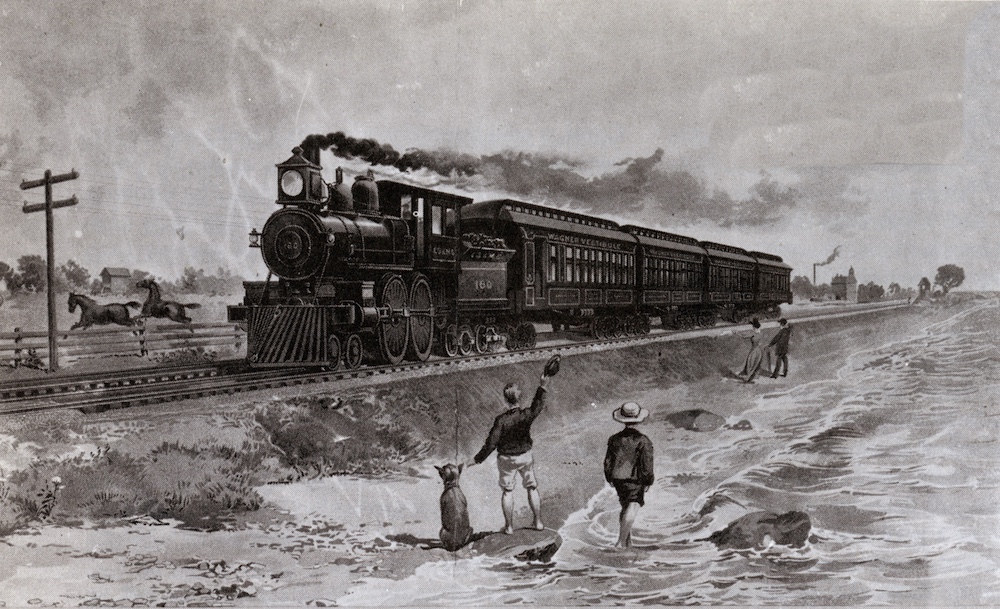
This image of the Exposition Flyer is from 20th Century by Lucius Beebe.
The Columbian Exposition was expected to bring millions of people to Chicago in the summer of 1893—an expectation that was fulfilled. An estimated 27 million people visited the attraction during its six-month run. Railroads from east and west alike were eager to capture their share of those travelers.
The New York Central and the Pennsylvania Railroad were already competing over passenger traffic between Chicago and New York in the years before the Chicago exposition. Between 1881 and 1891, the two companies had managed to reduce the time their fastest trains took to make the trip from more than 30 hours to roughly 24, mostly by reducing the number of stops and limiting or eliminating cargo cars.[2] The fare was slightly higher to reflect the time saved.
On the eve of the exposition, the New York Central’s general passenger agent, George H. Daniels,[3] envisioned a train that would take only 20 hours to make the trip between New York and Chicago, building on the techniques of the various “limited” and express trains currently traveling the route. The Exposition Flyer, billed as the “fastest train on earth,” was a small train, usually limited to a “buffet smoking and library car,” which was a haven for male passengers, a dining car, and two or three sleeping cars. It was also a “solid train”: all of its cars went the entire distance so no time was lost adding cars or leaving cars behind. And it made only seven maintenance stops on the route—no passenger stops.
None of this will appear in the proposal I am (still) struggling with. It probably won’t even turn up in the final book, if I am lucky enough to get to write it. My subject would have taken the cheapest train possible, not the Exposition Flyer nor one of the various limited or express trains that traveled from Chicago to New York . But knowing that she had to make a choice, and what those choices were, adds to my understanding. of her experience.
This is the way you write a book, one detail at a time.
[1] Not to be confused with a train of the same name that carried travelers west from Chicago to San Francisco’s Golden Gate International Exposition of 1939
[2] Both railroads continued to run slower trains, which took more than 36 hours but made all the stops on a route that traveled through Michigan and New York State. For which people who wanted to travel to Kalamazoo. Battle Creek, Buffalo, or Albany were doubtless grateful.
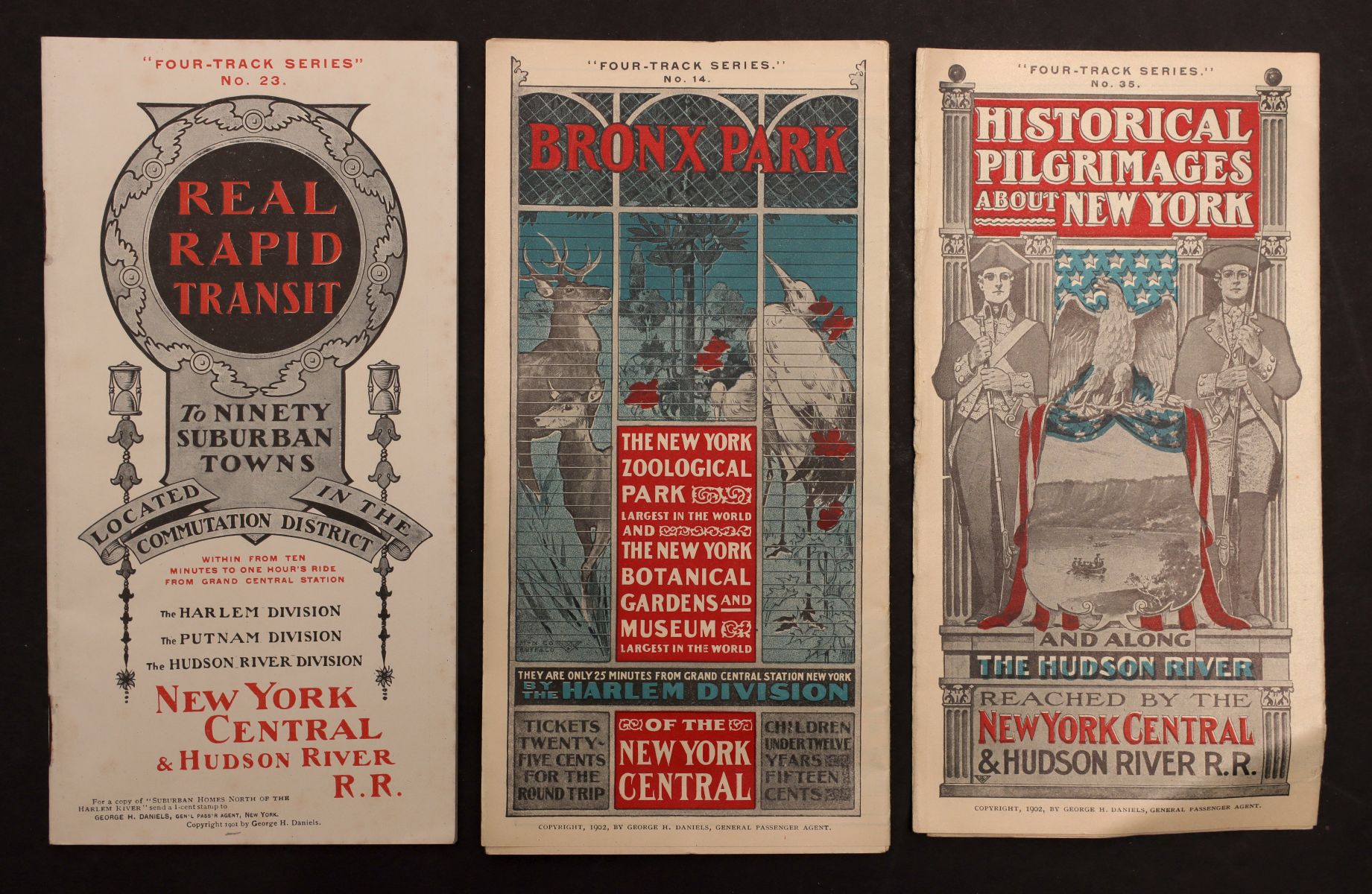
[3] Remembered by railroad buffs and advertising history nerds for his innovative promotion of the railroad, including the use of travel brochures to encourage people to take the train on their vacations. Much of his work rested on the tagline “Send a stamp to George H Daniels.” Anyone who wrote to Daniels for information and enclosed a 2¢ stamp would get travel information tailored to their interests in return, whether it related to the railroad or not. He and his team created a wide range of brochures, dubbed the Four-Track series. The most popular was a reprint of Elbert Hubbard’s inspirational essay “A Message to Garcia” (1899)–the story had nothing to do with the railroad, but the pamphlet included a map of the New York Central’s routes. The railroad published hundreds of thousands of copies of the essay, keeping an essay that originally appeared in an obscure magazine that reached a small audience in the public eye.