




Line of Flight: A Q & A with Novelist Evelyn Herwitz
Evelyn Herwitz and I have been writing accountability partners for more than a decade, cheering each other on and commiserating as needed via (almost) daily emails, occasional phone calls when an email doesn’t suffice, and rare real life meet-ups when travel plans allow. Over the years I have watched her debut historical novel, Line of Flight, which is set in 1915 during the Great War, evolve into its current beautifully written and deeply researched form.
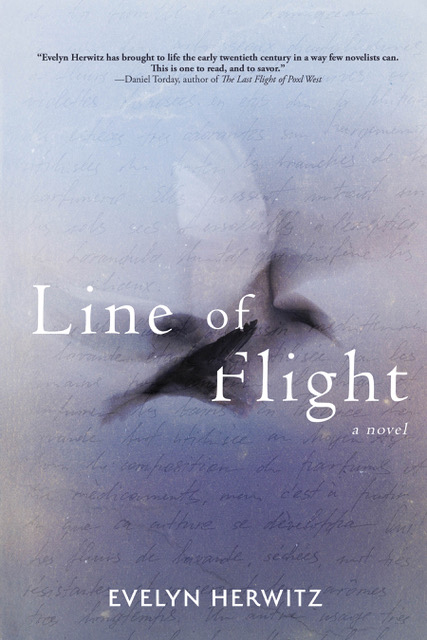
Line of Flight is coming out November 17 (today!). I’m delighted to have Evelyn here on the Margins to talk about the book and and how she wrote it.
What inspired you to write Line of Flight?
Writers start from different points, often beginning with a character, but in my case, I began with a setting, World War I. I never learned much about the Great War in high school, because it was eclipsed by lessons about World War II, which was relatively recent history. But two serendipitous visits to museums while I was on business trips piqued my curiosity. In 2010, I saw an evocative exhibit of Otto Dix’s WWI etchings, Der Krieg, that were part of a retrospective at the Neue Galerie in NYC. The images punched me in the gut. Then in 2014 I visited the National World War I Museum and Memorial in Kansas City, Missouri. I was completely overwhelmed by this war that I had never paid any attention to, which shaped so much of our world today. There was a display case with uniforms worn by women ambulance drivers, about whom I also knew nothing. That was the spark.
Line of Flight is such an evocative title. Could you tell us the story behind it?
In an early draft of the novel, there was a scene where a pigeon waddled along a sidewalk, leading Camilla, one of the lead characters, to a sign for a fortune teller. The fortune teller never made it into the final version, but the pigeon stayed. I was working on early drafts while taking a class at Grub Street in Boston, and I would watch the pigeons at the Back Bay station while waiting for my train back to Worcester. I was fascinated by them, so easily overlooked. So I began to read more about them and learned how carrier pigeons can always find their way home, possibly by sensing magnetic fields. That phenomenon is called line of flight. Given that the story is about a mother and daughter trying to find themselves and each other, it was the perfect metaphor.
How did you walk the line between historical fact and fiction in Line of Flight?
I tried very hard to use historical fact as a framework for the story. I checked a lot of details and dates and read extensively about the war and its impact. But I also played with those details. For instance, when the Lusitania sinks, I place Simone on one of the only lifeboats that remained intact. Of course, she wasn’t there, but she could have been.
What types of sources do you rely on to create rich fictional characters who are historically accurate?
You can find so much information on the internet, of course, though you have to vet it. I read many books about everything from the training of carrier pigeons to the lives of women ambulance drivers. I also used primary source material from The New York Public Library, which holds a collection of correspondence about the American Fund for French Wounded, as well as demographic details about the New Orleans Jewish community that emigrated from Alsace and Lorraine in France after the Franco-Prussian War that I discovered at The Historic New Orleans Collection. In addition, I found diaries by nurses and doctors who served at the American Ambulance Hospital in Paris. The letters and diaries especially informed my writing, because they captured the way that people told stories and expressed themselves—in much greater detail than we do today in glib text messages.
Did you base your characters on real-life historical women?
Simone and Camilla are women of my own imagination. The one historical woman in the story is Dr. Mary Crawford, who was a surgeon at the American Ambulance Hospital in 1915. I read her letters that were published in the Cornell Women’s Review—that you helped me to locate!—about her experiences, and then gave her a role as Camilla’s mentor at the hospital.
What was the most surprising thing you’ve found doing historical research for your work?
How much I just love digging! It can be both a blessing and a curse, because I can tunnel down rabbit holes for hours trying to track down some detail and then get totally distracted from the work of writing. Or, I admit, it can be a great excuse to not tackle the blank page.
How did your career as a journalist shape your approach to writing Line of Flight?
It certainly taught me how to research and also how to get to the point of “triangulation,” when you have dug up so many details that start to overlap enough that you know you have the story right.
Historical research for a book, whether fiction or non-fiction, inevitably turns up more than ever makes it to the page. (That’s what blogs are for!) Is there something you uncovered in your research that you were sad to leave out?
I could have written a lot more about pigeons! I really came to appreciate them as gentle, faithful creatures with this incredible homing ability. They come in so many shapes and colors. I never got to a pigeon fancier’s convention, but I would have liked to. I had a lot of fun creating Ozma, who definitely has a mind of her own as she flies in and out of the story.
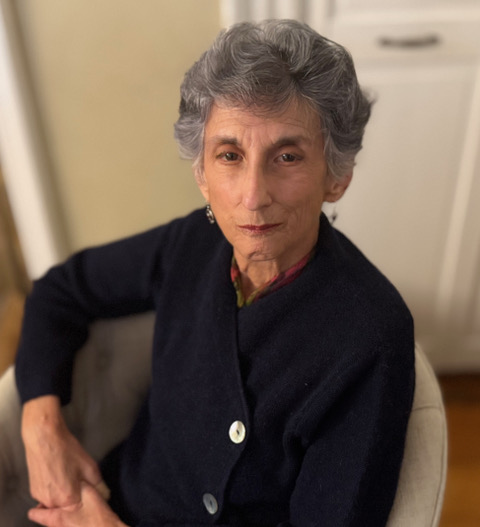
Photo credit: Joshua Meyer
Evelyn Herwitz has been telling stories since childhood, when she entertained her sister with songs about a dancing ant. For her own two daughters, now grown, resilient women, she concocted tales of talking moths and chipmunks; from them, she learned hard parenting lessons that inspired Line of Flight. Evelyn taught feature writing at Clark University in her hometown of Worcester, Mass., and has told stories professionally as a public radio and award-winning print journalist, a marketing and communications specialist, and an author. Her environmental history of Worcester, Trees at Risk (Chandler House Press, 2001), was cited as “a major historical work with a strong environmental message.” Now devoted to writing fiction, she is a graduate of Grub Street’s Novel Generator in Boston. Her stories have been published in Chautauqua, The Writing Disorder, and Embark Literary Journal. Line of Flight is her first novel.
To learn more about Evelyn and Line of Flight:
Check out her website: https://evelynherwitz.com/
Read her blog, History Making: https://evelynherwitz.substack.com/