




Reading my way through Asian American Native Hawaiian and Pacific Islander Heritage Month
Back in February, as I began to read my way through Black History month, I swore to myself that I was going to do the same thing for the other history and heritage months this year as a small way of shaking my fist at the current attacks on studying/teaching/valuing diversity.* Now it’s Asian American, Native Hawaiian and Pacific Islander Heritage month and I’m setting off on a new reading adventure. I will admit going in, I have no clue.
I had obvious choices in February: I simply pulled books from the To-Be-Read shelves and told stories that I had been hoarding. May is less clear. There are no books on my shelf. There are no books on my list. And I feel like I don’t know much.
Here are the historical bits I know something about:
• Chinese laborers on the transcontinental railroad
• Japanese internment camps in World War II
• South East Asian refugees into the United States at the end of the Vietnam War.
• Changes at various times in immigration law
I know even less about the history of Native Hawaiians and Pacific Islanders.
Looking at that list, and at the lumpy, portmanteau nature of the month itself, I think that part of the problem is that this is a story of different groups, with different histories. It may well be that the common thread is immigration law.
I’m starting with a Big Fat History Book that looks at the histories of Asian Americans as a whole. We’ll see where it takes me. In the meantime, if you have books to recommend, please let me know.***
*As I sit down to write this, I learn that I missed Arab-American history month in April because I didn’t know it existed. Which in some ways sums up the need for such months. I’ve marked my editorial calendar for 2026.
**There will be a couple of interruptions for Q & As with authors who have books coming out in May.
***To be clear, I’m always happy to learn about a good book, but I’m not actively looking for books about Asian history to read this month. I have plenty of those on the shelves.
***
To start us off, here’s an article from the Washington Post about the children who came to American as part of the Vietnam War’s “Operation Baby Lift” Hard to believe it’s been fifty years!
The Countess and the Nazis: A Q & A with Richard Jay Hutto
Months ago, a mutual friend introduced me to Rick Hutto. He thought we had things in common, including writing “lively, vibrant, deeply researched and highly entertaining historic narratives.” (That’s a compliment worth having!)
Rick’s latest book, The Countess and the Nazi: An American Family’s Private War is the story of an American heiress who traded America’s Gilded Age society for a title in Prussia’s aristocracy and later used her life of privilege as a foundation for resistance when the Nazis came to power. It is a fascinating addition to the growing genre of women who stood up to the Nazis, often at personal cost.
I am pleased to have Rick here on the Margins to talk about the book.

What path led you to the story of Muriel White, the American-born Countess Scherr-Thoss? And why do you think it’s important to tell her story today?
I’ve written a great deal about the American heiresses who married titled husbands. A few of those were love matches but most were cynical exchanges of money for titles. I came across Muriel who was completely outside the mold for women of her stature so I was intrigued by her. With very little help and support, she did everything she could to combat the rise of Naziism and her story needs to be told as it is instructive for the rest of us.
The Countess and the Nazis straddles two themes that have caught the public imagination over the last few years: the Gilded Age and women who resisted the Nazis. Why do you think people are drawn to these themes today?
The very name “Nazi” still evokes so many discordant reactions when we come across it. It is no wonder that thousands tried to escape from Naziism/Fascism but few tried to do so by staying within its borders as Muriel did to fight from within. She was the perfect incarnation of an educated, wealthy, and powerful woman who walked easily between the two worlds of royal courts and domestic responsibilities yet did all in her power – at great personal risk – to help people of all strata of society.
You have written extensively about American heiresses from this period who married titled Europeans. How does Muriel’s story differ from that of other women who took this path?
Most of her peers wanted a lovely life in a stately home with frequent guests, weekend parties, and servants to take care of all the demands of daily life. Muriel easily could have done the same but she took seriously not only her obligations to her family but to the families of servants who lived within her reach and depended on her for their livelihood. Even with years of research, I’ve never come across another who can match her efforts and accomplishments.
Many American women who married Germans supported the Nazi party. (In fact, the subject of my book claimed that were among the most fervent Nazis.) Why did Muriel take the path of anti-Nazi resistance?
From the beginning of her life abroad Muriel refused to take an easy path if her convictions led her to question authority and to make queries that were sometimes embarrassing to the recipients. She wanted nothing to do with the Nazis and their rigidity and cruelty. She was often advised to be quiet and not to cause problems and her persistence would eventually cause her lonely death.
What was most challenging or exciting about researching women in this period?
The most challenging was the realization that many of these women – particularly Muriel – would have been brilliant diplomats had they not been forced to defer to their husbands and fathers (and eventually sons). They were expected to smile and do what they were told even though their experiences uniquely suited them for a life of service. Her father and brother were ambassadors but there were no female U.S. ambassadors until long after her death.
What was the most surprising thing you learned working on this book?
The realization that all the money these heiresses had in the U.S. could not be accessed after their citizenship was lost at marriage and their fortunes in the U.S. were blocked. For many, it took years of legal battles and Congressional legislation to become Americans again. For Muriel, her U.S. passport was re-issued and she should have been free to leave anytime in the two years prior to her death had the Germans not confiscated the new passport and kept it from her.
Is there anything else you wish I had asked you about?
Perhaps the inter-connectedness of these woman and the family relationships of most of the royal and noble families in Europe. After a while, their family trees looked much more like wreaths.
****
Rick Hutto served as White House Appointments Secretary to the Carter Family and was Chairman of the Georgia Council for the Arts. A former attorney, he is an internationally-recognized writer and lecturer and has been featured as an on-air historical expert. One of his books was adapted for television. Hutto has written extensively about the marriage of America’s Gilded Age heiresses to titled husbands. See more at: rickhutto.com.
Rick may be reached at rick@rickhutto.com
Celebrating Independent Bookstore Day
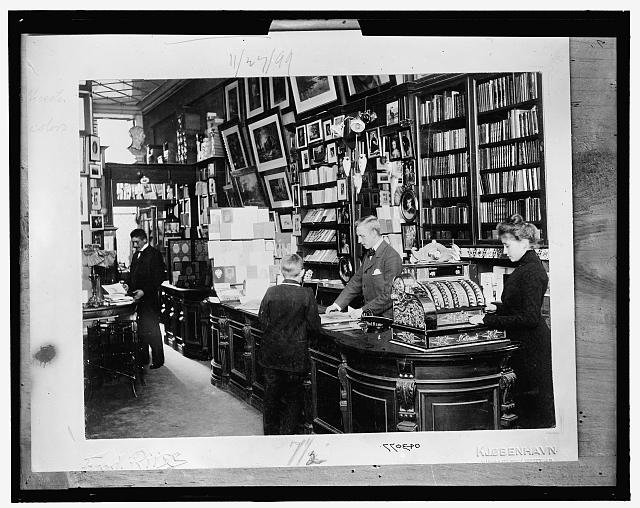
Here in the United States, the last Saturday of the month is Independent Booksellers Day. (That’s tomorrow if you’re reading this on the day it comes out.) It’s one of my favorite days of the year.
Normally I try to celebrate by visiting my neighborhood bookstores. I’m lucky enough to have three independent bookstores within walking distance: the fabulous Seminary Coop, its more commercial younger sister, 57th Street Books, and (brand new and just around the corner from our house) Call and Response Books, which specializes in books by and about people of color.* I am very very lucky to have so many choices.
A bookstore visit always leaves me feeling a little better. I browse.** I scan the shelf readers—those cards on the shelves that tell you something about a book. I chat about books with the booksellers. I eavesdrop on other people’s bookish conversations. I check to see if my books are on the shelves. I check to see if my friends books are on the shelves. I sheepishly take photos to post on social media. I try to resist the temptation to buy books I don’t need.*** I give in to temptation and buy some anyway, which I justify by reminding myself that it’s important to support independent bookstores.
f you’re lucky enough to have an independent bookstore near you, stop by and show them some love. If not, you can adopt an independent bookstore somewhere else—most of them ship. Or you can buy your books through Bookshop.org, an online bookseller that supports independent bookstores.
As for me, this year I will celebrate Independent Bookstore Day in Los Angeles, where I will sign books for two (2!!) independent booksellers. I will be on a panel at the Los Angeles Festival of Books,supported by Mysterious Galaxy Bookstore, at noon. Then I will attend a Meet and Greet at the celebration at Flintridge Books from three to five. I’d love to see you if you’re in the area. It’s going to be Big Fun!
*There is also a university bookstore in the neighborhood, which is run by Barnes and Noble. I tend to forget it’s there. Which is probably a good thing for my wallet and my bookshelves.
**I must admit, my browsing muscles atrophied during the pandemic and I am still working to rebuild them. Perhaps more bookstore visits are the answer.
***I have enough unread books to keep me going for years.