




Talk Amongst Yourselves

My Own True Love and I are on our way to Iceland, where we expect to have lots of history-buff adventures. I’ve scheduled some blog posts for the time we’re gone, but I thought it was a good time to introduce you to history blogs written by fellow readers.* (Many thanks to Jane S. Poole, who inspired this idea.) Check each other out. You may find a blog you love.
Obviously I only know who you are if you leave comments on blog posts, send me emails, or interact with me in some other way. And I may have missed someone as I went through four years of blog comments/correspondence.** So if your blog isn’t here–or if you want to share a blog you love that isn’t on the list–feel free to add it to the comments.
Here we go, in no particular order:
France Rolleston: A Victorian Lady
*At first I planned to list all the blogs written by readers, regardless of topic. That turned out to be impossible–DOZENS of you write interesting stuff on topics that have nothing to do with history. (Let me tell you, it hurt to leave off the book people. And the artists. And my youngest sister.) As it is, I’ve defined history as widely as possible.
**Crazy or just compulsive? You decide.
Song of the Vikings
As I’ve mentioned before, My Own True Love and I are in countdown mode for a history nerd trip to Iceland. As a result, my head is full of Vikings. *
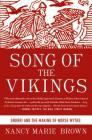 We’re going on a tour based on Nancy Marie Brown’s excellent Song of the Vikings: Snorri and the Making of Norse Myths. The heart of Brown’s book is the thirteenth century Icelandic poet, chieftain, and schemer Snorri Sturluson, whose poetry is the source of much of what we know about Viking culture and Norse mythology.** Brown uses Snorri as a lens through which to discuss Norse mythology, the complicated world of medieval Iceland, and the even more complicated aesthetics of skaldic poetry.*** Some of the most interesting parts of the book deal with the cultural impact of Snorri’s poetry on later artists–think Wagner, Tolkien, Gaiman, Marvel Comics.
Brown is an excellent story teller. If you’re interested in Tolkien, Vikings, medieval history, or the roots of Thor and Loki, I strongly recommend Song of the Vikings.
Stay tuned for breaking news from the field.
*Not to mention hiking boots, sunscreen, flexible layers, water bottles, and an overseas phone plan.
**It’s important to point out that the Viking period is generally defined as lasting from the eighth through the eleventh centuries. When he’s writing about the Iceland of his time, he’s a primary source; when he’s writing about Norse mythology he’s an oral historian. Or at least that’s my humble take on it.
***James Joyce is a breeze by comparison.
Are You Listening to History?

Over the last three years I’ve become a fan of podcasts. They’re great to listen to when I’m doing things that require my hands and eyes but only a small part of my brain: chopping vegetables, washing dishes, reconciling bank statements, sorting through the pile of mystery papers on the floor next to my desk. For the most part, I listen to podcasts about the craft and business of writing,* with an occasional side trip into popular culture. **
Recently I had a revelation. (You see where this is going, right?)
In the course of research, I stumbled across New Books In History: a podcast that interviews academic historians about their work. I’m glad I found it. The interviews are well done, but definitely academic in scope and tone. It’s more like listening to a college lecture than two smart, opinionated and funny writers discussing narrative structure and character development in The Philadelphia Story. *** And it’s a nuisance to stop what I’m doing to take a note. Which I often want to do. Because these people are smart.
But beyond its intrinsic value, NBH made me think “History podcasts!” and “Duh!” A quick glance at the choices in iTunes was both overwhelming and dispiriting. I downloaded several that seemed to meet my criteria: broad interests held together by a set of personal historical concerns on the part of the podcaster(s), a quirky aesthetic that doesn’t descend into farce, an appealing voice.**** In short, the podcast equivalent of History in the Margins.***** Once I find a few I like, I’ll share.
But in the meantime, I’m hoping you’ll share. Do you listen to podcasts? How do you find them? Are there history podcasts you love? History podcasts you hate? What makes a good history podcast? Etc.
I really want to know.
* If that’s your thing, I strongly recommend the various podcasts put out by the people at Storywonk and Dan Blank’s Dabblers v Do-ers.
**Or better yet, popular culture as a vehicle for understanding narrative structure.
***The Popcorn Dialogues. They stopped recording in 2012, but there is lots of good stuff here,
****Literally as well as metaphorically. The voices on some podcasts that I listen to regularly drive My Own True Love out of the kitchen.
*****Yes, yes. I’ve thought about it. But not any time soon.