




Lincoln’s Greatest Case–Sort Of

Image courtesy of the Library of Congress
Brian McGinty (The Oatman Massacre) uses his skills as both attorney and historian in Lincoln’s Greatest Case: The River, The Bridge and The Making of America.
In May, 1856, the steamboat Effie Afton hit a pillar of the Rock Island Bridge–the first railroad bridge across the Mississippi. Both steamboat and bridge caught fire. The Effie Acton sank, with all its cargo. The Illinois side of the bridge collapsed onto the wreck of the steamboat the next day. In the trial that followed, the powerful steamboat interest fought the developing railroad industry for control of the Mississippi, and the nation’s shipping business.
McGinty sets out the complicated story with the clarity of a legal brief. He places the trial and its issues solidly in a historical context that includes the role of the Mississippi in American economic life, the Dred Scott case, Abraham Lincoln’s career, and westward expansion. He leads readers through the intricacies of legal principles governing interstate commerce and judicial jurisdiction, steamboat operation, bridge construction and river currents with a sure hand. He reports the day-to-day unfolding of the trial with an eye to both the personalities and the issues involved.
Lincoln’s Greatest Case tells an intriguing story that will appeal to anyone interested in the commercial and industrial history of the United States, but the title is misleading. Anyone expecting a courtroom drama with Lincoln at its center will be disappointed. There’s a reason the Effie Afton trial is little more than a footnote in most Lincoln biographies: Lincoln was not the lead attorney in the team defending the Rock Island Bridge. He is simply the best-known character in a colorful cast.
This review originally appeared in Shelf Awareness for Readers.
Woodrow Wilson in Love

In honor of Valentine’s day, I want to share one of my favorite stories about President Woodrow Wilson, reported by Secret Service agent Edmund Starling in his memoir of the Wilson White House:*
En route to his honeymoon destination with his second wife, Edith Bolling Galt Wilson, the president was seen dancing a jig by himself and singing the chorus of a popular song: “Oh you beautiful doll! You great big beautiful doll…” Starling reports that the president even clicked his heels in the air.
Look closely at the portrait of the president at the top of this post. Add a top hat, pushed back. Picture him dancing and singing. Makes me smile every dang time.
Now if you’ll excuse me, I’m off to give My Own True Love a kiss. I may even click my heels in the air and sing a love ditty.
*My apologies to those of you who’ve read it here before or heard me tell the story in person (complete with song and dance step).
Fatherland
If you dismiss history told in comic book graphic form* as the non-fiction equivalent of Classic Comics, you’re missing out. At its best, graphic non-fiction uses visual elements to tell stories in new and powerful ways.**
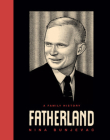 In her graphic memoir, Fatherland: A Family History, Serbian-Canadian artist Nina Bunjevac tells the blood-soaked history of the former state of Yugoslavia through the lens of one family’s story.
Fatherland centers on Bunjevac’s father, whose involvement in a Canadian-based Serbian terrorist organization led her mother to flee with her daughters to Yugoslavia in 1975 and ended with his death in a bomb explosion. Moving back and forth in time and place, from modern Toronto to Yugoslavia during both the Nazi occupation and the Cold War, Bunjevac explores the steps that led to her father’s extreme nationalism and its tragic consequences. Using a combination of strong lines, pointillism and cross-hatching that evokes the feeling of an old newspaper, she tells a story in which there are no heroes and every choice, personal or political, has traumatic consequences. (Bunjevac’s mother is forced to make a classic “Sophie’s choice”: the only way she can take her daughters to Yugoslavia is to leave her son behind.) Both the country and Bunjevac’s family are torn apart by the bitter divisions between Serbs and Croats, partisans and collaborators, royalists and communists.
Bunjevac makes no moral judgments about her family’s choices. Instead she approaches their history from several viewpoints, introducing increasing complexity and moral ambiguity with each new layer. The only thing that is black and white in Fatherland is Bunjevac’s exquisite and often grim illustrations.
*As opposed to what we call “comic book history” here at the Margins–stories that are culturally entrenched and often emotionally satisfying but untrue.
**At its worst, graphic non-fiction is garish and heavy-handed. But if we abandon entire genres of literature based only on the worst examples we’ll have nothing left to read.
Much of this review first appeared in Shelf Awareness for Readers