




In the Realm of a Dying Emperor
Women’s History Month is barreling toward us and I am happily working on bringing you another March full of mini-interviews with people who are doing interesting work in women’s history. In the meantime, I’m sharing some of the books that I’ve rediscovered in the process of finding room on my office shelves for the books I used in writing The Dragon From Chicago. (The danger with this is the temptation to re-read the books as I go. Which wouldn’t be a problem if it weren’t for all the as yet unread books piled throughout my office.)
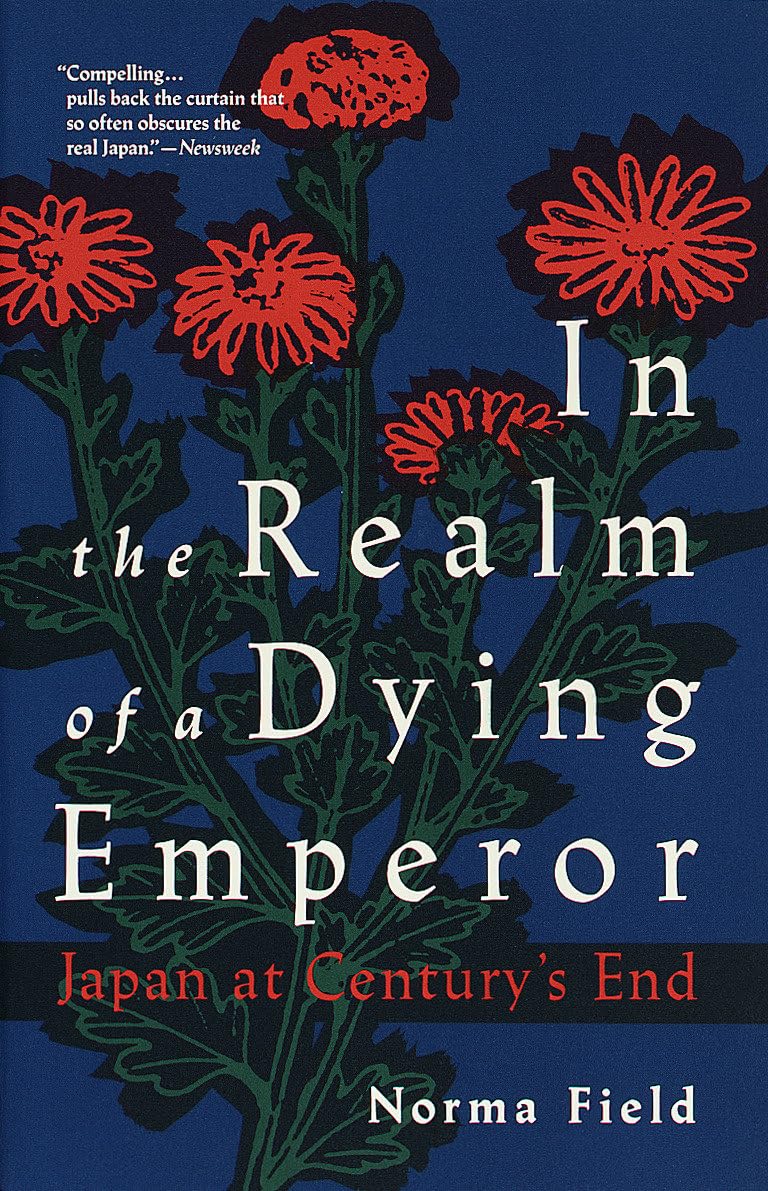
Next up, In the Realm of a Dying Emperor: Japan at Century’s End by East Asia scholar Norma Field
Long, long ago, when I was a graduate student, I team-taught three sections of a four-section continuing education course called “Asia and the Middle East” for the University of Chicago. I covered South Asia, the Middle East, and occasionally South East Asia. My co-teacher, Robert LaFleur, a brilliant and creative scholar who combines anthropology and history in his study of Chinese history and culture, covered China, Japan, and occasionally Korea. Over the course of the five years that we taught the course, I read everything he assigned—a fascinating dive into cultures and history that I knew little about that was the rough equivalent of an undergraduate major in East Asian studies. (Minus term papers, exams, and language requirements.)
In the Realm of a Dying Emperor, published in 1991, was one of those books. It was, by intention, a solid kick in the cultural assumptions. Emperor Hirohito had died in 1989. Norma Field, the daughter of an American soldier and a Japanese woman, was in Japan in the year leading up to his death. She witnessed the nation’s vigil over the dying emperor and its uncritical, formalized exaltation of his life after his death. In In The Realm of a Dying Emperor, Field sets that exaltation and the “national amnesia” which made it possible against the stories of three Japanese who dissented against the cultural hegemony that dictated the response to the emperor’s death in the prior two years. An Okinawan supermarket owner burned the Japanese flag in protest against Japan’s treatment of Okinawans. A widow sued the state to prevent the Shinto deification of her husband, a member of the Self-Defense Force who died while officially on duty, though not on the battlefield, claiming that it was an infringement of her religious rights as practicing Christian. The mayor of Nagasaki, also a Japanese Christian, raised a furor, and exposed himself to death threats, by stating that the emperor bore some responsibility for Japan’s role in World War II and consequently for the nuclear attacks on Hiroshima and Nagasaki.
Field does not simply tell their stories, she examines the public response to their actions and the roots of their actions in their minority status. She interweaves their stories with her own experience as “one of them war babies” growing up in Japan in the 1950s.
My memory of the book is that it was a compelling account of a society with fractures it did not acknowledge. If you’ve read it, I’d love to hear what you thought.
From the Archives–Samurai: The Last Warrior
I’m currently embroiled in proofreading the endnotes for The Dragon From Chicago. It’s a headache-inducing job, but it is the one part of the book in which no one can catch the errors except the writer. (Probably the person who made one of them. ) Instead of hoping I pick up speed and can squeeze out a new post, here’s post that ran in 2013 for your amusement.
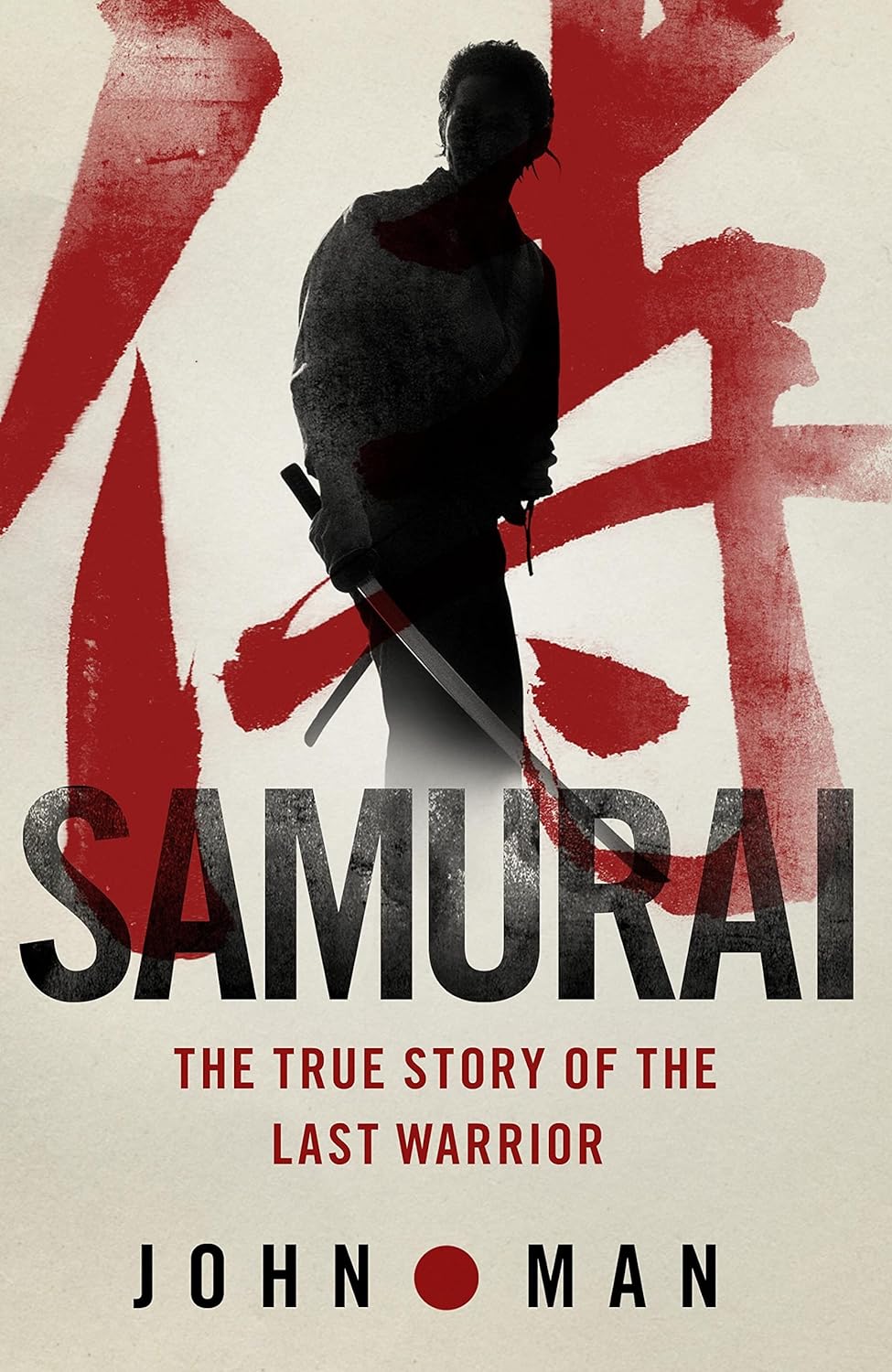
John Man combines travelogue, history and social commentary in Samurai: The Last Warrior, using the story of Saigo Takamori, popularly known as the “last samurai”, as his central focus.
In 1877, Saigo led a hopeless rebellion against the Japanese government. Six hundred samurai armed with traditional sword and bow fought the government’s newly trained modern army in an effort to reverse the westernizing changes of the Meiji Restoration. When all was lost, Saigo committed ritual suicide; the institution of the samurai died with him. Three years after Saigo’s death, the government against which he rebelled erected a monument honoring him as a great patriot.
Man uses Saigo’s story as a lens through which to consider the history of the samurai, Japan’s rapid transformation from a feudal society to a modern one, and the ways in which samurai culture colors Japanese society today. He offers detailed explanations of both familiar elements of samurai culture, such as ritual suicide, and less familiar subjects, such as formalized sexual relationships between men. Man himself is never far from the page, whether comparing traditional samurai education with that of a British public schoolboy, visiting a class where a toned-down version of samurai-style sword fighting is taught, discussing the samurai in the context of other “honor cultures” (think street gangs), or explaining Darth Vader’s samurai roots.
Samurai is an engaging look at the final days of a military elite: a great choice if you’re interested in the the story of the last samurai or the lasting influence of these warriors on Japanese culture.
Lords of the Horizon
Women’s History Month is barreling toward us and I am happily working on bringing you another March full of mini-interviews with people who are doing interesting work in women’s history. In the meantime, I’m sharing some of the books I’ve rediscovered in the process of finding room on my office shelves for the books I used in writing The Dragon From Chicago. (The danger with this is the temptation to re-read the books as I go. Which wouldn’t be a problem if it weren’t for all the as yet unread books piled throughout my office.)
Next up, Lords of the Horizons: A History of the Ottoman Empire by Jason Goodwin
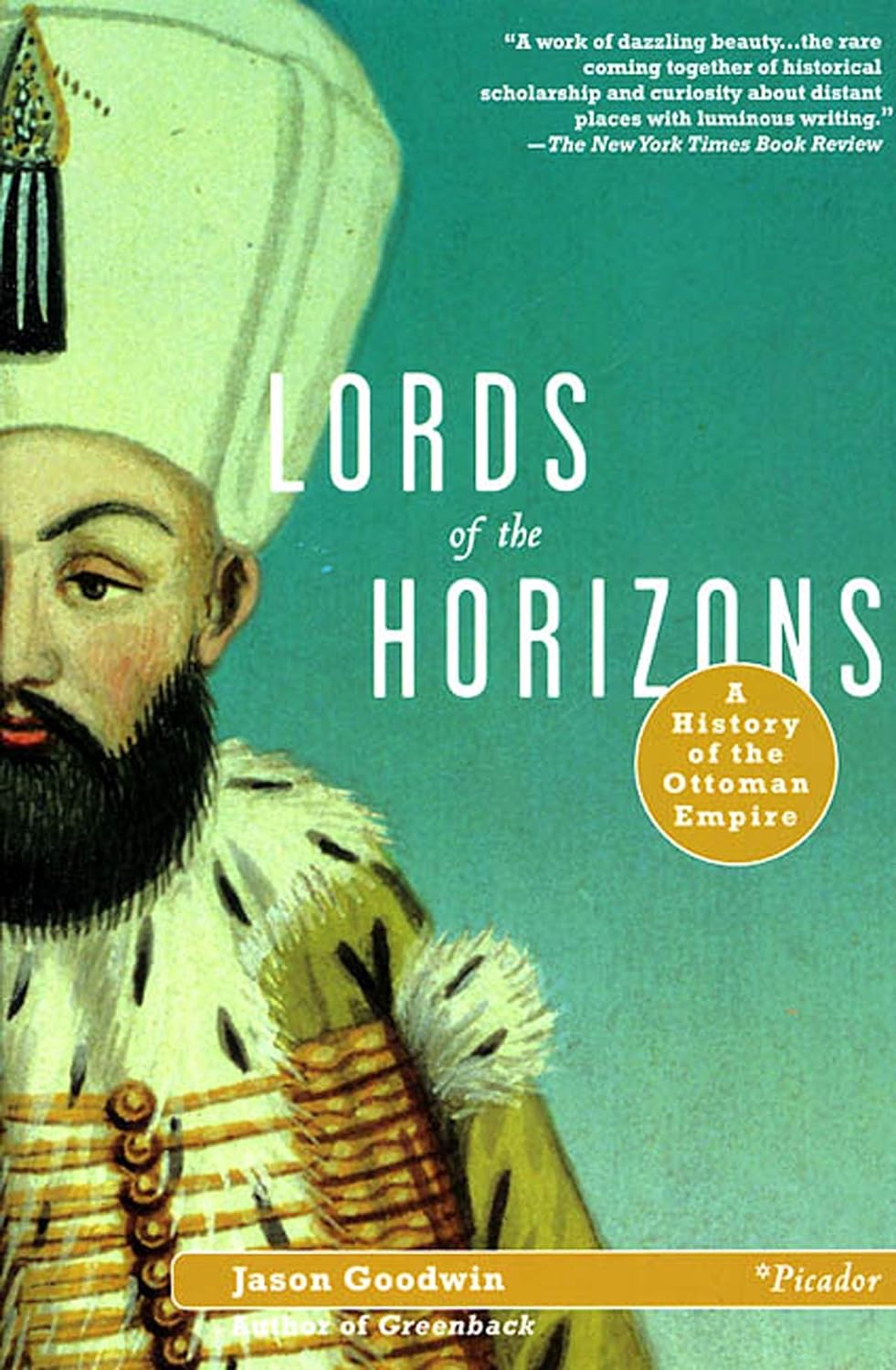
Lords of the Horizon was published in 1998, and I probably bought my copy soon after that. It is by far the most readable of the accounts of the Ottoman Empire that I have accumulated over the years.* Goodwin is an accomplished guide through the six centuries of Ottoman rule, from the empire’s origins in a nomadic people on the Eurasian steppes through its heydays in the fifteenth and sixteenth centuries to its eventual end in 1922. His prose style is lush and lyrical.. His narrative style is an idiosyncratic, non-linear blend of vivid anecdotes and deft historical summary–occasionally requiring the reader (i.e. me) to stop for a moment to figure out where she is in the bigger arc. He writes brilliantly about the Ottomans at war, but his focus is on the creation and maintenance of an empire that was multicultural at its heart.** As far as I was concerned, occasional moment of chronological confusion (Mine, not Goodwin’s.) were worth it—a fair exchange for moments of startling insight.
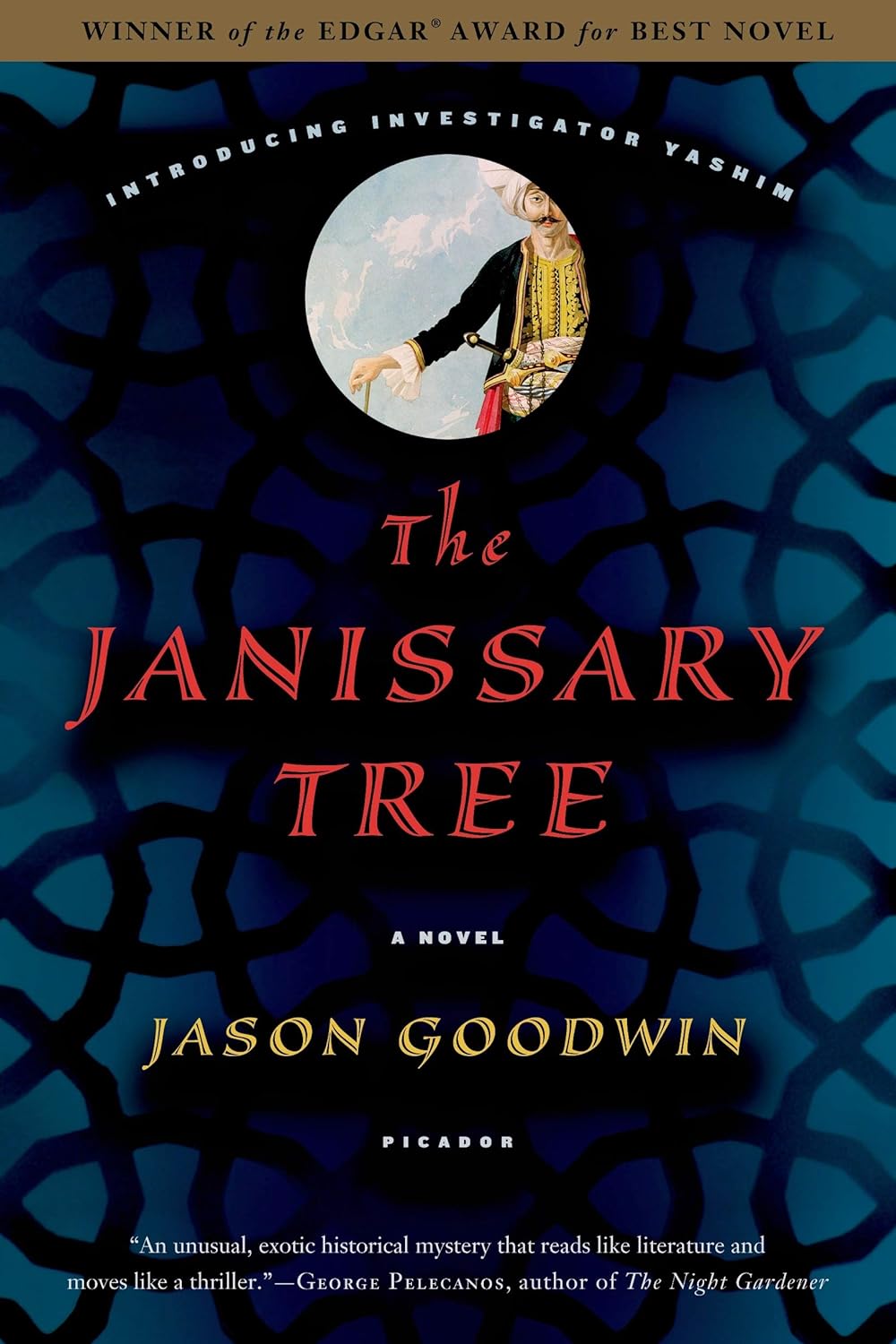
Goodwin went on to write a series of mystery novels set in mid-nineteenth century Istanbul, the first of which The Janissary Tree, won an Edgar. Also well worth reading, both for the story and as an introduction to the world of the Ottoman empire on the edge of decay. (Time for a re-read, I think.)
*At first I said “collected over the years,” but that suggests a more focused approach than I can claim.
**I am eternally fascinated by multicultural societies.
###
Apologies to those of you who hit the link to pre-order a signed copy of The Dragon for Chicago and found that it had gone bloooey. (I know at least one of you did—otherwise I wouldn’t know it had failed. Thank you, Dr. Wetmore.) It worked at the time I published the last two posts. Honest.
Here is a new link, which looks less crazy than the old link and is currently working: https://www.semcoop.com/dragon-chicago-untold-story-american-reporter-nazi-germany (Please let me know if it fails.)
A reminder of how this works: There is a space at the bottom of the order page to add special instructions. Request a signed copy there, and specify how you want the book to be signed.
You can also preorder the book wherever you usually buy books. Thank you.