




From the Archives: Log Cabins, Two Ways
Another post from the History in the Margins archives: this one from 2012.
✢ ✢✢
I always learn something new when My Own True Love and I head out on a Road Trip Through History. Our recent expedition to Colonial Michilimacinac was no exception.
- I learned that eighteenth century cooks dried pumpkins as well as apples* and used pig bladders to seal crocks of prickled vegetables.
- I had long known that when push came to shove (so to speak) the bayonet was a more useful weapon than the musket to which it was affixed. I had not previously known that with repeated firing the sides of the bayonet became coated with a greasy toxin that meant soldiers stabbed with a bayonet were unlikely to survive even a flesh wound. **
- I was introduced to wall guns–a weapon that combined the blasting power of a cannon with the mobility of a musket. Obviously a besieged fort’s best friend.
But the thing that struck me the most forcibly was the difference between how the British and the French built log cabins in the wilderness.
The Anglo-American log cabin style is what I picture when I think of log cabins: horizontal logs fitted together with notches and chinked with mud.
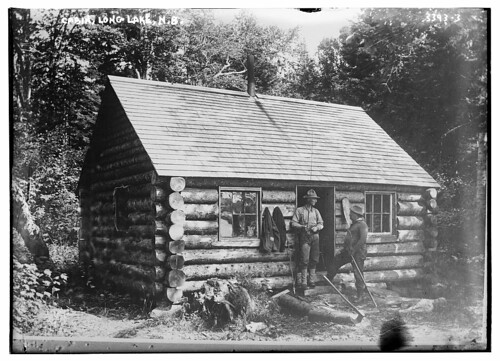
photograph courtesy of the Library of Congress
It is the form that evolved into WPA lodges, resort cabins, and Lincoln Logs.***
The French Canadian style of construction, known as poteaux en terre, or posts in the ground, used vertical timbers set into trenches, then weather-proofed with chinking and plaster.

It’s a small difference, I know. But it somehow seemed emblematic of the larger cultural differences that exploded into violence along the borders of the British and French colonies–a subject I’ll be coming back to in later posts.
*I may have learned about dried pumpkin before and simply blocked it out. I know it’s un-American, but I do not like pumpkin and cannot understand wanting to preserve it for future use.
**I’m not sure why this came as a surprise. Until the commercial production of penicillin in WWII, infected wounds were a major cause of death in warfare.
***Invented by John Lloyd Wright, the son of architect Frank Lloyd Wright. Really. I was as surprised as you are.