




Talking About Women’s History: A Bunch of Questions and an Answer with Jennifer Banning Tomás
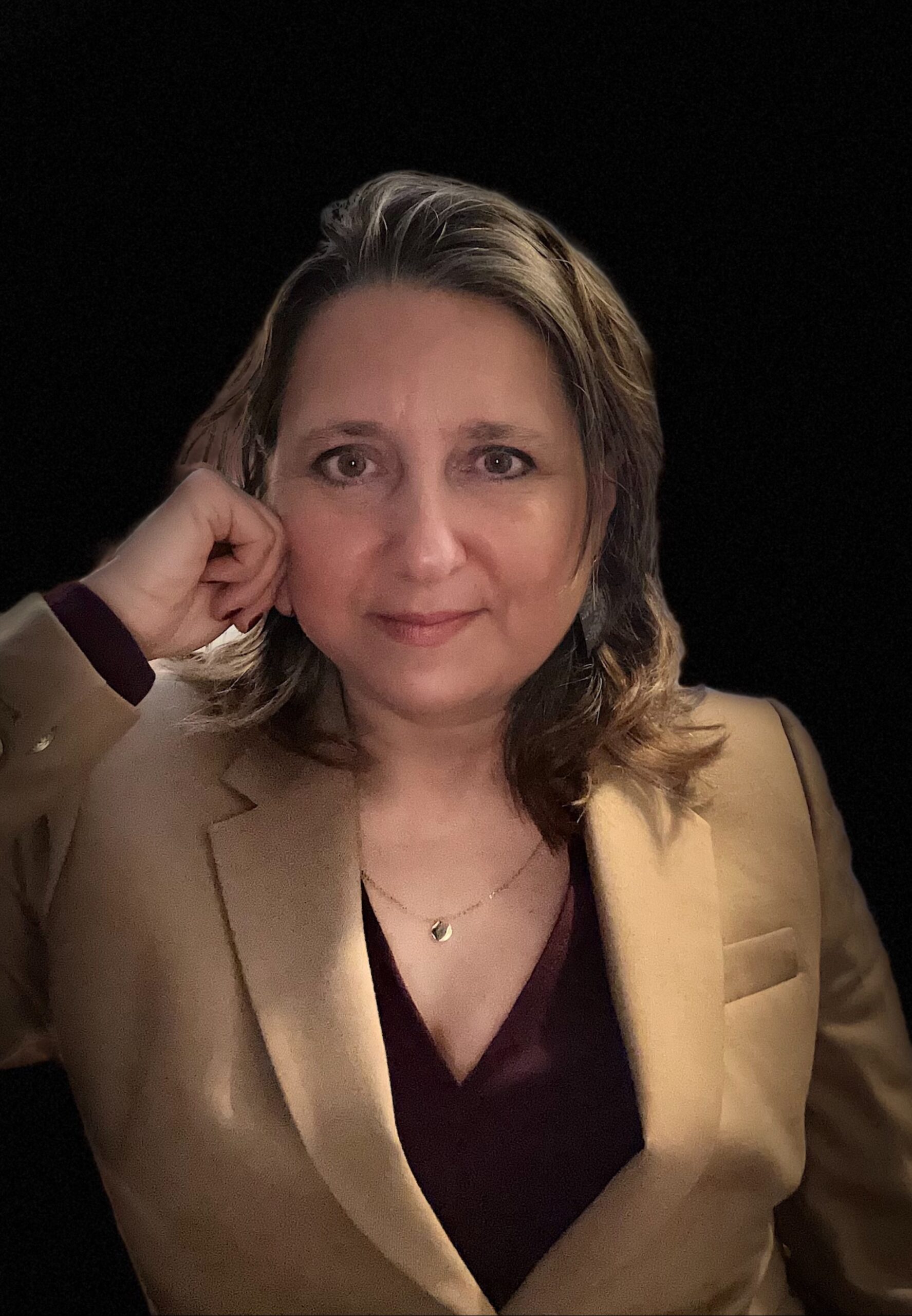
Jennifer Banning Tomás is a professor of history at Piedmont Virginia Community College. Her teaching and research center on 19th and 20th century American social, political, and cultural history; women, gender, and race; civic activism and social movements; the historical profession and higher education. She has published scholarly journal articles, encyclopedia articles and book reviews, and conducted and assisted in the production of oral history collections. Her work has been supported by research grants from Binghamton University, the Schlesinger Library, the Sophia Smith Collection, and the Southern Historical Collection at the University of North Carolina. She earned her Ph.D. from Binghamton University and has been a member of the history faculty at Piedmont Virginia Community College since 2013. She is the recipient of the 2026 State Council for Higher Education of Virginia–Outstanding Faculty Award.
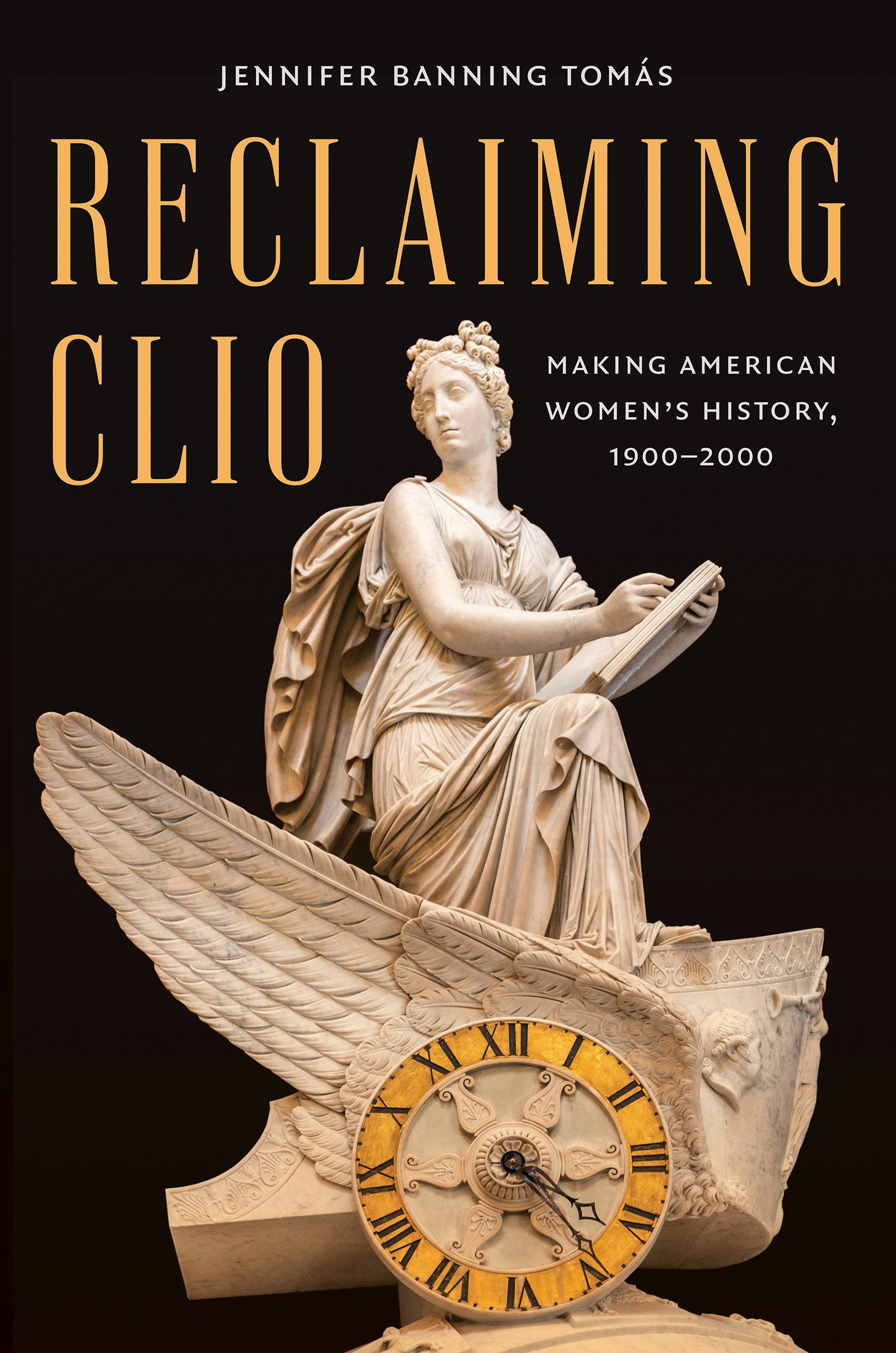
Tomás’s book, Reclaiming Clio: Making American Women’s History, 1900-2000, is a sweeping narrative that relates the history of an exciting intellectual movement comprising the work of two generations of historians, archivists, and curriculum designers who labored to fully incorporate women into the institutions, narratives, and curricula of American history. Their work initially developed in a historical context that generally ignored or dismissed women and their history as irrelevant to the development of the United States. Feminist historians, however, saw their work as essential to dignifying and valuing women’s existence and active participation in American history.
Take it away, Jennifer!
When did you first become interested in women’s history and what path led you to write Reclaiming Clio?
Thank you for featuring Reclaiming Clio on your blog.
I’m from Susan B. Anthony’s base of operations in Rochester, N.Y., where she infamously registered to vote and cast her ballot in 1874 and was then tried and convicted for her radical act of civil disobedience. It was also where she, Elizabeth Cady Stanton, and Matilda Joslyn Gage compiled the first three volumes of The History of the Woman Suffrage Movement in the 1880s. Her grave is in the same cemetery where Frederick Douglass is buried and where every major election year local women make a pilgrimage of sorts to affix their “I voted” stickers to her gravestone. So, I’m tempted to say location, location, location; or it’s something in the waters of my hometown. But obviously not every Rochesterian goes on to get a Ph.D. in the subject or write a book about the making of the academic field of American women’s history. I can’t say I had any special interest in women’s history before I went to college and encountered the right professors.
Really my earliest academic interest in women’s history that I recall traces back to a general U.S. History survey course I took back in 1997 at a community college in Central New York. It was a little before the 150th anniversary of the Seneca Falls Women’s Rights Convention. The course came first for me and in it, I wrote my first document analysis history paper on the Seneca Falls Declaration of Sentiments and Resolutions. I got an A on it. So, I was encouraged by my professor, Dr. Diane Casey, as a writer. Then she encouraged me to transfer to a four-year school and get my BA. I later ran into her when I attended the 150th Anniversary of the Seneca Falls Convention in 1998. I saw Hillary Clinton speak at that sesquicentennial celebration with my aunt and 4-year-old daughter in tow. Something about being in a place like that at commemorative moment like that has power and makes you feel connected to—grateful to—those who fought for our rights. It’s one of the reasons it’s so important for us to protect these public history sites from underhanded defunding efforts and outright censorship. My second research paper in a history course at that community college was on Emma Goldman. I don’t think I knew I was on a women’s history path yet. I just liked history. I majored in American History and Social Studies Education but really had no idea of specializing in something called “women’s history.” As a first-generation college student, I didn’t even intend to get a Ph.D. But again, I was living and working as a social studies teacher in a serendipitous location and ended up going to graduate school at Binghamton University. Fate put me in the courses of Thomas Dublin and Kathryn Kish Sklar and other excellent historians who focused on various aspects of the history of race, class, women, gender, and sexuality in different parts of the world. I really fell in love with graduate school and history. Kitty became my advisor when I agreed to work on the dissertation from which the book evolved. She originally envisioned the project as focusing on the 1960s to 2000 and the research nucleus of the project featured an oral history collection of U. S. Women’s historians she had produced with Mary Logan Rothschild of Arizona State University. Obviously, I expanded the timeline and the research plan considerably.
What was the most surprising thing you learned doing research for your work?
One of the most surprising things I learned in doing this work was just how hard it can be to nail down terminology and definitions. I spent what I initially thought was a silly amount of time trying to find the roots of the term “women’s history.” My advisor insisted it hadn’t been used before the 1970s. So, I set out to discover earlier uses by historians to refer to the academic study of women in the past, or the body of literature they produced, in those terms. I think it’s the only field that uses the possessive form. We don’t say African-American’s history, American’s history, Native-American’s history, European’s history, laborer’s history. So, why did we start calling this field of inquiry “women’s history?” One of the earliest places I saw this construction used was in the private correspondence and publications of historians Mary Beard, Alma Lutz, and other midcentury feminist historians involved with establishing women’s archives in the mid-1940s. It wasn’t widely or publicly adopted until a group of women introduced it into resolutions presented at the annual meetings of the American Historical Association and the Organization of American Historians in 1969 and 1970. The women demanded the associations support and direct resources to research and teaching of the neglected field of women’s history. The implication was that women had been deprived of their history by male arbiters of historical legitimacy and relevance. Feminist historians, like Gerda Lerner, made the case that depriving a people of their rightful place in history taught society that they had no rightful place in history, and devalued them as members of society. They thus understood the recovery of women’s history as both an academic endeavor and an inherently feminist act not just about women, but for women. Perhaps even a blow against patriarchy in that it would eventually expose the workings of patriarchy.
Another sort of gradual realization for me was that one of the most powerful aspects of the movement for women’s history was that by making women historically visible and doing good, responsible scholarship that adhered to the core academic tenets of the historical discipline, feminist scholars could strike a blow for gender equality. That this knowledge foundation would be enduring, even in the worst of times.
Most of us think of women’s history as beginning with second wave feminist historians in the 1970s. You begin the story much earlier. How did the contributions of those earlier historians lay the foundation for women’s history as an academic discipline?
First, I don’t think I would call “women’s history” an academic discipline per se. It is a thematic specialization within whatever your geographic, national, or topical specialization is. Right? History is an academic discipline. American history is a broad field of specialization. American women’s and gender history is also a broad field of specialization, as is Modern European women’s and gender history for example.
I begin the story of the field’s origins much earlier quite simply because that is where the investigative trail led me—back to the very beginnings of efforts in the United States to make American historians within academia pay attention to the historical experiences, activities, and yes, “contributions” of women to American life. In examining the archival record and also the contradictions in the way women historians told and retold the story of the field’s founding I began to perceive several things.
First, once I found my way into the institutional records of the Arthur and Elizabeth Schlesinger Library on the History of American Women at the Radcliffe Harvard Institute and The Sophia Smith Collection at Smith College, I was absolutely convinced that archivists and historians working to build women’s archives and build history careers while specializing in the history of women in the 1940s and 1950s had quite literally built the brick and mortar as well as the archival foundations for those who came to work in the field after 1969. What’s more they had done it with the quiet support of some important allies in the mainstream historical profession, an insight I first had when reading in the professional correspondence files of leading historians of women like Mary Elizabeth Massey, Anne Firor Scott, and Gerda Lerner who’d entered the profession between 1947 and 1966 with a good deal of encouragement and support from prominent male mentors. They also had small bands of female peers they connected with in the 1950s and 1960s—other historians of women. These three women were consummate professionals and very active in the major historical societies of American historians like the Organization of American Historians and the Southern Historical Association. They didn’t shy away from interacting professionally with the men dominating the profession and parlayed their academic and professional ties into opportunities not just for themselves, but for the field that came to be called women’s history, and for younger women who started entering graduate history programs in the 1960s. As role models, Scott and Lerner really paid it forward, since they both lived and stayed professionally active through the 1990’s. They were both still going to academic conferences when I started graduate school in 2008. That kind of commitment to the cause of women’s history was contagious. I think I caught the contagion just by reading in their papers and letters! Must’ve seeped in through the pores.
Second, this notion that there was “no women’s history” before the 1970s, is a rhetorical fiction. As I explain in the book. Feminist historians rightly observed in the 1970s that most academic historians had paid little attention to the history of women, didn’t teach it in most places, and didn’t consider it a developed or even a compelling area of specialization. The historical profession was predominantly male for most of the 20th century, and most male scholars weren’t interested in the history of women. Neither were most women scholars for that matter. But some historians were doing it and in the United States, most of these happened to be Americanists. There was a quiet ferment in the field at midcentury that was being encouraged by some pretty significant male historians in some very prestigious academic institutions, such as Harvard, Columbia, and the University of North Carolina at Chapel Hill. And there was also a quiet movement for creating women’s archival repositories dating back to the 1930s. There was just a lot more going on between the 1930s and 1960s to prepare the way for the women’s history initiatives launched in the 1970s than was apparent at the time to the young radical feminist historians transitioning from grad school into their early careers in the 1970s and 1980s
Another thing I found was that the same people who were writing dissertations on the history of women in the 1940s, and building women’s archives, publishing scholarly monographs about women, or incorporating women into their undergraduate history courses in the 1950s and 1960s—they show up as advocates, mentors and leaders of those feminists historians building the new “women’s history” in the 1970s. You see it in the institutional records of the OAH and the AHA, in the professional correspondence left in people’s papers, and in the records of big projects. So where do the earliest roots of the field originate? With the younger generation of the 1970s? I think not. The mid-century generation of feminist historians, it seemed to me, were an integral part of the field’s origins story that had not been given its proper recognition. They weren’t just pioneering precursors laboring at the margins of history. And their achievements, though small compared to what came later, were accomplished during decades when there wasn’t a mass women’s movement, like the second wave, to generate cultural support for it.
I don’t know why they’ve been overlooked until now, except for the fact that the flood of scholarship that was produced from the 1970s forward by a much, much larger number of historians of women who organized collectively on behalf of the field and to improve the status of women in the historical profession quickly overshadowed the progress that had been made by the mid-century generation. And that younger generation then dominated the historiography for thirty to forty years and shaped their students’ understanding of when women’s history became a field. So, that’s why everyone still goes around saying, “there was no women’s history before the 1970s.” Then if you start listing examples of all the women’s history, historians of women, women’s archives, exceptions to this commonplace, they begin to try to discount all that came before as somehow “not women’s history” or not part of the field of women’s history as they have understood it. That struck me as exceedingly ungenerous to the pioneering scholars and archivists trying to make women’s history possible during times when doing that wasn’t really all that professionally expedient. I now understand it to be more of a generational perspective, a product of the zeitgeist of the ‘60s and ‘70s. Young scholars were trying to distinguish themselves and what they were doing from what had come before.
In any case, I became a little fixated on making the mid-century historians’ work visible and showing how it provided the foundations for the field that supported what came after. By tracing the professional, personal, and institutional connections between historians of different generations, I was able to show more than just what this generation did before the next generation showed up on the history scene. I was able to show how the older generation of historians directly supported the work of the subsequent generation. That fixation turned into five chapters of my book.
I also really wanted to set the record straight in other ways. We historians of women in the United States haven’t really had a mainline historiography of our own. We’ve had lots of people telling bits and pieces of the story from different corners of the field as they’ve seen and experienced their part in developing women’s and gender history in the U.S. The closest we’ve come is Judith Zinsser’s 1993 Feminism and History, which is now out of print. We’ve got myriad oral histories, reflective essay collections, states of the field dialogues. I wanted to create a cohesive narrative that spanned generations and teased out the common threads as to what these generations were trying to accomplish in creating this exciting field of inquiry. And I wanted to meet these women (and men) on their own terms, before taking them to task for their failings. Honestly, I think we already do a good enough job of criticizing ourselves and one another.
The feminist historians who took women’s history to such glorious heights from the 1970s to the 1990s accomplished remarkable things in terms of expanding and even creating whole new fields and subfields of women’s history. They recruited and mentored a new generation of women’s, gender, and sexuality historians who in turn did the same. From the earliest years of the women’s history movement, many participants were not just interested in promoting attention to diversity and inclusivity in both their ranks and their scholarship. They were insistent upon it. By the mid-to-late 1970s, seeking out the participation of women of color historians, and paying more attention to race, class, sexuality, and gender in history increasingly became the sine qua non of most major women’s history gatherings for example. By the 1980s, it was de rigueur.
You look at the work of many individual historians to examine how women’s history was created as a discipline. Do you have a favorite? Is there someone you were sad not to include?
The first half of the book focuses more on individuals because there were fewer people working in the field and there wasn’t much of an organizational life built around women’s history as a collective project, with the exception of the big women’s history archives perhaps. Then the second half of the book focuses more on those working in collaboration, collective action, and organizations. That schematic was a natural outgrowth of how historians of women were doing women’s history in each era.
I can’t say I had a “favorite.” I came to really admire the tenacity, work ethic, smarts, and spirit of the midcentury feminist historians. Because their success was the result of a lot of hard work, chutzpah, and talent. I think it probably comes through in the way I write about them and just how much attention I lavished on them in part 2 of the book, which could have been a stand-alone book in its own right. I think the late Anne Firor Scott became my first professional role model while I was reading in her professional correspondence for lots of reasons. She was assertive, courteous, charming with her peers; a role model and mentor extraordinaire. I got to benefit from all the advice she ever put in print to anyone in a letter. Something she said in an interview once really stuck with me: “You see, the lesson is, Mary (Rothschild), it pays to write nice letters.” That seems like such a small thing, but it was so many letters and pearls of wisdom like that over a lifetime of devotion to promoting American women’s history and younger scholars. Another gem I came across in a letter she wrote to Ellen Dubois back in the 1970s. She wrote: “I learned from Thomas Jefferson that, if you keep at it, enormous amounts of work get done.”
I also admire the 1970s generation for their energy, chutzpah, brilliance, work-ethic, and tenacity every bit as much. I guess I’m supposed to be more detached than that as a scholar. But these historians have been living with me for years now and I can’t help but reiterate the closing sentiment from my acknowledgements. They have given us all a priceless gift by helping the majority find its past.
Am I sad about not being able to include someone?
Well, I would have liked to include more photos. But given the length of the book, I’m not sad about not being able to include everyone and everything. No book can do everything and sometimes people or things that really ought to be mentioned just don’t make the editorial cut. I’m not, after all, in the name-dropping business. The indexing process was painful though. I was like, oh no, so and so is going to look themself up and not see their name in the index or bibliography and be so offended they will toss the book aside. That almost happened at the last AHA conference. But the historian forgave me when she saw I had cited her work in the bibliography and said she would read my book. My hired indexer somehow didn’t include one of my most important mentors who was prominently featured in the book. It’s a darned good thing I caught that.
I hope people appreciate the enormous courage it took a graduate student turned obscure community college professor to attempt to write THE history of her field. What could possibly go wrong?
You teach a course on the history of American women at Piedmont Virginia Community College. What aspects of women’s history surprise your students most? What outrages them? What do you see as the biggest challenge in promoting women’s history today?
The biggest challenge is the same it has always been. Do work of relevance to the people or be tossed into the dustbin of history. If our work doesn’t interest or serve the public or our students, why do it? If we can’t find a way to do that at a time when the rights of women and so many other Americans are being dramatically assaulted, then we aren’t doing work that’s relevant.
I worry that the intense efforts and collective achievements of two plus generations of professionally active historians of American women will be forgotten or squandered in the face of contemporary challenges to gender and sexuality studies and other so-called “divisive topics” in higher education. I worry that contemporary historians of women, gender, and sexuality don’t know enough about their own fields’ origins stories to appreciate what each generation of feminist historians brought to the table to make that table longer, more inclusive, and hopefully more durable.
It also drives me a little bonkers to see the persistence of this idea that the history of women is still ignored, “forgotten,” unwritten, absent from curriculum and museums, or whatever. Ignored and forgotten by whom? My book proves that historians of women have now spent well over 60 years recovering, researching, writing, teaching, and publishing the history of women. Certainly, in the United States they did. I know there were parallel efforts in many other countries around the world. There are robust bodies of literature and works of public history waiting for students and the history consuming public to engage with. For heaven’s sake folks, go to the library or just google some women’s history. It proliferates in the digital realm. I’ve recently seen a couple of posts circulating on social media featuring pioneering American historians Gerda Lerner and Magaret Rossiter, which is cool, very cool. But they also portray these two women as unique trailblazers. When in fact, they formed part of an emerging, dynamic movement of hundreds upon hundreds of feminist historians working to build up women’s history into a robust academic specialty in the U.S. from the late 1960s forward.
What am I saying with regard to the challenges we face in promoting women’s history today? On the one hand the threat is coming from inside the house of women’s history—where we need to do a better job of acknowledging and honoring the professional labors and intellectual achievement of our field’s founders and its now incredibly long, rich, and diverse historiography. There is a lot to be proud of there that we don’t often choose to emphasize. We need to build each other and the field up in as inclusive a manner as possible.
There is also a major threat coming from outside the house of women’s history, from the broader culture—from conservative cultural warriors who label our work “divisive” or irrelevant even as they assault the rights of women, LGBTQ communities, immigrants, people of color, and the poor. These are folks who need the powerful historical examples of those who came before to buoy them in challenging times. So, this second threat might be just the thing that reinvigorates public interest in the histories of women and other people who have been historically marginalized from power, equal opportunity, or privilege in the United States.
I think that partly explains why enrollment in my History of American Women (Civic Engagement edition) course has become consistently stable every semester over the last 5 years now. It has earned something of a “cult following” at my tiny community college because it is filling a need for these students. Maybe that’s an exaggeration. But it is certainly an eye-opening 15-week journey for them. It takes them on whirlwind journey through the fundaments of structural race, gender, and class inequality in colonial Virginia, up through three centuries of American women’s active involvement in reform movements and social justice activism. Students are surprised by the broad array of issues women were interested in and the effectiveness of their civic activism even before they could vote. They are impressed by the range of ideological and other types of diversity featured in the course. They are often outraged by the blatant, shamelessly self-serving operations of Anglo-American patriarchal legal systems and cultural practices. And we are almost always left wishing we had another 15 weeks together.
A question from Jennifer: Do you see women’s and gender history as serving contemporary Americans in their struggle to prevent the ongoing erosion of human and civil rights, in the United States in any way? In what ways do you think our scholarship can serve society, if at all?
In my opinion, studying the past inherently serves society by providing context for the present. At the present moment, it is particularly important because history can remind us that we have been here before, if not in exactly the same way. For example, people who felt they had lost control of their society because of the expansion of rights attacked newly established Black rights, especially the right to vote, at the end of Reconstruction.
Looking at the past remind us that democracy is fragile and requires tending. That change begins when individuals stand up. That saying “someone should do something” doesn’t fix anything. Looking at the past can inspire us and enrage us—and I believe both of those things are needed today.
In short, heck yes, our scholarship can serve society.
***
Interest in learning more about Jennifer and her work? Check out her book
***
Tomorrow will be business as usual here on the Margins with a blog post from me. Then we’ll be back on Monday with three questions and an answer from nonfiction author and prize-winning poet Shelley Puhak.