




Maggie Lena Walker Opens a Bank
Circling back once again to the theme of women entrepreneurs, allow me introduce you to Maggie Lena Walker (1867-1934)[1] , the child of a formerly enslaved, illiterate mother who became the founder and president of an important Black-owned bank.
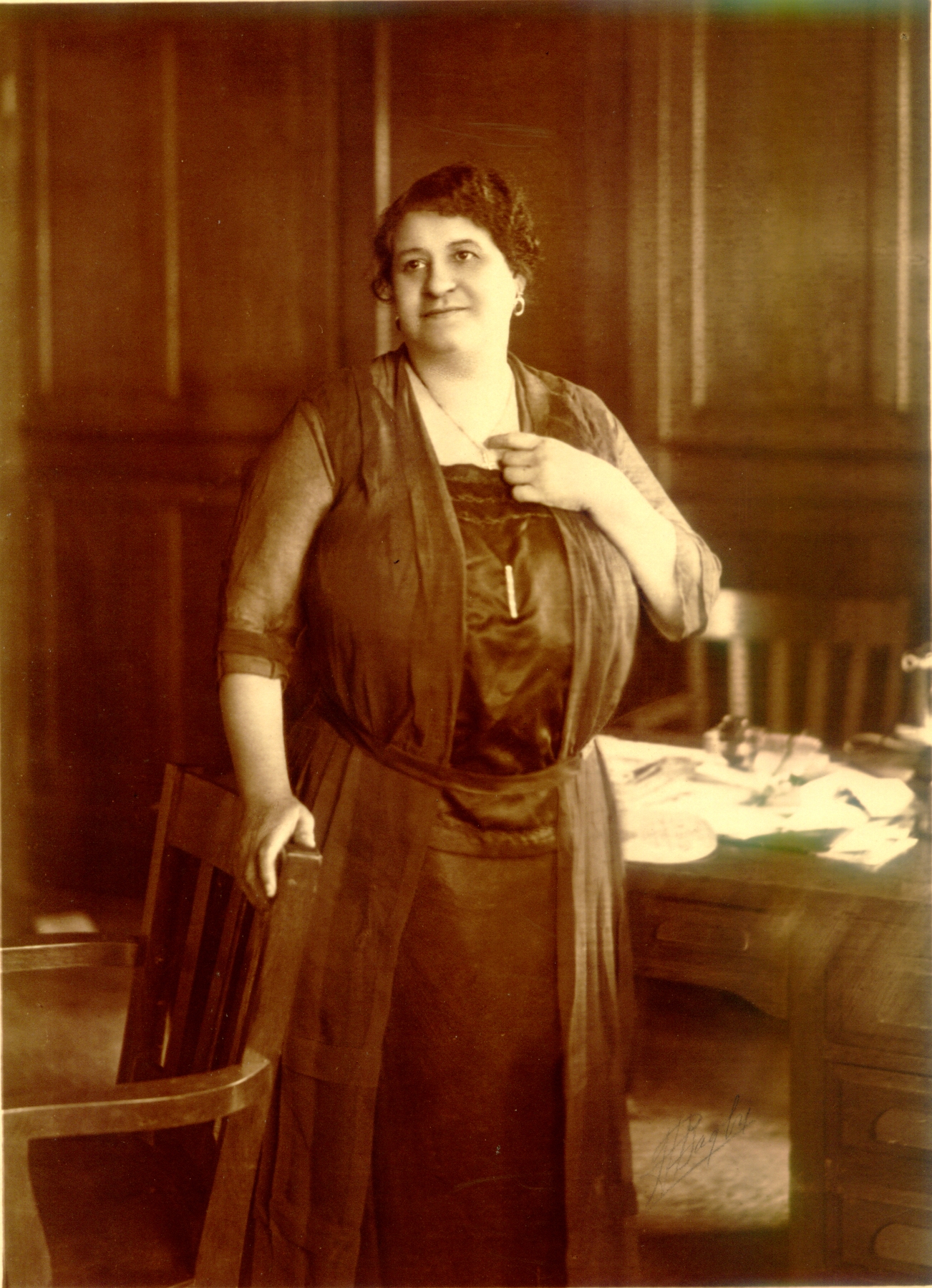
Walker was born in Richmond, Virginia, the capital of the Confederacy, two years after the end of the Civil War. Her mother married less than a year after she was born and for the first few years, Walker enjoyed some financial security. But after her stepfather died when, she was nine, her mother struggled to support the family by taking in washing. Walker helped by delivering the laundry to clients and looking after her younger brother. She would later say, “I was not born with s silver spoon in my mouth, but with a laundry basket practically on my head.”
Despite these challenges, Walker managed to stay in school, graduating from the Richmond Colored Normal School in 1883 at the age of sixteen. (She was already a shin-kicker: she organized Richmond’s Black students to strike against the unequal graduation ceremonies held for Black and white students.[2] ) For the next three years she taught grade school in Richmond’s public school system. That ended when she married Armisted Walker, whose father owned a successful brick-making and construction business.
Instead of trying to fight against the laws that made it illegal for married women to teach in the public schools, she found her cause in the Independent Order of St Luke (IOSL) , a fraternal insurance society established by a free Black woman named Mary Prout in Baltimore in 1867. IOSL was devoted to mutual aid for its members as well as providing life insurance policies, which were originally intended to make it possible for families to afford funerals and burial plots.
Walker joined IOSL at the age of fourteen. After her marriage, she began to quickly rise through its ranks. In 1890, she was named the Right Worthy Grand Secretary-Treasurer of the organization. IOSL was in financial trouble, with $31.76 in assets and more than $400 in unpaid bills, and on the verge of closing. Walker brought the organization back to solvency: by 1927, IOSL had 103,000 members in 24 states and more than $450,000[3] in assets. It had paid out more one million dollars[4] in death benefits.
Walker wanted IOSL to do more. At its annual meeting in 1901, Walker outlined a bold vision for financial security beyond the ability to buy a burial plot. She said that the organization should open its own department store, which would provide jobs for the community and support black-owned supplies. They should publish a newspaper, which would allow them to share news about the order and the community—and attract new members in the process. But she told her listeners “first we need a savings bank. Let us put our moneys together; let us use our moneys; let us put our money out at usury among ourselves, and reap the benefits ourselves. Let us have a bank that will take the nickels and turn them into dollars.”
Over the course of the next few years, Walker successfully opened the St. Luke Emporium, the St. Luke Herald, which rapidly became a platform for civil rights advocacy, and finally the St. Luke Penny Savings Bank. Walker was the bank’s first president. Under her leadership, the bank helped hundreds of Black families, who had found it difficult if not impossible to borrow from white-owned banks, to buy homes, start businesses, and build wealth, helping to build a Black middle class by creating generational wealth.
Walker continued to lead the bank and IOSL even as her health failed from diabetic complications. When she became confined to a wheelchair, she had a desk built that would accommodate the chair and carried on. She successfully led the St Luke Penny Savings Bank through the Great Depression, when many other banks failed. When she arranged for the bank to merge with two other Black-owned banks in Richmond, she became chairman of the board, a position she held until her death.
Not surprisingly, Walker was an advocate for civil rights in general and a supporter of the women’s suffrage movement. She advocated for education and jobs, especially for Black women—a position on which she led by example at the St. Luke Penny Savings Bank. She supported voter registration drives and a boycott against the segregated street car system in Richmond. She was a co-founder of the Richmond chapter of the NAACP and organized the first black Girl Scout troop in the South.
Today her home in Richmond is a historic site, run by the National Park Service. I’m adding it to my list of places to visit.
[1] No relation to Madame F. J. Walker (1867-1919), founder of the eponymous hair care products company and the first self-made female millionaire in the United States. I feel like Madame C.J. Walker’s story is well-known enough that I don’t need to tell it here. If I’m wrong, let me know.
[2] I went down a rabbit hole on the question of whether I should also capital white in this context. There are a lot of different opinions out there. But the position taken by the Columbia Journalism Review made sense to me. To quote the Review’s style guide: “
At the Columbia Journalism Review, we capitalize Black, and not white, when referring to groups in racial, ethnic, or cultural terms. For many people, Black reflects a shared sense of identity and community. White carries a different set of meanings; capitalizing the word in this context risks following the lead of white supremacists.”
I’m sticking to this position until someone convinces me otherwise. If you want to read the Review’s analysis, you can find it here.
[3] More than eight million dollars today
[4] More than 40 billion dollars today