




Talking About Women’s History: A Whole Lot of Questions and an Answer with Allison Tyra
Allison Tyra is the creator of Infinite Women, an online biographical database launched in 2020 that has grown to include more than 9,000 women’s stories from around the world, throughout history and across different areas of impact. She launched the weekly podcast of the same name in 2023 and also makes short-form videos for YouTube. Her first book, Uncredited: Women’s Overlooked, Misattributed, and Stolen Work (2025) came out of this work as she kept seeing the same patterns repeated across the huge range of women’s history and wanted to dispel myths around women’s capabilities by showing how their work and accomplishments have been downplayed and covered up by sexist forces.
Take it away, Allison!

What inspired you to start Infinite Women?
It’s very common to see listicles of “Five women artists you should know” or “Eight women scientists who changed the world” and so on, but there are never just five or eight women. So, being my spreadsheet-loving self, I started a list – that spreadsheet is now 240,000+ and constantly growing. It’s the kind of project that will never be completed, because there are always more women to find.
How do you chose the women whose biographies you post on the website?
All of my work is built on the work of others, from my books to the database to, of course, the podcast. While I do write some of the bios myself, the vast majority are shared with permission from other sources. So the biggest factor is what it’s available from other sources I can find. But that includes thousands of bios, so within that pool, I typically prioritize under-told stories and increasing the diversity and range of women in the database. The less representation a group has, the more I want to increase it, whether that’s disability, queerness, race or simply being from a less common category like architecture or archeology. I want people to be able to find as many examples of whatever kinds of women they’re looking for.
How do you choose the topics for your podcast episodes?
I don’t! My podcast is much broader than most, and I joke that I’ll talk about anything but cis dudes (and yet I somehow still get pitches from publicists wanting me to talk about them!). So that gives me the freedom to invite authors, historians, curators, etc. to just come and talk about their work. Sometimes something will catch my eye, like a book that looks interesting or something I see on Bluesky and I’ll invite the relevant person for a chat. But my only strategy is that I want to talk to people about interesting topics that they’re passionate and knowledgeable about, whether that’s a scandal in colonial Mexico or Ottoman wedding trousseaus.
You are also the author of Uncredited: Women’s Overlooked, Misattributed and Stolen Work, which includes more than 600 stories from throughout history and around the world. How did you choose the stories? Were there stories you were unhappy to leave out?
I describe my research for Uncredited as “passive” – other than a few internet searches for relevant keywords and phrases, I mostly just Venus fly trapped my way through, making notes each time I’d come across a story. This obviously happened a lot with my Infinite Women work, and I was fortunate not to have to cut any – in fact, I have 30 pages of links and notes with even more stories I’ve come across since then! Like I say, there’s always more women to find…
What was the most surprising thing you’ve found doing historical research for your work?
From a gendered standpoint, it was not only how much women’s history gets left out, but how hard patriarchal forces have to *work* to keep women out and cover up their stories. In Uncredited, I differentiate between what you might call neglect and intentional harm – the difference between the sexist assumption a woman was an assistant when she was an equal partner (or a model rather than one of the women actually programming the ENIAC computer!) and a man actively stealing credit from a woman.
What do you find most challenging or most exciting about researching historical woman?
I love patterns. I think the value I bring to the field is that while most people are focused on specific areas, I’m looking at such a broad (pun intended) picture that I can connect dots that those folks might not see, across time and place and fields of work. That’s really what Uncredited does, breaking down “we know women are as good as men, so why haven’t I heard of more women?” from “sexism… duh” into the specific mechanics of how that sexism plays out in real time and retroactively regardless of when and where and what profession we’re talking about. I over-analyze everything, so it’s nice to be able to apply it to something useful!
What work of women’s history have you read lately that you loved? (Or for that matter, what work of women’s history have you loved in any format?)
I just finished Mattie Kahn’s Young and Restless: The Girls Who Sparked America’s Revolutions, which I really enjoyed. I’m currently reading Chop Fry Watch Learn: Fu Pei-mei and the Making of Modern Chinese Food by Michelle T. King, and if that sounds like your jam, I adored Mayukh Sen’s Taste Makers: Seven Immigrant Women Who Revolutionized Food in America as well.
Not so much history, but my two feminist “I love this book, everyone should read it” recommendations are Caroline Criado Perez’s Invisible Women: Exposing Data Bias in a World Designed for Men and Soraya Chemaly’s Rage Becomes Her: The Power of Women’s Anger.

A question from Allison: We all know history narratives are shaped by individual and societal biases. As someone who tells these stories, what advice do you have for trying to identify and offset those biases in historical source materials, and to be aware of and minimize any you might have, to tell as accurate a version of history as possible?
These are question I struggle with all the time, and there are no easy answers.
I learned the most basic lesson about this my second week in graduate school in an independent study with my advisor, the great Barney Cohn. The structure was simple. He assigned a book. I came back the next week to talk about what I had read. He proceeded to blow my brain up. In our second session, and first real discussion, I was prattling happily about what I had read[1]. He stopped me and asked “What’s the source of that information?” I stammered a non-answer to a question it hadn’t occurred to me to ask. He then gave me an introductory primer on the inevitable bias in sources, particularly in the context of the colonial world. Asking “What’s the source of this information? What are the biases?” has been an intrinsic part of my process ever since. Sometimes, particularly in my book Women Warriors, the discussion of those questions becomes a critical part of the book.
Checking for my own biases is more difficult. (How do you see your way around a blind spot?). These days a large part of my personal work—as a historian, an American, and a human being–is coming to terms with the disjunction between the history we were taught and the history that was left untold. When that disjunction leaves me feeling sick at my stomach, I know I’ve come up against one of those blind spots. As I’ve said before on this blog, history is hard and I’ve come to believe it should be.
[1] I don’t remember what the book was. And I doubt if it matters. I suspect the result would have been the same no matter what.
***
Want to learn more about Allison and Infinite Women?
Check out her website: https://www.infinite-women.com/
Explore the Infinite Women biographical database: https://www.infinite-women.com/infinite-women/
Listen to the weekly Infinite Women podcast: https://www.infinite-women.com/podcast/
Watch the short Infinite Women videos on YouTube: https://www.youtube.com/@infinite_women
Check out her book: Uncredited: Women’s Overlooked, Misattributed, and Stolen Work (2025): https://www.infinite-women.com/books/
Sign up for the weekly Infinite Women newsletter: https://www.infinite-women.com/weekly-newsletter/
***
Come back tomorrow for four questions and an answer with Joanne Mulcahy
Talking About Women’s History: Three Questions and an Answer with Anya Jabour
Anya Jabour has been studying, researching, teaching, and writing about US women’s history for more than three decades. Her latest book, Matters of Sex: Katharine Bement Davis and America’s First Sexual Revolution, is forthcoming from NYU Press in Fall 2026. You can learn more about her and her work at her website.
Take it away, Anya!

In your biography of Sophonisba Breckinridge and in your forthcoming “Matters of Sex”: Katharine Bement Davis and America’s First Sexual Revolution you write about women who were social reformers in the Progressive Era whose stories have been underreported. When did you first become interested in this period and these women? What sparked that interest?
My interest in the Progressive Era originated with my teaching. My early research and publications centered on the Old South, but the more I taught about the Progressive Era in my two-semester survey of US women’s history, the more intrigued I became by the incredible array of reform activity American women undertook and how much they accomplished, mostly without voting rights—and, of course, by how their passion for reform led many of them to advocate for women’s suffrage.
My interest in both Sophonisba Breckinridge and Katharine Bement Davis, while related to my interest in the Progressive Era, came about a bit differently. All of my book projects have, in one way or another, come out of the preceding book project. In the case of Breckinridge, after spending so much time with “southern schoolgirls” for my book Scarlett’s Sisters, I wanted to learn more about southern schoolteachers. I stumbled across Breckinridge while doing preliminary research for that potential project, and I was so struck by how she went from being a schoolteacher to a social reformer that I just had to know more. Since Breckinridge, the daughter of a Confederate officer, ultimately became a civil rights advocate in Chicago, this project also shifted my focus from the South to the North.
My Breckinridge biography then led to the Davis book. A Davis descendent, Francie Pepper, had found a treasure trove of primary sources—including Davis’s unfinished, unpublished biography—and was looking for a scholar with expertise on women in the Progressive Era who might be interested in undertaking a biography of her. My work on Breckinridge—who, like Davis, pursued a graduate degree in the social sciences at the University of Chicago—meant that I fit the bill. It was great timing, too, since COVID curtailed my ability to go on traditional research trips. Instead, for many months, I welcomed regular “history care packages” of photocopied materials from Francie’s personal collection of Davis sources, which gave me the starting point for the book.
I was especially excited to work on this project. I had taught about Davis’s pioneering sex study, Factors in the Sex Life of Twenty-Two Hundred Women (1929) in that same women’s history survey, but like many other women’s historians, I knew of her, but I knew very little about her. I think of this book as a sort of “Where’s Waldo?” project, since Davis is everywhere—a Google search brings up thousands of hits—and yet there’s not (yet) a full-scale biography of her. (Mine is forthcoming from NYU Press in Fall 2026.)
What is your favorite research tip for people who want to write about relatively obscure historical women?
One of my favorite essays on biographical research is Sherry Katz’s “Researching Around Our Subjects,” in the Journal of Women’s History (Vol. 20, No. 1, Spring 2008, pp. 168-186). In this essay, Katz explains the importance of focusing not just on the person’s own records, but also looking at all the surrounding people, organizations, and so forth. This “researching around” approach was really important for the Davis project, because there is no formal collection of Davis papers. While I had the great good fortune of having exclusive access to a family collection of Davis materials—which includes her unpublished autobiography as well as correspondence, clippings, and memorabilia—I supplemented these materials with a lot of “researching around” Davis.
For me, this meant tracing the people and places she mentioned and examining materials related to the many institutions, movements, and organizations with which she was affiliated. For instance, to learn about her experiences as a college student, I examined student scrapbooks and other materials at Vassar College, including the letters and diaries of some of her classmates. To learn about her work as the superintendent of Bedford Reformatory, I not only read the official annual reports and extensive coverage in period publications, but also the oral histories of an African American inmate, Mabel Hampton, at the Lesbian Herstory Archives.
To learn about her work at the Bureau of Social Hygiene, which sponsored her pioneering study of women’s sexuality, I consulted several collections at the Rockefeller Archive Center (RAC). Importantly, this meant going beyond the “hits” I got from catalog-level or finding-aid descriptions. Because I knew she was involved with the Committee for Maternal Health, for instance, I examined that collection at the RAC; even though her name was not indexed in that collection, it turned out to consist almost entirely of her extensive correspondence with the committee’s founder, progressive gynecologist Robert Latou Dickinson, which yielded some great insights.
To learn more about responses to her sex study, I found Google Books and HathiTrust enormously helpful, leading me to numerous advertisements for and reviews of her pathbreaking book. Finally, I found some otherwise invisible Davis-related materials at the Kinsey Institute by tracking footnotes in books by Donna Drucker (The Classification of Sex) and Joanne Passet (Sex Variant Woman), which allowed me to document just how influential her study was.
In part because of COVID-related shutdowns, I also relied heavily on research librarians, who I want to recognize as the superheroes of historical research. Research librarians at Smith College helped me to gain access to materials from the College Settlement Association, shedding light on Davis’s time leading a Philadelphia Settlement House. The diaries and photographs of Rochester resident and family friend May Bragdon, held and digitized at the University of Rochester, gave me greater insight into Davis’s family dynamics and personal life, and the research librarian there also provided me with additional materials from that collection. Finally, research librarians at Schlesinger Library helped me conduct more sophisticated keyword searches of thousands upon thousands of digitized materials held there, which expanded my understanding of Davis’s feminist activism on a variety of fronts.
In addition to teaching and writing, you work as a public historian. What does that encompass?
My introduction to public history came through a totally unexpected, but completely wonderful, opportunity to work as a historical consultant for the PBS Civil War docudrama, Mercy Street—for which you wrote the companion volume, Heroines of Mercy Street! [Pamela here: Women’s history is a small world!] In addition to my behind-the-scenes work, I had the opportunity to contribute to the show’s blog post series, “Mercy Street Revealed.” I found I really enjoyed writing short, accessible pieces on historical topics—and I loved the idea of reaching a bigger audience than I could ever hope to reach, even in decades of classroom teaching.
Thus, when I was working first on the Breckinridge book and then on the Davis study, I sought out new venues to write public-facing but deeply-researched pieces. The timing of the Breckinridge biography meant that a lot of these were op-eds for the Washington Post, which was then the host of the “Made By History” series (now at Time), since there were many striking parallels between Breckinridge’s work on behalf of meatpacking workers and recent immigrants and then-current events.
Some of my short pieces on Davis also have had tie-ins to contemporary politics, like a piece about the role ostensibly childless women have played in “maternalist” politics. But a lot of them have been more lighthearted pieces, including one about single women’s vacation homes in the Georgian Bay, and another about how bicycles liberated Victorian women.


-

- The book cover isn’t available, so I offer you Katharine Bement Davis, ca 1915
A question from Anya: With so many great books coming out all the time, how do you decide what should be next on your TBR list?
I’m not sure that “decide” or “next” actually describe my approach to what gets read when.
I buy books that catch my imagination, and add them to the shelves, with no sense of when they will be read. I pull books off my shelf or order them because they feel related in some way to a project I’m working on, (A whole stack of women’s history that is adjacent to the proposal I’m working is sitting on the floor next to the reading chair in my office as I write this. I’ve been dipping in and out of them as and when one calls my name.) Other books track me down after years of sitting on my shelves—Lord Macartney’s journal of his embassy to China in the mid eighteenth century recently ambushed me and has joined the pile of books next to the reading chair downstairs. I read them in little bites.
In short, it is all pretty random. And I’m fine with that. It doesn’t hurt to have a little randomness in what is otherwise a pretty regimented orderly life.
***
Come back tomorrow for a lot of questions and an answer with Allison Tyra, host of the podcast Infinite Women.
Looking Forward to Women’s History Month
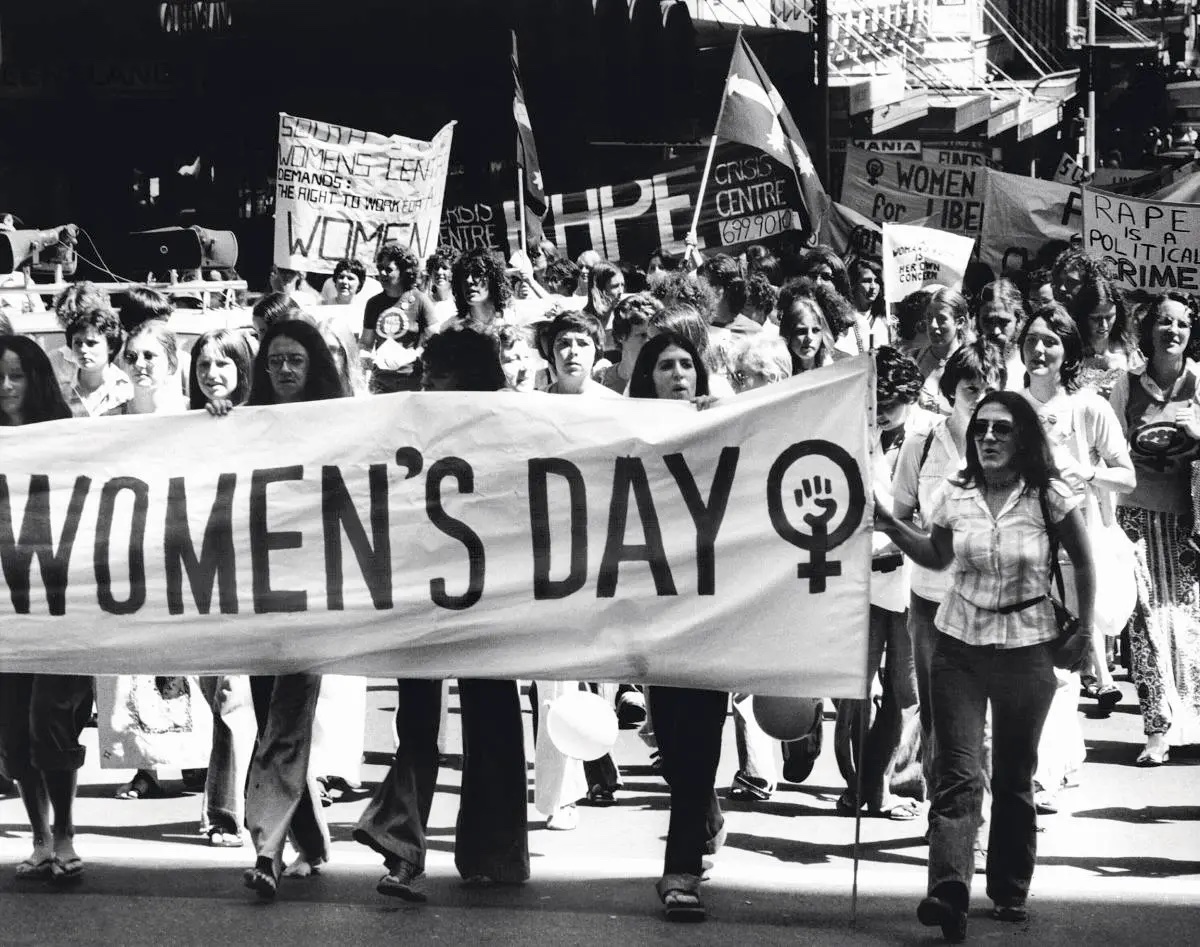
In case you missed the memo, March is Women’s History Month. As far as I’m concerned, it is more important than ever to celebrate the accomplishments of women in the past. As I have for the last seven (!) years, I’m hosting a series of mini-interviews with people doing interesting work related to women’s history in a variety of fields, with a wide range of subjects, activists, artists, novelists, politicians, and even serial killers! Unlike the rest of the year, there will be new posts Monday through Friday.
If you’re eager to get a head start, you can read interviews from prior years here.