




From the Archives: The Crusades from A Different Perspective
In every book I write I reach the point where I am so deep in the work that I have to stop writing blog posts and newsletters. I always hope to avoid it. That somehow I’ll be smarter, or faster, or more organized, or just more. This time I’ve managed to avoid hitting the wall for several months by cutting back to one post a month. But the time has come. For the next little while, I’m going to share blog posts from the past. (This one is from 2014.) I hope you re-discover an old favorite, or read a post that you missed when it first came out.
There will be new posts in March no matter what: we celebrate Women’s History Month hard here on the Margins. (I have some fascinating people lined up.)
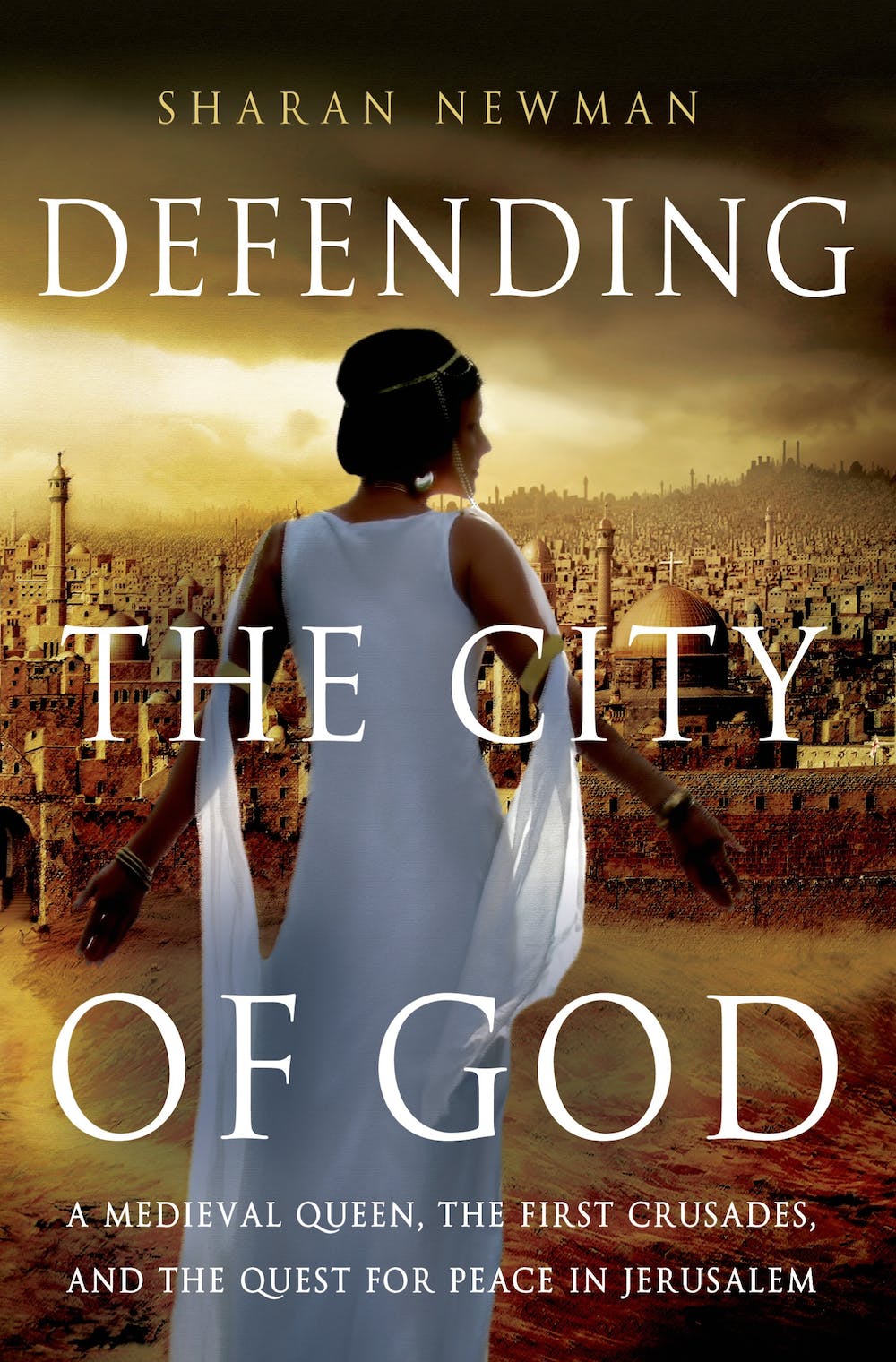
Recently I’ve been reading Sharan Newman’s Defending The City of God: A Medieval Queen, The First Crusade And The Quest for Peace In Jerusalem. It was a perfect read for March, which was Women’s History Month.*
Newman tells the story of a historical figure who was completely new to me. Melisende (1105-1161) was the first hereditary ruler of the Latin State of Jerusalem, one of four small kingdoms founded by members of the First Crusade. Her story is a fascinating one. The daughter of a Frankish Crusader and an Armenian princess, Melisende ruled her kingdom for twenty years despite attempts by first her husband and then her son to shove her aside. Even after her son finally gained the upper hand, Melisende continued to play a critical role in the government of Jerusalem. Those few historians who mention Melisende at all tend to describe her as usurping her son’s throne.** Newman makes a compelling argument for Melisende as both a legitimate and a powerful ruler. (In all fairness, this is the kind of argument I am predisposed to believe.)
Fascinating as Melisende’s story is, Newman really caught my attention with this paragraph:
Most Crusade histories tell of the battle between Muslims and Christians, the conquest of Jerusalem and its eventual loss. The wives of these men are mentioned primarily as chess pieces. The children born to them tend to be regarded as identical to their fathers, with the same outlook and desires. Yet many of the women and most of the children were not Westerners. They had been born in the East. The Crusaders states of Jerusalem, Edessa, Tripoli, and Antioch were the only homes they knew.
Talk about a smack up the side of the historical head!
If you’re interested in medieval history in general, the Crusades in particular, or women rulers, Defending the City of God is worth your time.
* It was also nice to spend some time in a warm dry place, if only in my imagination. Here in Chicago, March came in like a lion and went out like a cold, wet, cranky lion.
** To put this in historical context. Melisende’s English contemporary, the Empress Matilda (1102-1167) was the legitimate heir to Henry I. After Henry’s death, her cousin Stephen of Blois had himself crowned king and plunged England into a nine-year civil war to keep her off the throne. Apparently twelfth century Europeans had a problem with the idea of women rulers.
From the Archives: Eighty Days
In every book I write I reach the point where I am so deep in the work that I have to stop writing blog posts and newsletters. I always hope to avoid it. That somehow I’ll be smarter, or faster, or more organized, or just more. This time I’ve managed to avoid hitting the wall for several months by cutting back to one post a month. But the time has come. For the next little while, I’m going to share blog posts from the past. (In this case a review of one of my favorite books.) I hope you re-discover an old favorite, or read a post that you missed when it first came out.
There will be new posts in March no matter what: we celebrate Women’s History Month hard here on the Margins. (I have some fascinating people lined up.)
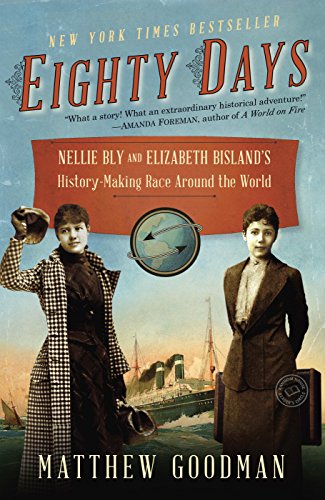
On November 14, 1889, Nelly Bly, reporter for the popular newspaper The World, sailed from New York on the trip that would make her famous: an attempt to travel around the world in less than eighty days. Eight and a half hours later, unknown to Bly, the literary editor of the monthly magazine, The Cosmopolitan, boarded a westbound train in a reluctant and largely forgotten attempt to beat Bly around the world. Matthew Goodman tells their story in Eighty Days: Nellie Bly and Elizabeth Bisland’s History-Making Race Around the World.
Goodman emphasizes both the differences and the surprising similarities between the brash investigative reporter from a Pennsylvania coal town and the southern lady who educated herself in a ruined plantation’s library. Alternating between their experiences, he contrasts their reactions to publicity, their fellow travelers (especially the British), and the new cultures they encounter. Even knowing that Bly will win, the race is a page-turner, complete with storms at sea, damaged ships, nearly missed connections, the kindness of strangers, and a hair-raising train ride through western mountains.
Although the race is engaging in its own right, Eighty Days is more than an adventure story. Goodman does not limit himself to a step-by-step narrative of his heroines’ travels. Instead he uses the race to illustrate the social impact of new modes of transportation, a growing popular press, and new opportunities for women. The result is a social history of America on the verge of modernity.
From the Archives: Woodrow Wilson in Love
In every book I write I reach the point where I am so deep in the work that I have to stop writing blog posts and newsletters. I always hope to avoid it. That somehow I’ll be smarter, or faster, or more organized, or just more. This time I’ve managed to avoid hitting the wall for several months by cutting back to one post a month. But the time has come. For the next little while, I’m going to share blog posts from the past. I hope you enjoy an old favorite, or read a post that you missed when it first came out.
There will be new posts in March no matter what: we celebrate Women’s History Month hard here on the Margins. (I have some fascinating people lined up.)

In honor of Valentine’s day, I want to share one of my favorite stories about President Woodrow Wilson, reported by Secret Service agent Edmund Starling in his memoir of the Wilson White House:*
En route to his honeymoon destination with his second wife, Edith Bolling Galt Wilson, the president was seen dancing a jig by himself and singing the chorus of a popular song: “Oh you beautiful doll! You great big beautiful doll…” Starling reports that the president even clicked his heels in the air.
Look closely at the portrait of the president at the top of this post. Add a top hat, pushed back. Picture him dancing and singing. Makes me smile every dang time.
Now if you’ll excuse me, I’m off to give My Own True Love a kiss. I may even click my heels in the air and sing a love ditty.
*My apologies to those of you who’ve read it here before or heard me tell the story in person (complete with song and dance step).