




In which I vote
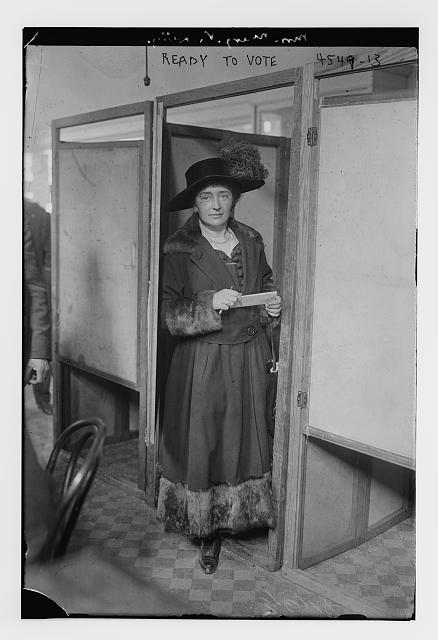
I am writing this on Tuesday morning. Earlier today I walked across the street to vote.* Those of you who have hung around here on the Margins know how much I love to vote, but I approached the polls today with a serious lack of enthusiasm. The day was cold and wet and the choices on the ballot were uninspiring. It was clear watching from my office window** that I was not the only unenthusiastic voter in the 4th ward. Instead of the usual mass of poll watchers lining the sidewalk, there was one lone man in a clear plastic poncho. Voters came one at a time, with long gaps in between.
I sucked it up and headed out, because voting is important. (Normally I would say thrilling, but I wasn’t feeling it.)
The man in the clear poncho met me on the sidewalk at the appropriate distance from the polling place door. I was pleased to be able to tell him that I planned to vote for his candidate and told him how impressed I was that he was out in what was really unpleasant weather.
He smiled. “I’ve been here since 5:30.”
I walked into the school auditorium feeling a little better because one man cared enough about local politics to stand in the rain at 5:30 in the morning talking to voters.
Once inside, there was no energy in the room. I was the only voter. The election judges were drooping. (In fact, the woman next to the machine you feed the ballots into was asleep.) I voted: two quick marks, one for mayor and one for alderman. When I handed my ballot sleeve and marker back to the election judge, he said, almost by rote, “Thank you for voting.”
Back in the days when I lived in a predominately Black neighborhood, the right answer to that was “It’s a privilege.” I decided to go for it.
“It’s a privilege,” I said and smiled. I felt better even as I said it.
Three election judges sat up straight and smiled back. “Yes, it is,” one of them one of them said, with an emphatic nod. “It surely is.”
I bopped back across the street, happier than when I walked out the door. Because voting is a privilege. One worth defending.
* Yes, my polling place is directly across from my front door.
**Again, right across from the polling place
From the History in the Margins Archives: The 6888th Delivers the Mail
I know you’re tired of hearing it–and believe me, I’m tired of saying it–but I am deep deep deep in book mode. My manuscript is due May 1 (I’ll let you do the math) and I have a lot of work yet to do. So for the next few weeks, you can expect a couple of guest posts, a review of a book that I’m really excited about sharing, and more posts from the archives. Up first, this post from 2019 that I think is a nice way to keep the Women’s History Month excitement going for a few more days.
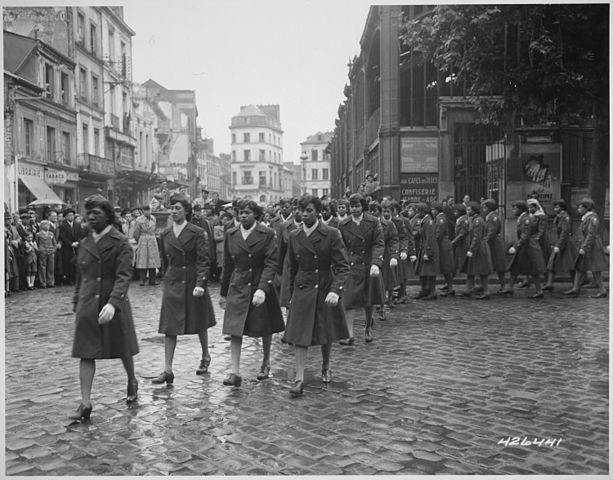
In 1945, the U.S. military was seriously behind in delivering the mail to Americans stationed in the European theater. There was a two-year backlog of letters and packages addressed to some seven million soldiers and aid workers. The thankless job of sorting through a warehouse full of undelivered mail was assigned to the 855 African-American women of the 6888th Central Postal Directory Battalion, also known as the “Six Triple Eight,” under the command of Major Charity Adams Early.
Part of the Women’s Army Corps (WAC), the women of the 6888th took the motto “No mail, low morale.” They arrived in Birmingham, England in February 1945, and set to work in unheated and poorly lit warehouses that were stuffed to the ceiling with undelivered packages and letters. (Including undelivered goodies that made the local rodent population very happy.) For three months, they worked three eight hour shifts each day, seven days a week, sending out 65,000 letters each shift.
The sheer volume of undelivered mail was a challenge. But it wasn’t the only challenge. Some of the mail was, shall we say, optimistically addressed: ”Junior. US Army” Even properly addressed mail was difficult to deliver. There were, for instance, 7,500 Robert Smiths stationed in the European theater and frontline soldiers were constantly on the move. In order to make their job easier, they created a system of information cards with serial numbers, one for each soldier—similar to a library card catalog back in the days when catalogs used actual cards.
The 6888th was the only all African-American female unit sent overseas during World War II. Despite the fact that they were making a valuable contribution to the war effort, the battalion suffered the same racial discrimination in the Army as they did in civilian life. They slept in segregated barracks and ate in segregated mess halls. As Major Early recalled, “ We didn’t mix it up. We were segregated in two ways, because we were black and because we were women.” Although white WACS and African-American soldiers were welcomed to a local club for American enlisted personnel run by the American Red Cross, the women of the Six Triple Eight were not allowed to use its facilities. When the Red Cross offered them alternative segregated facilities, Major Early and her women boycotted them and ran their own. Some members of the battalion felt they were treated better by the local people than by their fellow American soldiers.
Once the backlog in Birmingham was cleared, Six Triple Eight was transferred first to Rouen, and later to Paris, to deal with more stashes of undelivered mail.
In February, 1946, with the war over, they returned to the United States and the unit was disbanded. But for twelve months, neither snow, nor sleet, nor broken windows, nor badly addressed envelopes kept them from moving the mail on its appointed rounds.
Women’s History Month comes to an end, again
Back in November, I wondered whether I should run this interview series again this year. As I may have mentioned a time or ten, I’m trudging toward the first big deadline on this book. And while it may not be obvious, putting this series together takes time and energy. I changed my mind several times before I came to the conclusion that doing this project each year is important to me. (Not to mention fun.) I hope it is important to some of you, too. (Not to mention fun.)
Over the last few months I’ve had a chance to interact with some of my history-writing heroes, and find some new ones. I’ve added books to my TBR list and followed new people on Twitter.* I’ve promoted people who are doing wonderful work in our shared project of putting women back into history. And I’ve enjoyed being part of the online celebration of Women’s History Month. (And I’ve tried to answer some really hard questions—this year people posed some doozies!) I hope you’ve enjoyed it as much as I have.
As always, I feel a little deflated as the month comes to an end—it’s a little like the first week of January after the holiday season is over. And yet, much as I love the sense of celebration, I wish we didn’t need Women’s History Month, or Black History Month, or any of the other history months and heritage months that now mark our calendars. I wish history as we learn it would include people who were not as a center as a matter of course. That we didn’t have to put up big flashing signs that say “WE WERE THERE” once a year to remember. I don’t think that’s coming any time soon. In fact, I fear that Women’s History Month and its sister celebrations are more important than they ever were.
Dang it.
*And yes, I realize Twitter could crash and burn at any moment. But I haven’t found any social media format that suits me quite so well.
***
Over the next few weeks, you can expect a couple of guest posts, a review of a book that I’m really excited about sharing, and more posts from the archives. May 1 is coming really soon.