




Talking About Women’s History: Two Questions and an Answer with Carol Berkin
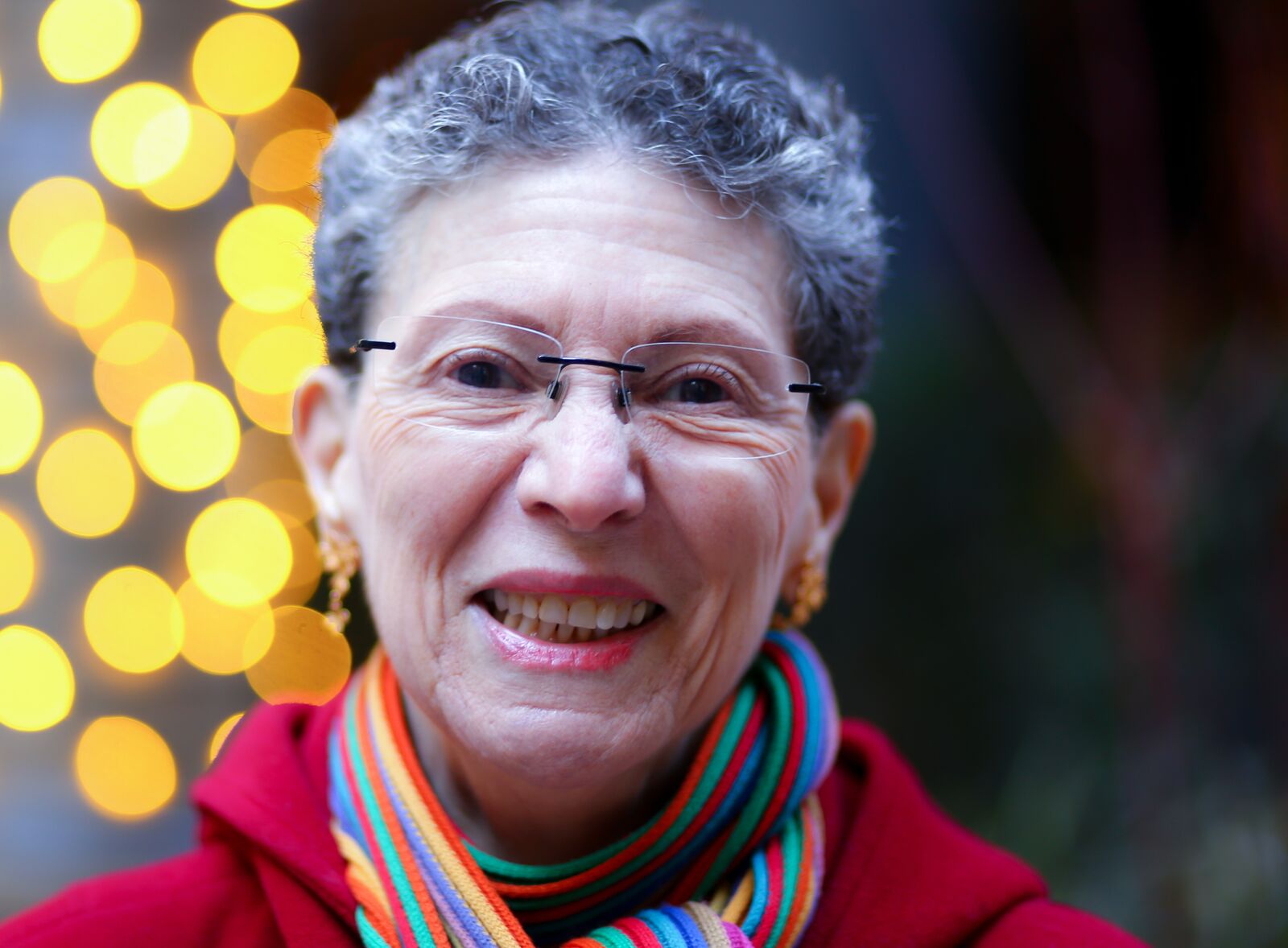
Carol Berkin is Presidential Professor of History, Emerita, of Baruch College & The Graduate Center, CUNY. She received her B.A. from Barnard College and her PhD from Columbia University where her dissertation received the Bancroft Award in 1972. She has written extensively on women’s history and on the American Revolution, the creation of the Constitution, and the politics of the early Republic. Her books include Jonathan Sewall: Odyssey of an American Loyalist [Columbia University Press] which was nominated for the Pulitzer Prize; co-editor of Women of America: A History [Houghton Mifflin & Company], the first published collection of original essays in American women’s history; First Generations: Women in Colonial America [Hill & Wang]; A Brilliant Solution: Inventing the American Constitution [Harcourt], awarded the Colonial Dames of America Book Prize; Revolutionary Mothers: Women in the Struggle for American Independence [Knopf]; Wondrous Beauty: The Life and Experiences of Elizabeth Patterson Bonaparte [Knopf] ; The Bill of Rights: The Struggle to Secure America’s Liberties [Simon and Schuster]; and most recently, A Sovereign People: The Crises of the 1790s and the Birth of American Nationalism. She has appeared in over a dozen documentaries on colonial, revolutionary, and civil war history, given lectures on her specialties at major universities in the United States and England, and participated in faculty development across the country under the U.S. Department of Education’s Teaching American History Grant Program. She has directed summer institutes for The Gilder Lehrman Institute of American History, Mount Vernon, and the NEH. She has served on the board of the National Council for History Education, the Staten Island Historical Society, and the Society of American Historians and on the Scholars Board of the New-York Historical Society’s Center for the Study of American women. She is a frequent participant in the New-York Historical Society’s lecture series, and is also the editor of the Gilder Lehrman online journal, History Now. Her favorite pastime is doting on her three grandchildren, Talulla, Noa, and Asher.
All I can say is, wow! Take it away, Carol!
You’ve written about a lot of interesting women. Do you have a favorite?
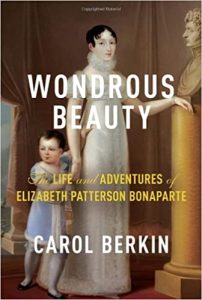
I am especially glad I had the chance to write about Elizabeth Patterson Bonaparte whose story I told in my book Wondrous Beauty: The Life and Adventures of Elizabeth Patterson Bonaparte. Elizabeth – or Betsy as she was called– was born in the late 18th century, the daughter of a wealthy Baltimore merchant, and she was by all accounts one of the most beautiful and brilliant women of her generation. She was restless and unhappy as a young woman, for she believed she belonged on a larger, less constricting and more sophisticated stage than the young republic had to offer a woman. She considered her native country a cultural backwater, its men consumed by money-making and its women content to live narrow lives as wives and mothers. She longed for the excitement and intellectual stimulation of European culture. Her discontent drove a wedge between her and her father whose rags to riches story left him obsessed with respectability and deeply socially conservative. At 17 Elizabeth’s wildest dreams came true: she met the youngest brother of Napoleon Bonaparte, an 18 year old naval officer who was visiting America. Jerome Bonaparte was, in fact, spoiled, selfish, and a womanizer but all she saw was his French manners and his charm—and her way to escape the mundane life of a genteel American woman. They married against her father’s wishes and, as they soon learned, against Napoleon’s as well. The emperor offered his brother an ultimatum: renounce this marriage, marry a member of the European nobility, and I will make you a king of one of the German territories I control , or, remain married to this commoner and I will disown you. Jerome Bonaparte chose option one, abandoning his young wife and her infant son without hesitation.
But this was far from the end of Betsy’s story. She pulled herself together, refused to ever depend on a man again, dared to take herself alone to Paris and London and later to Italy and Switzerland—breaking all the rules for well -behaved elite American women! Men fell in love with her by the dozens but she never considered marrying any of them. Instead, after becoming the belle of French literary salons—admired not only for her beauty and wit but her intelligence, she discovered to her delight that she did not need to bask in the light of a man; she could achieve her goals independently. Unfortunately, she focused most of her emotional energies on a long campaign to force the Bonaparte family to acknowledge her son and only child as a legitimate heir to the French imperial throne. For decades she pursued this dream, despite her son’s lukewarm response to her vision of a life among the royalty of Europe. In the end she failed, rejected by the Bonaparte heirs and, in her eyes, betrayed by her son who married an American heiress and settled contentedly into the bourgeois world of the US that she so despised.
Betsy’s only other consuming passion was financial independence and she proved to be a shrewd business woman and investor. She became the first self-made female millionaire of the 19th century, ironically engaging in exactly the money-grubbing she condemned in her father and American businessmen in general. In older age she returned to Baltimore, where she made clear her continued rejection of female domesticity; she refused to set up housekeeping in any of the properties she owned. She lived until her 90s in a rented room., surrounded by memorabilia and ball gowns from her days as the belle of Paris and Florence. She grew increasingly bitter and eccentric and could be seen, carrying her parasol and a large handbag as she went door-to-door collecting the rents from tenants in her many properties. Yet she retained her beauty and her wit. When she was 94 a local newspaper reporter visited her and wrote that she remained a “wondrous beauty.” She died soon afterward, refusing to be buried in the Patterson family cemetery. As she wrote: “I have lived alone and I will die alone.”
Many readers of my biography disliked Elizabeth Patterson Bonaparte. They consider her selfish and cold, and they see her life as a tragedy marked by her obsession with elevating her son to the throne. But I admired her. Imagine what it took to carve an independent path as a genteel woman in late 18th and pre-civil war America! She fulfilled her dreams, all on her own. She unleashed her intellectual talents, outdid her father and brother’s financial skills, traveled widely on her own when this was considered scandalous in America, and did not succumb to the many appeals by men to marry and be “taken care of.” She was witty, brilliant, and valued her mind over her looks. Her faults were many, but her strength of character allowed her to defy her moment in time and place and live as an individual rather than be defined by the female roles of her day. I say, Brava for her!
What do you find most challenging or most exciting about researching historical women?
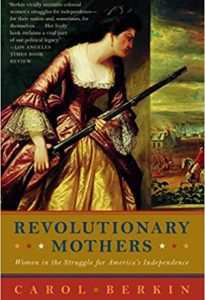
There is such satisfaction to be able to look into the mirror of the past and see a female face. [<<Emphasis Pamela’s.] This is what the decades of women’s history since the 1970s has allowed me and sister colonial historians to do, and, I like to think, it has allowed young women of every generation since we began to reconstruct the American female past the same satisfaction. It was extremely challenging yet exciting in the early years; we were told we would not find any sources and, even if we uncovered some, they would tell us little about what was important about our 17th and 18th century beginnings. In fact, well -meaning male advisors urged us not to jeopardize our careers by diverting our attention to this irrelevant topic. To our delight we proved them wrong. Buried in the archives, under labels like “Miscellaneous Documents,” or in the papers of famous men as simply “Other material” were a treasure trove of diaries, letters, poems and accounts of white women’s lives during the centuries of settlement and Revolution that allowed the voices of women to be heard at last. Then, archeology and anthropology and computer skills began to let us write the stories of African American, Native American, and poor white women, few of whom left written records but whose collective portraits could at last be painted. Soon new ways of theorizing about women’s experiences and roles in their societies deepened our understanding. And a new interest in how men learn their gender roles grew out of our efforts to discover how female roles were inculcated and enforced. All of these developments were exciting. Slowly our profession has come to realize that old models of “what happened and why” had to be abandoned once women were seen as active agents in shaping our past. For example, my book, Revolutionary Mothers, joined earlier pioneer works in showing that the Revolution could not be adequately or accurately understood until women’s many roles in its unfolding were written into the narrative of the struggle for independence.
A question from Carol: In Alice Through the Looking Glass, the White Knight and Alice are living chess pieces on a chess board. Alice cannot understand why it is so hard to move across that board and win the game. The Knight explains to her that, sadly, in this world, you have to run twice as fast just to stay in the same place. What do you think can be done —or is being done —today to ensure that the fight for women’s equality will not be stuck running hard to stay in the same place?
That is the bazillion dollar question, isn’t it?
Ultimately, I think the answer is the same for women’s equality as it is for democracy in general: Don’t take what we have for granted. Don’t expect someone else to do the work.
Easy to type. Hard to do.
***
Come back tomorrow for three questions and an answer with cabaret performer Fiona-Jane Weston
Talking About Women’s History: Three Questions and an Answer with Deborah Wastell
Deborah Wastell is an actor, writer, and theatre maker. She is the co-founder and artistic director of “The Female Edit” and in 2022 she created the podcast “Dinner Party Dames” where each episode she talks to a different guest and together they co-host a dinner party where all the guests are interesting women who her co-host would like to invite to their ideal dinner party. She lives in London with her husband and their Miniature Schnauzer, Ripley, named after Lieutenant First Class Ellen Ripley… a strong contender for Deborah’s own Dinner Party guest list.
Take it away, Deborah!
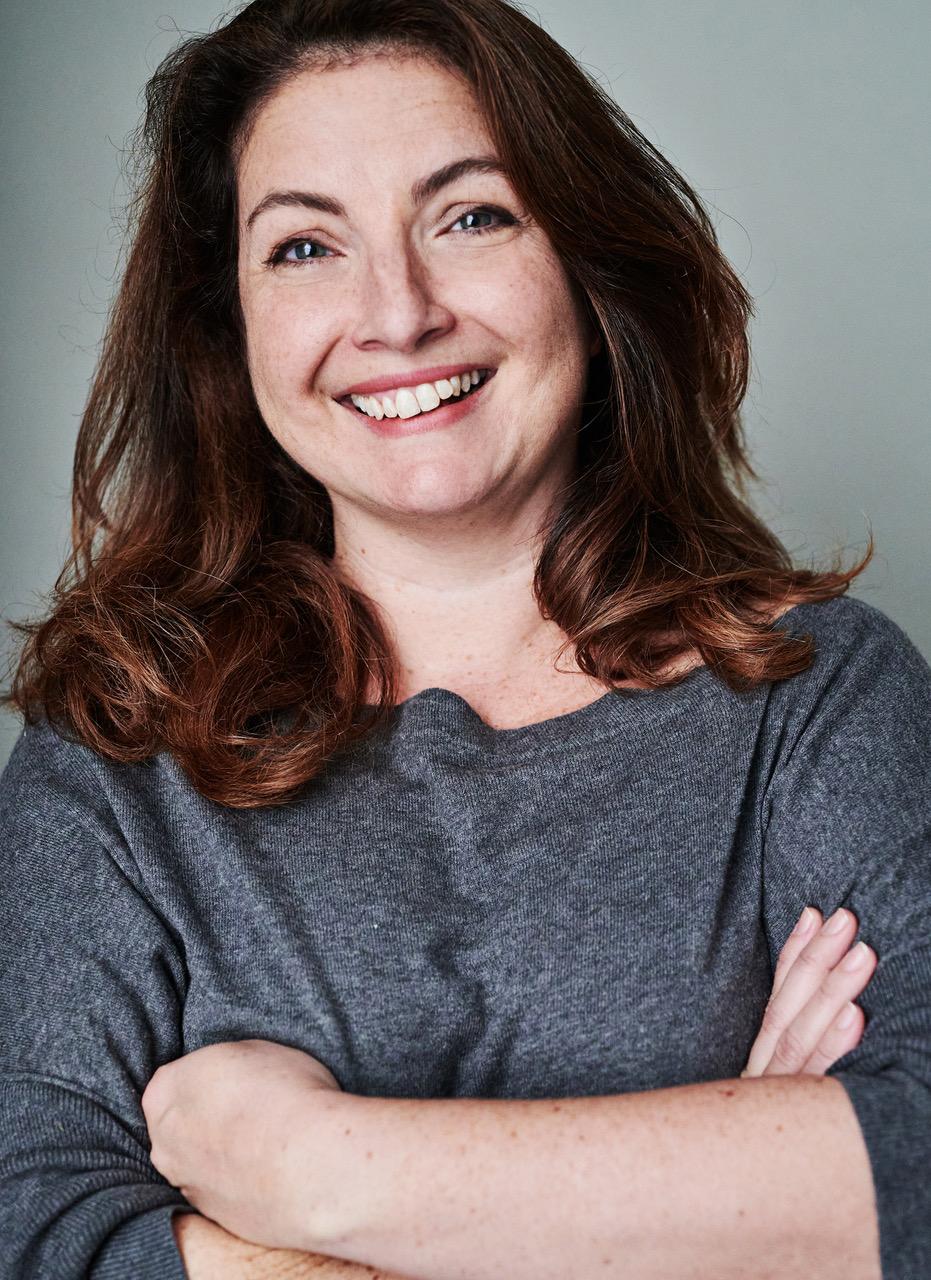
Photo credit: Ruth Crafer 2022
Dinner Party Dames has an unusual format: an imaginary dinner party to which your real life guest issues invitations to women who have had an impact on them–historical current, and occasionally fictional—in response to prompts from you. What inspired you to create this format?
In 2018, for the centenary of women’s suffrage in the UK, I decided to nominate a different woman every day on my social media accounts, and I very quickly realised that the majority of the women who instantly sprang to mind were from specific fields and geographical regions, so I spent a lot of time researching women who had achieved remarkable things from as many walks of life, and in as many different fields, as I could think of. I asked for, and received, loads of suggestions from people who were following the project, and I found out about some astonishing women – the knowledge I gained was not always a lot, but the stories of these women and achievements drew my attention to experiences and questions I’d never really thought about – not because of a lack of interest, but a lack of awareness.
A huge amount of work went into that project, so much so, that once 2018 came to an end, I felt like I wanted to do more with it – or to develop it in some way, but as with so many things, the various ideas of where to go with it were relegated to a notebook alongside many other creative seeds that had been planted over the years – including random notes I’d made after seeing Judy Chicago’s “Dinner Party” in Brooklyn the following January (2019), which I also wanted to use as an inspiration to develop something from.
Both ideas lingered side by side but unrelated, and then about two years later, while I was “Marie-Kondoing” some old notebooks it just suddenly came to me.
It’s one of those questions that pops up, isn’t it? “Who would invite to your ideal dinner party?” And I always love to hear people’s responses – which are very often very male heavy, because most of the history we are taught – whether it be at school, or through literature, cinema, or television is very focussed on men. So what if I asked different people “the dinner party question” but the guests had to be women? I love podcasts, and one of the things I enjoy about them, is the feeling they give you of just having an informal chat with interesting friends, so I liked the idea of creating something that welcomed in, not only the guest, but also these brilliant women, and – hopefully(!) – the listeners too.
I thought the different prompts were a way of making the process of choosing guests a bit less daunting and also a bit more varied for my guests – I figured splitting it up into specific categories was easier than just leaving it totally open ended.
How would you describe the purpose of the podcast?
At its heart, I think the purpose of the podcast is to celebrate women. And to pique people’s interest in women they may never have heard of. The format means that the focus isn’t specifically on history – it can be – it’s very much dependent on the guest, but sometimes it ends up being very contemporary. What I really want is for people to listen to an episode and come away wanting to find out more about the women we’ve talked about, whether that means reading up about historical achievements, listening to music by the women discussed, or watching a movie they directed. And then for them to tell other people about how brilliant these women were.
Do you think Women’s History Month is important and why?
So important. I hope that one day it won’t be. But for now, so many women’s stories are just not told. Whether those stories be individual or collective experiences most of the stories we are told are those of men. Predominantly straight men, and white men. So many of my my guests start off our chats commenting on how “loads of men sprang to mind” but they had to think harder to find a woman to fit the category – and make no mistake, this is not because women have achieved any less than men – in many cases it’s the historical equivalent of the meeting room scenario where a woman will pitch an idea multiple times, only to be ignored or dismissed and ten minutes later a man pitches the same idea to rapturous applause…
Until the day comes when our school history books have as many chapters dedicated to women as there are to men, and our biopics are as likely to have women in the title roles as men, we will need Women’s History Month.
Image credit: Rebecca Windsor 2021(photo) Charlotte Ive 2022 (artwork)
A question from Deborah: When I talk to people on “Dinner Party Dames”, I ask them to choose between six and eight guests. The categories the guest fall into are these:
1) The first woman you remember being inspired by;
2) The woman whose work or ethos has led you to living your life in a certain way (be the influence tiny or huge);
3) A woman who works in your field;
4) A woman who works in a completely different field to your own;
5) A woman you know in real life;
6) A woman who may be considered controversial;
7) An imaginary friend – a character from any form of fiction;
8) A wildcard
At the end of each dinner party I (very cruelly!) tell my guest that only one of the women they have invited can stay behind for an after dinner drink… they can choose any guest other than their real life connection – who would you choose to stay behind at the end of YOUR dinner party, and which category would they have fallen into in the seating plan, and why?
I have to admit, when I listen to your podcast I always think about who I would choose. And now I get to choose! Because obviously I can’t answer the question about which guest I would invite to stay behind without making up my entire list. So if you’ll excuse me for a moment…. Okay, I’m back. I’d invite Harriet Vane, the female foil to Peter Whimsey in Dorothy Sayers’ mystery novels. I’ll put her in the imaginary friend category, though in truth I could just as easily have put her in the influence slot. Certainly her picture of educated women’s lives helped shape my image of the life I wanted.
I’ve read the novels many times over the years. The thing I like about her as a character is that she is unrelentingly herself, even when it isn’t comfortable. You could do worse than sharing a glass of whiskey with a prickly, smart woman at the end of the day.
***
Want to know more about Deborah and Dinner Party Dames?
Check out the podcast: https://dinnerpartydames.buzzsprout.com
Follow her on Twitter: https://twitter.com/dinnerpartydame
Follow her on instagram: https://www.instagram.com/dinnerpartydames/
Follow her on Facebook: https://www.facebook.com/dinnerpartydames
***
Come back tomorrow for two questions and an answer with historian Carol Berkin
Talking About Women’s History: Three Questions and an Answer With Rebecca Grawl
Today I am pleased talk about women’s history with Rebecca Grawl, founding member and Vice-President of Education for A Tour of Her Own, a tourism company in Washington, D.C. That specializes in women’s history tours, book talks and virtual experiences.
Rebecca is a professional tour guide, historian, and author who holds a Bachelor of Arts degree in American Culture from Randolph-Macon Woman’s College (now Randolph College.) She has over a decade’s experience in tourism, public history, and museum education. She works with a wide array of companies, organizations, and audiences to bring our nation’s history to life in engaging and innovative ways.
Rebecca can be seen on Mysteries at the Museum on the Travel Channel and heard as a lead contributor for the Tour Guide Tell All podcast. She is a past board member of the National Woman’s Party and a consultant for Above Glass Ceilings, a firm dedicated to advancing women in the workplace. Her book, authored with A Tour of Her Own president Kaiatlin Calogera, 111 Places in Women’s History in Washington, DC That You Must Not Miss, is a travel guidebook that encourages readers to explore sites and stories about women, many who are overlooked in traditional textbooks.
Take it away, Rebecca:

Is it hard to find women-centric places to include on your tours?
I actually love this question because on the surface, the answer is yes but in reality, it’s much more complex than that. One of the driving motivations for the founding of A Tour of Her Own is the lack of representation for women and women’s history in public spaces in D.C. We are underrepresented on the National Mall, in the Capitol Statuary collection, and on the names of buildings. And yet, the more you dig in and peel back the layers, the more we can find women’s history right under our noses. When we started working on our book 111 Places in Women’s History That You Must Not Miss, we were worried about finding 111 unique places in DC but by the end of the process, we had discovered that there are many places where those stories can be found – you just often have to look beyond the traditional ways in which we think history should be shared.

How do your virtual tours work? Are they also D.C. based?
Our virtual programs are presented via Zoom and ticket holders can either join live or access a recording after the event. Our guides present the tours in a lecture-style with a visual presentation, with participants asking questions or giving feedback via the chat box or a live Q&A at the end. While still focusing primarily on D.C. based stories and locations, this medium allows us flexibility that’s not always possible on the ground. As a guide, I personally love being able to integrate more media in my tours – virtually, I can share images, videos, and audio that bring the story to life in a new way. Place-based learning is so important and our goal is to bring people to the places where history happened but in a virtual tour, we’re not bound by what is open, accessible, easy to walk or drive to, or a price of admission. Creating virtual programs really allowed us to connect with a much broader audience and expand the way we tell these stories. We have developed some really exciting programs like our Mrs. America meetup, which used the popular FX on Hulu series to share women’s history of the 1970s. Currently, we are hosting a virtual book club once a month and sharing behind-the-scenes reflections of our book. Each meeting focuses on 11 chapters and we plan to cover the entirety of the book by the end of the year!
How do you define women’s history?
For me, women’s history is about taking a holistic and intersectional approach to understanding women’s role in our political, cultural, and social history. Just as we try to move beyond the Great Man theory of history, I think it’s important to look at women’s history as not just identifying a handful of key women that need to be part of a canon but rather exploring the varied and complex ways in which women have interacted and influenced the events of their day. Women’s history is not monolithic and it’s not a universal experience – it is complicated, vast, and diverse and I think we are still in the process of reconciling that. Additionally, we often say that women’s history is American history (and American history is women’s history) and while Women’s History Month is a vital and essential component is raising visibility and starting conversations on women’s history, the goal has to be taking a more balanced and nuanced view to how we discuss and interact with history every single day.
A Question from Rebecca: What’s your experience been like as a historian and writer who focuses on women’s stories?
I took an indirect path to writing women’s stories.
It’s where I started. As a kid, I read every biography I could get my hands on about historical women who ignored social boundaries and accomplished things—the kind that are written with the intention of inspiring young girls. I was indeed inspired. My grade school’s revolving library owned a whole series of them. Every week a new one arrived and I snatched it before anyone else could get it, eager to read about Clara Barton, Madame Curie, or Julia Ward Howe.
I never lost my interest in women’s stories, but my life as a history buff took an unexpected turn when at the age of eight or nine I fell in love with Rudyard Kipling’s Kim. (Kipling’s India put me on the path to a PhD in South Asia history.
It wasn’t a straight path. And it wasn’t a short one. The first day of my PhD program at University of Chicago, my advisor said, “You know there are no jobs, right?” I knew, but I didn’t care. Without the promise (or perhaps the threat) of a teaching job at the end of the road, I kept wandering down fascinating by-ways.
After I got the degree, there were still no jobs, so I started writing for a popular audience and I kept chasing whatever historical story caught my imagination. What I wrote about probably looked pretty random to an outsider, but by and large it clustered around one central theme. I feel strongly that as a society we need to hear the stories that don’t get told in high school history classes: the history of other parts of the world as well as history from the other side of the battlefield, the gender line, or the color bar.
As a result of my historical wanderings, in 2015 I was asked to write a work of historical non-fiction about Civil War nurses as a companion volume to the PBS historical drama, Mercy Street. That book took me back to my history-nerd roots and a topic that had fascinated me for years: the roles women play in warfare and how those roles are rooted in and occasionally help change a society’s fundamental beliefs about women.
And that’s where I’ve stayed.
***
Interested in learning more about A Tour of Her Own?
Check out the website: https://www.atourofherown.com/
Follow them on Instagram: https://www.instagram.com/atourofherown/
Follow them on Twitter: https://twitter.com/atourofherown
***
Come back tomorrow for three questions and an answer with Deborah Wastrel, host of the podcast Dinner Party Dames