




The Only Woman

The concept behind Immy Humes’ The Only Woman is fascinating: one hundred photographs that include one woman in a group of men, ranging in time from the 1860s through 2020, drawn from hundreds of examples Humes collected over the years. Some are well known—both the woman and the photograph. Others are literally unknown, including a woman identified only as “Mascot.” (Grrr.)
Humes presents the pictures twice. First she shows the photographs as full page images accompanied by a brief essay, in no particular order that I could discern, though given the thoughtfulness of the work as a whole I have no doubt there is an organizing principle. Then she arranges the photographs in chronological order as black and white thumbnail images, with the only woman in each image identified with a white circle. I found this version fascinating. It not only made it possible to go back and find the woman in the larger photos—something I found difficult to do in many of the pictures*—but it gave many of the women a prominence that they otherwise did not enjoy. (Maybe that’s two ways of saying the same thing now that I think about it.)
Humes sums up the impact of the photographs as a whole in the brief, provocative essay that accompanies them: “Against this wild variety of time, place, occupations and cultures is a repetitive counterpoint of sameness. The same ludicrous constellation of many men, one woman, over and over again.”
I’ve been dipping into the book for several months now, considering the stories and images that Humes shares. I’ve read her introductory essay several times. There are women I want to know more about and ideas that I want to think over.** (I’ve also come to the conclusion that if you are going to be the only woman in a photograph of formally dressed people arrayed in rows and facing the camera, you should wear a hat if you want to be seen: the biggest, wildest hat you can manage.)
It’s been an interesting counterpoint to the book I’m writing about a woman who was often the Only Woman in the Room, except when she wasn’t.
*Think a real life version of “Where’s Waldo?”
**Just so you know, some of those ideas and thoughts may well appear in my newsletter, which will resume publication once I turn in this book manuscript. (May 1 or bust!) You can subscribe here http://eepurl.com/dIft-b —May 1 is practically tomorrow.
* * *
Come back on Monday for 3 Questions and an Answer with Rebecca Grawl of A Tour of Her Own.
Talking About Women’s History: Three Questions and an Answer with Einav Rabinovitch-Fox
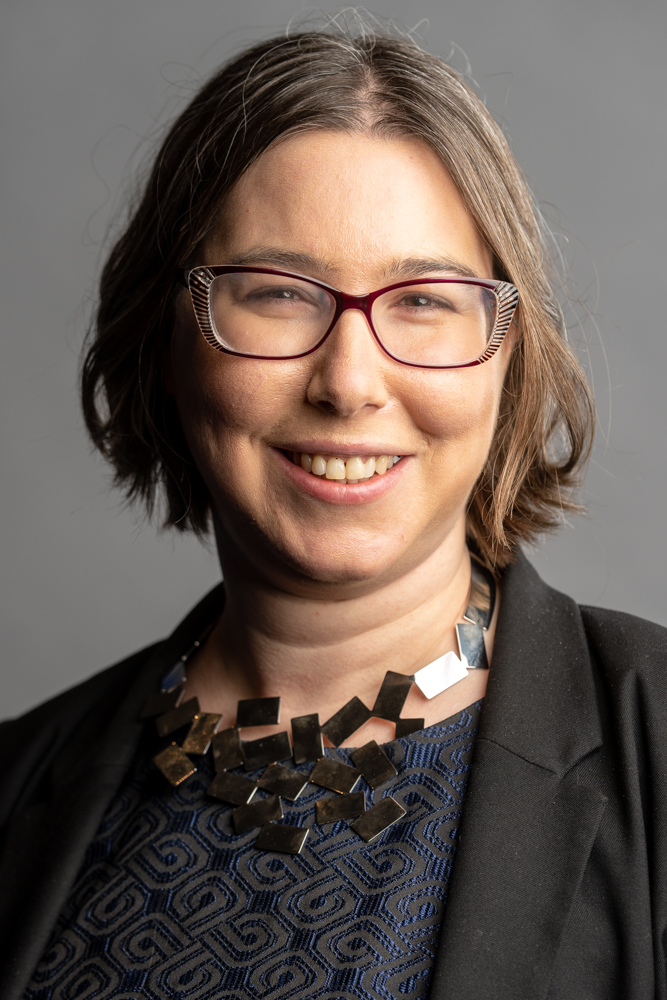
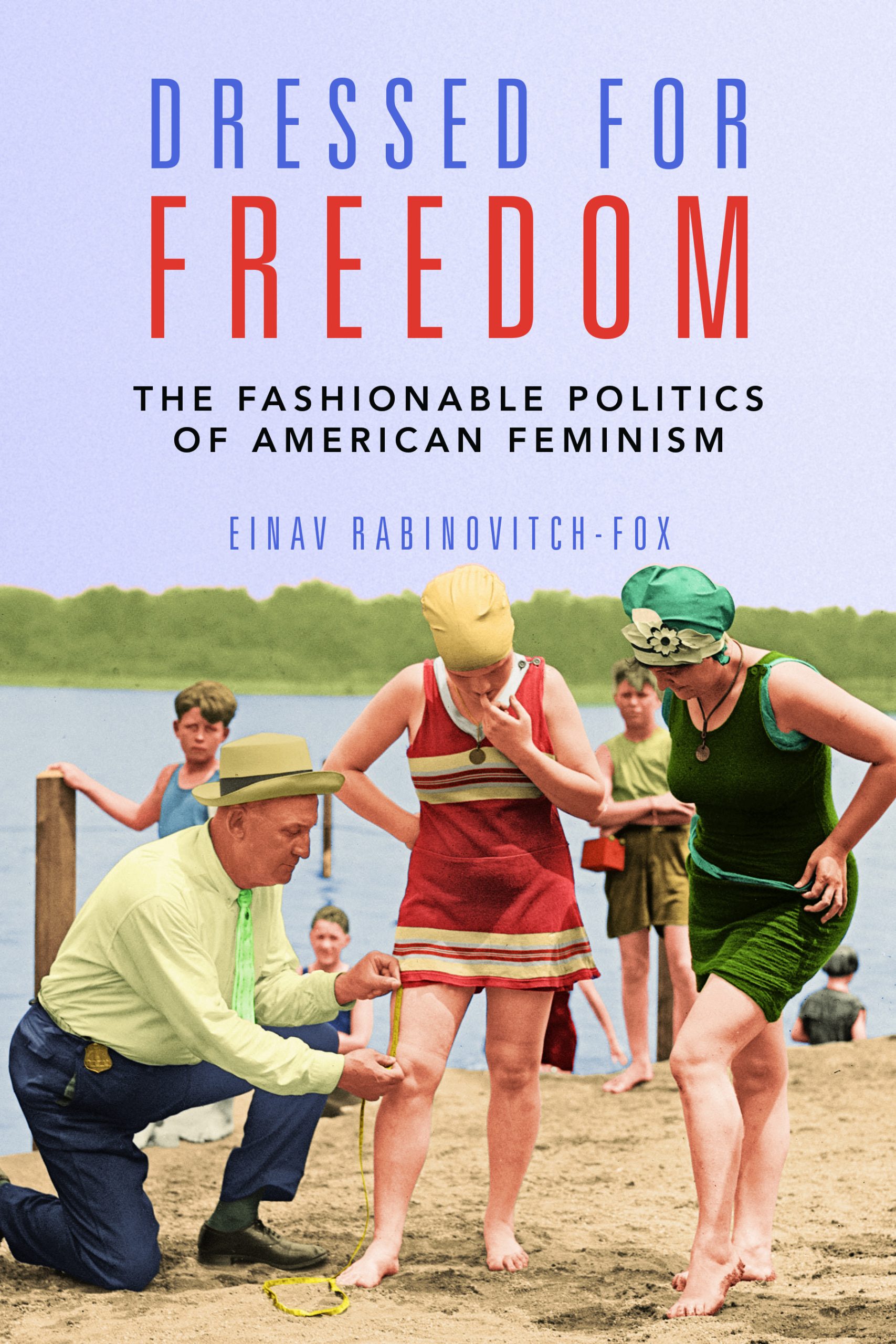
Einav Rabinovitch-Fox is a modern U.S women’s and gender historian who teaches at Case Western Reserve University in Cleveland, OH. Her research examines the connections between fashion, politics, and modernity, particularly the role of visual and material culture in social movements. Her recent book, Dressed for Freedom: The Fashionable Politics of American Feminism explores women’s political uses of clothing and appearance to promote feminist agendas during the long 20th century. Her writing has been published in academic journals and books including the Journal of Women’s History, the International Journal of Fashion Studies, American Journalism: Journal of Media History, as well as popular media such as The Washington Post, The Conversation, Public Seminar, and History News Network.
Take it away, Einav!
We’re all familiar with the challenges of finding sources for writing about women from the distant past. What are the challenges of writing about women from the early to mid-twentieth century?
In a sense, the past is always a foreign country, and although we are less removed from the modern period, and are more familiar with it, I think some of the challenges remain. This is especially true when writing about women, as for so long, these histories were considered frivolous or not important, so I think that even when writing about women from the early to mid-twentieth century, there are still challenges in finding sources about them, or in finding sources that really center women’s voices and experiences. This is especially true with regards to women of color, working-class women, or other marginalized women, for whom there is still scarcity of sources.
Moreover, this sense of familiarity with the recent past can be deceiving. There is always the risk of interpreting things wrong or to draw conclusions based on our own experience and not necessarily on the experience of women in the past. Things have changed so dramatically in the life of women during the first decades of the twentieth century, that even for a woman living in the 1930s, the 1900s didn’t seem so liberating, not to mention for someone living in 2023. I always try to meet the women I write about where they are, to understand their world and how they were able to navigate it, and what challenges they had to overcome that maybe I don’t anymore.
Another thing to consider, especially when writing about more recent periods, is that the women I write about are perhaps still alive or have family members who are still alive. And while this is also true when writing about the distant past, I think that the real-life presence of women who lived in the recent past can bring more challenges to writing about them. I often feel I have more responsibility towards them to get the story right, but also to be more sensitive in how I tell their story. I also take into consideration what would be the repercussions of writing about personal or uncomfortable aspects of their lives. In that sense, it is the sense of familiarity that actually presents a challenge to distance yourself from the subjects of your writing.
Your work focuses on the way visual and material culture shapes and reflects class, race, and gender identities. What do we learn when we use images as more than just illustrations?
In a way, an image is just like any other historical source that can tell us something about the past. Especially when researching women’s history and other marginalized communities, what we often have is visual and material evidence, so it is actually a very important source to understand women’s history. Not many women left for us written records in the form of letters or diaries, but we can learn a lot about their everyday life and what they cherished and enjoyed from their dresses, embroidery, and small possessions.
Photographs, paintings, and illustrations contain a lot of information about the past, and so we need to learn to read them just like we read written sources. Material objects offer us even more information, as one can tell a lot when examining wear-and-tear of clothes, or use of other items. I think once we train ourselves to look at images more than just illustrations, but as historical sources, we can also begin to ask questions about them and discover that they can tell us a lot of things about the past.
What was the most surprising thing you’ve found doing historical research for your work?
Writing about fashion, I got to do research not only in archives but also in costume collections, which are archives made of dresses and other clothing articles and accessories. The most surprising thing about it is how different dresses look and feel like in real life, compared to an image or an illustration. Looking at an actual garment: How it is constructed, from what materials, as well as how much of it worn and torn, can tell you a lot not only about the piece itself, but oftentimes also about the person who wore it, as items that arrive to costume collections are almost never anonymous.
One of the most exciting finds are the times that you can match an actual dress to an image of the person who wore it, or a description of them wearing it and how they felt in this garment. Yet, exciting finds can also happen when you get to feel and touch the garment and understand better issues of comfort and proportions, something that often gets lost in images.
One example of that, which to me was very surprising, was when I got to see a bathing suit from the 1920s in one of the collections I visited, which was in Smith College. Bathing suits in the 1920s were quite revolutionary at the time, because they exposed women’s hips and shoulders and were very revealing of the body. It even caused some municipalities to try and ban them on the beaches as they were considered “inappropriate” and even “immoral.” Bathing suits were really the symbol of a feminist consciousness and liberation in the 1920s, so imagine my surprise when I got to touch it, and discover it was made from wool, maybe the last material I would like to go into the water dress in. Realizing that bathing suits were made of wool not only made me appreciate the invention of Latex, but also got me thinking differently about what comfort meant to the women who wore these suits and what made them so revolutionary, and how we today judge comfort.
Question from Einav: You write historical works for popular audiences, how do you make your audience care about women’s history? How do you show them that women’s history matters, that it is important?
When I was writing my dissertation, I had a day job that required me to work with a great many tradesmen, many of whom had doubts about taking instructions from me. (Probably all of them had doubts at the beginning. Some of them were simply more polite about it than others.) I changed their minds one guy and one project at a time.
In many ways, making readers care about women’s history is very similar. Other than this annual series of mini-interviews, I don’t try to make my audience care about women’s history in the abstract. Instead, I do my best to make them care about a particular woman or group of women or a specific story. Part of doing that is to make it clear why that story and that woman matter and how putting them back into the historical record makes our understanding of the past richer.
***
Interested in learning more about Einav Rabinovitch-Fox and her work?
Visit her website: www.einavrabinovitchfox.com
Follow her on twitter: @DrEinavRFox
***
Tomorrow it will be business as usual here on the Margins with a women’s-history- related blog post from me. (Subject to be determined.) But we’ve still got more people talking about women’s history from a lot of different angles next week. Don’t touch that dial!
Talking About Women’s History: Two Questions and an Answer from Eleanor Fitzsimons
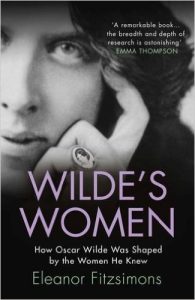
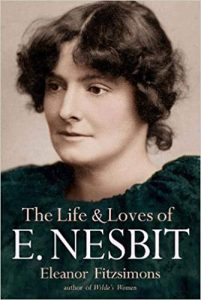
Eleanor Fitzsimons is an Irish researcher and writer who specialises in historical and current feminist issues. She has an MA (first class honours) in Women, Gender and Society from University College Dublin. Fitzsimons is the author of Wilde’s Women: How Oscar Wilde Was Shaped by the Women He Knew (Duckworth, 2015). She is an honorary patron of the Oscar Wilde Society, and a member of the editorial board for society journal The Wildean. She has worked as a television researcher for the Irish national broadcaster RTÉ, and was a contributor to The Importance of Being Oscar (BBC2, April 2019). Her second biography The Life and Loves of E. Nesbit (Duckworth, 2019) was a Sunday Times Book of the Year 2019, and was included in the Washington Post Top 50 Non-Fiction Books of 2019 and the Dallas Morning News Top 100 Books of 2019. Her work has been published in several academic journals and books.
Take it away, Eleanor!

What do you find most challenging or most exciting about researching historical women?
In a sense, the aspect I find most challenging about researching historical women is also what makes this research most exciting and rewarding. I’m sure we’re all acutely conscious of the fact that women’s lives have often been very poorly documented. Where their experiences have been chronicled, this was often done through a gendered lens, their achievements undervalued or, if deemed worthy of commenting on, attributed to men. When researching my most recent biography, The Life and Loves of E. Nesbit, I discovered that many reviewers assumed Edith Nesbit was a man. One critic in The Graphic described her as “a man of rare poetic gifts and of true honest purpose”. Nesbit was fully aware of this confusion and occasionally found it funny. “All the reviewers took me for a man,” she told a friend, “and I was Mr Nesbit in the mouth of all men until I was foolish enough to dedicate a book to my husband, and that gave the secret away”. Literary women have often found it beneficial to disguise their identity, or even to write as men. Similarly, women who operated in traditionally masculine spheres, such as politics, science or medicine, were often castigated for not behaving as they should. In each case, you are required to challenge and evaluate what are often very biased accounts of their lives.
When we recover women’s lives, the challenge often lies in finding any information about them at all. The advantage of having to work harder is that those of us who write about women are obliged to seek out neglected primary sources – letters, diaries, census records, death certificates, court records such as bankruptcy proceedings, and accounts left by reliable family members and friends. I find this so rewarding and exciting. In a sense, I regard myself as a literary detective, a Miss Marple of the archives. When I wrote about Harriet Westbrook Shelley, first wife of Romantic poet Percy Shelley, who was completely overshadowed by his second wife, Mary, one of my better sources was a series of letters she exchanged with a remarkable Irishwoman named Catherine Nugent. Although she never married, Catherine felt obliged to pose as a widow and call herself “Mrs Nugent”. A male friend described her thus: “a wonderful woman—altho’ very plain, little and republican looking . . . Catherine Nugent has amazing spring and elasticity of mind, as if her mind made her forget that she had a weak body”. Both women are largely forgotten. Fortunately, their letters, with notes about Catherine’s life, were published by her friend Alfred Webb, a printer in Dublin, as Harriet Shelley’s Letters to Catherine Nugent. Such treasures are often buried in the archives but digitization of old books has ensured that they are increasingly accessible to us all.
What work of women’s history have you read lately that you loved? (Or for that matter, what work of women’s history have you loved in any format?)
There are so many worthy candidates! I’m going to choose a brilliant but unconventional book, A Ghost in the Throat by Irish poet and essayist Doireann Ní Ghríofa. Using beautiful, lyrical language, Ní Ghríofa intertwines her own experiences as a young mother in modern-day Ireland, with the story of Eibhlín Dubh Ní Chonaill, an Eighteenth-Century Irish noblewoman. On discovering her husband has been murdered, Eibhlín drinks handfuls of his blood and composes an extraordinary poem, Caoineadh Airt Uí Laoghaire, in his honour. Enchanted by this powerful poem, Ní Ghríofa becomes obsessed with uncovering the truth about the interior and exterior life of the shadowy woman who wrote it. The biographical details she uncovers are compelling enough, but what really sets this exceptional book apart is Ní Ghríofa’s extraordinary insights into the way we are shaped by our experiences, her enchanting exploration of language and ideas, and her celebration of the power of words to console and transport us. I cannot recommend it enough!
A question from Eleanor: I think Women’s History Month is fantastic! What do you think the key achievement of the celebration of Women’s History Month has been? Does it allow us to reach and retain an audience that would never normally take an interest in the lives and experiences of women?
As so many of us do, I have mixed feelings about Women’s History Month.
On the one hand, I wish that we didn’t need it: that’s women’s roles in history were simply an integrated part of how we think about history and the way history is taught. But that simply isn’t true: according to a statistic shared by the Remedial Herstory Project, in 2022 teachers spent between five and twenty percent of their history curriculum time on women’s history, with five percent being the plurality. (What do you want to bet that most of that five percent occurred during Women’s History Month?) That means that the mandate to teach and talk about women’s history in March remains important.
At the same time, I LOVE the festival feeling that surrounds Women’s History Month. Every year, I make new connections with other people who share my passion for this subject—here at History on the Margins and elsewhere. With each new connection, we amplify each other’s reach.
***
Want to know more about Eleanor Fitzsimons and her work?
Check out her website: https://eafitzsimons.wordpress.com/
Follow her on Twitter: https://twitter.com/EleanorFitz
***
Come back tomorrow for three questions and an answer with historian Einav Rabinovitch-Fox