




Talking About Women’s History: Three Questions and an Answer with Sara Fitzgerald
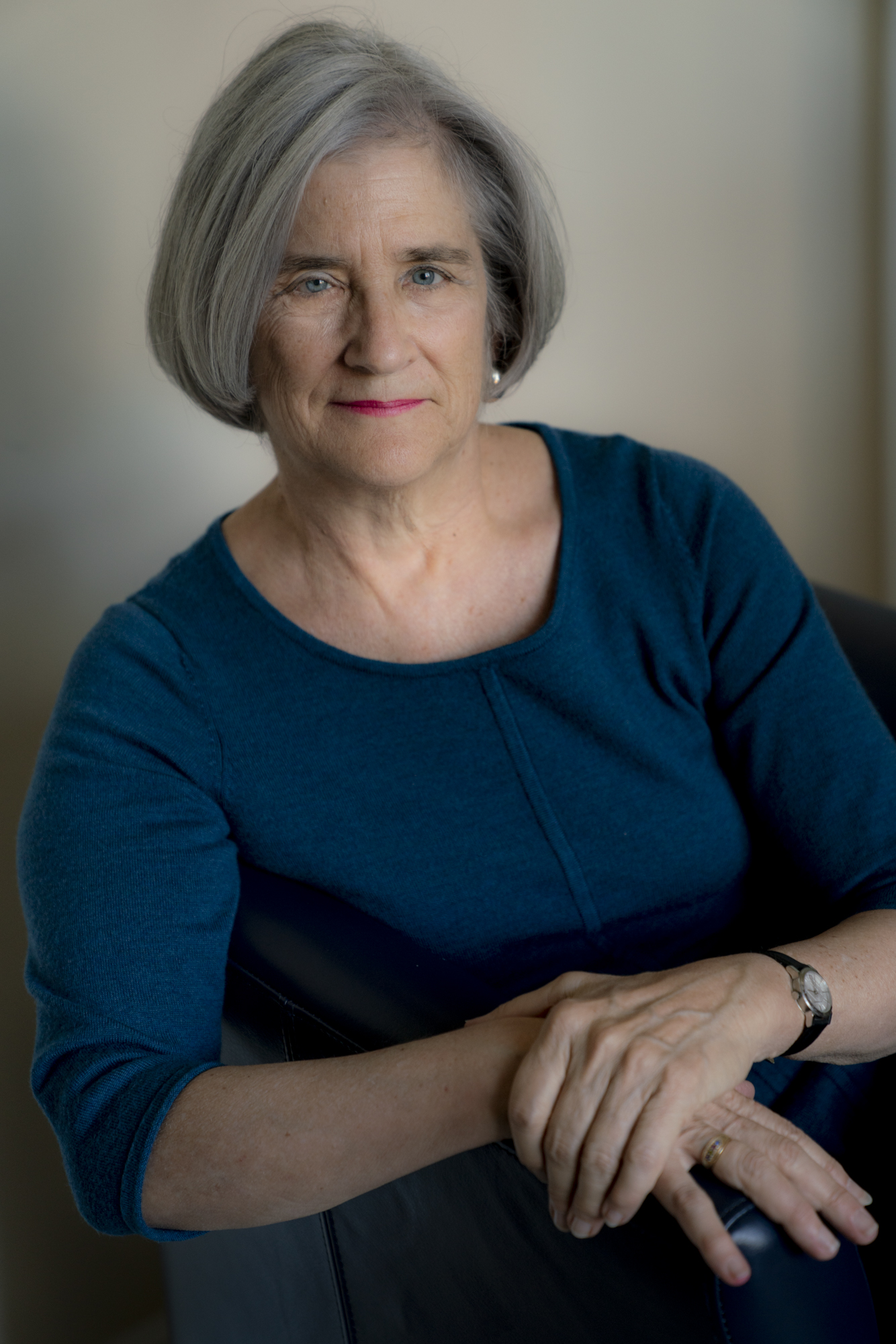
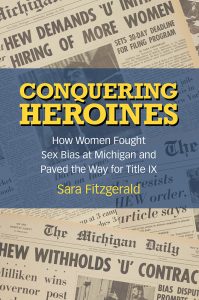
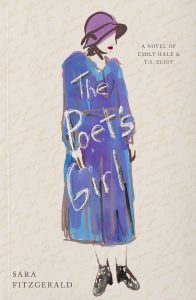
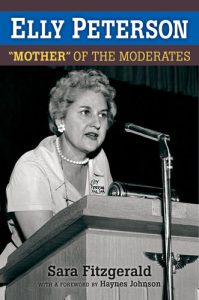
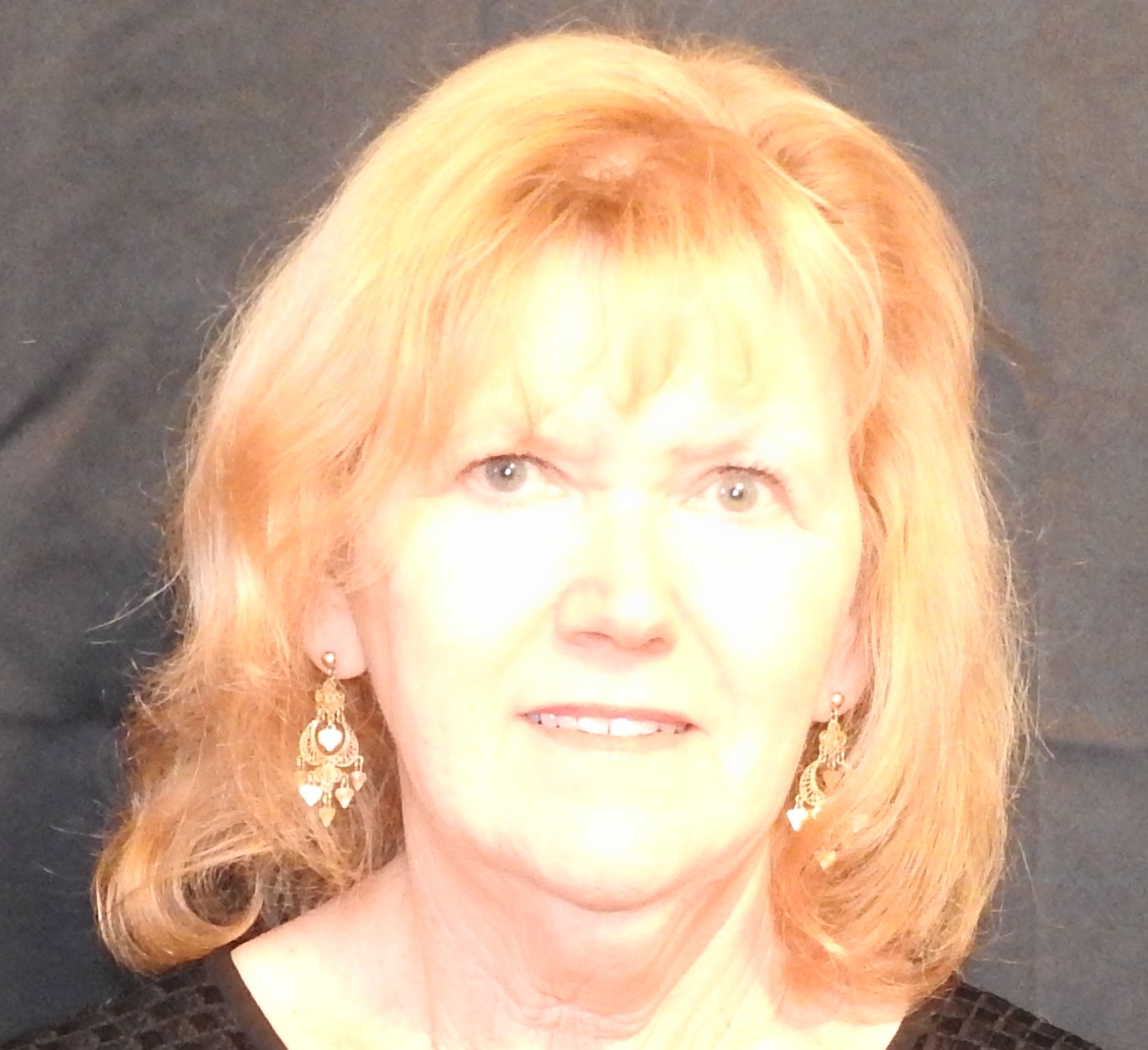
Sara Fitzgerald is an author and retired journalist who has been researching the untold stories of little-known women since she earned a bachelor’s degree in honors history from the University of Michigan in 1973. Her journalism career included 15 years as an editor and new media developer for The Washington Post. In 2020, the University of Michigan Press published her book Conquering Heroines: How Women Fought Sex Bias at Michigan and Paved the Way for Title IX in connection with the 50th anniversary of the so-called “HEW complaint” and the 150th anniversary of the admission of women to Michigan. Fitzgerald covered the complaint as a staff member of The Michigan Daily, the U-M student newspaper; in 1972, she became the first woman to serve as its editor in chief. In 2013, Fitzgerald contributed a project on the Michigan complaint to Volume 17 of “Women and Social Movements in the United States: 1600-2000.” Fitzgerald is also the author of a biography, Elly Peterson: ‘Mother’ of the Moderates (University of Michigan Press, 2011), which was recognized by the Historical Society of Michigan and as a Notable Book of the Year by the Library of Michigan. She is also the author of the 2020 novel The Poet’s Girl, and now is completing a biography on the subject of that novel, Emily Hale, the longtime secret muse of the poet T. S. Eliot.
Take it away, Sara!
When did you first become interested in women’s history? What sparked that interest?
I attended the University of Michigan between 1969 and 1973. It was a time of great turmoil on campus—and a time of great change for women. It was during those years that Ms. Magazine was created, the National Women’s Political Caucus was founded, the Equal Rights Amendment first cleared Congress, and the Supreme Court affirmed the reproductive rights of women in its Roe v. Wade decision. At the end of my freshman year, a group of women filed a sex discrimination complaint against the university that was ultimately successful in forcing Michigan to change some of its long-standing, discriminatory practices. At that time, it was revealed that admissions officers had imposed a quota of 55 percent men: 45 percent women for my freshman class, because they were concerned about what one described as a potential “over-balance” of women in my class because women had been out-performing men in high school.
I started off as a journalism major, but by my junior year, I decided to make history my main field of study. It was a time when women professors were eager to research and teach topics related to women’s lives, even if they had to hold the courses in their living rooms, as one of my professors was forced to do. Within a few years, these professors established the Women’s Studies Program at Michigan.
I was lucky to get to know Kathryn Kish Sklar, a pioneer in the field of women’s history. (Kitty’s biography of Catherine Beecher was a finalist for the National Book Award for Biography in 1974.) As I pursued my courses in history, I always looked for a fresh topic related to women to research and write my papers about. The summer before my senior year, I read Nancy Milford’s ground-breaking biography of Zelda Fitzgerald and decided to write my senior thesis on the flapper phenomenon. When I retired from a career in journalism and public policy work and looked around for what to do next, I realized how much I had enjoyed researching and writing about the lives of women, and returned to those roots.
Did you have a woman (or group of women) from the past who inspired you as a child?
My parents were moderate Republicans, and in 1964, I was watching television coverage of the Republican National Convention when I was astounded to see network correspondents interviewing a woman named Elly Peterson. I think I took note of her because it was so rare to see a woman on the political stage back then, and I was proud that she came from my home state of Michigan. At that time, she was the highest ranking woman in the national Republican Party, she was running for a Senate seat from Michigan, and she was about to become the first woman to address a national presidential convention in prime time. She did not win her Senate race, but she got on my radar screen. During my college years, she became one of the Republican leaders of the National Women’s Political Caucus after it was founded. Then in 1976, she was recruited, along with Democrat Liz Carpenter, to chair ERAmerica, the coalition of groups that was organized to work for ratification of the Equal Rights Amendment, to try and counter the opposition of Phyllis Schlafly.
As fate would have it, I got to meet Peterson a few years later when she moved to the same retirement community in North Carolina where my parents lived. She was a true “people” person, friendly and outgoing, and later sent me some “fan mail” about a novel I wrote at the time.
When I retired earlier than I had expected, I reflected that she was one of those little-known women of our history who deserved to be better known. She had since moved to Colorado, but I was able to track her down and explore whether she was interested in working with me. In the end, I wrote her biography. She was supportive of the project, but it was not an “authorized” biography, per se. But it was a very satisfying project, and I was only sorry that I was not able to complete the book before she died—two days after Hillary Clinton formally ended her first presidential campaign in 2008.
How does your experience as a journalist inform your work as a biographer?
Biographers need to get inside the heads of their subjects, but I find I have to push myself to go beyond the known facts of a person’s life. I am currently working on a biography of Emily Hale, the longtime secret love of the poet T. S. Eliot. I previously wrote a novel about her, but after their lengthy correspondence was opened in 2020 after a fifty-year embargo, I decided to write a more traditional biography. So I’m now trying to be more careful about what is known about her and what is just speculation—or taken as fact because Eliot wrote it. Most of the scholars who are writing about Hale and Eliot come from the discipline of English literature and are primarily interested in analyzing Hale’s impact on Eliot’s poetry and plays—an approach that is much more subjective, I think, than historical analysis. I’ve also come to realize that because Hale was, by nature, a very private, reticent person, her story was ultimately written by others, some of whom got significant facts wrong or distorted her motivations. I think my experience as a journalist motivated me to try and “set the record straight.” I think I’ve also been able to use my reporting skills to turn up new details about her life and “connect the dots” in fresh ways.
A question from Sara: As a professional historian who seeks to translate history for popular audiences, what are your thoughts about how history is being taught—or not being taught—in schools and colleges today?
Not an easy question, and no easy answers.
That said, I think as a group, the United States has not done a good job of teaching history in a way that includes our nation as a whole.* That is the reason that Women’s History Month, Black History Month and all the other ethnic heritage months exist. It is also the reason groups like the Remedial Herstory Project exist —to provide teachers with resources about historical subjects that are not included in classroom textbooks.
I am heartened by the numbers of people who are struggling to confront the parts of our history that we never learned. I cheer whenever I visit a museum that explicitly expands the story to include the uncomfortable parts, as well as adding women and and people of color back into the narrative. It is hard and it is uncomfortable. Over and over I am confronted by the blind spots in my own historical knowledge, and the accompanying pain in the pit of my stomach.**
At the same time, I am tremendously distressed by attempts to make whitewashing history a matter of policy rather than of collective cultural blindness, as well as by the attempt to gut or remove history departments.
*With the acknowledgement to my non-American readers, I’m going to be talking only about the United States here.
**If you are interested in a thoughtful discussion of this subject, I strongly recommend A More Just Future by Dolly Chugh. If you want to read an account of American history that deals directly with our collective blind spots, On Juneteenth by Annette Gordon-Reed is a wonderful entry point.
* * *
Want to know more about Sara Fitzgerald and her work?
Check out her website: www.sarafitzgerald.com
Check out her blog: Notes from a Chronicler of Little-Known Women https://sarafitzgeraldcom.wordpress.com/
* * *
Come back tomorrow for four (!) questions and an answer with Eileen Bjorkman, author of The Fly Girls Revolt
Women in World War II: “French Army Drafts Plan to Enlist Women”
For the last few years, I’ve spent a lot of time reading and re-reading old issues of the Chicago Tribune, between 1919 and the end of the Second World War in pursuit of the subject of my current book. And as those of you who been with me on this journey know, in doing so I’ve stumbled across stories that don’t belong in the book but are too good not to share. (I’m looking at you, Fiume.)
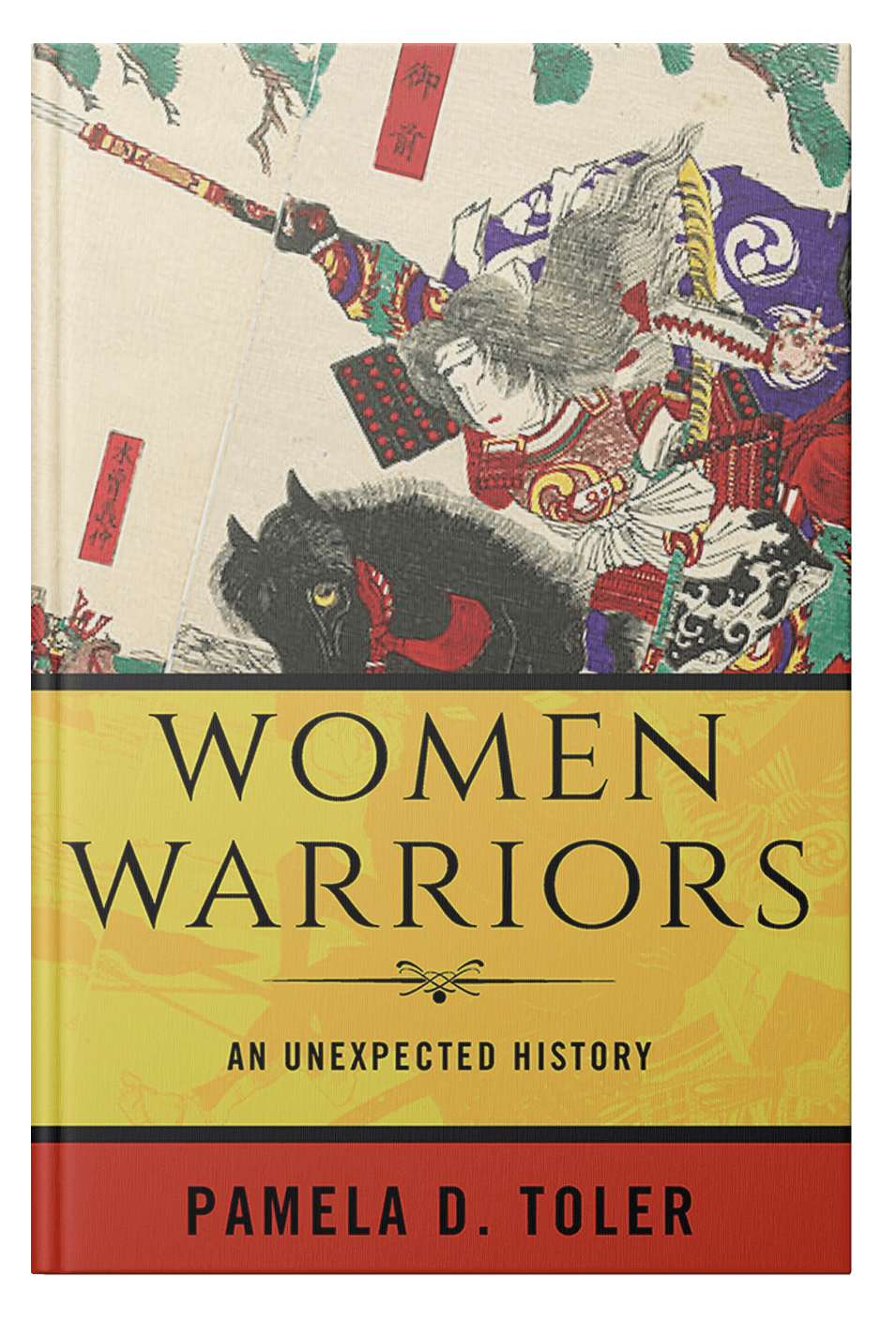
Most recently I found a small article—a total of four sentences—that had more to do with my last book, Women Warriors, than with my current book.
One thing I discovered as I worked on that book is that periods of national crisis open up spaces in which women are able to play roles that society otherwise might not have allowed them to play. The Second World War offered unprecedented opportunities for women to enlist in the armed services. Great Britain, the United States and Germany all had women in uniform providing support services to their forces. Several hundred thousand women actively fought in the Soviet Union’s army as snipers, machine, gunners, tank crews, and antiaircraft personnel, not to mention as bombers, fighter pilots and navigators. (Who says women don’t go to war?)
But what about France, you ask?
According to an article in the Chicago Tribune, on May 22, 1940, the French premier, Paul Reynaud, announced that French women between the ages of 21 nd 55 could now enlist as female auxiliaries of the armed forces—the French equivalent of WACs, WAVEs, WRENs and the like. Even if women swarmed the enlistment offices the next day,* it was too late for them to make a difference. German troops had crossed the border into the Ardennes on May 12 and were fighting their way toward Paris, which they occupied on June 14.
Personally, I like to think that many of the women who would have donned neat uniforms and “freed up a man to fight” instead became members of the Resistance.**
*Which they might well have done. They certainly hurried to sign up as Red Cross volunteers in the weeks after France and Britain declared war on Germany on September 3, 1939.
**If you’re interested in one woman’s involvement in the French resistance, I recommend The General’s Niece: The Little-Known DeGaulle Who Fought to Free Occupied France by Paige Bowers.
Come back on Monday for 3 Questions and an Answer with journalist and biographer Sara Fitzgerald who’s been researching untold stories of women since 1973.
Talking About Women’s History: Three Questions and an Answer with Nancy Kopp
Attorney and author Nancy Kopp is part of a two-woman team with an unusual women’s history project. They researched Lavinia Goodell, the first woman lawyer in Wisconsin, and created a website to tell her story.
Nancy grew up on a dairy farm about 10 miles from Janesville, Wisconsin. After graduating from a Milwaukee business college, she got a job as a legal secretary in Janesville. She has always enjoyed research and writing, and she discovered that she loved the law – which requires doing a lot of both – so she went back to school. She has a B.A. in history from the University of Wisconsin-Whitewater and a J.D. from the University of Wisconsin law school. She was in private practice at a large law firm for a few years but for many years has been employed by the Wisconsin Supreme Court as a Supreme Court Commissioner. Years ago she wrote five legal mysteries that were published as paperback originals by Penguin Putnam. She lives in Madison, Wisconsin and loves to travel – most often to historical sites, including many associated with Lavinia Goodell.
Take it away, Nancy!
What path led you to Lavinia Goodell? And why do you think it is important to tell her story today?
I first learned about Lavinia Goodell many years ago – before I went to law school – when I was working as a legal secretary in Janesville, Wisconsin. I was very surprised to discover that a Janesville woman had become Wisconsin’s first woman lawyer. The article I read referenced Wisconsin Supreme Court Chief Justice Edward Ryan’s condescending 1876 opinion refusing to allow Lavinia to appear before the court. I found the decision in our law office library and was infuriated to read that Ryan had denied Lavinia’s petition because, in his opinion, “the law of nature destines and qualifies the female sex for the bearing and nurture of the children of our race and for the custody of the homes of the world and their maintenance in love and honor. And all life-long callings of women, inconsistent with these radical and sacred duties of their sex, as is the profession of law, are departures from the order of nature; and when voluntary, treason against it.” Fortunately Lavinia did not take Ryan’s decision sitting down. She persuaded a male Janesville attorney, who also happened to be a member of the legislature, to introduce a bill changing Wisconsin’s statute to make clear that the legal profession was open to both sexes. That bill passed and was signed into law by the governor in 1877.
Since then I have thought of Lavinia as somewhat of a kindred spirit, and I have always felt that I – and all other women lawyers in the state – owe her a huge debt of gratitude for opening the profession to us. When a friend contacted me in 2018 to ask if I would be interested in doing more in-depth research on Lavinia, I jumped at the chance. I think it is important to tell Lavinia’s her story today to remind people, especially young women, that we all stand on someone else’s shoulders and no matter our profession or avocation might be, we are all benefiting from the hard work and perseverance of so many women who came before us. There are still many glass ceilings to be broken and many societal attitudes that need to be changed before women are truly viewed as equal to men in all walks of life. But hearing stories about women like Lavinia, who overcame enormous obstacles and prejudices to achieve their goals, might give young women today who are being told they ought to “stay in their lane” the grit they need to ignore the naysayers and keep going.
What do you find most challenging or most exciting about researching historical women?
I have found that the most challenging things about historical research are the astonishing amount of erroneous information that is available online and trying to decipher nineteenth century cursive script. These two issues converged when twentieth century folks began to digitize and catalog information. Misspellings of proper names are inevitable, and this presents a real challenge for a researcher. I have seen Lavinia’s name spelled Lavina, Lavona, Lavena and her last name also misspelled in multiple ways. Even the Wisconsin Historical Society’s death record index spelled her name wrong. I learned early on to approach every search using alternate techniques and multiple spellings. When trying to pinpoint where Lavinia lived and worked and the placement of various businesses that she frequented, I also discovered that many cities, including Janesville, Wisconsin, changed street names and renumbered buildings several times, the last time around 1915. In the 1870s, the Goodells lived at 29 South Academy Street. In order to determine the present day location of the house, I had to go through multiple Janesville City directories looking for families who lived on South Academy in the 1870s and still lived there in 1915. It took many hours, but I eventually determined that the Goodell’s house is now numbered 168-170 South Academy. Most articles about 1870s Janesville are unaware of the address changes, meaning that people looking for old sites go to the wrong place. In 2021 I developed two Janesville walking tours that take people past sites that played a role in Lavinia’s life and made sure to note the current location.
Reading 150 year old documents also requires enormous patience. The most frustrating document I encountered was four pages of notes from a court hearing after Lavinia died in which the people who witnessed her will testified about her state of mind at the time she signed the will. The court clerk must have scratched the notes down very quickly with a fountain pen. When I first looked at the document I could only make out a few words on each page. I had to go over it countless times before I finally figured out most of what it said. (There are still a few words that are a mystery.) Over time I became very familiar with Lavinia’s handwriting and her colloquial expressions. Her father, on the other hand, was born in 1792, and his script is exceedingly difficult to read.
I think the most exciting thing about historical research is making an unexpected, sometimes almost serendipitous find. We had known that during the Civil War, Lavinia helped her father publish an anti-slavery newspaper called the Principia. During one of my visits to Berea College in Berea, Kentucky, where the Goodell family papers are housed (because Lavinia’s nephew William Goodell Frost was the longtime president at Berea) I discovered that Lavinia had written dozens of articles and poems for the paper. I was able to access all of the issues of the Principia online and found her articles. That was a thrilling discovery. I doubt that anyone had read them in the last 140 years, but we are now sharing them on our website.
What was the most surprising thing you’ve found doing historical research for your work?
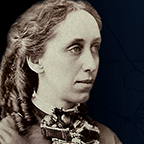
The most surprising thing I found came to light early in my research, and it is that the photograph of Lavinia Goodell that was featured in all previous articles and books mentioning her was not her at all. In the fall of 2018, through ancestry.com, I was able to make contact with several descendants of Lavinia Goodell’s eldest nephew. Virtually the first thing they told me was that back in 1959 one of their relatives had been asked for a photo of Lavinia and he sent off a picture of someone else. His daughter, Sarah Stamps of Nashville, Tennessee, who just died last year at age 95, saw the photo when it was returned and told him, “That’s not Lavinia.” The man responded that he was aware of that but said his photo of the real Lavinia was in poor condition and “This is a better looking woman anyway.” Ms. Stamps was a bit uneasy about the mix-up but she was busy raising a young family and decided the photo was unlikely to ever be disseminated so she did not try to correct the error at that time. Many years later Ms. Stamps was doing some family research online and, to her horror, she discovered that the picture of the “Faux Lavinia” was everywhere, including on a large plaque honoring Lavinia that had been installed in the Rock County Courthouse in Janesville, Wisconsin in 2000. Ms. Stamps and another relative made some efforts to correct the record but soon discovered that once erroneous information is on the web, it is very difficult to change it. Lavinia’s relatives were very pleased that we were researching their ancestor and urged us to try to “give her her real face back.” One of the most gratifying parts of our research project was doing just that. Through our website, social media accounts, and media accounts we have featured what we call the “case of mistaken identity,” and in December 2021, a new plaque bearing Lavinia’s true image was installed at the Rock County Courthouse. We would love to identify the woman in the “faux” picture. With assistance from another Lavinia relative, we have a good idea who it might have been but so far have not been able to definitively prove it. I have not given up on this quest and hope to be able to declare the case closed at some point.
A question from Nancy: My research over the last five years has focused largely on the time period from 1855 to 1880. Are there one or two women from that era that you particularly feel should be better known and why?
The thing that has caught my attention from the period is a type of institution that served women rather than an individual woman. American industrialists founded schools of design for women in northern cities in the decade or two before the Civil War. The curriculum was designed to train women in textile and wallpaper design, wood engraving, and other marketable artistic skills. It wasn’t a purely philanthropic endeavor. Textile mill owners, for instance, wanted to produce homegrown talent to replace the expensive designs they previously purchased from France. I want to know more about the women who attended these schools and what they did after they graduated.
***
Want to know more about Lavinia Goodell?
Check out the website: www.laviniagoodell.com.
Like the Facebook page: https://www.facebook.com/LaviniaGoodell
Follow her on Instagram: @laviniagoodell
***
Tomorrow it will be business as usual here on the Margins with a women’s-history- related blog post from me. But we’ve still got more people talking about women’s history from a lot of different angles next week. Don’t touch that dial!