




Talking About Women’s History: Three Questions and an Answer with Susan Ware
A pioneer in the field of women’s history and a leading feminist biographer, Susan Ware is the author and editor of numerous books on twentieth-century U.S. history. Educated at Wellesley College and Harvard University, she has taught at New York University and Harvard, where she served as editor of the biographical dictionary Notable American Women: Completing the Twentieth Century (2004). Ware has long been associated with the Schlesinger Library at the Harvard Radcliffe Institute, most recently as the Honorary Women’s Suffrage Centennial Historian. From 2012-2022 she served as the general editor of the American National Biography. She is currently writing a book about feminist biography and preparing two volumes on Eleanor Roosevelt for the Library of America.
Take it away, Susan!

You are one of the second wave feminist historians who helped create women’s history as an academic discipline. What sparked that interest for you? And did you face institutional challenges in addition to all the other challenges that confront someone writing about women in the past?
My interest in history was sparked by growing up as a voracious reader—I always had a book in my hands (still do). My interests vacillated between literature and history but in college I tilted towards history. This was the late 1960s, so it was very much “men’s” history, even at the women’s college I attended. But in 1970 I became aware of the powerful ideas of modern feminism, which caused me to ask “where are the women in history?” I never looked back. One institutional difference between my career and those of other, slightly older second-wave women’s historians is that they often started their careers in another field like Russian history (Linda Gordon), diplomatic history (Blanche Wiesen Cook), or colonial history (Linda Kerber) and then switched to women’s history, whereas I applied to graduate school in 1972 with the stated purpose of studying women. Why Harvard admitted me given their hostility to women’s history then and for many years after (talk about a chilly academic climate!) has always been a puzzle, but I thrived once I discovered the resources of the Schlesinger Library at Radcliffe and found mentors like Barbara Miller Solomon. Fifty years later I’m still at it.
You’ve written about a lot of interesting women. Do you have a favorite?
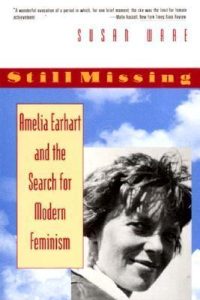
When Martha Graham was asked her favorite role, she would reply “the one I am dancing now.” Babe Didrikson Zaharias said the same thing about sports. I have always felt that way about my subjects, especially the biographical ones: my favorite is the one I am writing about now. But if I had to choose, it would be Amelia Earhart. I published Still Missing: Amelia Earhart and the Search for Modern Feminism thirty years ago and yet whenever I am asked to talk about her, I find myself just as excited and engaged as when I was researching the book. This is a good thing, actually, because I still am fielding calls, requests for interviews and lecture invitations on Earhart on a regular basis – and probably will until they find her plane. Such is her enduring hold on popular culture, whose coattails I have been delighted to ride.
For a book like Why They Marched, in which you look at a group of women, how did you chose which women to include?
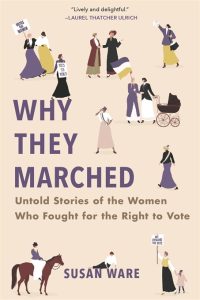
Why They Marched, my recent book on the women’s suffrage movement timed to the centennial of the Nineteenth Amendment, is a collection of nineteen portraits (the actual term is prosopography, but that’s too much of a mouthful) designed to capture the experiences of rank-and-file suffragists who made the vote happen in localities across the country. Biography –telling stories – is a perfect way to make the history come alive. I steered clear of national leaders (although I did include Susan B. Anthony) and tried to chose a range of subjects who represented the broad diversity of the movement in terms of chronology, geography, race, class, sexual identity and age. In addition I wanted to include a male suffragist as well as a female anti-suffragist. It was one huge balancing act but great fun too. Many of the subjects had some connection to the Schlesinger Library at Radcliffe, which has been my go-to library since graduate school. In many ways Why They Marched is a love letter thanking the Schlesinger Library for what it has meant to my career.
A question from Susan: During an intense few months in 1970 I was introduced to the powerful ideas of modern feminism by reading Betty Friedan’s The Feminine Mystique, Simone de Beauvoir’s The Second Sex, and Doris Lessing’s The Golden Notebook. Have you ever had a comparable life-changing feminist experience?
I was thirteen, going on fourteen, in 1972. I had already had the confusing experience of people telling me, on the one hand, that I was smart enough to do anything I wanted and, on the other hand, that there was a whole universe of things I couldn’t do because I was a girl. Then, seemingly all at once, the world changed with the passage of the Civil Rights Act, and Title XI in particular. For a brief, giddy time it seemed like anything was possible. That all the doors were open. I soon learned that wasn’t true: that some doors were still closed, and others were nominally open but had gatekeepers intent on keeping me from coming through them. But I never lost that sense of possibility—and I developed a taste for hip-checking my way through closed doors.
***
Want to know more about Susan Ware and her work? Check out her website at https://www.susanware.net/
***
Tomorrow it will be business as usual here on the Margins with a women’s-history- related blog post from me. But we’ve still got more people talking about women’s history from a lot of different angles next week. Don’t touch that dial!
Talking About Women’s History: Three Questions and an Answer with Elisabeth Griffith
Historian Elisabeth Griffith is an academic, activist, author, and expert on American women’s history. Her biography of suffragist Elizabeth Cady Stanton, IN HER OWN RIGHT, was hailed by both Oprah and the Wall Street Journal as “one of the five best books on women’s history.” It was the basis of Ken Burns’ documentary on Stanton and Anthony, NOT FOR OURSELVES ALONE, his only film about women’s history.
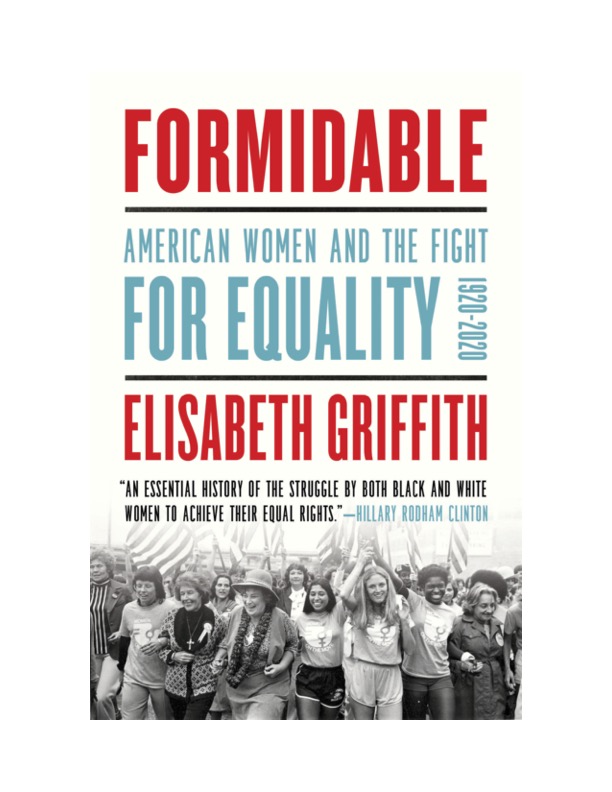
According to the Los Angeles Times, Betsy’s new book, FORMIDABLE: AMERICAN WOMEN AND THE FIGHT FOR EQUALITY, 1920-2020, is a “thorough and thoughtful” account of the struggles of white and Black women to expand their rights. The New York Times review found FORMIDABLE an “engaging, relevant, sweeping chronicle. [Griffith delivers a] multiracial, inclusive timeline of the struggles and triumphs of both Black and white women. A profoundly illuminating tour de force.”
A graduate of Wellesley College with a doctorate from American University, Betsy has been teaching women’s history for forty years. She marched for women’s rights in the 1970s with the National Women’s Political Caucus, before she led the Women’s Campaign Fund, a forerunner of Emily’s List. Her twenty-two-year tenure as headmistress of the Madeira School, a girls’ boarding and day school in McLean, Virginia, earned the Washington Post’s Distinguished Educational Leadership Award. A member of the Society of American Historians and Veteran Feminists of America, she has been a Kennedy Fellow at Harvard and a Klingenstein Fellow at Columbia.
Take it away, Betsy!
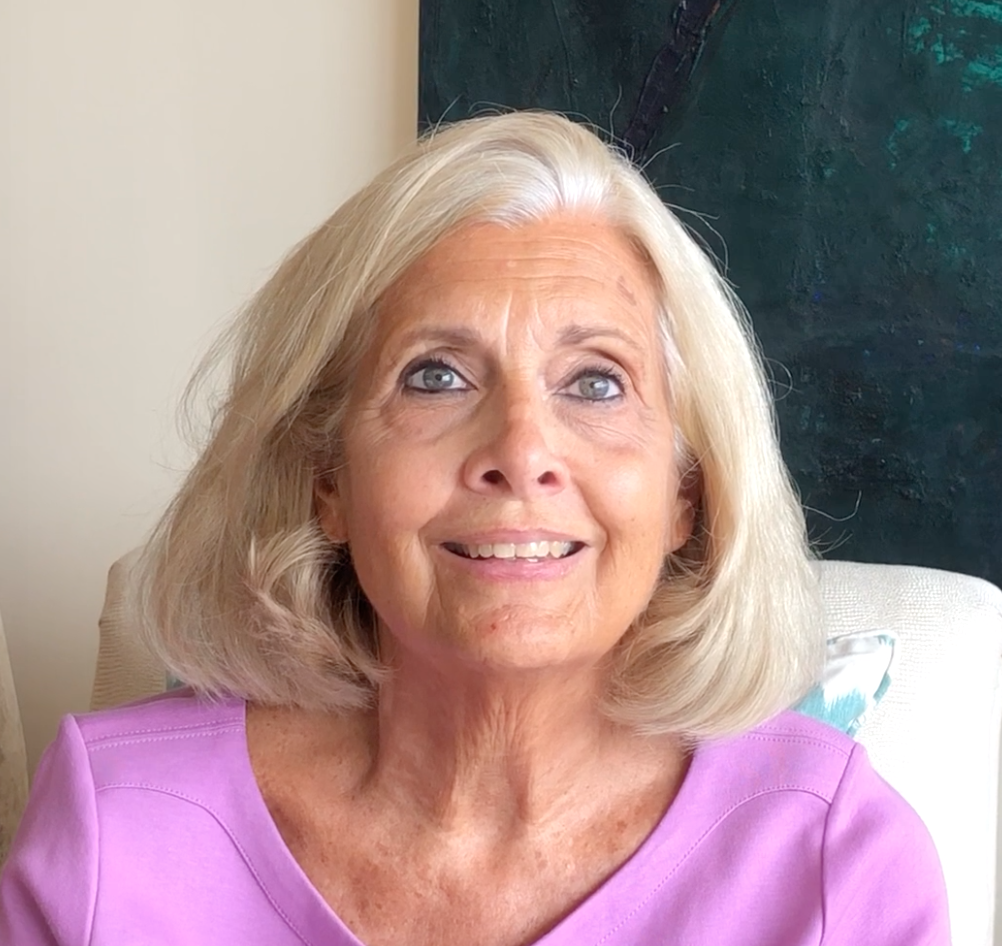
One of the questions I’m fascinated with right now is how biographers name their subjects, particularly when writing about a woman. You briefly discuss that subject in the introduction to Formidable. Where do you come down on the first name/last name question, absent any complicating factors?
When writing about the lives of men, biographers don’t have to worry about what to call their subjects. George Washington advanced from young George to Master George to Lieutenant Washington to General to Mr. President. He was always George Washington. In comparison, his wife was born Martha Dandridge, took her first husband’s name, and became the Widow Custis. When she married George, she was the General’s Lady. After her husband’s election, she was frequently called Lady Washington. The term “First Lady” appeared in 1838 and referred to Martha Washington.
The only name most women keep is their first. They exchange their fathers’ names for that of their husbands. For a married woman to keep her “birth” or “maiden” name was once both illegal and an act of feminist rebellion. Elizabeth Cady Stanton combined her father’s and husband’s names; Lucy Stone refused to take Henry Blackwell’s name. Neither woman vowed to obey their husbands. When Massachusetts granted limited local suffrage to women in 1879, the state insisted that Stone register in her married name. She refused, and never voted.
Francis Perkins, FDR’s Secretary of Labor, was another member of the “Lucy Stone League” of women who kept their birth names. Today, 68.5% of women take their partner’s names, even in 49% of LGBTQ marriages; 22% keep their birth names, and 8.9% use hyphens or create a new surname. The number of women keeping their own names is increasing among highly educated and high earning women, those who marry later, celebrities, and women committed to their personal “brand.” Maybe those women expect to become the subjects of biography.
Biographers of women who adopt married names, possibly more than once, face the naming quandary. Using only their first names, for consistency, seems disrespectful or dismissive once they become adults. To call married women by their married names leads to confusion with their husbands. For clarity in my biography of Elizabeth Cady Stanton, I call my subject Stanton and referred to her husband as Henry.
The more important issue is the act of naming women. “Say Her Name!” was the entreaty and demand of Black activists, that we acknowledge the Black women as well as the men who were victims of police violence. Historians of women want more women to be visible, remembered, respected, incorporated into the canon and included in the curriculum. While more and more notable women are being introduced to students and general readers, there are even more women whose names we will never know.
· Those of Native women whose tribes were by murdered by conquerors or germs or famine and whose descendants’ names were changed in government boarding schools.
· Those who were seized, enslaved, packed into slave ships, auctioned, raped, tortured, forced to give up their children, given the names of their owners, whose descendants fought for their rights for decades, with toilet paper and toothbrushes in their purses, anticipating beatings and jail.
· Women who crossed the plains, whose deaths are still marked by a cairn of stones.
· Women who worked in shoe factories or textile mills whose names only appear in census records or city directories.
· Immigrants whose names were misspelled on ship manifests or at border crossings.
Whether we know their names or not, we need to acknowledge the contributions women made to the creation of our country.
There are too many to name.
Do you think Women’s History Month is important and why?
It started with a week and it was never enough. Not enough time to recover and incorporate the lives and stories of the people ignored by the general narrative. That narrative, like all history, “was written by the winners,” who, in America, were mostly white men: the explorers, exploiters, frontiersmen, military leaders, statesmen, inventors, entrepreneurs, and politicians.
Over time, the American story became more inclusive and accurate as more perspectives were included and more primary sources were uncovered. Some accounts were lost with their original languages. Some were never written down by people forbidden to read or write. Other potential narrators were too poor or overworked to leave a record. Many were purposely ignored or silenced.
American history became more inclusive after the Second World War, when the mostly white beneficiaries of the GI Bill used its benefits to attend college. If they enrolled in history graduate school, these “social historians” wrote about soldiers, immigrants, factory workers, and farmers, still mostly men, but widening the lens.
To recover lost Black voices, Carter G. Woodson founded the Journal of Negro History in 1916. He published articles about slavery and professors from Fisk University collected stories from its survivors. On February 7, 1926, Woodson established Negro History Week. “If a race has no history, it has no worthwhile tradition,” he declared, “it stands in danger of being exterminated.”
Black communities had been honoring Lincoln since his assassination and segregated schools in Washington, DC, dedicated another day in February to teaching about Frederick Douglass. Woodson wanted to honor more than great men. Encouraged by Black churches and newspapers, by 1929 cities and states with sizable Negro populations adopted sundry teaching plans and classroom materials. By the end of the 1960s, Black history was offered more widely. During the 1976 celebration of the Bicentennial, President Gerry Ford recognized the value of Black History Month.
When draft boards denied academic deferments during the Vietnam war, graduate programs admitted more women. If they pursued women’s history, they confronted scarce source material. In 1970, Laura X, who like Malcolm X would not use her “owner’s name,” established the Women’s History Research Center, to collect archival materials and promote women’s history as an academic field. Credited with coining the term “herstory,” she launched a campaign to commemorate women’s history.
In 1978, a California county Commission on the Status of Women organized a Women’s History Week, to correspond with International Women’s Day, March 8. In 1980, President Carter made the week a national celebration. In 1987, the Congress created Women’s History Month. May became Asian-Pacific Islander Month and Jewish American Heritage Month. Hispanic History Month spans September and October, to incorporate what used to be known as Columbus Day and is now Indigenous People Day. Franklin Roosevelt established Columbus Day in 1937, to appeal to Italian American and Catholic voters. Politics has long played a role in how we acknowledge our past. The Daughters of the Confederacy rewrote the history of slavery and the Civil War into a cavalier myth of the Lost Cause.
All of these Americans, all of their stories, positive and negative, deserve more than a few weeks of attention. Our schools need to incorporate these narratives into lesson plans, and confront political pushback with facts. Every American deserves to know our whole history, in its full, rich, diverse, flawed, and glorious complexity.
You have spent your career teaching women’s history at a secondary and college level. What aspects of women’s history surprise your students most? What outrages them?
I’m passionate about teaching women’s history, as the length of my answers to earlier questions might indicate. I find it hard not to add one more fact or footnote.
I’m fortunate to have graduated from a women’s college at the cusp of the revival of the women’s movement in the 1970s. I had no classes in women’s history in any school I attended, although I did write a paper about mid-nineteenth century divorce and custody laws in a British history course. Noted historian Lady Antonia Fraser has expanded on that topic in her latest book, The Case of the Married Woman: Caroline Norton and Her Fight for Women’s Justice (2022).
But the combination of an institution led by women, in which students were challenged to use their brains and their leadership skills, and the energy exploding out of civil rights, anti-war and women’s rights protests fueled my interest in learning more. I moved to Washington, DC, enrolled in graduate school, and volunteered for the National Women’s Political Caucus.
The Caucus has been founded in 1971 as a bipartisan organization to elect more women and ratify the Equal Rights Amendment. Record keeping was casual and recollections were contradictory. In one creation myth, the first meeting of the NWPC was in a chapel on a junior college campus in DC. None of the organizers or the journalists covering it or anyone else knew enough women’s history to recognize the parallel to the first formal women’s rights convention in America, held in a Methodist chapel in Seneca Falls, NY, in July 1848.
I signed on, marched, lobbied, and was shouted at by both Bella Abzug and Betty Friedan. My actual tasks were more mundane. In anticipation of the first NWPC national membership gathering, in January 1973, I was put in charge of creating a backdrop behind the podium. This was long before “pipe and drape” setups or electronic screens displaying an organization’s logo. After I secured an American flag and some ficus trees, the setting still seemed anonymous. I wanted to signal that fighting for women’s rights was not a new proposition.
My search took me to the Smithsonian National Museum of American History, where I met the curator of political history, Edie Mayo. She led me into the back rooms where drawers held photographs of the founding feminists. I recognized Elizabeth Cady Stanton, Susan B, Anthony, Lucretia Mott and Sojourner Truth, but not Matilda Jocelyn Gage, Francis Ellen Watkins Harper, Carrie Chapman Catt, Ida B. Wells, Mary Church Terrell, or so many other unacknowledged foremothers.
We reproduced and enlarged the black-and-white photos of these old, wrinkled, care worn, unsmiling women, mostly wearing business black, and shipped them off, to post behind the podium and across the stage. Identifying them became an pop quiz.
Meanwhile, I’d chosen my dissertation topic, a biography of Elizabeth Cady Stanton, the principal organizer, with Lucretia Mott, of the 1848 convention. Stanton was the first to demand voting rights for women. In the history department at my university, there were no specialists in American women’s history. The only female, tenured, full professor was an expert on ancient Greece, but she was an ally and served as the only woman on my dissertation committee.
I was also teaching part-time at an independent girls’ high school, because it did not require a teaching certificate. I got the job because the head of the English department, who had been my teacher in public school in Michigan, introduced me to the head of the history department. We were all alumnae of the same women’s college. I was invited to reach a course about US politics, which allowed me to cover women in politics and in the streets. The Congress had passed the Equal Rights Amendment after Martha Griffiths (D-Michigan) freed it from the House Judiciary Committee, where it had been held hostage since 1943. The Supreme Court had decided Roe. Phyllis Schlafly had not yet joined the fray.
My new boss found funding for me attend the Berkshire Women’s History Conference. Founded in 1930 by women who felt marginalized in a profession dominated by white men, the “Berks” began as a series of weekend retreats in the Berkshire Mountains. It was reinvigorated in 1973 at Douglass College, Rutgers University. I returned, inspired if unprepared to teach one of the first women’s history courses at the high school level.
I’ve been teaching women’s history ever since – to diverse audiences, to boys and girls, to men and women, to Girl Scouts, high school students, undergraduates, women running for office, adults in lecture halls and bookstores, at corporate retreats, at dinner tables, with speeches, in books, articles and media appearances. The responses are always the same. “OMG! Who knew?” It’s a challenge, especially for young people, to imagine the lives of women decades or centuries ago – the lack of rights, the physical hardship, the early deaths brought on by exhaustion and childbirth, the lack of opportunity, the constricting clothing and confining laws. People find women’s history engaging, compelling, outraging, and empowering. It is.
A question from Elisabeth: What is the role of political leaders in defining the purpose and content of teaching American history?
In the best of worlds, I believe political leaders should play no role in defining the purpose and content of teaching American history—or any history for that matter. In prior years we left plenty of people out of the historical picture in the classroom, and we were all the worse for it. But that neglect was a result of cultural blindness, not a matter of official policy. Turning curricula into political battlegrounds is not the answer.
* * *
Want to know more about Elisabeth Griffith and her work? Check out her website: https://www.elisabethgriffith.com/
***
Come back tomorrow for three questions and a answer with historian Susan Ware.
Talking About Women’s History: Four Questions and an Answer with Eileen Bjorkman
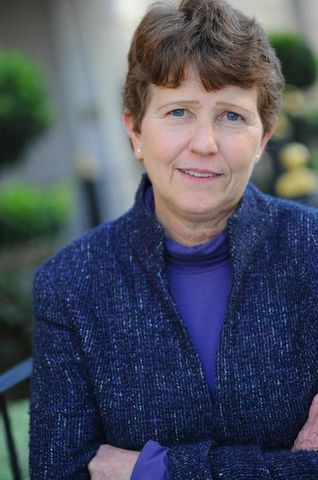
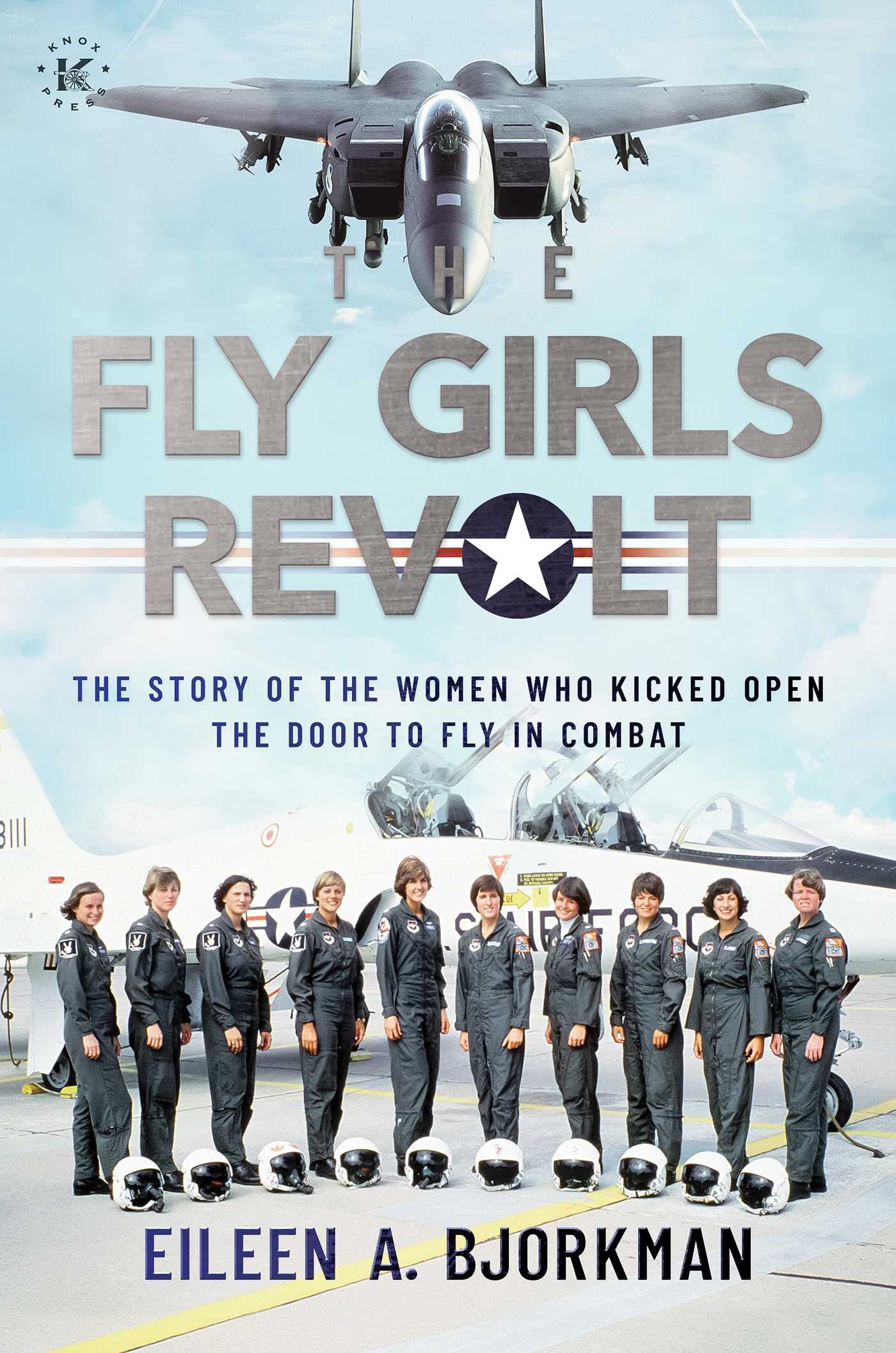
Eileen Bjorkman is a writer and retired Air Force colonel. She is the author of three books, including The Fly Girls Revolt: The Story of the Women Who Kicked Open the Door to Fly in Combat, which will be released in May. She has also had numerous articles and essays published in many outlets, including The Washington Post, Time.com, Air & Space, and Aviation History.
Take it away, Eileen!
What inspired you to write The Fly Girls’ Revolt?
I’ve read a lot of recent memoirs about women who have flown in combat in the past 20 years or so. And there are plenty of books about the Women Airforce Service Pilots in World War II, a group of about 1,000 civilian women who ferried military aircraft and did other support flying during the war. But there are almost no books about the women of my generation who served in the military in the 1970s and 1980s. This is the first generation of women who trained as military pilots, but could only fly support aircraft. These women led the charge to open the door in 1993 to allow women to fly combat aircraft. The full story that gives credit to everyone involved in making the change has never been told, so I wanted to tell that story. And the story isn’t just about women aviators; it’s about all the women who served and proved they belonged, along with those who supported them along the way, such as members of Congress and lawyers, including an unknown lawyer in the 1970s, Ruth Bader Ginsburg.
We’re all familiar with the challenges of finding sources for writing about women from the distant past. What are the challenges of writing about women from the late twentieth century?
The biggest challenge I had was finding materials in archives. A lot of material from that time period in military archives is still marked “For Official Use Only” or is still considered classified, even if the normal 25 year point for declassification has passed. I likely could have accessed some of the materials I wanted if I’d had time to file FOIA (Freedom of Information Act) requests, but I was on a tight timeline because I wanted to get the book published to coincide with the 30th anniversary of opening the door to combat in 1993. I’m not sure it made that much difference overall because I was able to learn much of what I needed by interviewing women, but some of the official sources would have been nice for fact checking and providing another perspective. Another challenge was that some of the archival material I used was recently donated and hadn’t yet been organized. I had to examine every single document in about a dozen boxes to see if it had any relevance to my research. I enjoyed looking at all the documents, but again, I was short on time, so some better organization might have helped. Last, a lot of the archival materials had maiden names in them, so I sometimes had to chase down who was who and what their current name was if I needed more information or wanted to check something. Fortunately, the Women Military Aviators association was able to help me find most of the women.
Did your own experience as a military aviator shape the writing of The Fly Girls’ Revolt?
Yes, definitely. I was a flight test engineer, not a pilot, and because of that, I was able to fly in the back seat of fighter aircraft because the airplanes we used for testing weren’t considered combat aircraft. From my own experiences, I knew that women were fully capable of flying combat aircraft, so I was a big proponent of opening the door, even though it didn’t impact me personally. I followed the news on women aviators very closely, and I knew some of the women who were working hard to get into combat. Knowing the basic story and some of the women helped shape my research from the beginning, as I knew which events I wanted to cover. I of course discovered some other things during my research that I included, but knowing the basic outline helped me focus. I also knew that I wanted to put myself into the story in a few places since I had the experience of being one of a handful of women who flew in fighters before it was allowed. I wanted to talk about some of the issues I encountered, as well as my ability to navigate the fighter and test pilot cultures to be part of the team.
What was the most surprising thing you’ve found doing historical research for your work?
I’d have to say it was learning that some things were not exactly the way I remembered them from the 1980s. I had some misperceptions about the Reagan administration’s attitudes towards women in the military because of what I’d observed as a young woman. I found during my research that I was wrong. I also learned things about one of the main characters that led me to write about her in a different way than many writers have previously. Having access to original source documents was very helpful in changing my mind about how to portray certain events and people. I think the biggest lesson learned is that, even if you’ve lived something, you still need to do research!
A question from Eileen: Why is it important to tell the stories of historical women today?
It’s really pretty simple. In her book, Headstrong, journalist Rachel Swaby describes the process of treating historical women scientists as scientists rather than anomalies or moonlighting wives and mothers as “revealing a hidden history of the world.” That’s true whether you are talking about scientists, or activists, or aviators, or journalists, or artists, or factory workers. When you put half the population back into history, you get a very different story.
* * *
Want to learn more about Eileen and The Fly Girls’ Revolt?
Check out her website: https://eileenbjorkman.com
Follow her on Twitter: @AviationHistGal
Follow her on Facebook: https://www.facebook.com/AviationHistGal/
* * *
Come back tomorrow for Three questions and an answer with historian and activist Elisabeth Griffith