




Talking About Women’s History: Four Questions and an Answer with Missy Gibson and April Grossinger
Last year, a writing friend of mine, Michele Hollow, introduced me to the hosts of the Sheela Na Gig podcast, Missy Gibson and April Grossinger.[1] She’d enjoyed being on the podcast and thought Sigrid Schultz and I would be a good fit for their concept. They agreed. The rest is, ahem, history.
Missy Gibson, a 30+-year L.A. transplant from Detroit, Michigan, is a singer-songwriter, touring musician, voice teacher, and podcast journalist. She is also a full-time mom of two kids, a personal stylist, and a wardrobe artist. Missy’s passion for women’s history has led her to host many eye–opening and laugh-out-loud historical trivia parties.[2] One of her favorite prizes to give is a mini-Poo Pourri—an excellent product (invented by a rad woman) that hides nasty bathroom smells. Missy is excited to now share her “parties” with a larger audience through the award-winning Sheela Na Gig podcast!
April Grossinger, originally from Queens, New York, is a career consultant and podcast journalist. She has spent much of her career helping women (and men) navigate career advancement, including career strategy, salary coaching, resume writing, and interview prep. She was the former Associate Director of Women at Work, a nonprofit dedicated to helping women bridge the pay gap. She is also a proud mother of two young adults and a very spoiled chihuahua named Ellie.
Take it away, ladies!

How do you choose the topics for your episodes?
First, it is important to acknowledge that, sadly, like a crime podcast, we are confident we’ll never run out of admirable women (whom we call “our Sheelas”) who have failed to get adequate recognition in history. Generally, in each episode, we take turns presenting a “Sheela”, surprising each other and our listeners with each new episode.
We both have several ways of identifying our Sheelas. Sometimes we know, or at least we’ve heard something about an unacknowledged woman, and then we dig deeper to discover her brilliance. Sometimes we cover women who have been acknowledged, but we believe their story can be told better or more accurately. And often, our listeners, friends, acquaintances, and relatives recommend someone.
Recently, Missy was introduced to a woman named Donaldina. When inquiring about her unusual name, Missy discovered her acquaintance was named after the heroine, Donaldina Cameron. When Missy went down the Donaldina Cameron “rabbit hole,” she found a rich network of new and astonishing Sheelas.
We also research obscure women online and identify Sheelas by reviewing historical dates and periods. For example, many World War II heroines remain largely unknown. They range from groundbreaking scientists to guerrilla-warfare resistance fighters. We’ve found brief references to Sheelas in advertisements, social media posts, books, and online magazine articles, too. Finding our “Sheelas” has become a favorite hunt for both of us. We each maintain lists of our many prospects, and bringing them to life has become a labor of love for us both.
When did you first become interested in women’s history?
Missy has always been a feminist history buff and often shared historical tidbits or played feminist trivia at the start of women’s networking events and during parties and other social gatherings that April attended. April has always been a women’s advocate in the workplace. As a career counselor, particularly at a women’s career center in the 1990’s, she conducted extensive advocacy on issues related to equal pay and occupational segregation. Upon hearing Missy’s “Women in History,” moments, she was riveted.
When we decided to launch a podcast together, Missy suggested women in history who were not sufficiently recognized, and we never looked back! Our shared passion for bringing women’s achievements to light is an honor we both savor every week. We like to say, “We’re fighting the fight & shining the light!”
What sparked that interest?
Missy first became interested in women’s history in 3rd grade when her teacher assigned a report on a historical figure. While most girls in her class chose Betsy Ross and Amelia Earhart, Missy went to her school library and found a book about Nellie Bly. She was enthralled by this bold investigative journalist, who exposed asylums by pretending she was crazy to get herself committed. Missy loved that she dressed like a man to nab a good story, made it around the world in less than 80 days, and even had a pet monkey on her shoulder! From that moment forward, she found herself delving into women she had never heard of before to learn more.
This was in the 1970s, when Missy’s homemaker mother experienced a renaissance as women’s liberation emerged. She began burning her bras, she separated from Missy’s father, and turned to books like “The Women’s Room” and to powerful women like Gloria Steinem and Betty Friedan. At the time, Missy wasn’t sure what gender equity, reproductive rights, and equal opportunities all meant, but it felt very important and empowering to her 8-year-old self.
At the same time, April’s mother was working as a secretary throughout her childhood. Although April watched her mother sit at a typewriter and answer telephones, she also witnessed her mother sitting in the same room as her business owner and real estate tycoon boss. April’s mother helped her boss structure business deals and navigate negotiations, signaling to him as she “read the room,” advising him on which negotiation tactic to use. While April’s mother was a well-paid “Executive Secretary,” she still served coffee to men and played a subservient role. Her mother often complained that her gender kept her from advancing to her rightful place at the executive table. As a result, April dedicated much of her career to helping women advance and increase their earnings potential. She is deeply aware of how recent history has confined Rosie the Riveter and how long and hard women have had to fight for equal pay and executive positions in the workplace. When April read “The Women’s Room” in college, it became a life and career-altering experience.
Why did you name your podcast Sheela Na Gig?
Sheela Na Gigs are figurative carvings of naked, haggard women with exaggeratedly large vulvas. They were found on churches, cathedrals, castles, and other European buildings from the 11th to the 16th centuries, particularly in Ireland, Great Britain, France, and Spain. Many have been destroyed, but some remain on building facades to date. An early interpretation of these carvings was that they were grotesque images representing evil and the embodiment of lust and sin. More recently, however, researchers have leaned toward the idea that they are pre-Christian folk goddesses representing female empowerment, fertility, and protection. We named our podcast from this latter interpretation. Since the women we showcase are largely “hidden” in history, we like the idea of setting these women free, “What once was hidden now set free, unabashed in her glory,” as our podcast theme song goes. Just like those exaggerated, open vulvas, we want to help our Sheelas stand out, no longer hidden, but rather bold and beautiful!

A question from Missy and April for Pamela: While researching women in history, we encounter remarkable, groundbreaking women whose boldness and audacity are not always in service to what might be considered “heroic” or “good.” An example might be Auntie Suzy, a midwife who murdered abusive husbands (whether or not their wives wanted the guys eliminated). We often debate whether to feature such controversial women on our podcast. We wonder if you also experience such dilemmas. If so, how do you grapple with that? If not, do you have any advice for us?
This was a central issue for me when I was writing Women Warriors. I started out with an image of heroic women, but I quickly realized that was too limiting. I finally decided to tell stories without regard to a woman’s perceived morality. Many of the women I wrote about were maligned as witches or viragoes, as sexually voracious, as sexually frigid, or as just plain crazy by the men who fought against them—and occasionally by the men who fought alongside them. Some of them are considered both national heroines and arch-villains depending on which side of the battlefield the person writing about them stood on. Examining how their stories were told, and the biases of the sources became an important element of my larger story: just because a contemporary engaged in a little trash-talking about a woman didn’t make it true.
Ultimately I believe it comes down to the purpose of the work. There is a long tradition of collective biographies of notable women that emphasize the heroic aspects of individual women’s stories. And that is a perfect valid model. The question to ask yourselves is Auntie Suzy, or any other controversial woman you want to consider, a Sheela by your own definition.
[1] Fair warning to podcast hosts: writers trade your names and contact information with wild abandon, assuming you’re good at what you do.
[2] An idea I am tempted to steal.
***
Want to learn more about MIssy, April, and Sheela Na Gig?
Visit their website
Listen to the podcast
Follow them on Instagram
***
Tomorrow will be business as usual here on the Margins with a blog post from me. Then we’ll be back on Monday with three questions and a answer from historian Lorissa Rinehart
Talking About Women’s History: Four Answers and a Whole Bunch of Questions with Joanne Mulcahy
Joanne B. Mulcahy is an essayist, biographer, and teacher of creative non-fiction. Her studies in anthropology and folklore inspired travels to the Arctic, Northern Ireland, Australia, and Latin America. Her travels, in turn, inspired three books, include the prize-winning Writing Abroad: a Guide for Travelers. In 2013, while teaching at La Universidad Latina de America, Mulcahy discovered the murals of an extraordinary but largely unforgotten artist. Her work on that artist, Marion Greenwood: Portrait and Self-Portrait—A Biography, was published in March, 2025.
Take it away, Joanne!
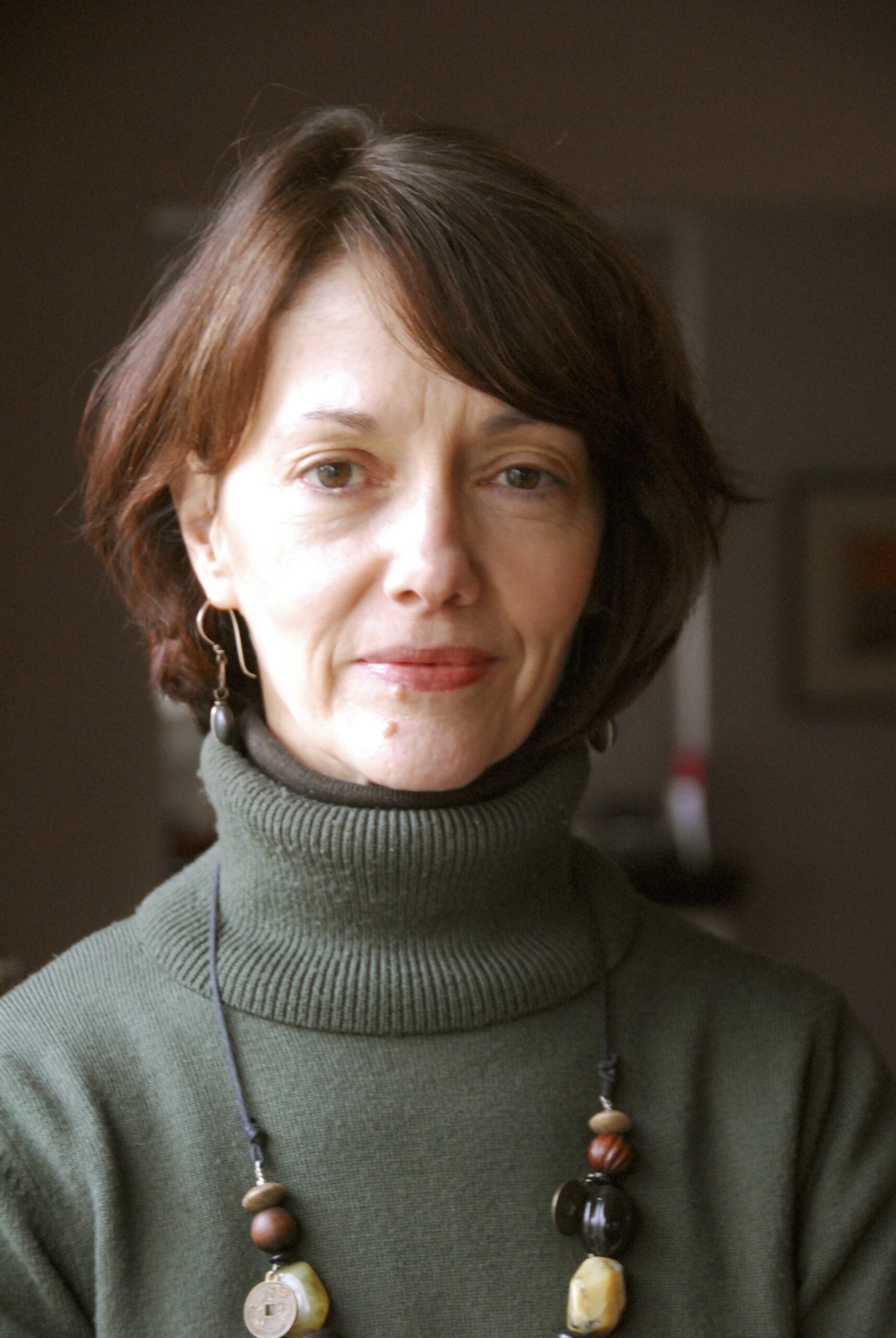
Writing about an historical figure like Marion Greenwood requires living with her over a period of years. What was it like to have her as a constant companion?
My husband jokes that of our nearly thirty-four years together, a third were spent in a ménage-à-trois with Marion Greenwood. There was no escape in our house! I posted images of Greenwood and her paintings on my walls and I bought a lithograph on eBay, now framed in the dining room. Her work filled my life for over a decade, as did her model of a life lived unfettered by society’s constraints.
Despite the vast differences in our lives, I needed and continue to need role models like Marion Greenwood. She forged her own path, resisted social conventions regarding marriage and children, and stayed passionately devoted to her art. She went to her studio daily but she also traveled the world, had many lovers, and generally indulged in pleasure. In the words of her second partner, Robert Plate: “Always with strong appetite for life, Marion ate too much, drank too much, even worked too much, and loved too much.”
But living with Marion Greenwood also revealed schisms between her public and private personae and the numerous struggles she experienced. The public artist wanted and received accolades for her work, beginning with becoming the first woman to paint a mural in Mexico at age twenty-four. Diego Rivera called her one of the world’s “greatest living women mural painters.” The private Marion confessed to her longing to experiment artistically and disappointment at returning to realistic portraits in order to make a living— a rare achievement for an artist then or now. Financial insecurity was a demon she never escaped. Her notebooks offered a glimpse of her money problems, and she lived hand to mouth for most of her sixty years. The publicly assertive woman also needed a level of emotional support missing from her marriage, which Robert Plate did deliver during the last twenty years of her life. Unearthing the hidden aspects of her publicly confident, intrepid, and adventuresome life just deepened my sympathy and admiration.
We’re all familiar with the challenges of finding sources for writing about women from the distant past. What are the challenges of writing about women from the mid- twentieth century?
I didn’t expect that the proximity of Greenwood’s era would pose challenges. If I were writing about women from say, the medieval world, I would suspend assumptions of shared values, world views, and other aspects of culture. The radical differences between eras come alive in one of my favorite articles, “Wonder” by Carolyn Bynum. She suggests adopting “the strange view of things” in order to penetrate a period foreign to our own. I see this as acknowledgment that we can stand in awe of differences yet never truly understand. In contrast, the mid-twentieth century felt, well, familiar, since I was born into it.
Identification with the subject can color the biographer’s experience. In her book Afterlives: On Biography and the Mysteries of the Human Heart, Megan Marshall described “proximate distance,” the ways in which we are both intimate with and apart from our subjects. Temporal proximity can heighten the identification. I had no idea when I found Greenwood’s mural that she came from an Irish Catholic family of six children, as do I. However, a deeper dive into her personal life and the first half of the 20th century turned those facile assumptions on their head. Greenwood’s family was quite unlike mine, and her path was marked by the challenges women faced in her time.
Greenwood left high school at fifteen to attend the Art Students League, a move that didn’t surprise her family of artists and would-be artists. She often pointed to this decision as illustrative of her determination. Yet her decisions raised eyebrow in an era when young women’s education was intended to make them marriageable. Greenwood did finally marry the British-born Charles Fenn; they divorced after thirteen tumultuous years. She lived with her second partner, Robert Plate without marrying, and she was critiqued for her romantic adventures in ways her male counterparts were not. She remained committed to her art during deeply conformist eras, especially the 1950s. I took inspiration from Greenwood’s life but came to recognize how sharply the barriers she faced contrasted with the freedom I had coming of age in the 1960s and 70s.
Regarding sources, my main challenge was the resistance of two collectors who owned archival materials they would not share. The long journey to acquiring those prolonged the research and thus the writing of the book. But Greenwood’s tenacity in her life and artistic practice kept me forging ahead as I confronted obstacles.
Did your training in anthropology and folklore inform your work on Marion Greenwood, and if so how?
My training in anthropology and folklore definitely influenced my understanding of Greenwood’s life and work. When I discovered her mural in Morelia, Mexico in 2013, I had planned to begin research on traditional healing among the Purépecha people of Michoacán. I’d already written two books about healers, one about a Mexican/Otomi curandera, the other about an Alaska Native midwife. However, Greenwood’s mural captivated me. I had to find out more about this American artist who had so powerfully depicted the daily life of the Purépecha in the 1930s. Soon I was deep into the terrain of art history, Mexican culture, and myriad other topics.
I have stayed attuned to debates around representing other cultures, especially ways to tease apart power and representation. Greenwood, I discovered, started out naïve but grew sensitive to her place as an outsider, becoming an advocate for indigenous artists in the WPA art programs. That said, she also fell prey to “romantic primitivism,” that attraction to “otherness” that sometimes blinds outsiders. That she evolved from that stance was due in part to Greenwood’s teacher, Winold Reiss. I’d never heard of this amazing German modernist who came to the US in 1913 to depict the diversity of the Americans. His influence on Greenwood’s vision of cultural diversity was enormous. My background made me particularly alert to these aspects of Reiss’ and Greenwood’s art and the surround that shaped them. Both linked art and social justice, seeking to show the uniqueness of each individual within a cultural context. Questions about cultural representation are of course different today than during Greenwood’s time, so I tried to account for the shifting nature of those discussions.
In your title, you refer to Marion Greenwood in terms of both portrait and self-portrait. What do you mean by that?
Greenwood was a portrait painter as well as a muralist and printmaker. My early research revealed that she was once well-known for the sensitive portraits that garnered a Carnegie Prize, among many others. Critics praised her ability to capture a subject’s inner spirit, one “excavated from beneath surface fact.” I expected that she would still be celebrated for that work, and had she lived beyond 1970, she might have been. Portrait painting is again in vogue, pioneered by artists of color, a resurrection that Greenwood would have applauded. But during the 1940s to the 60s, when abstract expressionism dominated, realism fell from grace and her work was often deemed merely reportorial.
Today, when she is acknowledged at all, it is for her murals, her derring-do, and lamentably, her beauty. When I set out, I had no idea that Greenwood was stunningly beautiful. Her friend Gladys Broksky said that her looks were “almost a handicap.” On my initial search, I found more portraits and photographs of her than by her. Among the artists who tried to capture Greenwood’s beauty and allure were Max Beckmann, Lola and Manuel Alvarez Bravo, Alexander Calder, Isamu Noguchi, Harry Sternberg, and Winold Reiss. Most of their portrayals are glamorous, highlighting her extraordinary looks. In contrast, her self-portraits reveal a woman unsmiling, understated, and decidedly unglamorous. She wanted above all to be taken seriously, a goal of women artists then and now. One of my favorite quotes is from art historian Jennifer Higgie, “The act of female self- portraiture—a woman declaring that her existence is something worth recording—is one of radical defiance: ‘Look at me,’ she is saying. ‘I exist. I have something to say.’ I chose the subtitle based on my belief that Greenwood wanted her self-portraits to point to her achievements, and to her goal of being remembered as a serious, passionate, and uncompromising artist.

A couple of questions from Joanne, who felt that turnabout with fair play:
On your website, you say “At the time, I was deep in the process of writing a proposal for a totally different book about another woman whose story deserves to be told. Is that story still in the works? And what other women call to you?
That story is very much still in the works. I’m currently working on a second draft of a proposal, trying to spiral out from the narrative of her complicated and creative life to see how she connects to today’s world. (wish me luck!)
As far as what women call to me: the overlooked lives, the formerly famous, the creative, the ones who live and work in times of fundamental social change, the shin-kickers. Often I end up following a theme. These days I find myself returning to women entrepreneurs, women inventors, and women artists and illustrators. Beyond that, I’ve got to feel a sense of personal connection, however tenuous that might be. I’ve walked away from more than one story that looked viable and relevant but just wasn’t a good fit.
You’ve written an amazing range of books. What unites the guide to socialism and the history of mankind with the fine-tuned biographies? How does the life link to the bigger picture?
First, it has to be said that the guide to socialism and the history of the world, and several other of my books, were work-for-hire, which means that I was hired to write a book that was someone else’s idea. I don’t take those jobs if I’m not actively interested. I’m proud of the work I did. But they don’t come from my gut the way Women Warriors and The Dragon From Chicago did.
And yet, there is a thread that holds them all together: that idea of fundamental change. Even my history of the world is told in terms of a series of fundamental changes.
***
Interested in learning more about Joanne and her work?
Check out her website : https://joannemulcahy.com/
***
Come back tomorrow for three questions and an answer with April Grossinger and Missy Gibson, the hosts of the podcast Sheela Na Gig
Talking About Women’s History: A Whole Lot of Questions and an Answer with Allison Tyra
Allison Tyra is the creator of Infinite Women, an online biographical database launched in 2020 that has grown to include more than 9,000 women’s stories from around the world, throughout history and across different areas of impact. She launched the weekly podcast of the same name in 2023 and also makes short-form videos for YouTube. Her first book, Uncredited: Women’s Overlooked, Misattributed, and Stolen Work (2025) came out of this work as she kept seeing the same patterns repeated across the huge range of women’s history and wanted to dispel myths around women’s capabilities by showing how their work and accomplishments have been downplayed and covered up by sexist forces.
Take it away, Allison!

What inspired you to start Infinite Women?
It’s very common to see listicles of “Five women artists you should know” or “Eight women scientists who changed the world” and so on, but there are never just five or eight women. So, being my spreadsheet-loving self, I started a list – that spreadsheet is now 240,000+ and constantly growing. It’s the kind of project that will never be completed, because there are always more women to find.
How do you chose the women whose biographies you post on the website?
All of my work is built on the work of others, from my books to the database to, of course, the podcast. While I do write some of the bios myself, the vast majority are shared with permission from other sources. So the biggest factor is what it’s available from other sources I can find. But that includes thousands of bios, so within that pool, I typically prioritize under-told stories and increasing the diversity and range of women in the database. The less representation a group has, the more I want to increase it, whether that’s disability, queerness, race or simply being from a less common category like architecture or archeology. I want people to be able to find as many examples of whatever kinds of women they’re looking for.
How do you choose the topics for your podcast episodes?
I don’t! My podcast is much broader than most, and I joke that I’ll talk about anything but cis dudes (and yet I somehow still get pitches from publicists wanting me to talk about them!). So that gives me the freedom to invite authors, historians, curators, etc. to just come and talk about their work. Sometimes something will catch my eye, like a book that looks interesting or something I see on Bluesky and I’ll invite the relevant person for a chat. But my only strategy is that I want to talk to people about interesting topics that they’re passionate and knowledgeable about, whether that’s a scandal in colonial Mexico or Ottoman wedding trousseaus.
You are also the author of Uncredited: Women’s Overlooked, Misattributed and Stolen Work, which includes more than 600 stories from throughout history and around the world. How did you choose the stories? Were there stories you were unhappy to leave out?
I describe my research for Uncredited as “passive” – other than a few internet searches for relevant keywords and phrases, I mostly just Venus fly trapped my way through, making notes each time I’d come across a story. This obviously happened a lot with my Infinite Women work, and I was fortunate not to have to cut any – in fact, I have 30 pages of links and notes with even more stories I’ve come across since then! Like I say, there’s always more women to find…
What was the most surprising thing you’ve found doing historical research for your work?
From a gendered standpoint, it was not only how much women’s history gets left out, but how hard patriarchal forces have to *work* to keep women out and cover up their stories. In Uncredited, I differentiate between what you might call neglect and intentional harm – the difference between the sexist assumption a woman was an assistant when she was an equal partner (or a model rather than one of the women actually programming the ENIAC computer!) and a man actively stealing credit from a woman.
What do you find most challenging or most exciting about researching historical woman?
I love patterns. I think the value I bring to the field is that while most people are focused on specific areas, I’m looking at such a broad (pun intended) picture that I can connect dots that those folks might not see, across time and place and fields of work. That’s really what Uncredited does, breaking down “we know women are as good as men, so why haven’t I heard of more women?” from “sexism… duh” into the specific mechanics of how that sexism plays out in real time and retroactively regardless of when and where and what profession we’re talking about. I over-analyze everything, so it’s nice to be able to apply it to something useful!
What work of women’s history have you read lately that you loved? (Or for that matter, what work of women’s history have you loved in any format?)
I just finished Mattie Kahn’s Young and Restless: The Girls Who Sparked America’s Revolutions, which I really enjoyed. I’m currently reading Chop Fry Watch Learn: Fu Pei-mei and the Making of Modern Chinese Food by Michelle T. King, and if that sounds like your jam, I adored Mayukh Sen’s Taste Makers: Seven Immigrant Women Who Revolutionized Food in America as well.
Not so much history, but my two feminist “I love this book, everyone should read it” recommendations are Caroline Criado Perez’s Invisible Women: Exposing Data Bias in a World Designed for Men and Soraya Chemaly’s Rage Becomes Her: The Power of Women’s Anger.

A question from Allison: We all know history narratives are shaped by individual and societal biases. As someone who tells these stories, what advice do you have for trying to identify and offset those biases in historical source materials, and to be aware of and minimize any you might have, to tell as accurate a version of history as possible?
These are question I struggle with all the time, and there are no easy answers.
I learned the most basic lesson about this my second week in graduate school in an independent study with my advisor, the great Barney Cohn. The structure was simple. He assigned a book. I came back the next week to talk about what I had read. He proceeded to blow my brain up. In our second session, and first real discussion, I was prattling happily about what I had read[1]. He stopped me and asked “What’s the source of that information?” I stammered a non-answer to a question it hadn’t occurred to me to ask. He then gave me an introductory primer on the inevitable bias in sources, particularly in the context of the colonial world. Asking “What’s the source of this information? What are the biases?” has been an intrinsic part of my process ever since. Sometimes, particularly in my book Women Warriors, the discussion of those questions becomes a critical part of the book.
Checking for my own biases is more difficult. (How do you see your way around a blind spot?). These days a large part of my personal work—as a historian, an American, and a human being–is coming to terms with the disjunction between the history we were taught and the history that was left untold. When that disjunction leaves me feeling sick at my stomach, I know I’ve come up against one of those blind spots. As I’ve said before on this blog, history is hard and I’ve come to believe it should be.
[1] I don’t remember what the book was. And I doubt if it matters. I suspect the result would have been the same no matter what.
***
Want to learn more about Allison and Infinite Women?
Check out her website: https://www.infinite-women.com/
Explore the Infinite Women biographical database: https://www.infinite-women.com/infinite-women/
Listen to the weekly Infinite Women podcast: https://www.infinite-women.com/podcast/
Watch the short Infinite Women videos on YouTube: https://www.youtube.com/@infinite_women
Check out her book: Uncredited: Women’s Overlooked, Misattributed, and Stolen Work (2025): https://www.infinite-women.com/books/
Sign up for the weekly Infinite Women newsletter: https://www.infinite-women.com/weekly-newsletter/
***
Come back tomorrow for four questions and an answer with Joanne Mulcahy