




Talking About Women’s History: More Than Three Answers and a Question with Sarah Rose
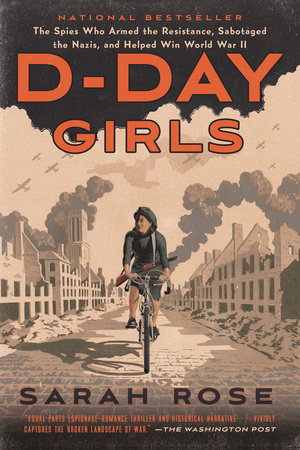
Sarah Rose is a journalist and bestselling author of D-Day Girls: The Spies Who Armed the Resistance, Sabotaged the Nazis and Helped Win World War II, and For All the Tea in China: How England Stole the World’s Favorite Drink and Changed History. A former news columnist at the Wall Street Journal, her feature writing appears in Outside, The New York Post, Travel + Leisure, Bon Appetit, The Saturday Evening Post, and Men’s Journal. Sarah is a graduate of Harvard College and the University of Chicago.
I’m pleased to have her here for what turned out to be seven questions and an answer!
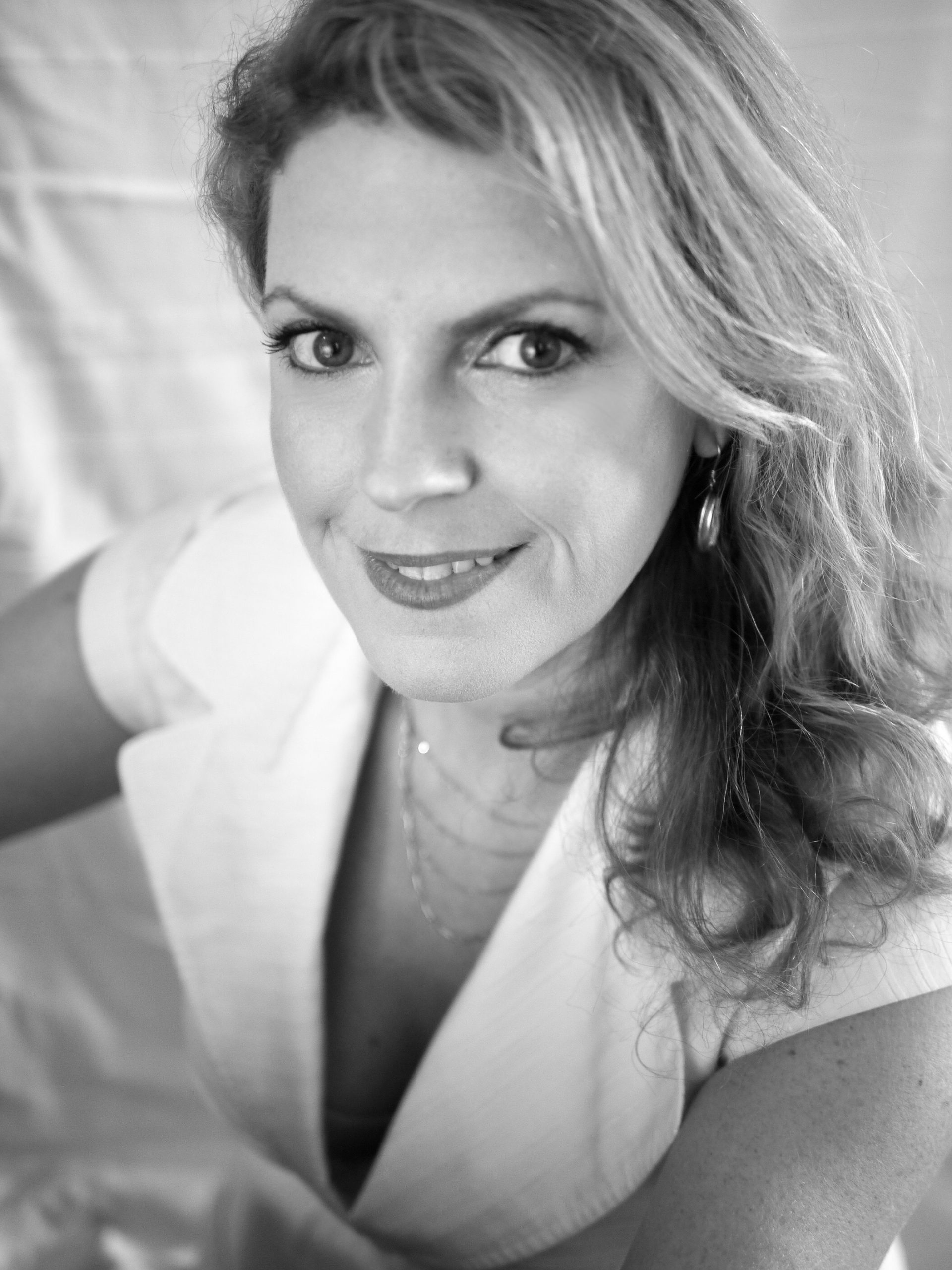
How did you discover the women you write about in D-Day Girls?
I was interested in writing about women in the military – how do women operate in traditionally male spaces? When I asked the question “Who was the first woman in combat?” I discovered it was the women of SOE, the Special Operations Executive. And it wasn’t a new phenomenon, it was 75 years old and we had mostly forgotten their stories.
D-Day Girls tells the story of three fascinating women. Do you have a favorite among them?
I suppose I feel most strongly about Andree Borrel because she wasn’t able to tell us her story. Almost everything we have is a secondhand source. A lot of energy went into figuring out what happened to her, so we know a lot, but in her voice we only have these 5 letters she managed to sneak out of prison before she died.
How does your experience as a journalist inform your work as a historian?
I don’t really think of my work as a reporter and as a historian separately. My trade is sources and stories. When I was reporting, it was always my job to know everything about my subject before an interview, and I spent a lot of time in the morgue, or in databases, researching. As a historian, it’s harder (though not impossible) to interview live sources, but there are still vast swaths of original documents that tell the story. It’s my job – as a reporter or a historian – to interrogate sources and make them cohere as stories.
How would you describe what you write?
I write narrative non-fiction. Traditional history can be bland, written from the point of view of the present, from a results-oriented perspective, as if the conclusion was obvious to everyone at the time. But that’s not how we live at all. No one knew how D-Day would turn out, Eisenhower had no clue. And if you read the histories, it is taken as a given that the Allies won the day. I don’t know who wins the 2020 election. We have no idea how our own lives will end, this is the human condition. So I try to write a story that is true, but I want it to read like lived experience, as if it were a great novel. I am not allowed to make anything up – everything, every thought from a character, every bit of dialogue, every description of every room can be sourced.
Who are some of your favorite authors working today?
Erik Larson is the master of narrative non-fiction. I study everything he writes, I try to reverse-engineer why his books are such a pleasure to read, why they work and how he is just so good.
What do you find most challenging or most exciting about researching historical women?
Women’s work is historically mis-categorized. When I started D-Day Girls, the scholars in the field said women of SOE “didn’t do much” or “they were just couriers” as if parachuting behind enemy lines and blowing up Nazi installments, surviving Gestapo interrogation is somehow not much. And what they mean is it’s not as important as the male agent’s work. (This is, according to men…) If you center the women’s stories – make the men the marginal players – whole new narratives reveal themselves.
So for instance, if we were to pick one thing in WWII that changed the war more than anything else, that did more to turn the war in favor of the Allies, we could reasonably argue that it was ULTRA, the decrypting of the Enigma machine, that allowed us to get our convoys across the Atlantic and overpower Hitler. This was work performed overwhelmingly by a female workforce, Bletchley Park was 80 percent women. So, led by a gay man, Alan Turing, a force of primarily women won World War II.
It takes centering the experiences of marginalized voices to even see an argument that women won the war. This isn’t about participation trophies: we are less safe now, as a nation, if we don’t recognize the way women — and women’s work — contributes to the national defense.
Do you think Women’s History Month is important and why?
It helps to see ourselves in history to make history. We need role models. We shouldn’t have to break every glass ceiling for the first time. Some ceilings were already broken but the stories got lost, mostly because men wrote the stories. There are hidden figures everywhere.
May there be so much equality someday that every month is women’s history month.
And a question from Sarah for Pamela: Tell us about a woman (or group of women) from the past who has inspired your writing.
At the personal level, my grandmother who told me stories about her own childhood that inspired my interest in the past and my mother, who is also a writer and who taught me by example about seizing time to write even when it wasn’t easy.
Moving beyond my own circles: I want to be Barbara Tuchman when I grow up. Like Eric Larson, she was a master of narrative non-fiction. And she pursued stories that caught her imagination across a broad range of periods and topics.
Want to know more about Sarah Rose and her work?
Check out her website: https://sarahrose.com/
Follow her on Twitter: https://twitter.com/thesarahrose
* * *
Come back tomorrow for three questions and an answer with historian Kimberly Sherman, who asked me a really tough question.
Reading Your Way Through Women’s History Month, Pt 1
We’re a week into Women’s History Month and people all over the internet are posting lists of good books about women’s history.* I am happily adding names to my To-Be-Read list, which is already so long that I may never work my way through it. But in the excitement of learning about new (or at least new-ish) books, it’s easy to forget (slightly) older books of women’s history.


Here are links to a dozen reviews from earlier posts, just in case your list isn’t long enough already:
Marie von Clausewitz: The Woman Behind the Making of On War (Okay, this isn’t technically a review. It’s an interview with the author. My blog; my rules.)
Astrid Lundgren’s War Diaries, 1939-1945
Goddess of Anarchy: The Life and Times of Lucy Parsons, American Radical
Warrior Women: An Archaeologist’s Search for History’s Hidden Heroines
Meg, Jo, Beth and Amy: The Story of Little Women and Why It Still Matters
The General’s Niece: The Little-Known De Gaulle Who Fought to Free Occupied France (FYI. You’re going to be hearing more from Paige Bowers later this month
The Amazons: Lives and Legends of Warrior Women Across the Ancient World
Fly Girls: How Five Daring Women Defied All Odds and Made Aviation History
Dickey Chapelle Under Fire: Photographs by the First Female War Correspondent Killed in Action
Daughters of Chivalry: The Forgotten Princesses of King Edward Longshanks
That should keep you busy for a while.**
*I was pleased to be included in this list: 8 Unforgettable True Stories of Women Who Made Their Mark on History
**If you’re looking for more suggestions, I highly recommend Greer McAllister’s blog series #read99women, in which 99 women authors recommend books by and about women. (Full disclosure: I made my recommendation on February 27.)
A FEW PUBLIC SERVICE ANNOUNCEMENTS
If you are reading this in real time: we spring forward into Daylight Savings Time on Sunday. Don’t forget to change your clocks. (I also celebrate this event by cursing whoever decided this was a good idea. It doesn’t actually save daylight. It just steals it from the morning people and gives it to the night people. Rant over. Until next year.)
I will be speaking about Women Warriors in the Twin Cities on March 11. Here are links to the details:
St. Paul https://www.globalminnesota.org/event/global-conversations-st-paul-women-warriors/
Minneapolis https://www.globalminnesota.org/event/global-conversations-minneapolis-women-warriors/
In case you missed it, Women Warriors is now available in paperback.
* * *
Come back on Monday for three questions and an answer with Sarah Rose, author of The D-Day Girls !
Talking About Women’s History: Three Questions and an Answer with Kip Wilson
A novel based on a real-life teenager who resisted the Nazis. Written in verse. How could I resist?
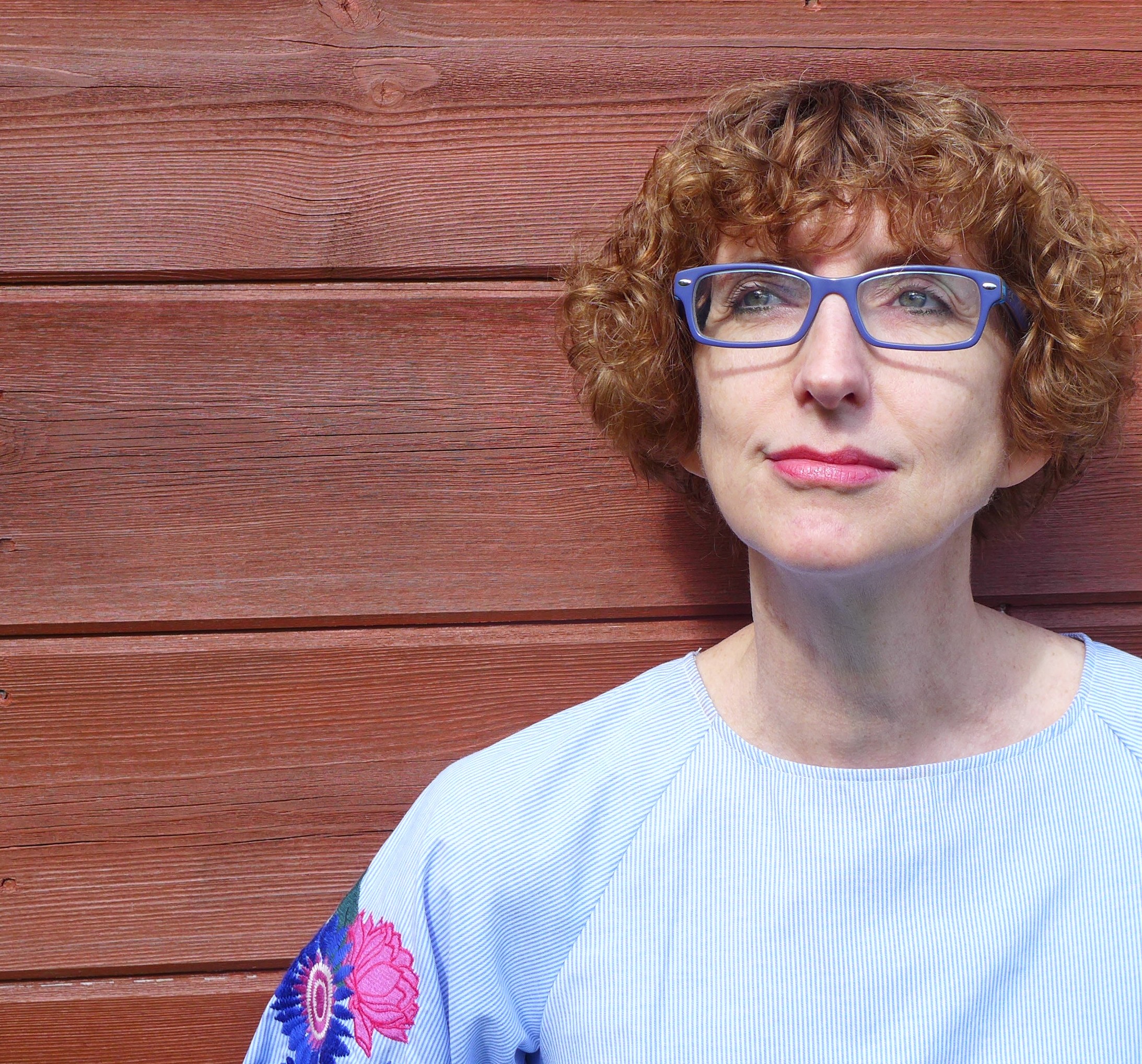
Kip Wilson is the author of White Rose, a YA novel-in-verse published by HMH/Versify about anti-Nazi political activist Sophie Scholl. White Rose won the 2017 PEN New England Susan P. Bloom Children’s Book Discovery Award, was a 2019 Winter/Spring Indies Introduce and Indies Next title, and received four starred reviews. Kip holds a Ph.D. in German Literature and wrote her doctoral dissertation about the poet Rainer Maria Rilke. She’s lived in Germany, Austria, and Spain, and currently calls Boston home.
Take it away, Kip:
What type of historical figure makes a good base for a historical novel?
As a young adult author, I look above all for figures who would be inspiring and relevant to teens. When I first learned about the White Rose resistance group back in my own high school German class, I found the mission of these young people—standing up against the Nazis in spite of the danger—to be incredibly inspiring. As the youngest member and only core female in the group, Sophie Scholl became a personal heroine for me, and I’m so thrilled to be able to share her story with American teens who might not otherwise know who she was.
One question that came to mind for me: Why did you chose to tell Sophie Scholl’s story as a novel in verse?
My inspiration to write in verse stemmed from a love of reading poetry and novels in verse. In the case of White Rose, I had been trying for *years* to find the right format for the subject. I first tried to write the book as nonfiction, but it just wasn’t working, and I set the project aside. Years later during a chat with two verse novelists, I learned that verse is often the best format for difficult, tragic subjects—that the whitespace helps the reader (and the author!) process the heaviness of the words. With that in mind, I figured out that writing the story in verse might be the very thing it needed, and I got to work on it the very next day.
What did you find most challenging about researching Sophie Scholl’s story?
There’s a temptation with historical fiction to try and fit in as many interesting facts as possible to the narrative, but that doesn’t always make for the most engaging read. So as much as I love all the research myself, one of my biggest challenges with this project was giving myself the freedom to go beyond those documents and fictionalize some of Sophie’s thoughts and emotions. I’m so glad I allowed myself to do so, however. Adding a bit of (hopefully authentic) fiction to the history definitely took the manuscript to a new level and helped bring her to life on the page.
From Kip for Pamela:
My question for you is a two-part question about inspiration from travel. First, what historical site have you visited that most inspired you to uncover more about a historical woman, and second, what woman from the past is still calling you to visit one of her historical sites?
Hmmmm. The first part of your question is hard to answer simply because there are so many possible examples! As regular readers here on the Margins know, whenever we travel I stumble across ideas/things/people that send me down the research rabbit hole to learn more. One example of that would be the Mozart sites in Salzburg, which left me eager to know more about his older sister, Maria Anna Walburga Ignatia Mozart (1751-1829).
As far as the second goes, I want to visit the Gene Stratton Porter sites in Indiana. We’ve come close, but never quite made it. Porter was a novelist and an early conservationist. I’ve loved her books since I was a child and I’d like to spend some time walking in her footsteps. In the meantime, maybe I’ll pull Girl of the Limberlost off the shelf for another read.
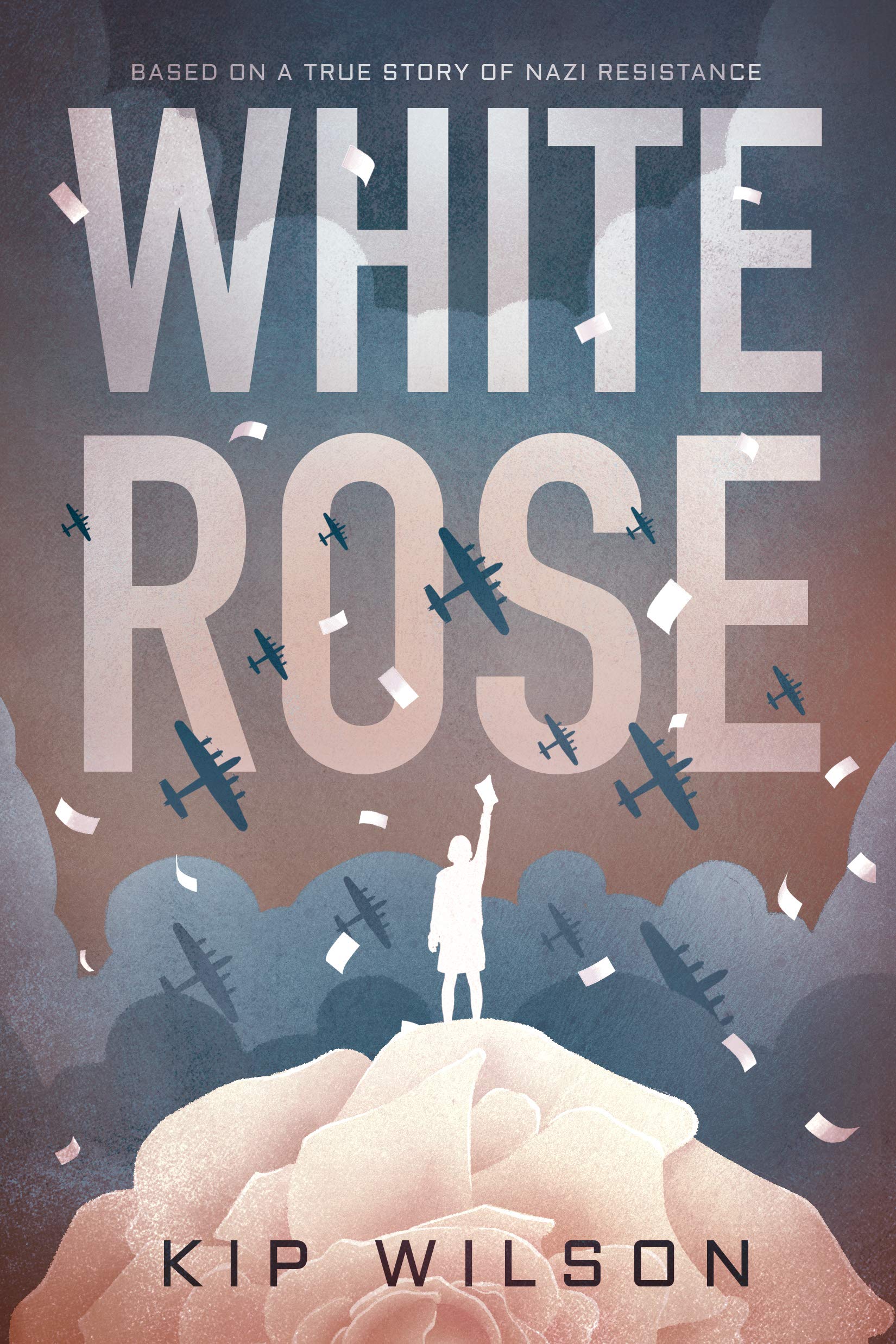
(Is that cover gorgeous or what??)
Want to know more about Kim Wilson? You can find her in the following places:
Website: http://www.kipwilsonwrites.com/
Twitter: https://twitter.com/kiperoo
Instagram: https://www.instagram.com/kipwilsonwrites/
* * *
Tomorrow it will be business as usual here on the Margins with a blog post from me. Then we’ll be back on Monday with an interview with the amazing Sarah Rose, author of D-Day Girls.