




Boat Trip Through History: Muhammad Ali (No, Not the Boxer)
I recently got back from two weeks in Egypt with my BFF from graduate school: a river cruise on the Nile with many shore expeditions to see the things a card carrying history nerd would expect to see, and some things that were totally unexpected.[1] I have stories to share—probably more than I will actually manage to tell because it gets harder to channel the excitement with the passage of time. Let’s go!
***
Our first expedition was a visit a site known as Citadel Cairo, which includes the citadel built in the twelfth century by Saladin to protect Cairo from the Crusaders,[2] and a mosque built by Muhammad Ali Pasha in the mid-nineteenth century. I was looking forward to seeing Saladin’s citadel and learning more about him. Instead, the focus was the mosque and Muhammad Ali, an Albanian mercenary in the employ of the Ottoman Empire who became the defacto ruler of Egypt and is often described as the father of modern Egypt.[3]
I remembered a few disconnected stories about Muhammud Ali from my dissertation days.[4] (He fascinated European painters and poets during his reign.) But I didn’t have a feel for the bigger story. Once I got back home, I pulled my Big Fat Islamic History Books off the shelf and dove in.

Muhammad Ali Pasha, ca 1840, by Auguste Couder
The short version: It’s complicated.
The slightly longer version (which requires footnotes and asides because there is a lot of background information) :
Egypt was in political disarray when Muhammad Ali arrived in 1801. The three-year occupation of the country by the French under Napoleon had weakened the power of the Mamluks[5] who had ruled Egypt for more than 500 years, first as an independent sultanate and later as a provincial military and bureaucratic elite as part of the Ottoman empire. Determined to reassert their authority in Egypt, the Ottomans sent an occupying army, including a contingent of Albanian soldiers led by Muhammad Ali. As the Mamluks and the Ottomans duked it out for the control of Egypt, Muhammad Ali played each side against the other, slowly strengthening his position in Egypt at the expense of both.
In 1805, the sheikhs and ulema of Cairo led a revolt against the Ottoman viceroy. In the course of that revolt, the ulema declared Muhammad Ali governor of Egypt.[6] The Ottoman sultan confirmed the appointment several weeks later, perhaps with some hesitation given Muhaammad Ali’s track record of grabbing power whenever he got the chance.
Muhammad Ali was now the Sultan’s man in Cairo, but he still had to deal with the Mamluk forces. In 1811, after several years of political and military fighting with the Mamluks, he organized the death of the remaining Mamluk leadership, an atrocity known as the “Massacre at the Citadel”. He invited some 500 Mamluk rulers to a ceremony at the Cairo Citadel, which remained the military and political center of Egypt in the centuries after Saladin.[7] As they entered the citadel’s massive gateway the gates swung closed and the Mamluks were shot down. [8] The massacre of the leaders was followed by an indiscriminate slaughter of Mamluks throughout Egypt. (They were, after all well-trained, well-organized soldiers, with a history of promotion from within. They could well have risen up against him under new leaders..)
With the Mamluks out of the way, Muhammad Ali began to rebuild Egypt into a regional power, sometimes acting as the agent of the Ottoman empire and sometimes acting against them. He invaded the empire in 1831 and again in 1840—both times England and France intervened on the Ottomans’ behalf. In 1840, he accepted a brokered peace, withdrawing from Ottoman territory in exchange for hereditary rule over Egypt for himself and his sons. His dynasty ruled Egypt for more than a century, until the revolution of 1952, when King Farouk was deposed.
[1] As those of you who get my newsletter know, I was gobsmacked by the sheer size of Cairo.
[2] He used stones taken from some of the smaller temples at Giza—not the first ruler to reuse building materials from an earlier culture.
[3] Personally, I think that title should go to Gamal Abdul Nasser, the Egyptian military officer who was a leader in the revolution against King Farouk in 1952 and played a major role in creating the Republic of Egypt.
[4] See link to my newsletter above if for some unimaginable reasons you want to know more about the dissertation
[5] The Mamluks were not actually a dynasty in the way we normally use the word. They were a self-perpetuating military elite made up of freed slave solders. When one sultan died, his inner circle chose his successor from within their ranks. (Perhaps the Mamluks should be the subject of another blog post? Let me know if you’re interested.)
[6] The Ottoman viceroy did not go quietly, but this is still an abbreviated version of events. Assume lots of violence at every stage of the game.
[7] Why let a mammoth stone fortress on the high ground go to waste?
[8] This event captured the European imagination at the time and was the subject of a number of Orientalist paintings. most notably The Massacre of the Mamelukes by Horace Vernet. 1819

Isaac’s Storm: A Man, a Time, and the Deadliest Hurricane in History

For several months now, Isaac’s Storm: A Man, a Time, and the Deadliest Hurricane in History by Eric Larson has been my traveling book—the one I read on airplanes and city buses. I recently finished it on the last leg of a trip. And I have thoughts.
Isaac’s Storm tells the story of the hurricane that flattened Galveston in 1900. Larson captures the epic scale of the storm while telling us a human story of tragedy and loss.
Larson uses more than half the book to build to what he terms the cataclysm, a combination of unstoppable natural power and bad decisions based on hubris. He opens the book on the night before the storm, introducing us to Galveston and to Isaac Cline, the U.S. Weather Bureau’s resident meteorologist in Galveston. In the second chapter, he introduces us to the other major character of the book, the storm itself, with a breathtakingly beautiful line: “It began, as all things must, with an awakening of molecules.” Moving forward he describes how the storm grew, making the science of hurricanes clear to this non-scientist.[1]—and how new the science of meteorology was at the time. He gives us the history of the Weather Bureau, and a vivid picture of how political infighting within the organization contributed to multiple miscalculations about the power of the storm and where it would hit land. He introduces us to individuals in Galveston. He builds the tension.
The pace picks up when the storm hits Galveston. Using telegrams, newspaper accounts, letters, and later memories of Cline and others, Larson takes his readers back and forth through the city, tracing the experiences of the people to whom he has previously introduced us. Each story is marked with uncertainty, as people make decisions that will determine whether they and those around them will live or die. Larson’s storytelling is masterful in this section, holding the reader is suspense as he moves from vignette to vignette
Isaac’s Storm came out in 1999—not Larson’s first book but his first work of the narrative non-fiction for which he is famous. When compared to his later books of his, it is clear that he is still learning his craft. If I felt any disappointment, it is because I have read later work: early Larson is still better than many books that I read.
*****
A small coda: As those of you who have been following me around for a while know, I adore footnotes. For those of you who ignore the footnote section, Larson opens his notes in this book with a lovely brief essay on exploring “the lives of history’s little men.” I strongly recommend it to readers, and writers, of biography. I think I will return to it in the future.

[1] I will admit, several days after I closed the book, I would not be able to reproduce most of the science if you asked me to do so.
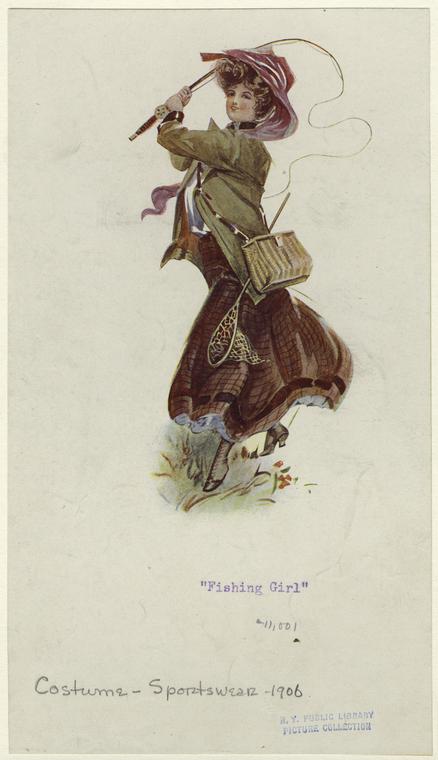
Gone Fishin’
I’m getting ready to go on a Boat Trip Through History with my BFF from graduate school. We’re taking a river cruise on the Nile where we will see all the things we dreamed of as nerdy little girls who were fascinated by ancient Egypt. Nine-year-old Pamela would have been over the moon. For that matter, middle-aged Pamela is pretty dang thrilled.
I have no doubt I’ll bring back stories to share.
Later, y’all.