




In Which a Tomato Appears Before the U.S. Supreme Court

I have tomatoes on my mind these days.
Chicago has been hovering on the edge of spring of days now–though you wouldn’t know it by looking out the window today. Last week I planted peas, lettuces and radishes. I’m eager to plant heirloom tomatoes, cucumbers, beans, summer herbs, some more tomatoes. But the weather isn’t quite cooperating., so I’m going to have to wait until we get back from the Great D-Day Tour. Which means waiting a couple of weeks longer before we have tomatoes from my two raised beds.
In the absence of an opportunity to play in the dirt, I’ll share a small historical controversy surrounding the tomato.
As someone is always willing to point out, the tomato is botanically a fruit.* In the United States, the tomato is legally a vegetable, and has been since 1893 thanks to a ruling by the United States Supreme Court in the case of Nix v. Hedden .
The case began with the Tariff Act of 1883, which placed a ten percent tax on imported vegetables. Some vegetable sellers refused to pay the tax on imported tomatoes on the grounds that the tomato is a fruit. Edward L. Hedden, a customs official at the Port of New York, didn’t buy it. When a vegetable merchant named Nix imported a load of tomatoes, he imposed the tariff. The Nix family sued.
After six years, the case reached the Supreme Court. Technically, the Nix family was right. Nonetheless, the Supreme Court ruled that since we eat tomatoes like a vegetable, they are a vegetable for purposes of trade. If it walks like a duck and quacks like a duck, you tax it like a duck.
* I must admit, sometimes that person has been me. Sorry.
So Much Depends on a Pair of Trousers
As I’ve mentioned before, in the course of reading and writing about women warriors over the last long while, I’ve spent a certain amount of time thinking about women who disguised themselves as men and enlisted as soldiers. I came to the question with the image of women who fought in the American Civil War and some assumptions about why they fought that turned out to be based on not much. I soon found that the lineage of cross-dressing women soldiers was a long one, though the women who fought in the American Civil War may have been the high point in terms of numbers.* I also found my fascination with the subject was shared by many: in seventeenth and eighteenth centuries there was an entire genre of ballads and (sometimes highly fictionalized) memoirs about women who disguised themselves as men and and became soldiers, sailors, pirates, bandits or simply adventurers in search of love and/or glory.
Looking at their stories as a whole, one thing is clear: women who joined the military disguised as men were part of a larger phenomenon of women who chose to break out of the constraining roles society allowed to women and pass as men. Women who served as soldiers often spent time disguised as a man in civilian life as well as in the military. After leaving the army,*** Spanish nun-turned-soldier Catalina de Erauso (1592-1750) spent the last years of her life working as a muleteer in the Latin American colonies under the name Antonio de Erauso. Emma Edmonds, traveled as a Bible salesman named Franklin Thompson for several years before she enlisted in the Union Army. Babe Bean spent five or six years traveling as man prior to enlisting to fight in the Spanish American War as Jack Garland.
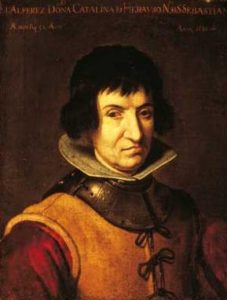
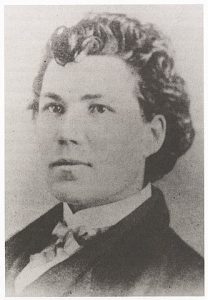
Successfully passing as a man gave these women access to more than just a better wage and the chance to do a job they otherwise could not aspire to. As men, they could travel more easily, get a better education, own property, enjoy more political rights, and, in some cases, marry other women.**** One of the most colorful and successful examples I found was New York City, politician Murray Hall (ca, 1840-1901). Born Mary Anderson in Govan Scotland, Hall successfully maintained the disguise that allowed “him” to be a Tammany Hall powerhouse for twenty-five years. Hall married other women twice, adopting a daughter with “his” second wife, and flirted with others. When the disguise was revealed after Hall’s death in January 1901, Abraham Gruber, Republic leader of the 17th Assembly District joked that there should be a law requiring Tammany precinct captains to wear whiskers so no woman could vote for the Democrats again.*****
*This is a tricky question. Did more women fight in the American Civil War than in earlier wars? Did the nature of the war and/or the time mean that more women were discovered?** Or do we simply have better records? (Sometimes it feels like every seemingly definitive statement I make rests on a shaky pyramid of uncertainties.)
**The point at which women disguised as men tend to enter the historical record.
***Not entirely voluntarily. The disguised Erauso was a good soldier on the battlefield, but a problem when not fighting. “He” alternated between courting young Spanish women and dueling with young Spanish men. Eventually “he” killed so many of his fellow soldiers that he was called before the authorities. Having confessed the truth about her gender, Erauso managed to escape punishment both for the killings and for the illegal act of disguising herself as a man. In fact she received a small pension from the Spanish crown and dispensation from the Pope to dress as a man. Go figure.
****I prefer not to assign modern gender labels to any of these women. I find the question of pronouns sticky enough. I will struggle with that topic in tomorrow’s news letter, along with a brief and ill-informed look at the new field of transgender history. If you’re interested and not yet a subscriber, you can sign up here: http://eepurl.com/cobpk9
*****Or maybe he wasn’t joking, given the rough and tumble world of New York City politics at the end of the nineteenth century.
The Poisoner’s Handbook: A Belated Review
 It is possible you have already read Deborah Blum’s The Poisoner’s Handbook. I was late to the game when I first picked it up and I have been reading it on and off for several years.*
For those of you who haven’t read it, the book’s sub-title says it all: Murder and the Birth of Forensic Medicine in Jazz Age New York. In the early twentieth century, poison was readily available and largely uncontrolled. Industrial chemists had created new poisons and introduced old-poisons into readily available household products in the name of progress. Carbon monoxide poured into the air from that emblem of modernity, the automobile, and from “illumination gas” leaks in the home. With the introduction of Prohibition, wood alcohol and other toxins found its way into drinking flasks and cocktail glasses. Chemists had found ways to create new compounds, but had not yet developed ways to detect their affects on the human body. Poison became the murder’s weapon of choice. Blum tells the story of how medical examiner Charles Norris and toxicologist Alexander Gettler–as dynamic a duo as you could wish, without the capes–created the new discipline of forensic science, one poison at a time.
Blum organizes the book around individual poisons and the cases that developed around them.*** The result is a intricate combination of clearly told science and page-turning mysteries, set against the backdrop of rapid social change in the Jazz Age. It is fast-paced, smart, and gripping: Bones meets F. Scott Fitzgerald.
*Paradoxically, I kept putting it down because it was so good. I wanted to read it it the way I drink cold water on a hot day, draining half the glass at once. Unfortunately life didn’t allow that kind of reading. For years there was always a book I needed to read for a Shelf Awareness for Readers review, or a stack of material to read for the latest book I was writing.** Having written this out, I realize this is the silliest reason to not finish a book that I have ever heard. I am tempted to erase it and just write the review. But instead I will leave it in as a Public Service Announcement to readers. Saving books for the perfect reading opportunity makes no sense.
**It’s hard to belief, but Women Warriors will be my eighth (8th!!!) book in a little over ten years. It’s amazing I have time to read anything.
***I originally picked up the book because fellow author and historian Holly Tucker recommended it as a primer in how to structure a complicated story.