




Isaac’s Storm: A Man, a Time, and the Deadliest Hurricane in History

For several months now, Isaac’s Storm: A Man, a Time, and the Deadliest Hurricane in History by Eric Larson has been my traveling book—the one I read on airplanes and city buses. I recently finished it on the last leg of a trip. And I have thoughts.
Isaac’s Storm tells the story of the hurricane that flattened Galveston in 1900. Larson captures the epic scale of the storm while telling us a human story of tragedy and loss.
Larson uses more than half the book to build to what he terms the cataclysm, a combination of unstoppable natural power and bad decisions based on hubris. He opens the book on the night before the storm, introducing us to Galveston and to Isaac Cline, the U.S. Weather Bureau’s resident meteorologist in Galveston. In the second chapter, he introduces us to the other major character of the book, the storm itself, with a breathtakingly beautiful line: “It began, as all things must, with an awakening of molecules.” Moving forward he describes how the storm grew, making the science of hurricanes clear to this non-scientist.[1]—and how new the science of meteorology was at the time. He gives us the history of the Weather Bureau, and a vivid picture of how political infighting within the organization contributed to multiple miscalculations about the power of the storm and where it would hit land. He introduces us to individuals in Galveston. He builds the tension.
The pace picks up when the storm hits Galveston. Using telegrams, newspaper accounts, letters, and later memories of Cline and others, Larson takes his readers back and forth through the city, tracing the experiences of the people to whom he has previously introduced us. Each story is marked with uncertainty, as people make decisions that will determine whether they and those around them will live or die. Larson’s storytelling is masterful in this section, holding the reader is suspense as he moves from vignette to vignette
Isaac’s Storm came out in 1999—not Larson’s first book but his first work of the narrative non-fiction for which he is famous. When compared to his later books of his, it is clear that he is still learning his craft. If I felt any disappointment, it is because I have read later work: early Larson is still better than many books that I read.
*****
A small coda: As those of you who have been following me around for a while know, I adore footnotes. For those of you who ignore the footnote section, Larson opens his notes in this book with a lovely brief essay on exploring “the lives of history’s little men.” I strongly recommend it to readers, and writers, of biography. I think I will return to it in the future.

[1] I will admit, several days after I closed the book, I would not be able to reproduce most of the science if you asked me to do so.
Gone Fishin’
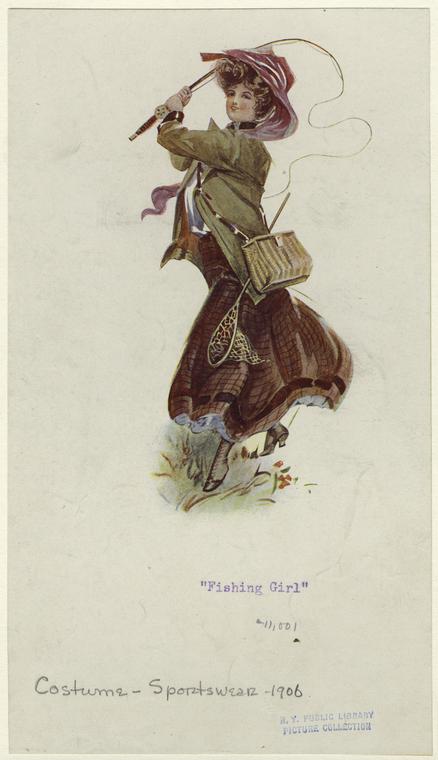
I’m getting ready to go on a Boat Trip Through History with my BFF from graduate school. We’re taking a river cruise on the Nile where we will see all the things we dreamed of as nerdy little girls who were fascinated by ancient Egypt. Nine-year-old Pamela would have been over the moon. For that matter, middle-aged Pamela is pretty dang thrilled.
I have no doubt I’ll bring back stories to share.
Later, y’all.
Matisse at War: A Q & A with Christopher Gorham
Matisse at War: Art and Resistance in Nazi-Occupied France, by Christopher Gorham, is a vivid portrayal of the the advance of fascism and war into French life and culture during World War II, told through the lens of one of the country’s most celebrated post-impressionists and his family. How could I resist learning more? (Warning: I found myself pulling art books off the shelves as I read.)
Take it away, Christopher!

What path led you to the story of Matisse’s life in Nazi-occupied France? And why do you think it’s important to tell this story today?
Two things. One was a book I came across in the mid-‘90s, Artists Under Vichy. In it, the author accused Matisse of essentially sitting out the Second World War, living in relative comfort in Nice. That seemed inconceivable to me: not only was Matisse a modernist, a creator of so-called “degenerate art,” but his daughter had been in the Resistance, so I thought, how could this be? Second, my wife and I have had the good fortune to spend time in Nice, France each summer, visiting the Matisse landmarks. Was it really possible that Matisse simply painted his way through the war, ignoring the German occupiers and the Vichy collaborators? Or did he seize a patch of the cultural battlefield? Was he among the artists who were censored? How did his efforts affect his fellow citizens? These were the questions I wanted to answer.
Most of my readers will recognize the name Henri Matisse. Are there particular challenges in writing about a person people think they know something about?
I quite enjoyed it! My previous book was a biography of a once-famous presidential advisor, Anna Rosenberg, who was lost to history. It’s a lot easier to give your elevator pitch when it’s about a world-famous figure like Henri Matisse! What I found interesting about Matisse is that from his contemporaries until today, there is this notion that he was a painter of pretty things; a man who indulged himself in the pleasures of Nice; an artist untroubled by the events unfolding around him. First, Nice was the site of a four-way war between the Allies, Axis, right-wing militia, and French Resistance. Second, while it is true Matisse used vibrant color and flawless lines, much of his work during the Occupation held a latent menace, a sense of confinement, or being surveilled. His work reflected his angst over the war and over the fates of his family and friends. As his son Pierre told the New York Times in 1942, artists during wartime don’t paint skulls and battle scenes, they reflect, they filter, and sometimes it takes a keen eye to see their pain.
Did looking at this period of Matisse’s life give you a new/different understanding of his work?
Yes! I am not an art scholar. My wheelhouse is modern American history, the 1940s, the ‘50s, so this was a journey of discovery. Why did Matisse create so many cut-outs in his “second life”? Why did he use blue in so much of his work? Why did he make so many stylistic pivots? What was he in search of? I was able to answer many of these questions, but I still find it mysterious and awe-inspiring to see his art up close; it is so vibrant, so evergreen, so fresh, and so moving.
Writing about a historical figure like Henri Matisse requires living with him over a period of years. What was it like to have him as a constant companion?
Before setting off on his biography of Harry Truman, David McCullough had planned to write about Pablo Picasso. At some point, he got fed up. Picasso was a jerk, and McCullough didn’t want to spend years in his company. He moved on to Truman, and I think helped put Truman in the top ranks of modern American presidents. I was so fortunate to write the biography of Anna Rosenberg, who was smart, loyal, patriotic, witty, and respected by trucking unions and U.S. senators alike. I loved being in her company. She cherished American democracy, and worked to strengthen it by striving for greater social equality for women, for working people, for Black Americans, and for veterans. When I set off on Henri Matisse, I had a vague idea, but I found him to be an engaging figure, one who on the one hand could be economical with his thoughts—he spoke through the images he created–but who could also be a candid correspondent in his letters. While he did so in a very different way, Matisse, too, cherished the republican values of liberty, equality, and fraternity.
Historians of the resistance in Nazi-occupied countries often draw a contrast between active and passive resistance—a distinction that I feel is often artificial and discounts the very real danger of those involved in “passive” resistance. Where would you put Matisse and members of his family on the active/passive continuum? Or do you reject the distinction entirely?
I don’t love the word passive, but I think it’s fair to say that compared to his daughter Marguerite, who was a courier for a Resistance network, and his son Jean, who assisted British Intelligence in the South and who harbored Allied agents, Henri Matisse was engaged in a form of resistance that suited his stature, his advanced age and his failing health. Matisse didn’t need to be a bomb-thrower; by defiantly remaining in France and by steadfastly continuing to create subtly patriotic work, he resisted and gave succor to the Resistance. Each member of the Matisse family was playing for real stakes. As Françoise Gilot said, by holding his work up against the destructive impulses of the Nazis and their collaborators, Matisse was a beacon of hope for the young. Louis Aragon, the “Poet of the Resistance” who befriended Matisse during these years, wrote quite powerfully that “Matisse was of France, Matisse was France.”
What was the most surprising thing you learned working on this book?
There were many surprises. Perhaps the most dramatic one was a remark by Matisse to one of Varian Fry’s assistants (Fry was an American sent to Marseille to rescue artists from Nazi Europe). Matisse said, basically, that he’d provided a safehouse for enemies of the regime. The risks that his family took were also very sobering. Certainly his daughter, Marguerite, and probably his son Jean, were lucky to make it out of the Occupation alive. And the tension between Matisse’s bourgeois, middle-class grounding and his daring and audacious artistic flights is a source of awe for me.
Is there anything else you wish I had asked you about?
This is a book about art and war, and I hope to have also illuminated the role Nice played. From 1940 to late 1942, Matisse’s adopted city was under Italian jurisdiction—neither occupied by Germans, nor under the curdled regime of Vichy–a haven of relative normality in Hitler’s Europe, where Jews lived and worked without the yellow star. In the second half of the war the Mediterranean port became the locus for battles between pro-Nazi militia and Resistance fighters; Nazis and the Jews they hunted; and finally Germans and the American liberators. Henri Matisse had traveled to the United States and liked much about it. Perhaps his wartime cut-out The Cowboy was an homage to the American soldiers and the country that had liberated France twice in Matisse’s lifetime.

Art credit: Joshua Pickering
Christopher C. Gorham is a lawyer, educator, and acclaimed author whose books include Matisse at War and the Goodreads Choice Award finalist, The Confidante. He is a frequent speaker at conferences, literary events, colleges, and book club gatherings. He lives in Boston, and can be found at ChristopherCGorham.com and on social media as @christophercgorham.