




A Treasure Trove for History (And Film) Buffs
If you’ve been hanging out in the places I hang out on line, you already got the word: British Pathé has put its 85,000 historic newsreels on YouTube. My first reaction was “Cool. That’s a great resource for people who write about the 20th century.” Then I looked a little closer.
The company’s founder, Charles Pathé, was a pioneer of moving pictures at the end of the nineteenth century and the inventor of the cinema newsreel. For almost 100 years, British Pathé caught the news of the world on film. The new YouTube archive offers 3500 hours of filmed history–that’s a lot of blog posts in the making. If you want to see Queen Victoria’s funeral, the Wright Brother’s first flight, footage of the Battle of the Somme,* or the Beatles’ arrival in New York in 1964–head on over. I suggest you set a really annoying timer before you click the first video. Otherwise, you may never find your way out.
As a teaser, here’s a newsreel documenting Mahatma’s Gandhi’s arrival in England in 1932:
[Just a reminder: if you’re reading this via e-mail, you will need to view the post in your browser to see the video. Just click the post title and it will take you there.]
* If you’re interested in this one, I suggested you read Ian Beckett’s account of making the first war documentary (The Battle of the Somme, 1916) in The Making of the First World War: A Pivotal History
Gandhi Before India
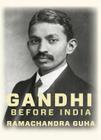
The first volume of what may well be the definitive biography of Mohandas Gandhi, Ramachandra Guha’s Gandhi Before India covers the years from Gandhi’s birth in 1869 through his departure from South Africa in July, 1914.
Biographers have often treated Gandhi’s earlier life– especially his two decades working in South Africa–as a little more than a warm-up for leading the struggle for Indian independence. Guha gives this period serious and detailed attention, arguing that such attention is necessary if we are to understand both “how the Mahatma was made” and Gandhi’s critical role in South African history.
Even a reader who is familiar with Gandhi’s history will find new insights in Gandhi Before India. Guha not only draws on Gandhi’s own writings from and about this period, but also uses a wide range of contemporary sources, from Gandhi’s childhood school reports to secret files kept by South African officials. By focusing on contemporary records rather than retrospective accounts, he overturns some accepted “truths” and introduces new elements to a familiar story. Perhaps the most interesting parts of the book are the side excursions that illuminate elements of Gandhi’s life: the British ranking Indian rulers, the history of vegetarianism in England, Johannesburg as a cultural and intellectual melting pot.
Gandhi Before India is a step-by-step account of how a previously uninspiring member of a Gujurati merchant caste transcended the conventions of his caste, class, religious and ethnic backgrounds to become one of the most important–and controversial–figures of the twentieth century. I recommend it highly.
A version of this review appeared previously in Shelf Awareness for Readers.
History on Display: Lost Kingdoms
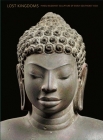 On my annual visit to New York for writerly stuff, I always try to squeeze in a visit to a museum or that mecca for all book lovers, the Strand Bookstore. This year, with my office over-flowing with books and a move on the horizon, I promised My Own True Love that I would stay away from The Strand. Besides, I already had an exhibit in my sights: Lost Kingdoms: Hindu-Buddhist Sculpture of Early Southeast Asia, 5th to 8th Century at the Metropolitan Museum of Art.
In the first millennium, a series of kingdoms that most of us have never heard of grew up in Southeast Asia : Pyu, Funan, Zhenla, Champa, Dvaravati, Kedah, and Srivijaya. Their boundaries roughly reflect the political map of the region today. Over time, their rulers adopted Hinduism and/or Buddhism as their official religions. In 1968, George Coedès described this official adoption of the religions of the Indian subcontinent in his seminal work The Indianized States of South East Asia. He argued that Indian states colonized Southeast Asia. More recent scholarship suggested that the process of Indianization was less thorough than Coedès believed* and that it was a result of acculturation rather than colonization. The exhibit was billed as using “sculpture as a lens to explore this period of Southeast Asian history.” I had read Coedès as an undergraduate and had followed the developing academic argument in a low-key way over the years. I was jazzed about the exhibit, to say the least.
Lost Kingdoms was both artistically breath-taking and historically disappointing. The artifacts on display, many of them loaned by the governments of Cambodia, Vietnam, Thailand, Malaysia, Singapore, and Myanmar and never before seen outside their countries, are fabulous and beautifully displayed. But as is so often the case in art museums, the curators focused on describing the exhibits as objects without providing much context. I wanted more information on long-distance trade routes within the Indian Ocean World, Buddhist merchants, and the use of Vishnu as the model of kingship. I wanted to asked my fellow viewers whether they knew enough about Buddhism, Vishnu, Shiva, Durga, rakshas,** and nagas for the signs to mean anything. The conversations I overheard suggested that most of them were concentrating on whether a particular piece came from Vietnam or Cambodia.
In all fairness, I did not rent an audio tour–possibly it was full of historical goodies. More importantly, the accompanying catalog, written by John Guy, is beautiful, well-written and thoughtful.***
My recommendation? If you’re in New York, take the time to see the exhibit but moderate your historical expectations. If you’re actively interested in the “lost kingdoms” of early Southeast Asia, track down the book.
*First guy in the field gets a pass for being overly enthusiastic.
**No, not rickshaws, Autocorrect. Though my guess is that most everyone in the hushed gallery, including me, knew more about rickshaws than anything they were looking at.
***I almost gave in to the temptation to buy it. After all, I’d promised not to go the The Strand, not to return home bookless. I resisted, but once I’m in the new office with the additional bookshelves…..