




Talking About Women’s History: Three Questions and an Answer with Ann Foster
Ann Foster is a writer living in Saskatoon, Saskatchewan. Her research interest is in the intersection of women, history, and pop culture, especially the lives and stories of figures both well-known and half-forgotten. Ann has appeared as a historical expert on BBC radio, and her writing has been published on Longreads, Shondaland, in Bitch Magazine, and elsewhere. Ann has hosted the Vulgar History podcast since 2019.
Take it away, Ann!

Photo credit: Deborah Wong
What inspired you to start the Vulgar History podcast? What type of stories do you discuss?
I started my podcast, Vulgar History, because I wanted an outlet to share the fascinating stories I’d been reading about in my spare time with an audience who would be interested in hearing them (my real-life friends and family, while supportive, weren’t prepared to hear me monologue for 3 hours every week on my latest obsession). Before I started the podcast, I had been researching some women from Tudor history, which turned into my blogging about them. And as a fan of podcasts myself, I thought there was space for my take on these stories in that format as well.
With both my podcast and my writing, I’ve always felt that anyone can read up on these people on Wikipedia or in a biography. What I bring to it is my point of view, as well as my best attempts to explain it all to people without previous knowledge of the subject matter. I’m able to do this because most of the time, I also don’t know these stories! So the questions I have are the questions I presume others might have, and so I always work very hard to hold listeners’/readers’ hands through my retellings. You need to understand the history of ancient Egypt, the Ptolomy Dynasty, ancient Rome, and Julius Caesar, for instance, to really understand who Cleopatra was and why she matters. So I try my best to really set every story in a place and time so that we can all enjoy the shenanigans together.
I started just talking about British history, because that was my interest at the time I started the show. As more listeners came on board from many different cultures, I wanted to learn about them and share these stories as well. Most of the stories I tell are still from Western countries, because I can only read English sources and those are the ones most available to me. Within that, my guiding principles are: is this a good story with twists and turns? Can I really dig into this story and make it exciting? Am I dying to share this with someone? And when the answers are all yes, I know I’ve found a topic worth covering!
Rumor has it that you have a book in the pipeline. Can you tell us what it’s about and when to expect it?
Yes! My first nonfiction book is scheduled to come out in about one year, at the beginning of 2026. It’s called (tentatively) Rebel of the Regency: The Scandalous Saga of Caroline of Brunswick, Britain’s Uncrowned Queen.
I want to be very clear that my book, like my podcast, is funny! And doesn’t require anyone to come in with any pre-existing knowledge of British history. I explain everything in plain language, with a lot of jokes along the way.
Caroline of Brunswick was the subject of the very first Vulgar History episode, which is still my most-listened to. I fell in love with her story when I first encountered it five or six years ago, and it’s always really stuck with me. I knew I wanted my first book to be about someone I’m passionate about, and she was the best choice. Part of what’s fascinating about her is that she lived during the Regency Era, which is a very well-known time period from books, TV shows, and movies. In fact, she was married to The Regent himself, George, Prince of Wales! But neither of them tend to show up in these Regency-era books or films, which is telling. We like to think of that time as one with strict etiquette and very well-behaved people, but Caroline and George don’t fit into that schema at all. She was known for being outrageous and intentionally shocking people with her jokes and behaviour, while George notoriously was a womanizing gambler who wasted his money on home renovations and drink.
In researching the book, I also learned more about the absolute chaos happening in England during this time period. There were near-constant riots that veered toward full-on revolution (this was just after the French Revolution, which had all the monarchies in Europe terrified they’d also be overthrown by a mob). Caroline, like Princess Diana, was at odds with the monarchy and was beloved by the everyday people. She became a sort of figurehead of the revolution, inspiring women from lower and middle classes to step up as activists in a way they hadn’t before. I talk about this in the book, but in some ways, Caroline paved the way for the later suffragette movement as her supporters all wore white.
Do you think Women’s History Month is important and why?
I think Women’s History Month is important similarly to how other commemorative dates like Black History Month, Pride Month, and Holocaust Memorial Day are important. On my podcast and in my life, I do my best to honour all kinds of history every day. But I know that most school curriculums and most popular history podcasts and TV shows highlight the history of the same wealthy cis white men and stories from history. To break through so that people know that history is so much more than the 50 white men who wind up on lists of “greatest historical figures of all time” lists means I’m always beating a drum and yelling about people like Caroline of Brunswick.
So while I’m celebrating all these histories all the time, Women’s History Month is a time when a more-than-usual amount of people seek out these stories and pay attention. And hopefully some people will get excited about these stories, and maybe start thinking about what other people haven’t we been celebrating. I live in Canada, which is similar to the USA and the UK in that a lot of peoples’ concept of history comes from historical movies. And many of those movies were made in the mid-20th century, and therefore feature a lot of white men doing “great” things, with no people of colour shown in the background. This has led generations to assume that these monumental events occurred in times when there were only white people around, when actually it’s just that the films were made during a racist era by racist people. So when we see people now correcting that by putting people of colour in historical settings, or by showing women in powerful leadership roles, there are accusations that this is misleading when it’s actually being more reflective of actual history.
All of which to say: Women’s History Month is very important, and it’s better for people to celebrate this one month a year than never. But in my life, it’s Women’s History Month 24/7.

Caroline of Brunswick, Consort of George IV
A question from Ann: What is the most interesting thing you’ve learned by interviewing people this year on this topic?
I always learn a lot working on this series. Stories about women I’d never heard of. Books I want to read. Ways of thinking about the work of doing women’s history, (I call everyone’s attention to Jennifer Tuttle’s very smart discussion of doing research beyond the obvious places, which will run on tomorrow.) But this year I find myself thinking a lot about Lydia Moland’s discussion of her decision to find an American woman who had faced a moral emergency in the past, her discovery of Lydia Maria Child, and Child’s conscious choice to devote her talents to abolition.
Moland included what seemed to me to be a challenge to find the philosophical core that will support you (and by you I mean all of us) in fighting against systematic evil. I am not a philosophical thinker by nature, as you may have realized in my answers to big questions in previous posts. I tend to find my answers through story-telling. But I think Moland’s call to think about the big questions is an important one.
***
Want to learn more about Ann and her work?
Visit her website
Listen to the podcast
Subscribe to her newsletter, Vulgar History a la Carte
Follow her on Bluesky: @vulgarhistory.bsky.social
***
Come back tomorrow for three questions and an answer with historian and archivist Jennifer Tuttle.
Talking About Women’s History: Six Questions and Two Answers with K.S. Barton and Johanna Wittenberg
K.S. Barton and Johanna Wittenberg cohost the podcast Shieldmaidens: Women of the Norse World. Both have done extensive research in the period, and use it as the background for their novels.

K.S. Barton writes historical fiction and fantasy stories of love and adventure set in the Viking age. The author of several novels, she explores themes of family, honor, and strength all within the backdrop of Norse society. When doing research on Norse mythology for a teaching project, she discovered the Norse sagas and immediately knew she wanted to write fiction about Vikings. She has an M.A. in Humanities with a focus on literature and history and has always loved to learn about history through stories.

Johanna Wittenberg is the author of the bestselling Norsewomen Series, the story of Åsa, a real Norse queen who ruled alone during the early Viking Age. Book 7 of the series, The Irish Harper, releases in March 2025. Like her Viking forebears, Johanna has sailed to the far reaches of the world. She lives on a fjord in the Pacific Northwest with her husband, whom she met on a ship bound for Antarctica.
Take it away, ladies!
First up, K.S. Barton:
What inspired you to start Shieldmaidens: Women of the Norse World ?
I love listening to podcasts, especially history podcasts. It’s a fun, easy way to get information. However, there were no podcasts that really talked about Viking women. The only ones out there talked mostly about men, and if they did mention women, it was only in passing. The default (as it often still is in history) was from the male perspective. I wanted to do something that focused on the women of the Norse world. I wanted their stories told, and for them to be given the respect they deserve. So, I reached out to Johanna, whose novels and research I admire, and asked her to join me as a co-host. We came up with enough topics to get us started and we dove in!
How would you describe the purpose of the podcast?
The purpose of the podcast is to do deep dives into the lives of women in the Norse world. We examine the stories of Viking women from historical accounts, sagas, and archaeology. From shield maidens and queens to farmers and priestesses, we want to uncover the varied and complex roles that women played in Norse culture. We explore gender roles, war, magic, marriage and family, and even the impact of Christianization on their traditional beliefs and practices, among many others.
In addition to talking about the past itself, we interview the women today who study and write about the Viking Age–archaeologists, historians, journalists, and novelists. By looking at the Viking Age with a different lens and asking different questions, these women have uncovered new information and have pushed our understanding of the Viking Age into some fascinating areas.
Do you think Women’s History Month is important and why?
I remember being in graduate school and a fellow student, a man, asked me sarcastically, “Why don’t we have men’s history?” to which I replied, “We do have men’s history. It’s called history.” I wish we didn’t need Women’s History Month. I wish we studied the accomplishments of women in every history class from elementary school all the way up to graduate school, but, sadly, that’s still not the case. It’s important for everyone, women and men, to understand that women play a vital role in every society and have since the very beginning of time. Women’s History Month is especially important now that there are certain forces that want to go backwards to a time when only certain people could be studied and celebrated. It’s important that women’s stories are told and their accomplishments celebrated.

And now, Johanna:
When did you first become interested in Norse history? What sparked that interest?
When I was in college, my mother, an artist of Norwegian descent, created a series of images that revived the ornamental style preserved in wood carvings and metalwork of the Viking age. These designs are now incorporated into the covers of all my books. When Mom was invited to exhibit her work in the Oslo City Hall, she took me and my sister along. She introduced me to the museums of Oslo. I spent hours in them, especially the Viking Ship museum which housed the magnificent Oseberg burial ship.
What work of women’s history have you read lately that you loved? (Or for that matter, what work of women’s history have you loved in any format? )
I especially enjoyed the book by journalist Heather Pringle, The Norsewomen. (We interviewed her on our podcast.) I thought I had read everything there was about women in the Viking Age, but Heather’s book explored aspects I had not delved into, such as female slavery.
What do you find most challenging or most exciting about researching historical women?
The most challenging thing I find about researching historical women is all the missing, inaccurate, deleted, or rewritten information on their lives and their circumstances. Assumptions made by Victoria Era archeologists still hold sway, such as beliefs that women were without rights, agency, or power throughout history. Strong women were vilified. Misinterpretation of grave findings is common: An axe in a man’s grave is a weapon, the same axe in a woman’s grave is a cooking implement. It is exciting that those notions are being overturned by modern archeologists.

A question from K.S. Barton: When you started doing research into Sigrid Schultz, did you realize how timely the story is?
When I wrote my proposal for The Dragon from Chicago in 2019, I definitely pitched it as a story with resonance in the modern world, complete with “working around glass ceilings, keeping the news flowing despite tightening controls on the media, outwitting Nazis in Germany, standing up against pro-Nazi sympathizers at home, and dealing with claims of ‘fake news’ on both sides of the Atlantic, plus a little bit of a conspiracy theory.” But I had no idea how timely it would become.
A question from Johanna Wittenberg: In the introduction to your recent book, Women Warriors: An Unexpected History, you explain how you chose which historical figures to include. Can you share that criteria?
It was easy to find historical women warriors. Choosing which ones to include in the book was harder. It finally came down to three criteria: definition, diversity, and sources.
1. I went into the book with a simple definition of women warriors as women who actually fought. That definition was sufficient when looking at women who wielded a weapon, whether they dropped rocks from the wall of a besieged city, fired a musket/rifle/machine gun, or drove a tank. But once you more beyond the front line and start looking at commanders, the story becomes more complicated. After much thought, I chose to include female commanders who were the rough equivalent of what the United States armed forces calls a “combatant commander.”.
2. I wanted the book to be a true global history, so I made a real effort to include women from many times and many places. I had plenty to chose from.
3. Ultimately, my choices were defined by available sources. (When you write historical non-fiction, if always comes down to the sources.) Because I was writing a global history I had to rely to secondary sources and translations of primary sources into one of the languages I can read. There were many frustrating hints of stories that had not been translated.
In the end, I left out more stories than I included. So many stories remain to be told.
***
Want to know more about K.S. Barton and her work?
Visit her website, ksbarton.com, where you can claim a free prequel to the Norse Family Saga series
Follow her on Facebook at ksbartonauthor , on Instagram at ksbartonauthor and on Bluesky at @ksbarton.bsky.social
***
Want to know more about Johanna Wittenberg and her work?
Visit her website: https://johannawittenberg.com
Follow her on Facebook: Johanna Wittenberg Author
***
Listen to Shieldmaidens, Women of the Norse World at https://linktr.ee/womenofthenorseworld or on YouTube
***
Come back tomorrow for three questions and an answer from Ann Foster, host of the Vulgar History podcast
In which I sink into Queen of the West: The Life and Times of Dale Evans
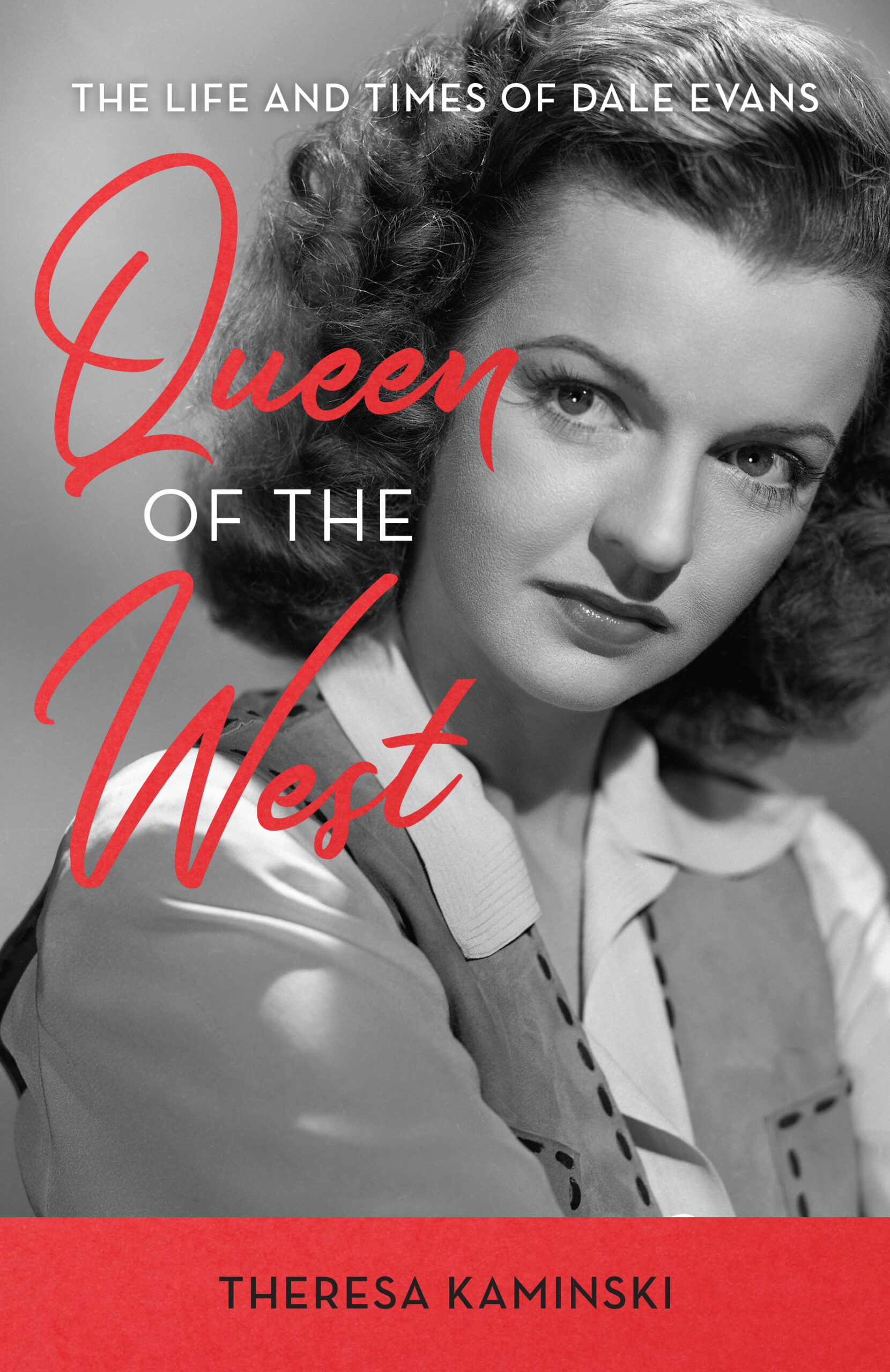
I will admit, I picked up Queen of the West: The Life and Times of Dale Evans by Theresa Kaminski with a sense of relief. Even though I knew Evans suffered personal tragedy in her life, I was looking forward to a mental palate cleanser after a month of reading books that took on tough topics from Black history. A biography of a Hollywood icon seemed like just the thing. Kaminski did not disappoint.
I went into the biography knowing very little about Evans: she was an image and a name but not much else.*
Kaminski creates a vivid picture of a complicated life. She introduces the reader to the often harsh realities of the music world, following Evans from local radio, to Chicago lounges, to Hollywood. She creates the picture of a career woman, who hid the fact that she had a child by her first marriage and yet championed traditional roles for women later in her life. She follows Evans through four marriages, ending with her decades-long marriage to Roy Rogers. She traces Evans’ attempts to create a career as a glamour girl, her success as a songwriter,** her initial reluctance to be cast in Westerns because female characters were typically overshadowed by their male co-stars, and her re-invention later in her life as a stalwart of the inspirational/Christian country music world. And she makes it clear that Evans was actively involved in shaping her career and her image every step of the way.
Much more than a singing cowgirl.
*I’m not sure I ever saw an episode of the Roy Rogers Show as a child. My local television station offered reruns of Sky King instead.
**Who knew? Not me!
Interested in learning more about how Kaminski researched and wrote Queen of the West? Check out this Q & A from March 2022: Three Questions and an Answer with Theresa Kaminski
* * *
Come back on Monday for six questions and two answers with K.S. Barton and Johanna Wittenberg, hosts of the podcast Shieldmaidens: Women of the Norse World