




Talking About Women’s History: Three Questions and an Answer with Lori Davis
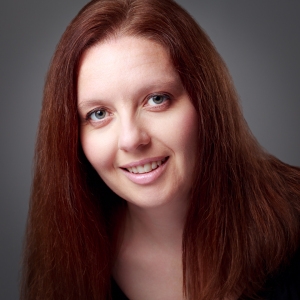
Lori Davis is the writer and producer of the podcast and blog Her Half of History. The show explores what it was like to be a woman in the past, from queens to slaves to everything in between, with episodes on women who successfully seized control of an empire, the nitty gritty of how to do laundry without electricity or plumbing, when women finally could get credit cards and more. In short, lots of fascinating stuff that doesn’t show up in mainstream history classes.
Her Half of History is a member of both Evergreen Podcasts and the Into History podcast network.
Take it away, Lori!
How do you choose the topics for your episodes?
My listeners choose! At least, they choose the theme for each overall series.
My setup is different than most history podcasters because I’m not trying to cover a chronological period, and I’m also not picking topics at random. Instead, I let listeners vote on a series theme. Past themes have included women who seized power, women as great painters, and women who escaped slavery. I’ve also done some social history themes: the history of housework, the history of girlhood, the history of getting married, etc.
Once the polls are closed and the theme is chosen, I dive into research mode. I choose the topics for each individual episode based on what I find. For example, I am currently working on Series 12: The Last Queen. I’ll have episodes on Boudica, Cleopatra, Liliʻuokalani, and Marie Antoinette for sure. There are also a whole host of less famous women that will also get an episode.
I always try to include a variety of locations and historical eras because one of my favorite things about history is the cross-cultural comparison. I love looking at how people faced very similar situations and sometimes came up with radically different solutions. Or sometimes they came up with the same innovative solution as another group with whom they had absolutely no contact. Unfortunately, I find that the sources available to me often skew heavily in favor of Western Europe and North America, but I do try hard to make sure that my podcast does include women from other places.
When did you first become interested in women’s history? What sparked that interest?
I’ve always loved history in general, but I used to despise women’s history! When I was in college, I took a History of Civilization course. The professor had clearly been informed that women exist because at the end of each unit, he’d say, “What was the position of women in this civilization?” The answer was always “Bad.” We’d list all the rights women didn’t have (it was always the same list as for the previous civilization), and then we’d move on to the next unit. I thought women’s history was the most boring thing ever. I mean why even ask the question if that’s all there is to say? I thought we should have just stuck with the interesting stuff, which was what the men were doing.
I’d also heard a lot of women rant about how much discrimination women faced in the past (and the present). That wasn’t exactly boring, but it was depressing. A lot of what they said was true, but it didn’t make me want to hear more.
Women’s history sort of snuck up on me. When choosing a research topic for my capstone thesis, I wanted to do something with literacy in territorial New Mexico. That was too big for the time available, so cutting it down to women’s literacy seemed like a way to make it manageable. Many years later when I wanted to make a history podcast, I was casting around for what my distinguishing niche would be, and it occurred to me that most of the history podcasts I had binged and loved didn’t include a lot of women. It seemed like a place where I could add to the conversation. One thing really just led to another, and I just published my 117th episode. I really love women’s history now!
What was the most surprising thing you’ve found doing historical research for your work?
Just how much there is on women! Earlier I had the vague impression that traditional history didn’t include many women because women weren’t allowed to do anything. That meant women’s history had to be short, vague, boring, depressing, or all of the above. Nothing could be farther from the truth.
It is true that men have dominated the historical record, but when you take the trouble to look, you find women everywhere. Given the reality of discrimination against women, it is incredible just how much they did manage to accomplish, in pretty much every field of human endeavor. There is absolutely no shortage of things to say about women, their lives, and their achievements.
A question from Lori: Who are your favorite women in history that you think should be better known than they are?
At least for today, I would say Margaret Chase Smith (1897-1995), senator from Maine. She is certainly not forgotten, but is not as well known as she should be, and is one of my personal heroes.
Tomorrow I might have a different answer. So many amazing women. So hard to chose.
* * *
Want to know more about Lori Davis and her work?
Visit her website: https://herhalfofhistory.com/
Follow her on the social media platform previously know as Twitter: : https://twitter.com/her_half
Visit her on Facebook: https://www.facebook.com/herhalfofhistory
Check out her Instagram account: https://www.instagram.com/herhalfofhistory/
Come back tomorrow for a whole bunch of questions and an answer about women in ancient Rome with historian Emma Southon,
Talking About Women’s History. A Bunch of Questions and an Answer with Brooke Kroeger
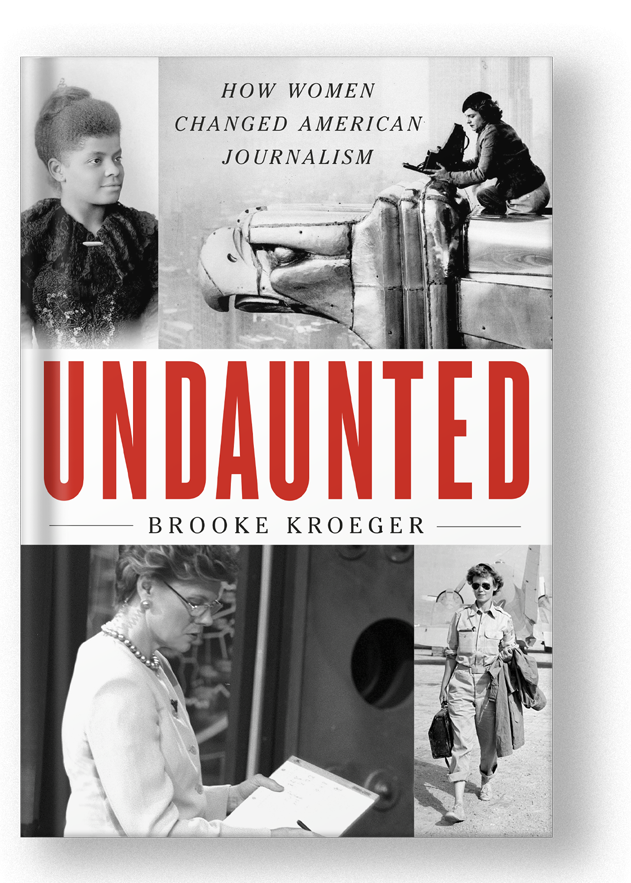
I am pleased to open this year’s Women’s History Month series with what turned out to be more- than-three questions and an answer with journalist and author Brooke Kroeger, whose most recent book, Undaunted: How Women Changed American Journalism (2003) explores how women have fared in American journalism’s most competitive and highly valued bastions, the ones men have dominated in the 180 years since mass media began. A topic that I have some interest in.
Brooke is also the author of Nellie Bly: Daredevil, Reporter, Feminist (1994); Fannie: The Talent for Success of Writer Fannie Hurst (1998); Passing: When People Can’t Be Who They Are (2003); Undercover Reporting: The Truth About Deception (2012), and The Suffragents: How Women Used Men to Get the Vote (2018).
Early in her career, she was UN Correspondent for Newsday and deputy metropolitan editor for New York Newsday. Over eleven years with United Press International in its Scripps Howard days, she reported from Chicago, Brussels, London and Tel Aviv, where she was bureau chief (1980-83) before returning to London to become the agency’s division editor for Europe, the Middle East, and Africa (1983-84). At NYU, she served on the journalism faculty from 1998 to 2021 and from 2005 to 2011 was department chair and founding director of NYU’s Arthur L. Carter Journalism Institute. She created the MA unit Global and Joint Program Studies and directed this joint program field of study from 2007 to 2020.
In short, Brooke is a woman who knows a lot about women in journalism.
Take it away, Brooke!
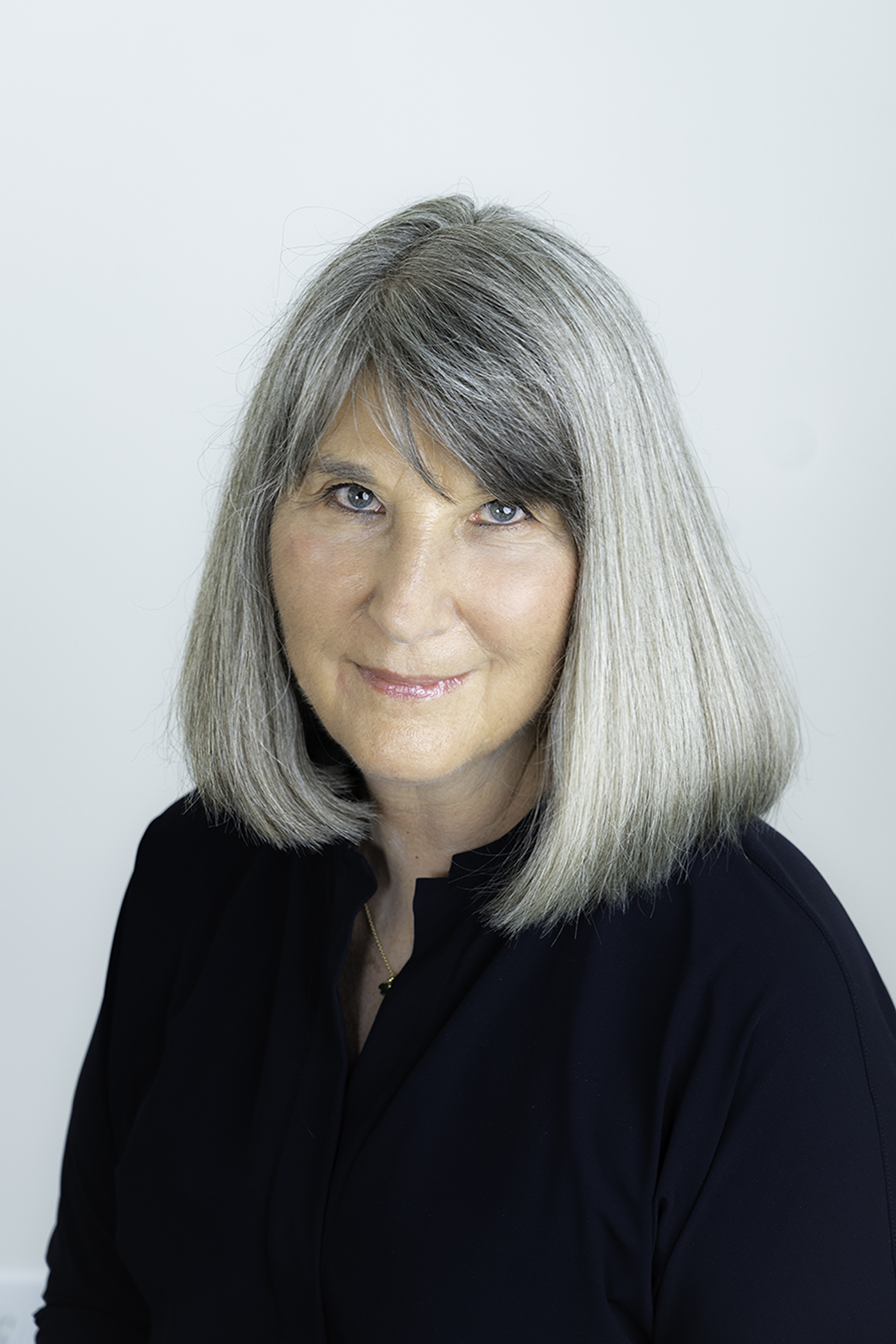
Photo by Jenn Heffner @East27Creative
How did your own long career as a journalist shape the writing of Undaunted?
My background was essential to the work. It influenced the anecdotes I chose, the details I emphasized, the reflections those examples elicited, the questions I asked of the living and of the historical record, and the responses all of these elements evoked, ones that grew out of my own long experience and relationships over more than 50 years with other women journalists—both established and emerging—feelings, really, that remain common to us all.
You share the stories of a large number of women in Undaunted. How did you choose which women to include?
This was such a painful process and I know from a few comments in public forums that it is hard for some readers to accept who got left out in the winnowing. We wanted the text to be under 400 pages. Hence, the 120 pages of endnotes as I couldn’t entirely let go. And yet, it’s meant to be representative history—emphasis on representative.
I focused on women with outsized careers for their time in major mainstream publications and broadcast outlets or those who attracted major mainstream notice, not later in excavation, but in real time. I looked only for women doing what we might call men’s work, women who had jobs or held positions that men in the field would envy. Women who competed directly with men. This mattered especially in the years when this was far less common than it is today. That meant no women’s magazine denizens (e.g. Gloria Steinem only as a freelancer before Ms.), no activists, no writers who wrote or broadcast primarily in languages other than English.
In the introduction, I explain my method. For consistency, I used dozens of proprietary databases from 1840 to the present and applied the same two search terms to every decade: “women” “journalism.” This gave me “a good sense of the conditions that governed the presence and place of women as journalists, the ideas about them that prevailed in each period, and how those ideas changed, or did not change over time. It became possible to identify the individuals whose achievements received the most attention. I considered how and why some women attracted publicity and if and how their stories fit into the wider context of women’s advancement.” I told the story in strict chronology, decade by decade. The dominant theme of progress-setback-progress-setback guides the telling. On top of all that, I gave precedence to the episodes that dealt with or dovetailed with the most significant news events and trends of each period.
I used 12 questions as guides: Which stories best illustrated what women were up against in their professional lives? How or why did the most successful women first get in the door? Who were the true trailblazers and pioneers? (Sidenote from Brooke: those words erroneously get thrown around far too often.) Assuming talent and hard work, how much did background, privilege, strategy, charisma, style, looks, advocacy, connections, or luck figure in their ascent? How well did women manage their successes and failures, their celebrity and censure? Were they “womanly” or “manly” in their reporting and writing or in their editorial vision? What impact did they have on the nation’s news diet and on the profession? Whom among women has the wider journalism community chosen to honor? Which qualities and characteristics fairly or unfairly attributed to women brought condemnation? Which brought respect? How did newsroom politics figure? Have women made a difference? I liked the opportunity to highlight great friendships and I gave due respect to the men who gave deserving women opportunity when so many others would not.
Was there a woman you were sad to leave out?
So, so many. In many cases this was because the most compelling contours of those personal stories were too similar to those of predecessors from earlier decades whom I had already detailed. See above.
You introduce readers to a lot of fascinating women in Undaunted. Do you have a favorite, or two?
Again, so many. This would include all the well-remembered you would suspect with a special place for Charlayne Hunter-Gault. And from the entirely forgotten, don’t miss Edith Evans Asbury, who defied all odds to become a brilliant New York Times metro reporter (but not until her 40s!), serving from 1952-1981, and Ann Stringer, the United Press World War II correspondent, who, like a few others, defied no-women-allowed regulations to report up the Rhine, but then also scooped every other reporter on the Russian-US linkup at Torgau, and produced scoop after scoop from Nuremberg working under Walter Cronkite, then also with UP.
What was the most surprising thing you’ve found doing historical research for your work?
In a field that puts a high premium on youth, how many enormously successful early 20th century women journalists hit stride in middle-aged, e.g. Pauline Frederick, Marvel Cooke, Ethel Payne, Edith Evans Asbury.
A question from Brooke: If you’ve read the book, what was your most significant take-away?
The clear sense that more women worked as serious reporters than the shorthand version of the story tells us, something I’m finding to be true in more and more historical contexts.
* * *
Want to know more about Brooke Kroeger and her work?
Check out her website: https://brookekroeger.com/
Follow her on Twitter: @brookekroeger
Come back tomorrow for three questions and an answer from Lori Davis, writer and producer of the Her Half of History podcast.
Starting Women’s History Month with a Song in Our Hearts
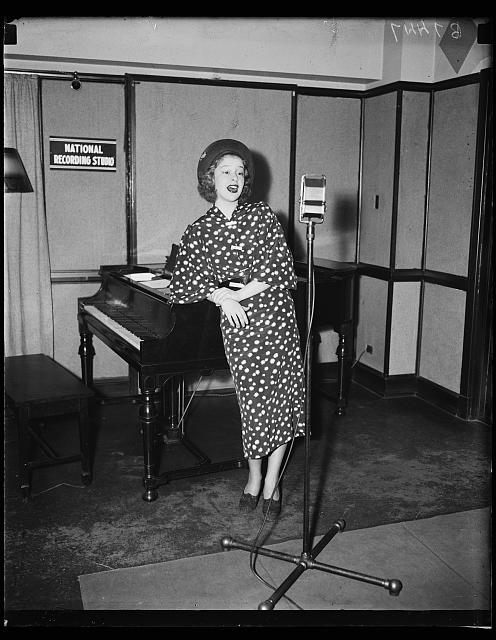
As usual in March, I am hosting a month-long series of mini-interviews here on the Margins in celebration of women’s history month. As usual, we have three questions (or more) and an answer with people doing interesting work related to women’s history in a variety of fields and forms. (If you want to read some interviews from prior months, you can find them here: https://www.historyinthemargins.com/category/women/womens-history-month/ )
I am not the only person offering a month of special content in March. I am very excited by the project of composer and pianist Amy Wurtz, who is celebrating by performing 31 works of music written by women composers on her YouTube channel. I peeked at what she did last year, and I am definitely going to be following along. I invite you to join me.
Here’s a link to her announcement of the project, which includes a link to her YouTube channel: https://www.amywurtz.com/post/women-s-history-month-2024
If you want to skip the explanation and go straight to the music, here’s the YouTube link: https://www.youtube.com/channel/UCOfXxKR189__pNUIyTXBJAQ
And now, to quote Maurice Sendak: Let the wild rumpus begin! (Okay, I may be a tad overexcited.)
***
Come back on Monday for many questions and an answer with journalist Brooke Kroeger, talking about the history of women in journalism—a topic I’m very interested in these days.