




Napoleon’s Russian Campaign
I am writing this on February 20, a week (or more) before you are reading it. I was amused to learn this morning that it is National Clean Out Your Bookshelf Day, a “holiday” that has been celebrated each 20th of February since 2014 by, well, I don’t quite know who.
It is also the last day that I am writing a post inspired by trying to find room on my shelves for the books I used in writing The Dragon from Chicago. I can’t claim I cleaned out my bookshelves in the process, though I did move a handful along to the giveaway box in the basement. (I suspect I will suffer sorter’s remorse and pull a few of them back out.)
With one last hurrah before Women’s History Month starts, I bring you Napoleon’s Russian Campaign by Count Phillipe-Paul De Ségur.

This is a much better cover than the one on the edition I own, but this edition doesn’t have an intro by Peter Gay. Which I think is better than a cool cover.
The Count de Ségur was an eyewitness of Napoleon’s Russian campaign. He was a member of a French noble family that had come through the French Revolution impoverished but alive. He was struggling to make a living writing theater skits when he first saw Napoleon riding through the streets of Paris at the head of his cavalry escort. De Segur, whose father was Minister of War under Louis XVI, succumbed to his family’s military tradition and applied for a commission on Napoleon’s staff. He served as one of the general’s aides de camp from 1800 through the end of the Napoleonic Wars. He was, in his own words, “less an actor than a witness, never leaving the Emperor’s side for more than a few feet, and then only to deliver several of his orders and see that they were carried out.”
De Ségur published his account in 1824. The two volumes were an enormous success: ten editions sold out in three years. Later, various one-volume editions appeared that left out technical military details about supply depots and marching schedules and instead concentrated on the dramatic story at the heart of the book. The edition I own was abridged by de Ségur’s grandson and includes an introduction by historian Peter Gay.
I suspect I would have enjoyed the supply train info, but there is no doubt that the book as it stands is an enthralling account of Napoleon’s hubris in marching to Moscow and the tragedy of the French army’s retreat, told from the perspective of a man who was there. De Ségur opens with Napoleon walking down the lines of his soldiers, who were massed for the great march to the east, asking his men about their thoughts and needs. It ends with him abandoning his men in the field as he raced toward Paris to raise new troops. From beginning to end, de Ségur keeps the reader at his side with a judicious use of the first person plural. The first chapter ends “We had to press on in pursuit.” And we, the readers, press on too, as if we were part of the Grand Army.
From the Beast to the Blonde
March 1st is almost here: only two more posts in which I dive into my bookshelves and pull out treasures from my reading past before we switch gears entirely.
For those of you who haven’t been here on the Margins before during Women’s History Month, we ramp up to five posts a week. Four of them are mini-interviews with people who are doing interesting work in women’s history: historians, podcasters, novelists, you name it. On Friday, I write a post featuring a women’s history story or idea. It is Big Fun as far as I’m concerned. (And yes, a lot of work.) I hope you enjoy it too.
In the meantime, let’s take a look at From the Beast to the Blonde: On Fairy Tales and Their Tellers by historian, mythographer, and novelist Marina Warner.
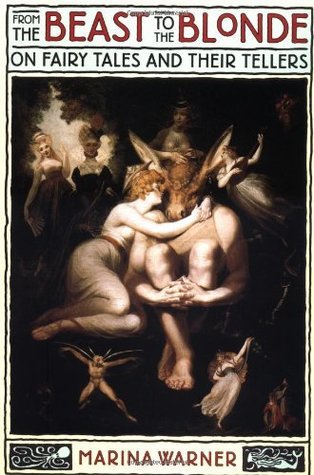
Like much of Warner’s work, From the Beast to the Blonde explores tales of the imagination for the truths they reveal. Warner looks at story tellers as they appear inside the stories as well those scholars, collectors and writers who have transcribed, translated, and transformed familiar tales across centuries and cultures. She considers recurring themes—absent mothers, wicked stepmothers, reluctant brides, men transformed into beasts (and vice versa), the power of hair (length and color alike)—and why they have remained powerful, while rejecting the idea of universal archetypes in favor of solid historical and social grounding for individual tales. She draws surprising and illuminating connections across time and space and wanders off into fascinating digressions that enrich her central arguments.
In short, Warner leads us on a big, richly imagined, deeply researched expedition into the familiar land of fairy tales, which turned out to be less familiar than this reader expected.
If Warner’s approach to fairy tale appeals to you, you might also be interested in her book on the Arabian Nights, Stranger Magic.
****
At the risk of being obnoxious, allow me to remind you that The Dragon for Chicago is now available for pre-order wherever you buy your books. If you want a signed copy, you can order it through my local independent bookstore here: https://www.semcoop.com/dragon-chicago-untold-story-american-reporter-nazi-germany Use the special instructions block at the bottom on the order page to request a signed copy and tell me how you want it signed.
I wouldn’t keep repeating myself, but pre-orders makes a difference.
The Square Halo
Women’s History Month is barreling toward us and I am happily working on bringing you another March full of mini-interviews with people who are doing interesting work in women’s history. In the meantime, I’m sharing some of the books that I’ve rediscovered in the process of finding room on my office shelves for the books I used in writing The Dragon From Chicago.
I must admit, I’m enjoying looking at books that I haven’t touched or thought about for years—in some cases decades—and sharing them with you, even though it is definitely slowing down progress on reclaiming my project bookshelf.* (Not to mention the related process of filing stuff in my project boxes.) At least some of you seem to be enjoying it as well—or at least I am causing you to add books to your own TBR lists. (As far as I’m concerned, this is a WIN.) Don’t be surprised if you see more posts like this once Women’s History Month is over.**
In the meantime, let’s take a look at The Square Halo and Other Mysteries of Western Art by Sally Fisher.
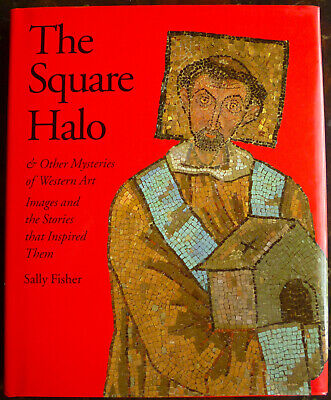
The subtitle of The Square Halo sums up what the book is about: Images and the Stories That Inspired Them. It is a crisply written, beautifully illustrated introduction to the stories behind works of Western art that were created in periods before art for arts sake was a thing, specifically the Middle Ages through the Renaissance.*** Fisher, who worked for many years at the Metropolitan Museum of Art, looks at paintings that were shaped by meaning as well as aesthetics—paintings that we often hurry past in museums on our way to art works that seem more accessible—and untangles the symbols, ideas and attitudes that are impenetrable to the modern viewer. Her goal is to not only answer the question “what’s going on?” in these paintings, but to help a modern reader understand the ideas behind what’s happening on the canvas.
The book is organized according to themes rather than chronology. Most of the themes are Biblical or drawn from the stories of Christian saints, though Fisher includes a chapter on stories from classical Greece and Rome. (It seems perfunctory to my eye, though I doubt if it did when I bought the book soon after its publication in 1995.)
Testing to see how the book holds up, these many years later, I turned to the story of Judith and Holofernes, which I am familiar with as a subject in Romantic painting and which Bridget Quinn discussed in Broad Strokes in her chapter on Baroque artist Artemisia Gentileschi (1593-1653). Fisher’s account of the story is clear and complete. Her description of the painting she uses to illustrate it directed my eye to elements I might have missed on my own. (I’m used to more dramatic paintings of the subject.) She places it in the broader context of medieval and Renaissance paintings on the subject. But I must admit, it didn’t grab me.
I then turned to her discussion of halo shapes, which was absolutely fascinating. Perhaps because I didn’t remember any of it from reading it the first time.
The Square Halo will keep its place on my shelves as a useful reference work to use alongside other books about art, but I am not tempted to read it again from start to finish.
*This would only matter if I had another project in the wings waiting to fill that shelf, but I don’t. Or rather, I have a growing list of possible projects waiting for me to have enough time and clarity of thought to explore them.
**Though you also have a horde of women journalists coming your way.
***I would argue that “art for arts sake” did not become an important idea until the nineteenth century. But paintings created between the Renaissance and the Romantic movement often build on very different stories than the Christian-centric art of earlier periods. Classical mythology and history, for instance, played an important role in the history painting of the seventeenth and eighteenth centuries. But I digress.