




Broad Strokes
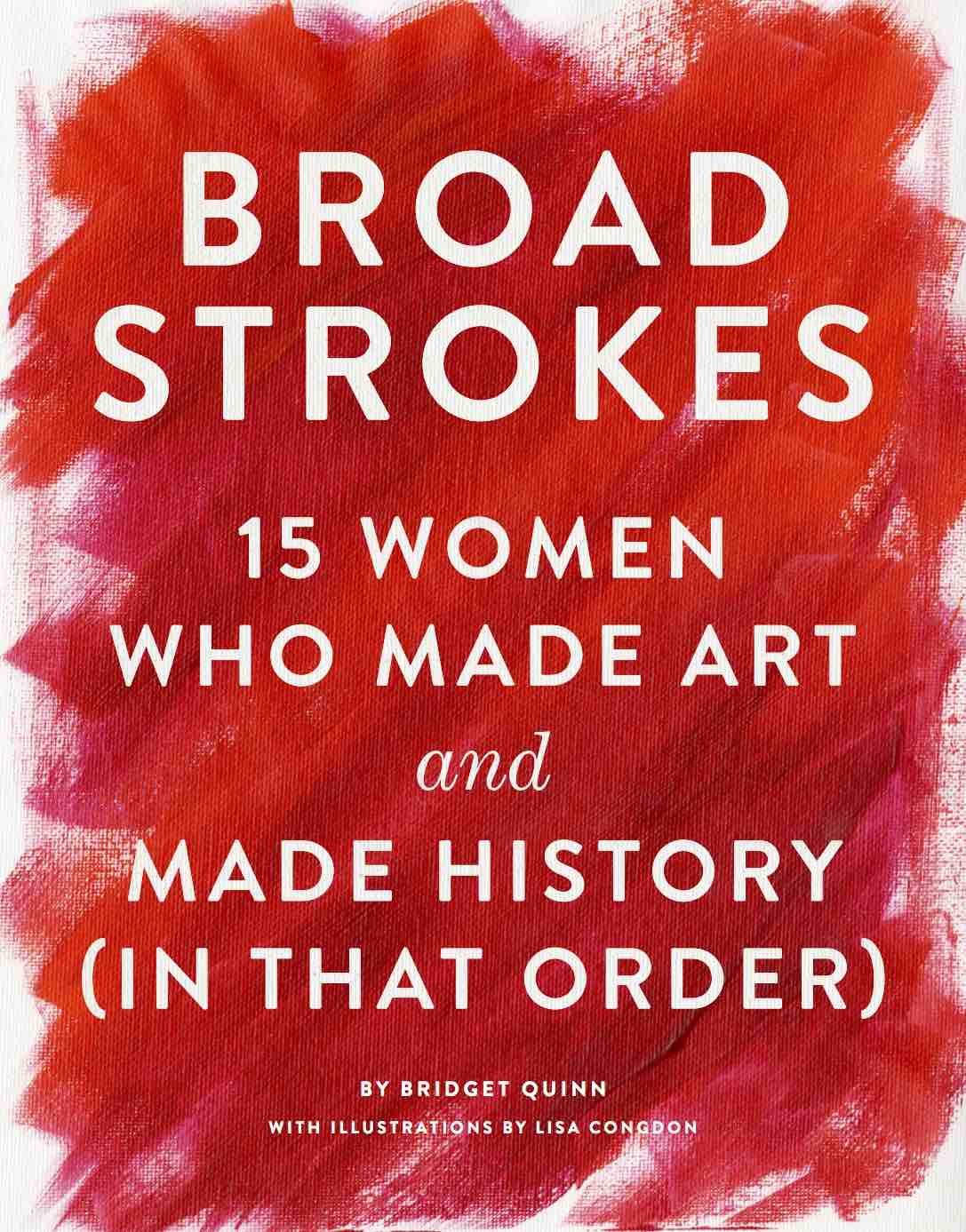
In 2021, I read an article by art historian Bridget Quinn titled “What Should We Call the Great Women Artists?” I was already struggling with the questions of what to call Sigrid Schultz in the book I was working on.* I was fascinated by Quinn’s argument and taken with her voice. I immediately added her to the list of people I wanted to contact for my series of Women’s History Month mini-interviews the following March.** (You can see her interview here.)
Almost two years after that interview, I finally read Broad Strokes: 15 Women Who Made Art and Mad History (In That Order).
Here’s the short version of what I have to say: Wow!
Here’s the short version of what Quinn has to say: “The careers of the fifteen artists that follow run the gamut from conquering fame to utter obscurity, but each of these women has a story, and work, that can scramble and even redefine how we understand art and success.”
In the introduction, Quinn tells the story of how she came to realize that women artists had existed, even though few of them appeared in the Big Fat Art History Book that was used in almost every art history class taught in the United States in the last 50 years, H.W. Janson’s History of Art. She continued with the journey that led her from that revelation to the book in my hand.
The fifteen essays that follow are dazzling. Quinn is erudite, witty, and passionate. She places each woman in not only her art historical context, but her larger historical moment. By the second essay I had lugged my copy of Janson off the shelf so I could look at the art work Quinn references. (Yes, I recognize the irony.) When Jansen failed me, I turned to Google. She traces major themes across the essays: the recurrence of missing mothers and artist fathers, the similar challenges the women faced across the centuries, the difficulty of finding information on the artists. More, Quinn sets each woman within the context of her own intellectual and emotional journey, telling us how each artist entered her life and what it meant to her at the time. Her analysis is consistently insightful. Her interaction with each work is personal, and inspiring.
As you can tell, I am a fan. If you are interested in smart writing, women’s history, or looking at art from a different perspective, this one’s for you.
*It took me another two years to make a decision.
**I’m running the series again this March, with a fascinating line-up of creators working in the field of women’s history. Don’t touch that dial.
***
Bridget Quinn has written a full-length biography of one of the women she explores in Broad Strokes. Portrait of a Woman: Art, Rivalry and Revolution in the Life of Adélaïde Labille-Guiard will be released on April 16. I can hardly wait.
American Journalists and the Great War
One of the challenges of writing history is deciding where the story starts. For me that not only means deciding where I begin telling the story, but how much of the backstory I need to understand. The short answer is, a lot. I am never comfortable making broad generalizations based on other people’s broad generalizations.
For The Dragon From Chicago, I spent a lot of time learning about the history of foreign and war correspondents. It had not dawned on me before I began working that overseas press bureaus as we know them were, like so much of life in the mid-twentieth century, an outcome of World War I. If I was going to understand the conditions under which Sigrid Schultz worked, I needed to understand how journalists covered the Great War.
I started with very general books on the subject, most notably Philip Knightley’s the First Casualty: The War Correspondent as Hero and Myth Maker from the Crimea to Iraq.* Knightley’s book is a solid, accessible introduction to the subject. If I were a different kind of writer I could have stopped there.
I’m so glad I didn’t. If I had, I might not have discovered Chris Dubb’s two excellent books on American journalists in the Great War.
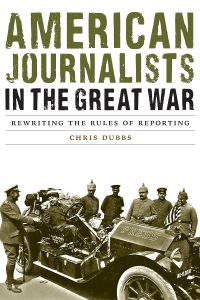
American Journalists in the Great War: Rewriting the Rules of Reporting (2017) is a deep dive into the experience of American journalists who reported on the war in Europe in which Dubbs argues that they redefined war coverage. (For what it’s worth, I agree.) He looks at the journalists who covered both fronts before America entered the war in April 1917, including those who attached themselves to the German army. He outlines the development of an accredited news force attached to the American Expeditionary Force (A.E.F.), in greater depth than Knightley. He follows the experiences of individual journalists, in the Balkans, in Russia, in the trenches of the Western front. My only quibble with the book is a personal one: only two of the World War I correspondents who later reported from Berlin made an appearance. I would have loved to see them through another historian’s eyes.
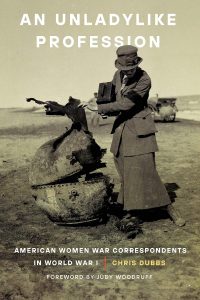
Dubbs briefly discussed women who managed to report on the war in American Journalists in the Great War. He covered the subject in greater depth in a second book, An Unladylike Profession: American Women War Correspondents in World War I (2020). Women weren’t allowed to become accredited war correspondents attached to the AEF, but some gained credentials as “visiting correspondents” for magazines and others made their way to Europe with no credentials at all. Dubbs covers the stories of more than thirty women who reported on the war. Their shared assignment was to cover the “woman’s angle” of the war. As a group they stretched that definition to include much more than their editors intended. (My personal favorite, mystery novelist Mary Roberts Rinehart, was the first journalist to visit the front line trenches.) An Unladylike Profession was less useful to me than his more general book, but I found it absolutely fascinating, for obvious reasons.
I give both books a big thumbs up for anyone interested in the history of journalism, the First World War, or kick-ass women.
* “The first casualty when war comes, is truth.” Senator Hiram Johnson. 1917. (In case it isn’t obvious from that quotation, Johnson was not a fan of the United States getting involved in the Great War. He was also a major player in the United States’ decision not to sign the Versailles Treaty and a leader of the isolationist movement in the period leading up to the Second World War, though he hated being referred to as an isolationist.)
From the Archives – Three Mothers: How the Mothers of Martin Luther King Jr., Malcolm X, and James Baldwin Shaped a Nation
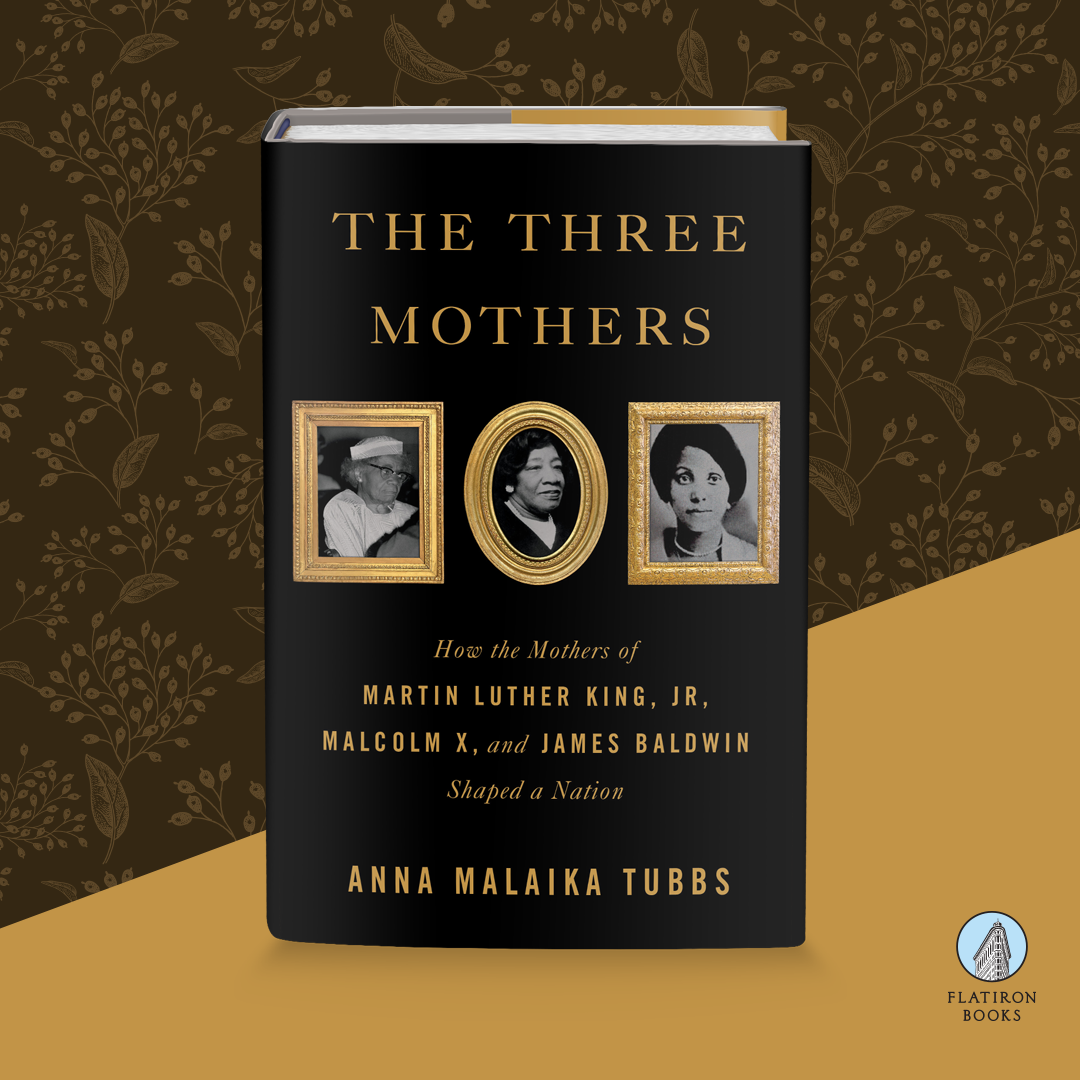
Anna Malaika Tubbs is the author of The Three Mothers: How the Mothers of Martin Luther King Jr., Malcolm X, and James Balwdin Shaped a Nation. She is also a Cambridge Ph.D. candidate in Sociology and a Bill and Melinda Gates Cambridge Scholar. After graduating Phi Beta Kappa from Stanford University with a BA in Anthropology, Anna received a Master’s from the University of Cambridge in Multidisciplinary Gender Studies. Outside of the academy she is an educator and DEI consultant. She lives with her husband, Michael Tubbs, and their son, Michael Malakai.
Take it away, Anna!

What inspired you to write about these women?
I have always been passionate about correcting the erasure of Black women. When I started my PhD I knew I wanted to bring attention to Black women who had been wrongfully forgotten. We often hear the saying that “behind every great man is a great woman,” a saying that really bothers me, because most likely in such cases that woman is right beside the man, if not leading him. So I wanted to think about things differently and introduce the woman before the man. I believe mothers are some of the most underappreciated and unseen people in society and I felt it was time to honor them with the attention and credit they deserve. With all of this in mind, I dove into researching mothers of famous Black men. When I came across Alberta’s, Berdis’s, and Louise’s stories that were filled with nuance, diversity, as well as similarities and intersections as a result of the closeness in their birthdays as well as their famous sons’ birthdays, I just knew I had to dive deeper and share their names with the world. Their lives offer guidance and encouragement for Black women today, they show us different ways to be women, Black women, Black mothers, activists, educators, and much more. They remind us how difficult the world can be while also showing us ways to actively change it.
Who are some of your favorite authors working in women’s history today?
I have so many, but I’ll list a few!
Isabel Wilkerson – what she was able to do with The Warmth of Other Suns and now Caste is deeply inspiring. Her research is crucial and her ability to translate years of work into beautiful narratives that allow us to understand difficult concepts easily is something I try to emulate.
Patricia Hill Collins – her extensive sociological work on all aspects of Black womanhood and Black feminism over decades provides the basis of so many projects, interventions, and policies that impact our lives. You simply cannot do research on anything concerning Black women without engaging in something Patricia Hill Collins produced.
Melissa Harris-Perry – She is the kind of public intellectual I hope to become. She is brilliant and she uses her work to inspire change within, but more importantly beyond, the Ivory tower. She reminds all Black women of our worth and the treatment we deserve even if we’ve been denied it time and time again in the United States. Sister Citizen is one of my all-time favorite books.
How can your book help us better understand the civil rights movement as well as our current political/social climate?
At the center of The Three Mothers is a discussion of the dehumanization of all Black people. Motherhood is about creation, the giving of life, and this role becomes even more powerful in communities that are denied humane treatment on a daily basis. We as a Black community are continuing a long-fought struggle for our humanity, dignity, and worth to be recognized. This book, by focusing on Black motherhood, acknowledges that fight and shows how despite the many ways that our humanity has been denied in our nation, we have continued to find ways to humanize ourselves, give life, and move our country forward.
The Three Mothers provides a perspective of a century of U.S. history through the eyes of Black mothers. Alberta King, Berdis Baldwin, and Louise Little were born within six years of each other, the first was born in the late 1890s, and the last of the three to die, passed away in the late 1990s. The book is a lesson on the way history has impacted the current fight we find ourselves in from the perspective of identities we do not highlight enough. We have much to learn from the generation before our revered civil rights heroes, we have much to learn from Black women, and we have much to learn from Black mothers.
Question for you – Who would you say are women warriors of today?
In Women Warriors, I concentrated on women for whom battle was not a metaphor. By that standard, some of the most amazing modern women warriors are the Kurdish women who fought against Isis. They are the subject of a new book by Gayle Tzemach Lemmon, The Daughters of Kobani. I loved her previous book, Ashley’s War and I’m looking forward to this one.
* * *
Want to know more about Anna Malika Stubbs and The Three Mothers?
Check out her website: https://annamalaikatubbs.com/
Follow her on Twitter: @annas_tea_
* * *
Come back tomorrow for three questions and an answer with historical novelist Diana Giovinazzo.