




Reveille in Washington
Women’s History Month is barreling toward us and I am happily working on bringing you another March full of mini-interviews with people who are doing interesting work in women’s history. In the meantime, I’m sharing some of the books that I’ve rediscovered in the process of finding room on my office shelves for the books I used in writing The Dragon From Chicago. (The danger with this is the temptation to re-read the books as I go. Which wouldn’t be a problem if it weren’t for all the as yet unread books piled throughout my office.)
Next up, Reveille in Washington, 1860-65 by Margaret Leech
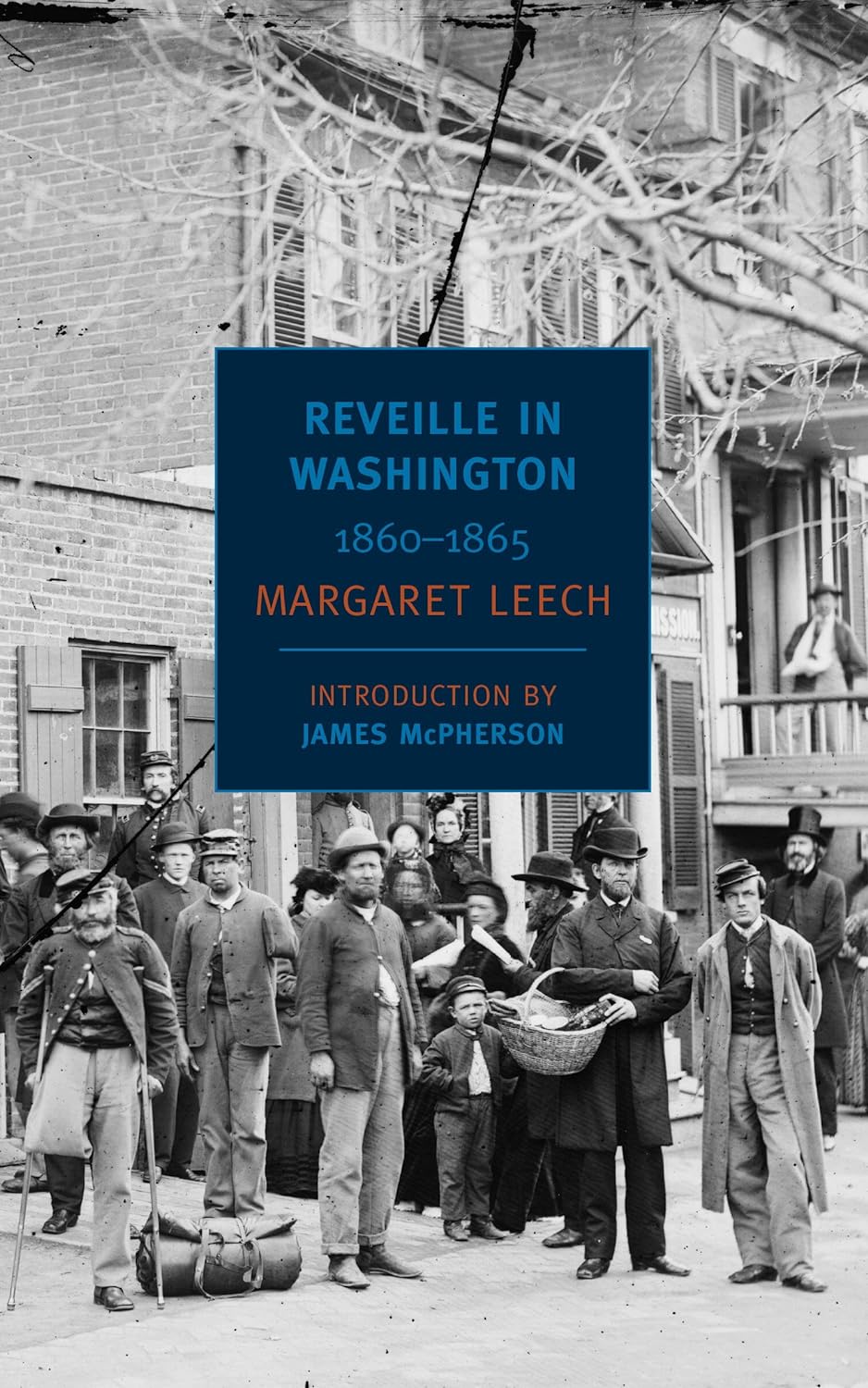
This is a much more handsome cover than the edition I own.
Reveille in Washington was published in 1941. It became an immediate best seller, won the Pulitzer Prize for History in 1942,** and has remained a classic work of Civil War history ever since. If you know a serious Civil War history buff, they probably have a copy on their shelves.
Reveille in Washington is not an account of battles and generals. Instead Leech focuses on the war through the lens of the capital, looking at its politics and its people.
The book opens with a character sketch of the American army’s aging. overweight commanding general, Winfield Scott— the chapter title notes “The General is Older than the Capital”—who was emblematic of the army at the outbreak of the Civil War. The book is larded with similar portraits, often witty and always insightful, of characters who peopled Washington over the course of the war: General George McClellan, Frederick Law Olmstead, Andrew Carnegie, Clara Barton, Walt Whitman and Louisa May Alcott among others. Leecch claimed that she tried to keep Lincoln out of the book because it was the story of Washington. Late in the writing, she realized “that was like doing a book about the disciples and not mentioning whose disciples they were.” She had to go back and insert Lincoln into her story.
But the primary character in the book is Washington, D.C., itself, which was in many ways a frontier town despite its location. Leech describes it as “an idea set in wilderness.” In 1861, the city was unfinished, filthy, and famously corrupt. One Union soldier, who arrived to guard Washington in the first days of the way grumbled that the city was “hardly worth defending, except for the éclat of the thing. Reveille in Washington is at heart the story of how the city shaped the conduct of the war and was shaped by the war in turn, from an unfinished administrative backwater to the true center of federal power. It is also a thumping good read. Leech wrote several novels before she turned to history and it shows. She knows how to tell a story.
*Leech won a second Pulitzer in 1960 for In the Days of McKinley, which also won the Bancroft Prize in American History and was a finalist for the National Book Award. She remains the first person and only woman to win two Pulitzer Prizes for History. ** It is perhaps not coincidental that Leech was married to Ralph Pulitzer, whose father had established the awards. Nonetheless, the fact that the playing field is never entirely flat does not change the fact that Reveille in Washington is a great book.
Leech was also a sharp-tongued member of the Algonquin Round Table, which came as a surprise to me. Turns out that more women were members of the vicious circle than I realized: https://algonquinroundtable.org/6-women-you-didnt-know-were-members-of-the-algonquin-round-table/
**Barbara Tuchman won two Pulitzer Prizes for General Non-Fiction, for The Guns of August in 1963 and Stillwell and the American Experience in China in 1971. But I digress.
###
I mentioned before The Dragon From Chicago is now available for pre-order wherever you get your books. If you want a signed copy, you can order it from my neighborhood book store, the Seminary Coop Bookstore at this link: There is a space at the bottom of the order page to add special instructions. Request a signed copy there, and specify how you want the book to be signed. (I’m afraid there’s going to be a certain amount of “My Book, My Book!” going forward. Sorry, not sorry.)
Girl Sleuth
Several weeks ago, I mentioned that I am in the process of putting away my research materials for The Dragon From Chicago. I said then that it is always harder than I expect and that remains true. My efforts are turning my office into a pit of despair. Putting one thing away requires moving another three.
This is particularly true in the case of the bookshelves. I shelve my books alphabetically by author’s last name. Adding a single book requires shuffling books, sometimes across several shelves, to open up a spot. I have not yet resorted to stacking books vertically, but I suspect the time will come.
There is an upside to all this, familiar to anyone who has packed or unpacked books. As I struggle to move books from the project bookshelf to the permanent bookshelves I handle books I haven’t thought about for a long time. It is impossible to do this without stopping to read a little bit and remember why I enjoyed them, or why they mattered to me. It inevitably slows down the process, but it is a great delight. (I wish I could report that this resulted in a few books moving to the give away pile. No such luck.)
Over the next few weeks, I’ll be sharing some of the books I’ve re-discovered with you. First up, Girl Sleuth: Nancy Drew and the Women Who Created Her by Melanie Rehak.
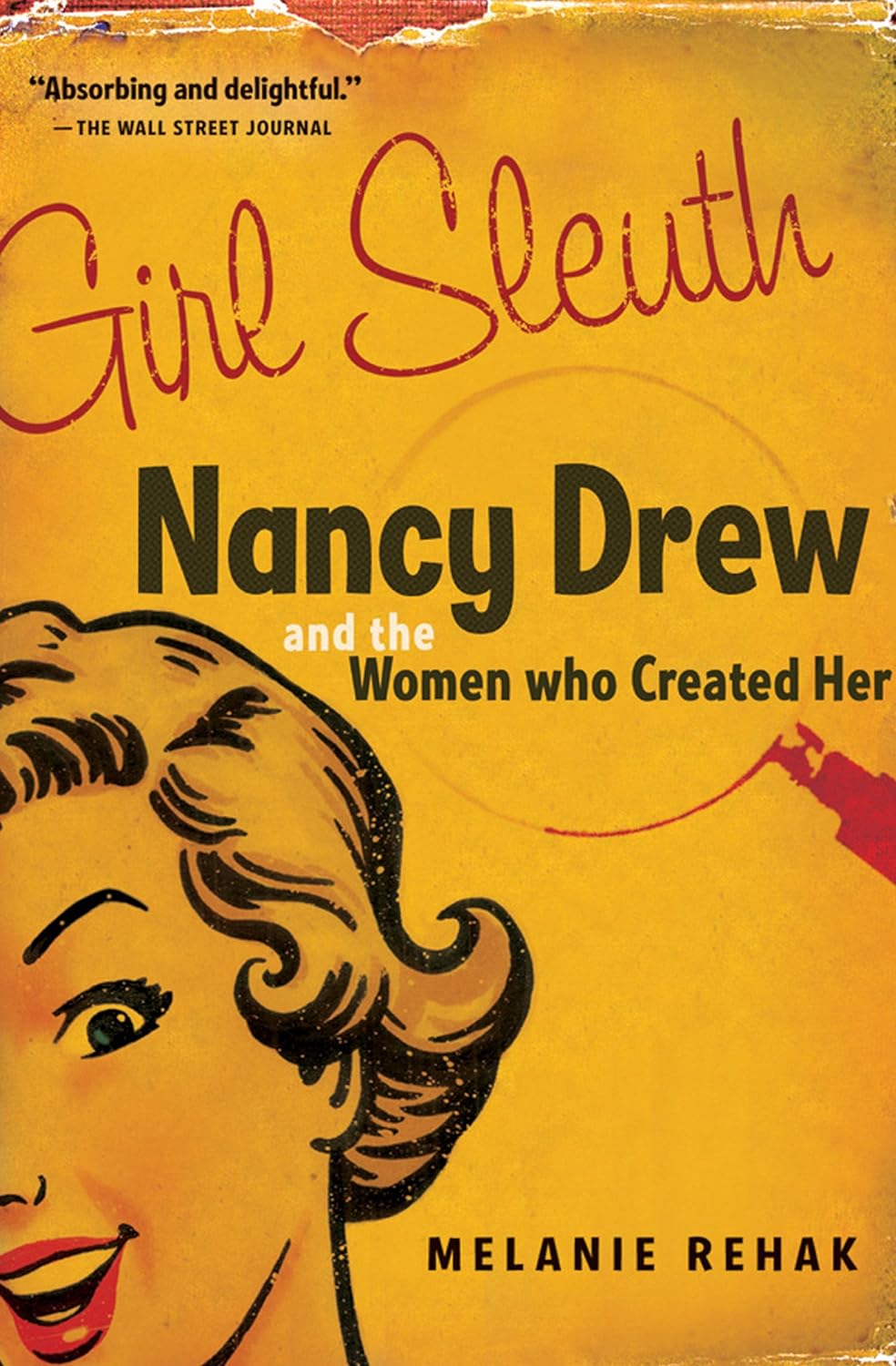
I read Girl Sleuth when it first came out in 2005.* When I pulled it off the shelf last week as part of the great shelving project, I was tempted to dive back in and read it again. I may yet.
Rehak knows who her audience is: the generations of women who have read and loved the Nancy Drew books since the first four books were published in 1930. (Not to mention those who watched at least one movie and a television series.) Rehak is a member of that audience. And so am I. The first Nancy Drew book I ever read, my mother’s copy of The Mystery of the Ivory Charm (1936), still holds a place on my bookshelves.** For many of us, Nancy Drew, with her roadster, her gal pals,**** her great clothes, and her unending stream of adventure, was an icon, if not actually a role model.

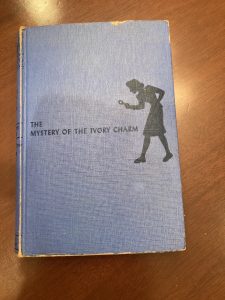
(I must admit, when I pulled it off the shelves to take this picture, I was tempted to read it again. )
In Girl Sleuth, Rehak tells the story of how the Nancy Drew books moved from a pulp series to a foundational text of American girlhood. It turns out that publisher Harriet Stratemeyer Adams and journalist Mildred Augustine Wirt Benson, the original women behind “Carolyn Keene”—the equally fictional author whose name still appears on the covers of the Nancy Drew, almost 100 years and 600+ volumes later—were just as interesting as the titian-haired girl detective. For at least this Nancy Drew fan, Benson turned out to be almost as much of a potential role model as her most famous creation.
Time to put Rehak back on the shelves and see what book catches my attention next.
*Hard to believe it was almost twenty years ago.
**The downstairs shelves that hold fiction, not the ones in my study.
***Far more interesting characters than her stalwart boyfriend, Ned Nickerson. (The fact that I remember his name is evidence of how deeply engrained the books are in my brain.)
**********
*Clears throat nervously*
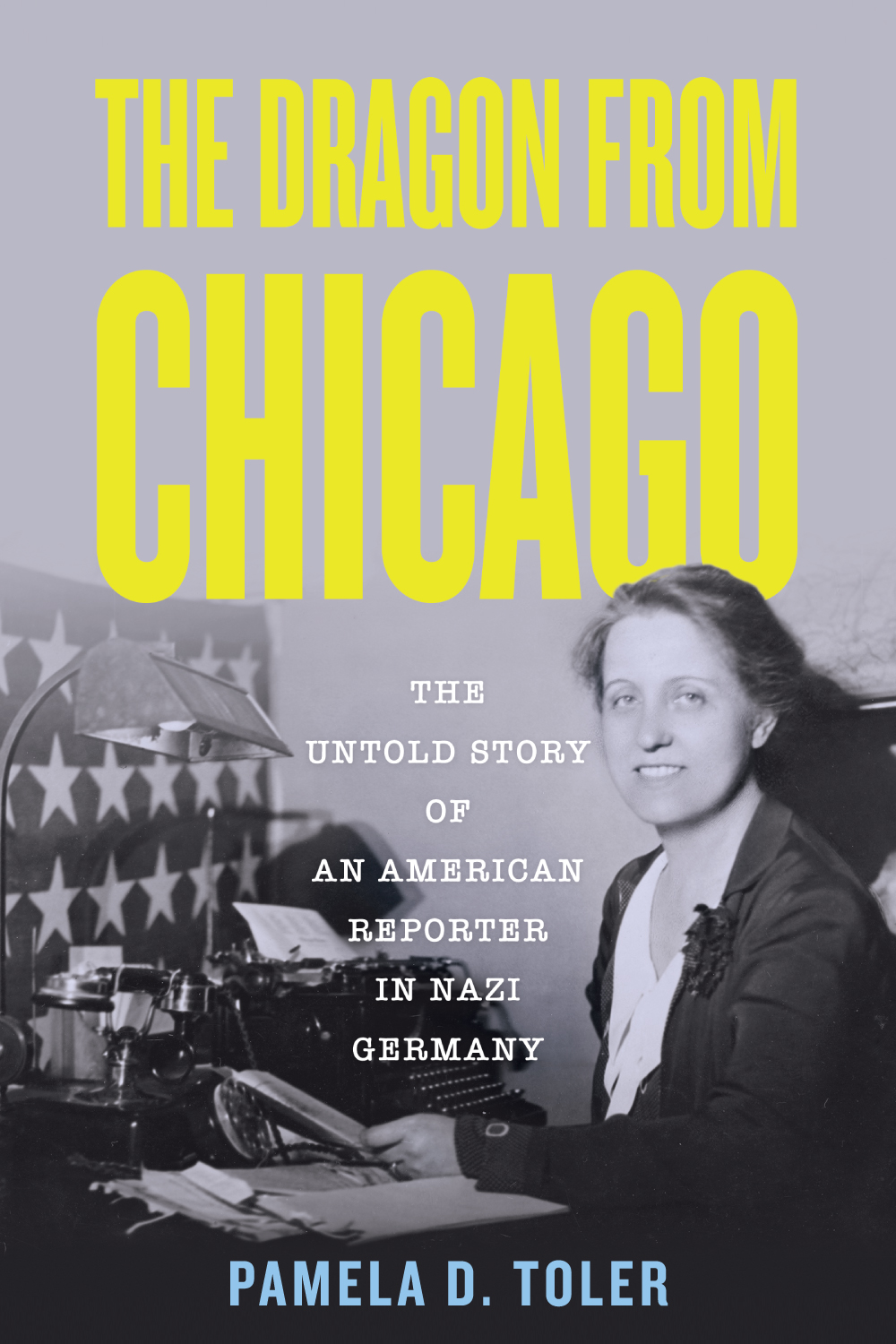
While you’re here, I have a piece of news: The Dragon from Chicago is now available for pre-order wherever you get your books. If you want a signed copy, you can order it from my neighborhood book store, the Seminary Coop Bookstore at this link: There is a space at the bottom of the order page to add special instructions. Request a signed copy there, and specify how you want the book to be signed.
A Photojournalist You Never Heard Of
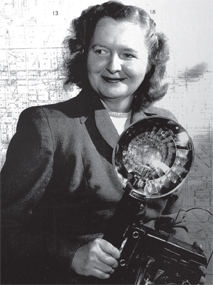
In the lull between Christmas and New Year’s a high school classmate of mine, and regular reader of this blog, reminded me of the woman who was a photographer for our hometown paper, Betty Love.(1) The name rang a bell, but I knew nothing about her. I had decided to take the last ten days of the year off, so I had time to take a little dive down a rabbit hole.(2) I’m so glad I did. Love’s career was both singular and emblematic of the careers of many women journalists of the mid-twentieth century. I had no idea.
Love was an art teacher in Springfield ,Missouri’s elementary and junior high schools in the 1930s. In 1941, she took what was supposed to be a temporary job replacing the cartoonist at the Springfield News and Leader. (Given the timing, I presume the cartoonist she replaced had volunteered for World War II , though none of the sources say that.) Not surprisingly, her cartoons focused on the realities of wives and children on the home front, an unusual perspective for political cartoonists at the time. (4)
She was still the “temporary” cartoonist four years later, when the paper’s photographer, John Reading McGuire, was drafted. The paper’s editor, perhaps counting on Love’s artistic talent, handed her McGuire’s camera and told her she was now the photographer. She quickly taught herself the technical skills she needed to do the job, including how to develop film in the newspaper’s darkroom.
Love was the paper’s photographer for three decades, from 1945 until her retirement in 1975.
She was a photographer for a local paper, but her work was known beyond the Missouri Ozarks. One of her photographs helped change the rules governing news photography. In 1948, she was assigned to get a picture at the federal courthouse, where two prisoners were being brought in under the custody of federal marshal Fred “Bull” Camfil. Camfil told her she couldn’t take the picture. Love told him she had a first amendment right to do so. Camfil made the mistake of saying “The constitution be damned.” When Love continued to take pictures, the marshals threw blankets over the prisoners. Love’s photograph and Camfil’s foot-in-the-mouth comment made the wires. The incident led to a ruling that federal marshals and their deputies could not prohibit photographers from taking pictures of federal prisoners on the public way outside of a courthouse.
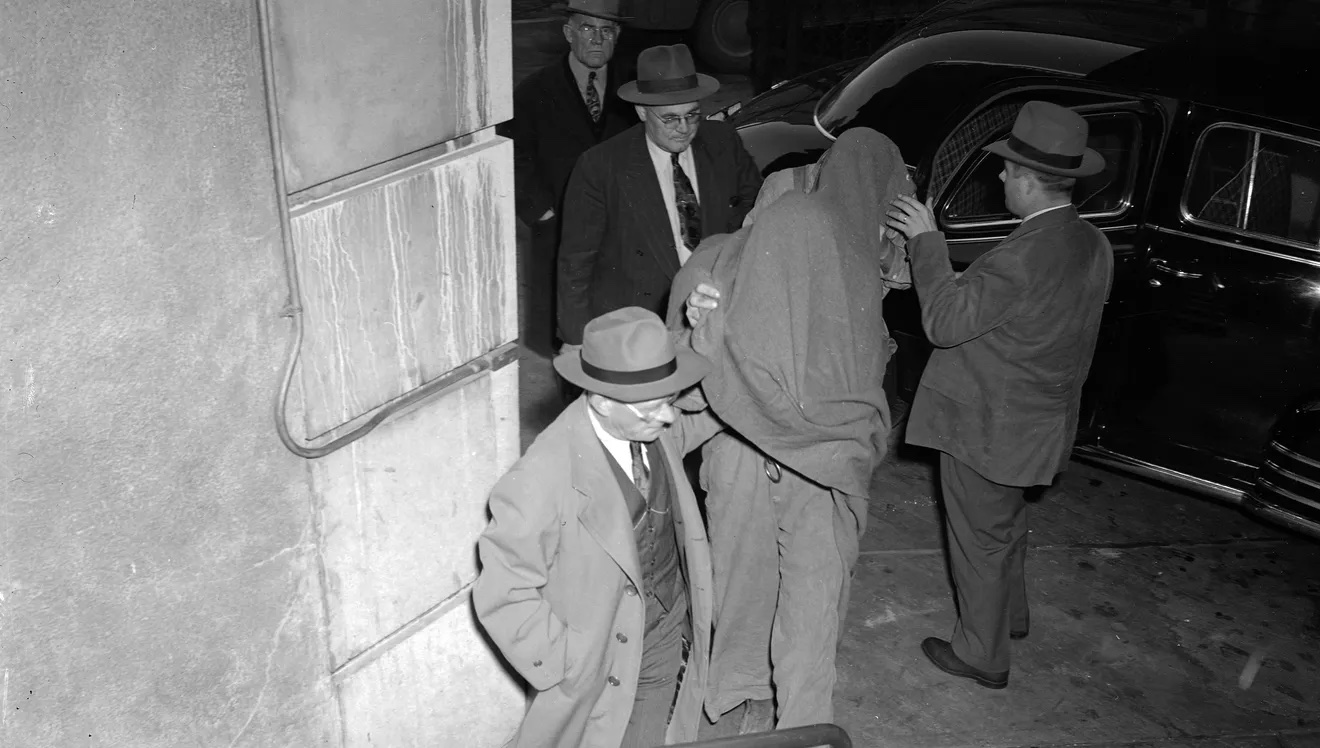
Printed in the Springfield News and Leader, December 7, 1947
Love was one of the first women newspaper photographers, a pioneer of the use of color photography in daily newspapers a charter member of the National Press Photographers Association, and one the original inductees into the Missouri Journalism Hall of Fame.
I was fascinated by Love’s story, but it raised a question for me. How many women like her were there, working as hard-nosed journalists at smaller papers at the same time that Sigrid Schultz and a handful of other women were making their names in big city papers? And how do you find them? *****
If you know of a woman who worked in your local paper in the mid-twentieth century as a reporter or photojournalist, I’d love to know.
(1) Thanks, Tracy!
(2) Who am I kidding? I would have gone down that rabbit hole regardless. I always do.(3)
(3) My new motto in this regard regard comes from Zora Neal Hurston: “Research is formalized curiosity. It is poking and prying with a purpose. It is a seeking that he who wishes may know the cosmic secrets of the world and they that dwell therein.” (With a hat tip to historian and biographer Ray Boomhower, who recently shared this quotation.)
(4) At this point I drifted down a secondary rabbit hole on women political cartoonists and began to build a bibliography. Because I had a thought.
(5)Actually, now that I think about it, I have an idea or two about that. Hmmm.