




Talking About Women’s History: Three Questions and an Answer with Sharon M. Harris
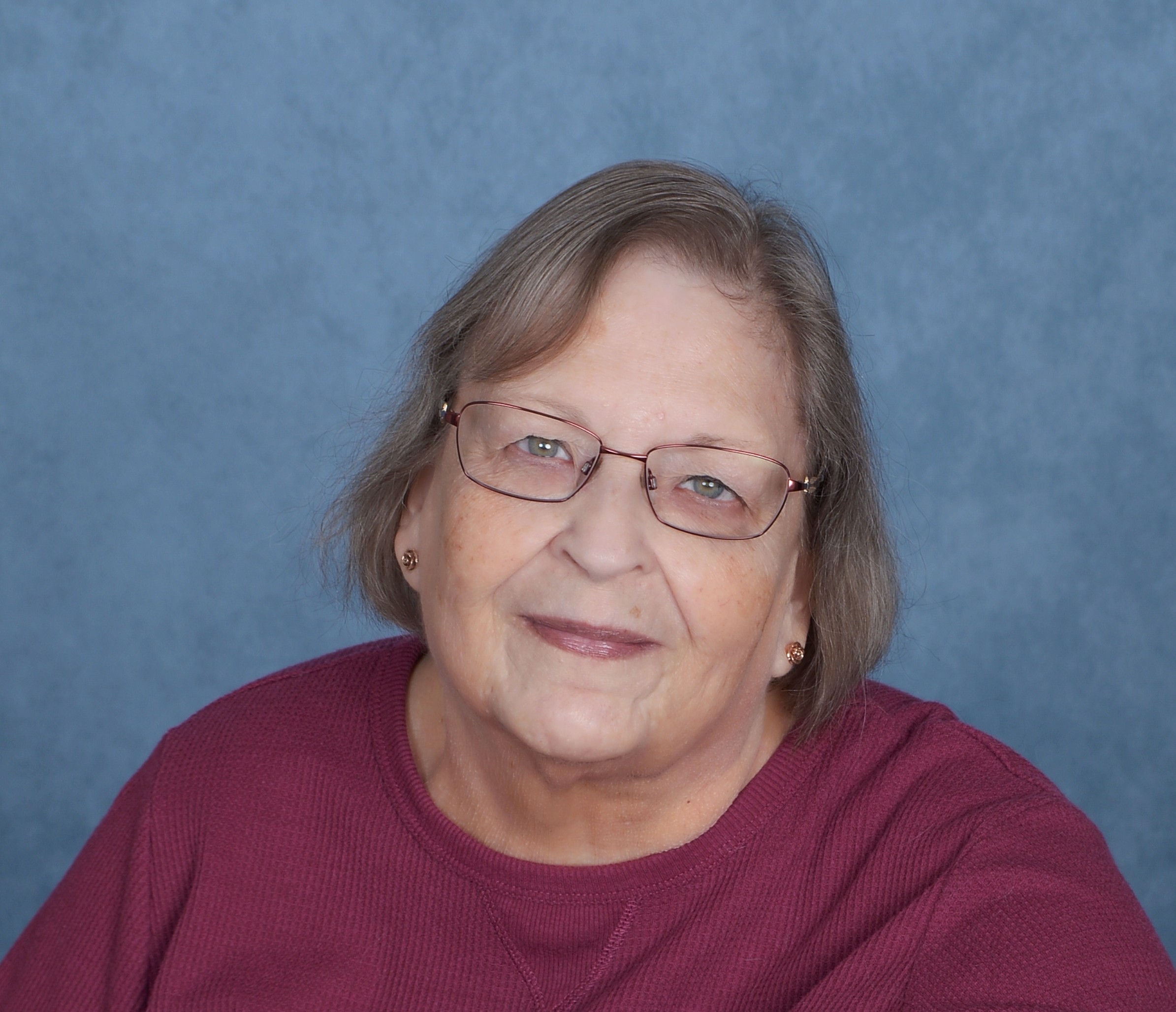
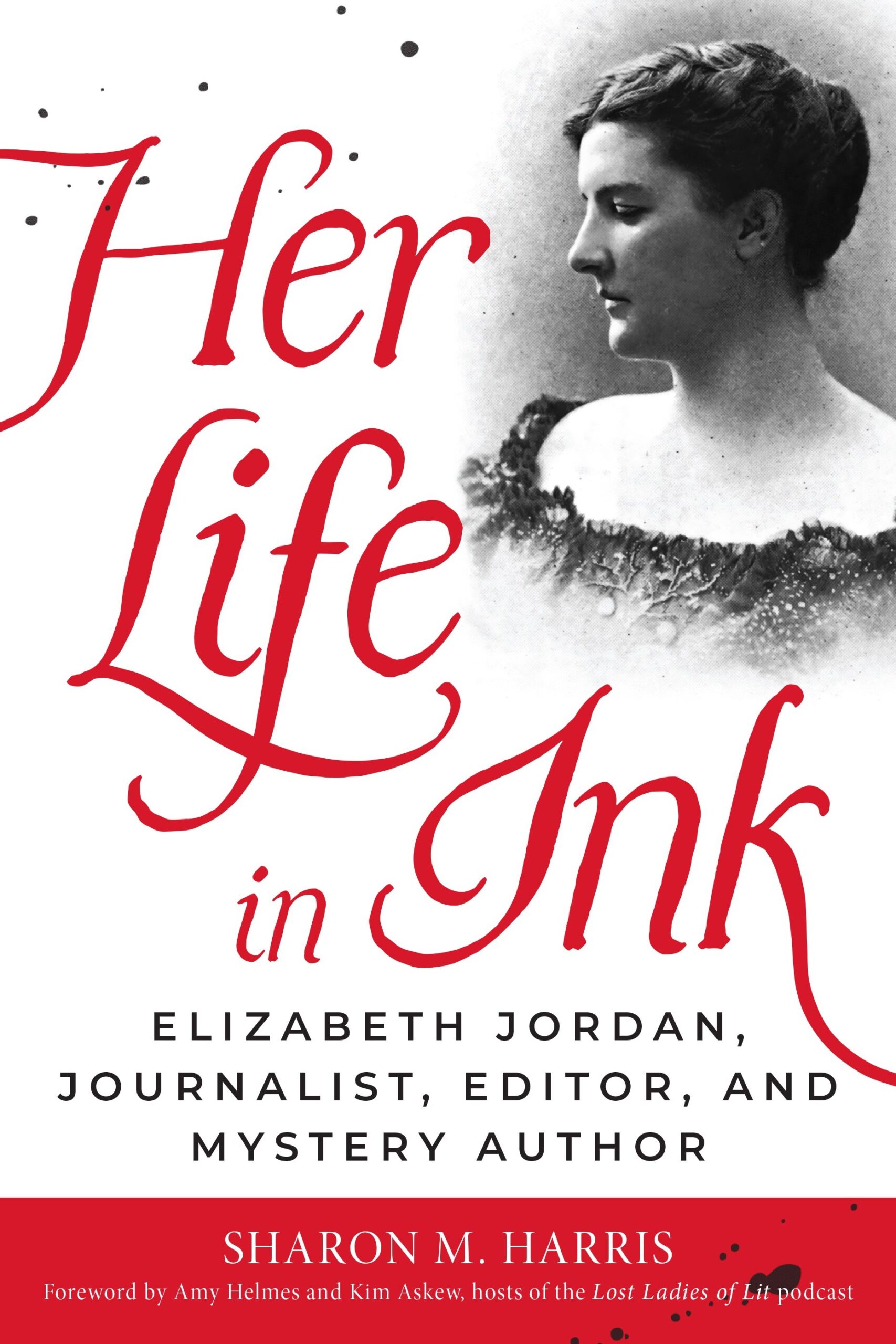
Sharon M. Harris worked in business for several years before she went back to college, finished her B.A., and went on to earn an M.A. and Ph.D., after which she had a wonderful twenty-five-year career in academia. She “retired” in order to have more time to write, and now is a writer full time, focusing on biographies. Her biography of Elizabeth Jordon, Her Life in Ink, was recently released.
Take it away, Sharon!
Writing about an historical figure like Elizabeth Jordan requires living with her over a period of years. What was it like to have her as a constant companion?
Of all the women whose lives I’ve written about in biographies or whose works I’ve recovered from unwarranted obscurity, Elizabeth Jordan has been the most delightful companion of all. When I start working on a biography, I create a timeline, with the person’s birth date at the top and her death date at the bottom. My job is to fill in that timeline with every ounce of information I can find—facts about her life, but also her impressions and those of people who knew her; what she professed in public and what she revealed in private documents; and especially, how she crafted her life. Initially, the search is rather distanced—the outline of a life, a date here and there, a book published, a friend who commented on her. This is the period in which I decide if there is enough substantive information for a biography and, most importantly, if there is something unique about this person that warrants recovering their life. I’m going to spend anywhere from five to eight years with that person, so there must be a powerful life story to tell that deserves such a commitment. I have spent several months on at least half a dozen subjects, only to decide that perhaps their writings are fascinating but there just isn’t anything particularly unique about their lives; or, as happens fairly often when working with eighteenth and nineteenth century figures, if they express racist attitudes. I definitely do not want to live with that for years. But then, as I delve further into a subject, their personality is revealed in multiple layers. That’s when the research becomes fascinating.
Early on in my research relating to Jordan, I realized one word defined her better than other: optimism. She loved life, was fascinated by people, and she had confidence in herself. I found it impossible not to like her and to feel optimistic myself when I was engaged with her. What I also admired was that she knew what she wanted out of life from a young age. She wasn’t a dreamer; she was a do-er. She laid out Plans (insisting on the capital P) for her career and was willing to work her way up in a profession rather than expect opportunities to be handed to her. To me, she was and is inspiring.
You are one of the second wave feminist historians who helped create women’s history as an academic discipline. What sparked that interest for you? And did you face institutional challenges in addition to all the other challenges that confront someone writing about women in the past?
First, let me emphasize that I am, by training and passion, a literary historian. My interest in a subject almost always begins with something they have written that makes we want to know more about them. I did not start my graduate studies expecting to make my career in relation to women writers. In my Master’s I studied Hemingway, Fitzgerald, Faulkner, and in my doctorate, I began the same way. But one of my first Ph.D. courses was in Early American Literature, and I found myself fascinated with the period, broadly conceived. But as the course progressed, I began to think about the fact that there was only one woman on our reading list, the poet Anne Bradstreet. That seemed odd to me and, always driven by the love of research, I started in my “spare time” digging into colonial and Revolutionary histories. Some marvelous women historians were beginning to add to our knowledge in the field, but I specifically wanted to find women writers. And I did! My book, Early American Women Writers to 1800, which collected numerous early writers and offered brief biographies, was published shortly after I graduated.
Early in my graduate studies, thanks to some wonderful women professors, I also became interested in nineteenth-century American women writers. I took every course I could in the field. Then one summer, I went into the university bookstore looking for some light summer reading before I hunkered down to my academic work. I found a copy of a book Tillie Olsen had just published with Feminist Press: Life in the Iron Mills and Other Stories by Rebecca Harding Davis. I couldn’t put it down. I had studied a lot about American Realism as a literary movement, but Davis’s story, published in 1861, was far earlier than any realist work I had studied in classes. That understanding of the genre would change, of course, and Davis’s work was part of that change. Once again, I set off into research, and the more I found, the more I knew I wanted to focus my dissertation on her.
My enthusiasm was not met well by the faculty members I had been working with for several years. Davis wasn’t a “major writer.” I made my case over and over again, until I wore down everyone, and I wrote the dissertation I wanted. “Was her work ‘good enough’ to warrant a dissertation?” was what I had to answer—both for the dissertation and for readers. This question haunted me throughout my career in recovering early and nineteenth-century women’s writings and lives. For years, at every conference where I presented my research, the first question I would receive was “But is her writing any good?” It was after a couple of years of this that I finally responded to the poor soul (always a man, I must admit) who asked it. “I don’t take that question anymore,” I stated. “I would not devote my life’s work to writers who weren’t ‘good.’”
What I did not face was rejection from publishers. I was so fortunate to be delving into these writers just when publishers were recognizing we were tapping into a huge area for new and exciting scholarship. I’m pleased to say that my book on Davis, a revision of my dissertation, Rebecca Harding Davis and American Realism, was published by the University of Pennsylvania and became a standard in the field for decades.
You have written that “recovering” women’s texts—and by implication women’s lives—is only the first step in a multi-phase process. Could you discuss this a little?
Gladly. When I’m writing an article about an author or a biography of her life, I do not believe that I am presenting “the last word” on that subject. Of course, a biography requires placing your subject in historical contexts, and I write as thoroughly as possible about aspects of her life, but once that book is published, it goes out into a wider world. It is offered as a text that other readers and writers will then engage within their own fields of interest and, hopefully, add to our knowledge. Let me take Jordan as an example. I have detailed the many fields in which she was influential—journalism, authorship, magazine editing, book publishing, the film industry, and mystery writing. Scholars within each of those fields can hereafter integrate Jordan more fully into our understanding of those fields. She no longer becomes the single subject, but one who adds to what we know about the many participants in that field and reshape what we thought we knew about a particular era. A journalism scholar, for instance, will be able to add a great deal of depth to our understanding of Jordan’s role in the field and the ways in which she follows certain patterns or created new paths within the profession. A biography offers a rocket launch for greater understanding.
A question from Sharon: I find one of the challenging aspects of a biography to be that all-important Prologue. Your Prologue for The Dragon from Chicago is, to my mind, a model of that aspect of writing. It is beautifully written, gives away enough of Sigrid Schultz’s life to demonstrate why she is an important historical figure, and entices us to read more. How do you decide what to include in the Prologue? how much to give away of the life story while keeping the most important points for the book itself?
With the caveat that I don’t usually think about writing craft in abstract terms:
I think the key is choosing the right anecdote from your subject’s life: one that reveals a key element of their story and requires you to add some historical background . In the case of The Dragon from Chicago I knew almost from the beginning that I wanted to use the story that explained the title. That story has a clear beginning, middle and end, and gave me a space to talk about the treatment of foreign correspondents in Nazi Germany and the main arc of Sigrid’s story.
Also, I try to keep the prologue short compared to chapters in the main body of the book. I aim for roughly half the length of a standard chapter. Word count restraints are a great way to keep yourself focused on what needs to be included.
On the other hand, what do I know?
***
Interested in learning more about Sharon and her work?
Visit her website
Follow her on Instagram
***
Come back tomorrow for three questions with historian Carla Kaplan