




Talking About Women’s History: Three Questions with Carla Kaplan
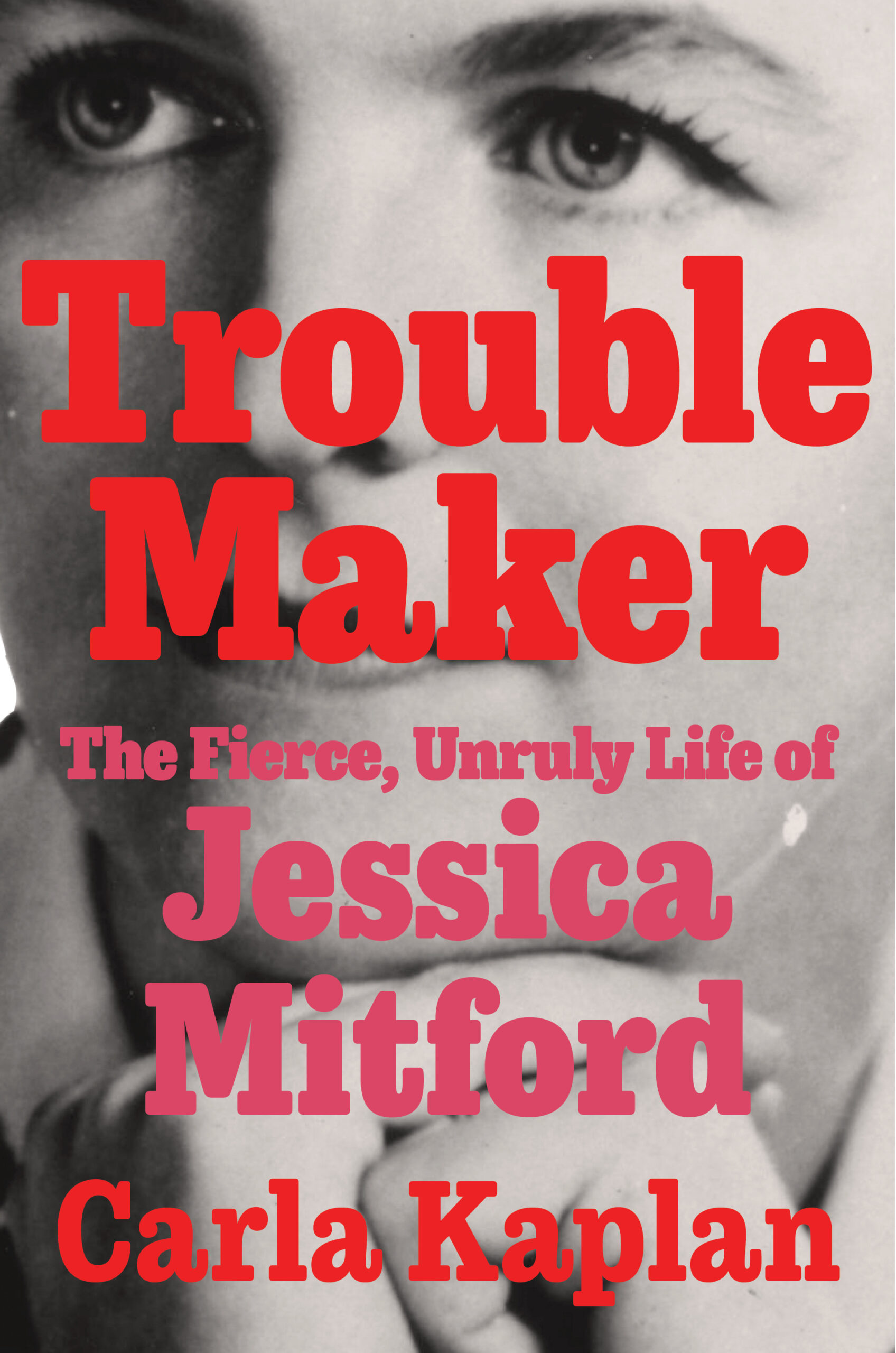
Carla Kaplan is an award-winning Professor and writer who holds the Stanton W. and Elisabeth K. Davis Distinguished Professorship in American Literature at Northeastern University. She has published eight books, including Zora Neale Hurston: A Life in Letters and Miss Anne in Harlem: The White Women of the Black Renaissance, both New York Times Notable Books and, most recently, Troublemaker: The Fierce, Unruly Life of Jessica Mitford. A recipient of Guggenheim and National Endowment for the Humanities “Public Scholar” fellowships, Kaplan has also been a fellow in residence at the Cullman Center for Scholars and Writers, the Schomburg Center for Research in Black Culture, and the W. E. B. Du Bois Institute She is a fellow of the Society of American Historians, chairs the editorial board of the journal Signs, and serves on the board of Biographers International. Her biography of the British-aristocrat-turned-American-Communist-and-muckraker Jessica Mitford, Troublemaker: The Fierce, Unruly Life of Jessica Mitford has been excerpted in Town & Country and The Telegraph and widely and warmly reviewed, including in Kirkus (starred), The New York Times, The New Yorker, The Spectator, the Financial Times, The London Review of Books, Times Literary Supplement, and elsewhere. Described as “an absolutely delicious biography of the best Mitford sister” by TheBoston Globe (one of the Globe’s “75 Best Books” of the year), as a “gripping new biography …which places Mitford’s achievements within the context of America’s roiling political climate in the mid-20th century” by the Los Angeles Times, and as a “resolutely modern new biography that refuses to reduce this most beautifully messy and complicated of Mitfords to bon mots,” (New York Times, “Critic’s Choice”), Troublemaker appears on numerous “best books” lists and is a Finalist for the National Book Critics Circle Award and the PEN Jacqueline Bograd Weld Award in Biography.
Take it away, Carla!

What path led you to Jessica Mitford and why do you think it’s important to tell her story today?
I was looking for Jessica Mitford all my life, and looking for her without knowing that she was the one I was searching for. For many years I’ve wanted to tell the story of a funny female activist. There is a long-standing myth that women activists (or women professionals) are grim, grey, cheerless, and just no fun to be with. I knew that wasn’t true. And I wanted to counter and defeat that stereotype. No American activist was probably as funny – or as fun to be with – as Jessica Mitford. She drew people to her because her fighting spirit was always combined with her love of fun, and her brilliant and prescient critiques were combined with her humor. She was an ideal person to break that stereotype.
I came upon Jessica Mitford when I was writing my last trade book, Miss Anne in Harlem: The White Women of the Black Renaissance, the first book to identify and document an extraordinary group of white, mostly upper-class women, who attempted in the 1920’s to become, in effect, honorary blacks: insiders in the Harlem Renaissance. For the most part, they were failed allies, coming into Harlem with sometimes little beyond their good intentions – never enough to defeat systemic racism. I knew, even early in the writing of Miss Anne, that I could not write another book about failed allies and that my next book would have to be about successful allies – and only a few white allies have been as successful, especially in the civil rights struggle, as Jessica Mitford. So she came into my life just as I was looking to tell the story of a successful ally in the fight against racism. Her story is important because she did succeed and also because she kept up the fight by keeping up her spirits, and the spirits of everyone around her. And that’s such an important model today when so many of us wish we could just pull the covers over our heads and stop reading the news!
Writing about an historical figure like Jessica Mitford requires living with her over a period of years. What was it like to have her as a constant companion?
Originally, Mitford was quite foreign to me, and not just because she was born a British aristocrat. Mitford was, by her own admission, someone who always avoided introspection. In fact, she so disliked any focus on personal feeling – her own feelings or those of others – that she called such a focus “grubbing about.” Not only is the biographer’s job, in my view, a certain amount of “grubbing about,” to explain the complex choices her subject made, in their historical and social context, but I am an American feminist and a child of its important consciousness-raising. I was trained to grub about, if you will. So that aspect of my subject – her refusal to talk about her feelings if she could avoid it – was challenging to me and it look me a bit longer to get to know Decca. But once I did, I was so grateful to have her in my life – she got up every single day to fight fascism and authoritarianism. And she got up every single day looking for some fun and some joy. She inspired me to keep fighting and keep enjoying life at the same time. And, like me, Mitford was a very hard worker – we both tend to put in the 14-hour day. And, also like me, she really loved a microphone. So I found all kinds of things that we shared. And that too made it easy to welcome Mitford into my home and my life for the 10 years it took me to write Troublemaker.
At first glance, Jessica Mitford led a very different life from the subjects of your earlier books. Are there common themes that link them?
I have always written about women who made unlikely choices and led unpredictable lives, women who crossed lines that others did not cross, and women who were advised against doing exactly what they did. While Zora Neale Hurston, Jospehine Cogdell Schuyler and Jessica Mitford might not look very similar at first glance—a Black woman from Florida, a white Texas born to a Klan family, and a British aristocrat who became an American Communist and muckraker—all of them shared a refusal to walk in the paths that were laid out for them, and all of them took themselves on unlikely life journeys, making difficult choices personally and professionally.
Interested in learning more about Carla and her work?
Visit her website
Listen to this podcast interview
* * *
Come back tomorrow for a whole bunch of questions and an answer with historian Jennifer Banning Tomás