




Angels of the Underground
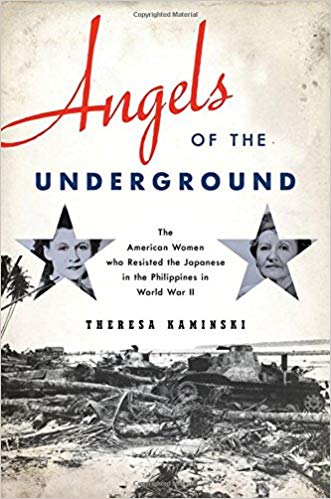
Now and then I realize that a book slipped through the cracks, that I read it and never reviewed here on the Margins. My friend Theresa Kaminski’s Angels of the Underground: The American Women Who Resisted the Japanese in the Philippines in World War II is one of those books[1], something I realized only after I watched her excellent interview on WW2TV several weeks ago in preparation for my own appearance in April.[2] It seemed like a good idea to pull it off the shelf and take another look.
Angels of the Underground tells the stories of four American women—Peggy Doolin[3], Yay Panililio, Claire Phillips, and Gladys Savary—who were trapped in the Philippines during the Japanese occupation in World War II. Before the war, Doolin was a nurse, Panililo was a newspaper correspondent and photographer, Clair was a not-entirely-successful entertainer, and Gladys was a very successful restaurateur. Each of them became involved in the loosely coordinated resistance movement, but they were not a unit. In fact, they barely knew each other, which in some ways underlines the breadth of the resistance.
Kaminski skillful establishes what life was like for Americans in the colonial Philippines in the years before the war, and why each of her subjects went there is search of a better life. She sets her subjects’ lives and actions firmly within the context of the military action that led to the Japanese occupation of the Philippines in 1942 and the campaign to regain control of the islands, beginning in 1944. She brings to life the horrors of the Japanese occupation in general, and the specific dangers suffered by these women. She examines how those experiences shaped their lives after the war.
In short, it is an excellent contribution to the growing body of work on the experiences of women in World War II.
[1] Looking at my notes, I realize I read Angels of the Underground in 2017. *dang*
[2] I strongly recommend WW2TV for any of you who are World War II buffs. It is an amazing YouTube channel at airs live interviews related to the war several times a week. The topics vary widely and so do the presenters. Pretty much something for everyone.
[3] aka Margaret Utinsky—a name that might be familiar to you from the war movie The Great Raid. Women’s names are often a tricky issue when you write about historical women. It becomes even trickier when women chose to take on false names as part of their cover.