




Uncle Sam Wants You: The Man Behind the Poster
Illustrator James Montgomery Flagg (1877-1960) keeps popping up in places where I don’t expect him. Each time I have to look him up, because I don’t remember who he is. Each time he looks a little more interesting.
Most recently I stumbled across him on HathiTrust. I had given into the temptation to search for the name of the person I am researching—which is fun and easy—instead of squeezing out a few more sentences on a book proposal about her—which on that particular day was neither fun nor easy. There on the search list was book titled The Well-Knowns as seen by James Montgomery Flagg. Published in 1914, it is a collection of caricatures drawn by Flagg of famous people, including She Who Will Not Be Named, in some cases with a sharp-penned caption.[1]
Since I was in HathiTrust anyway, I did a quick search on Flagg. Whereas before I had gone “ho-hum” each time I looked him up, this time I was hooked.
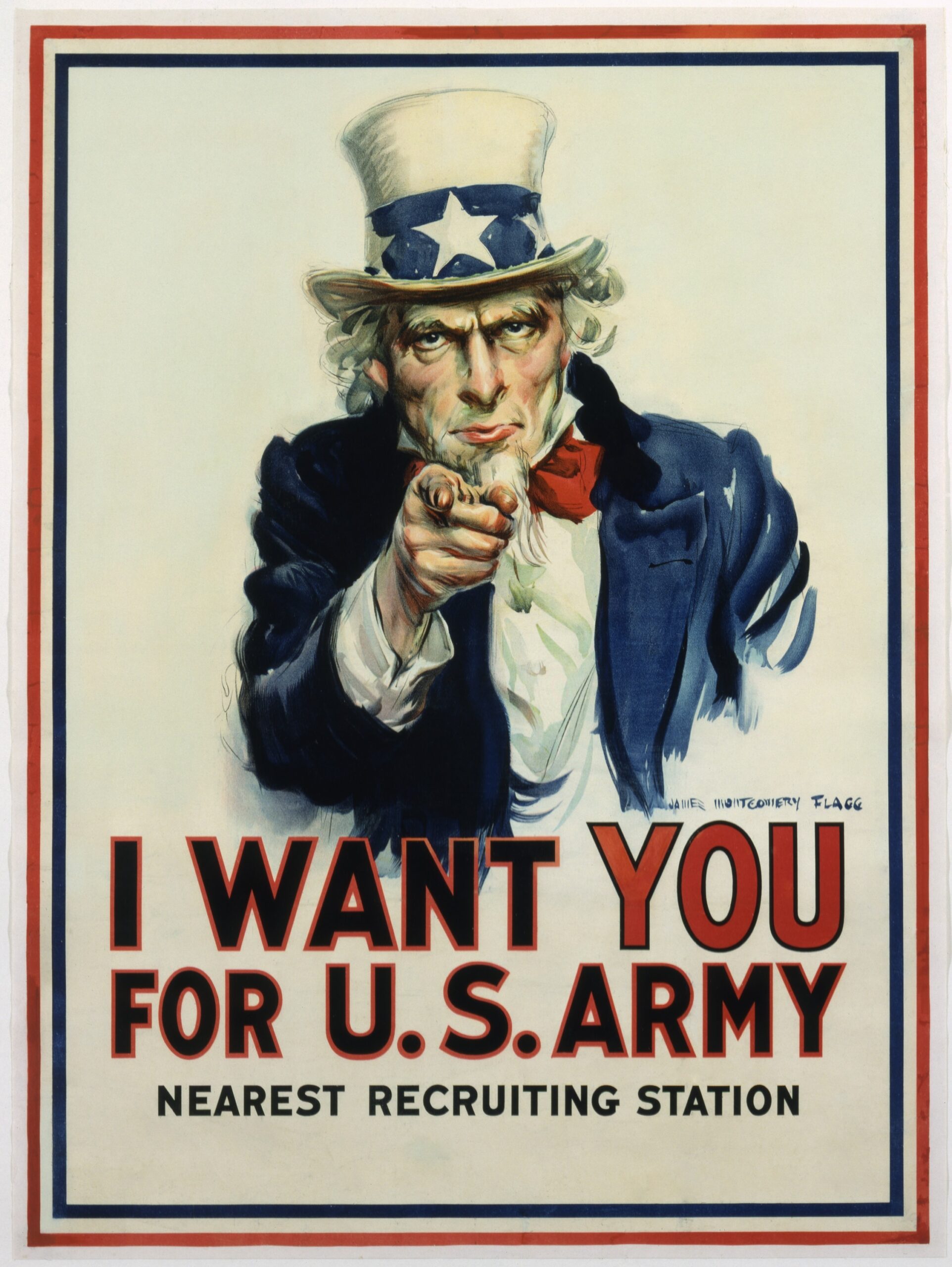
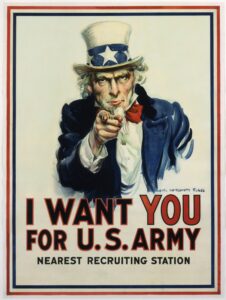
The piece James Montgomery Flagg is best known for is the World War I recruiting poster in which a stern Uncle Sam looks out at the viewer and proclaims “I Want You for U.S. Army.” But that poster was simply one moment in a successful and varied career.
“Monty,”as he was called, started early. His first published work appeared when he was twelve: a page of comical drawings in the popular children’s magazine St. Nicholas.[2] By his teens he was already working as regular freelance contributor for well known weekly magazines.
Flagg studied at the Art Students League[3] in New York for several years and then went on to study in London and Paris. Once back in the United States, his career as an illustrator took off.[4] He was facile and hard-working, producing an illustration a day in his studio on West 67th Street. His work appeared most often in the comic magazine Life, but he was also published in many other magazines, including Colliers, Cosmopolitan, Judge (another popular comic magazine), McClure’s, Redbook, and The Saturday Evening Post. He drew cartoons, including a series with a tramp character named Nervy Nat that ran in Judge magazine.[5] He illustrated serialized novels and short stories, most notably P. .G. Wodehouse’s “ Jeeves” stories, which appeared in Colliers. He produced magazine covers. He also illustrated popular books, including an early satirical novel by Edna Ferber, and created a series of posters with the combined title Girls You Know, featuring leading actresses of the time, as a promotion for short, silent films produced by Thomas Edison’s film company.[6]
In addition to illustrating the works of others, Flagg was also a writer:
- He created a series of illustrated books, with titles like Tomfoolery, Why They Married, and, my personal favorite, If: A Guide to Bad Manners. These books combined satirical rhymes on social issues with closely observed caricatures.
- After illustrating a number of popular romantic novels, he wrote a romance story of his own, The Adventures of Kitty Cobb, which told the story of a young woman making a life for herself in the big city. (Personally, I would say it is a gentle parody of the more serious, more romantic novels he illustrated.) It was serialized over twenty-five weeks in major newspapers across the United States before being collected into what would now be described as a graphic novel.[7] The serial was so popular that advertisers used her name to promote their products.[8] He followed Kitty Cobb’s success two years later with another illustrated serial titled A Girl You Know.
- His experiences with the Edison Studios led him to write several dozen silent movie scripts, including one for a movie in 1914 based on the Adventures of Kitty Cobb, in which Flagg played a cameo role as himself in the opening scene. A contemporary reviewer in Motion Picture News described him as sitting “at his drawing table executing a sketch of the heroine at his usual mile a minute clip.”

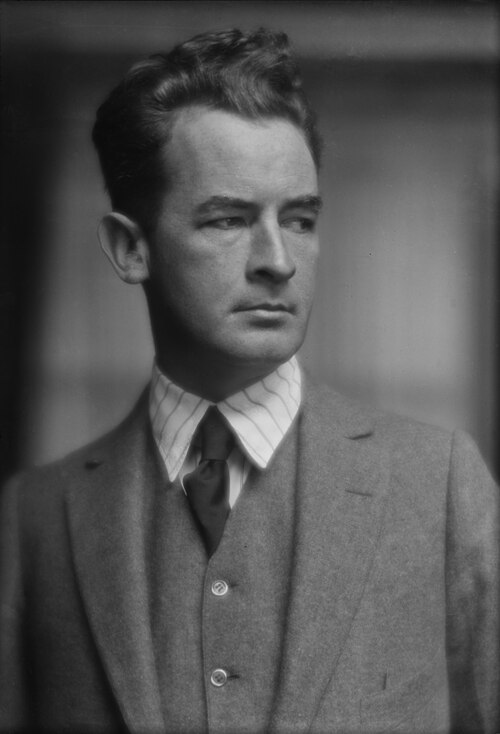
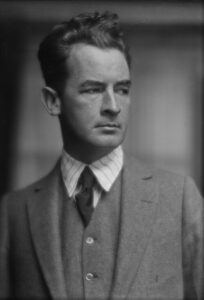
When the United States entered World War I, Flagg was one of the illustrators who joined Charles Dana Gibson in his unofficial propaganda agency, the Division of Pictorial Publicity. Over the course of the war, Flagg created forty-six war posters for the United States government, the best known of which is the famous image of Uncle Same declaring “I Want You.” The image first appeared on the cover of the popular illustrated news magazine Leslie’s Weekly in 1916 over the caption “What Are You Doing for Preparedness?” It was inspired by an earlier poster by Alfred Leete featuring the British general Lord Kitchener in a similar pose. Flagg based Uncle Sam on his own face in this and other posters, reportedly because he didn’t want to bother with finding a model. If you look at them side by side, the resemblance is pretty obvious.
After Pearl Harbor, Flagg once again devoted his talents to the war effort, creating posters aimed at recruiting soldiers and war workers and selling war bonds. The government also resurrected the Uncle Sam poster: why mess with a good thing?
When the war was over, Flagg, like other illustrators, found there was less demand for his work as magazines began to replace pen and ink drawings with color photographs. He pivoted to painting portraits until his eyes failed him shortly before his death at 83.
[1] I only recognized the names of about half of them, and even fewer of their faces. Such is the fleeting nature of fame.
[2] This occurred at least ten years before the magazine established the St. Nicholas League, a department that published the best work submitted by its young readers. E.B. White would later claim that “The fierce desire to write and paint that burns in our land today, the incredible amount of writing and painting that still goes on in the face of heavy odds, are directly traceable to St Nicholas.” A number of well known writers, including Bennet Cerf , William Faulkner, F. Scott Fitzgerald, Edna St. Vincent Millay, and E.B. White himself , were publsihed for the first time when they won a St. Nicholas League competition.
[3] If you think the Art Students League sounds familiar, that’s because it has shown up in several previous posts dealing with American illustrators. The school is hard to avoid if you are interested in 20th century American artists.
[4] He also received commissions for serious portraits, thanks to his wife, wealthy socialite Nellie McCormick, who happily pulled strings on his behalf until her untimely death in 1923, at the age of 56. She was eleven years older than Flagg and some of the sources snicker about the age and social differences between them. One claims “she appeared less wife than patron.” But Flagg seems to have been devastated by her death. This is what he had to say about her , and their relationship, in his autobiography: “Here was the beautiful woman who had turned down a number of rich suitors to marry a poor but promising artist who was madly in love with her…. Nellie was a St. Louis socialite and knew all the richest people in all the big cities; up to then a realm of society entirely beyond my knowledge.”
[5] The character was popular enough to appear in several Broadway revues, two live silent films, and an animated short in 1916.
[6] I only have my sources’ word for it that the women pictured were well-known actresses. I didn’t recognize any of them. See note one above.
[7] Available in HathiTrust if you want to take a peek.
[8] Whether they made arrangements with Flagg to use the Kitty Cobb brand is not clear.
I also keep coming across him and then forgetting about him. It turns out that his only appearance on My Life 100 Years Ago was in the caption of an illustration from an Edna Ferber novel. Now I’ve also gone down a James Montgomery Flagg rabbit hole.
I look forward to learning what you find out.