




Word with a Past: Cartoon
-
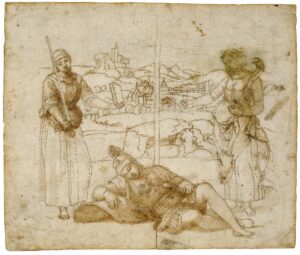
- Cartoon by Raphael ca. 1504
-
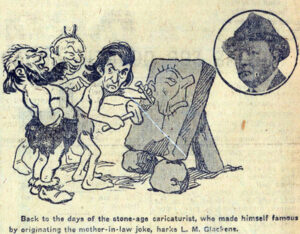
- Cartoon by Louis Glackens. 1916
I had long been aware of two meanings of the word cartoon: one from the world of fine art and the other from popular culture. During a recent stroll through the history of political cartooning in the United States, I learned that the two meanings were linked at a very specific moment in time.
Originally the word cartoon, coming from the Italian cartone meaning a large sheet of heavy paper, referred to a full-scale preparatory drawing on paper done by an artist in preparation for a work of art, such as a fresco, painting, or tapestry. Art historians and museum curators still use the word with this way in some contexts. A term of art, as it were.[1]
What we think of as cartoons were called caricatures. That changed in July, 1843, when illustrator and satirical artist John Leech (1817-1864)[2] gave the word “cartoon” a new twist in the weekly British humor magazine Punch
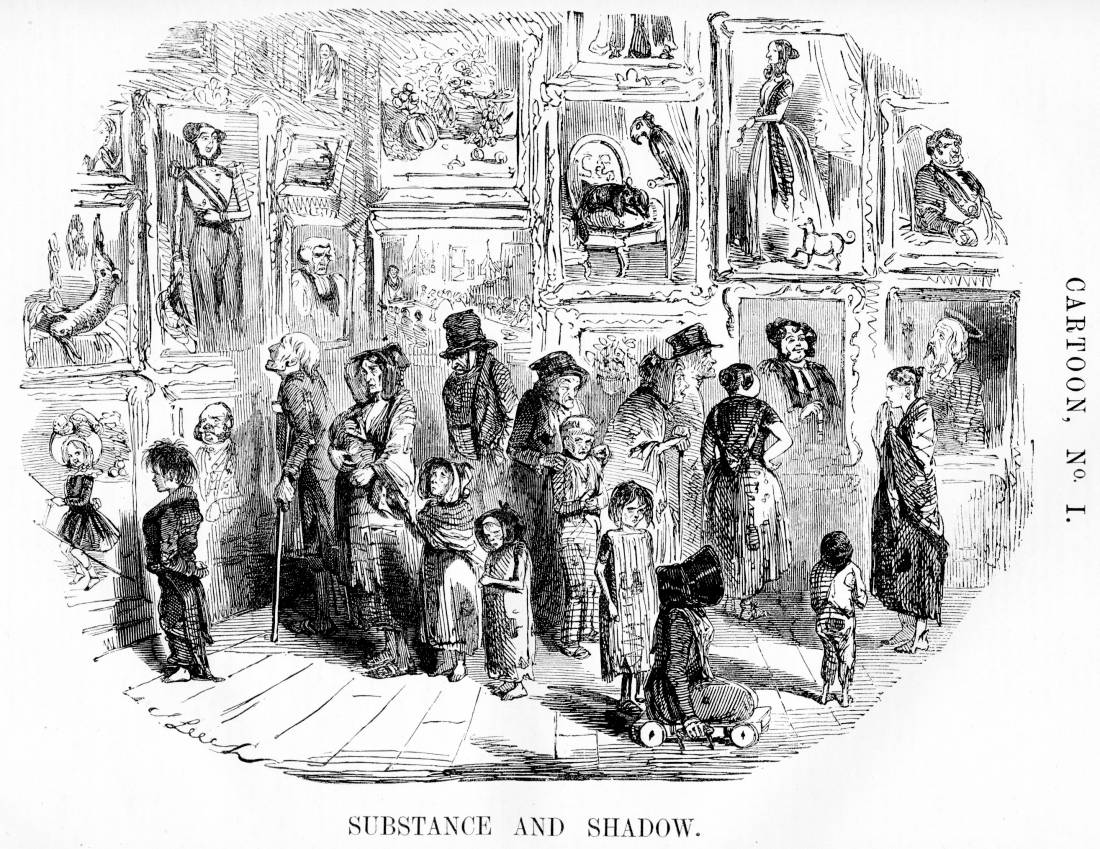
In the depths of the “Hungry 40s,” the British government held a competition for a commission for murals to decorate the houses of Parliament, which had been damaged by fire. The government displayed the cartoons (in the original sense) that had been entered in the contest in a public exhibition with an entry fee of one shilling. Feeling that the money could be put to better use, Punch published a drawing by Leech of a ragged crowd of the poor, many of them children, gazing at a lavish display of paintings in a gallery reminiscent of the annual exhibit at the Royal Academy The drawing was titled “Cartoon No. 1–Substance and Shadow.” The accompanying editorial summed up the scene: “The poor ask for bread and the philanthropy of the State accords an exhibition.”
After Punch’s application of the term “cartoon” to this satirical drawing , the word began to be applied first to the type of satirical pictures the magazine was famous for and later to drawings that we would recognize as cartoons today [3]. In the twentieth century, the word expanded to include animation.
To quote Porky Pig, “th.., th.. that’s all folks!”
[1] Sorry. Sometimes I can’t resist
[2] Leed created some 30000 illustrations for Punch over the course of 20 years. (I’ll let you do the math.) Many of them addressed social problems, particularly those dealing with Britain’s poor. He also illustrated novels, including the first edition of Charles Dickens’ A Christmas Carol (1844).
[3] I hate to resort to Supreme Court Justice Stewart Potter’s definition of pornography –“I know it when I see it”–but writing a definition of cartoons as we know them proved to be surprisingly difficult. The dictionaries I usually consult didn’t do much better.