




In which I share a small Nazi story
In an article dated March 21, 1933, Sigrid Schultz reported that the Nazis had raided a country home in search of weapons.* The event was a small incident in the larger Nazi program against German Jews. It would probably not have made the news if the home had not belonged to Albert Einstein, who had won the Nobel Prize in 1921 and was always good news copy.
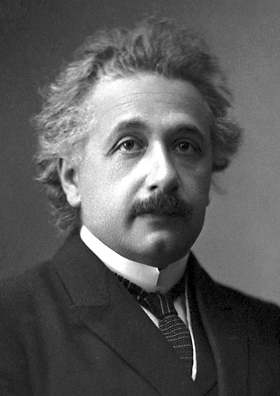
Albert Einstein’s official Nobel Prize portrait, 1921
The Nazis claimed they had received information that large amounts of arms and ammunition was cached in the scientist’s home. In fact, Schultz told her readers, “the nearest thing they found to arms was a bread knife.”
It is not clear what the Nazis hoped to accomplish. Einstein, who had denounced the Nazis and predicted a Fascist reign of terror as early is 1931, was then on his way to the United States. Before his departure, he had announced that he would not return to Germany under Hitler’s rule.
Not a story that matters in the the bigger picture except for two unrelated sentences buried in the middle of the article: “Authorities have announced that the first concentration camp for communists will be opened Wednesday at Dachau, near Munich. It will accommodate 5,000 Reds now in jail, as well as other political prisoners.”—one of the earliest references to the concentration camps, in an American paper
*For those of you who don’t have a timeline of Nazi Germany in your heads, Adolf Hitler was sworn in as Chancellor on January 1, 1933. On March 23, the Nazis pushed a set of bills called the Enabling Acts through the Reichstag. These acts gave Hitler the ability to rule by decree and made control of the Reichstag irrelevant.
In which I talk about the revision process and Welchs’ Grape Juice
 As I work on these revisions,* I am dipping back into Sigrid Schultz’s documents, including the daily logs that she kept on and off over the years, looking for details that I remember but can’t quite put my hands on.*** In the process, things catch my attention that didn’t strike me the first, or fourth, time around.
For example, in her notes about a trip to the United States in 1933, Schultz noted “drink grape juice Welch.” It was hard for me to imagine why Schultz, who spent considerable time choosing wine for her personal cellar and occasionally splurged on a small keg of whiskey straight from the distiller, would think a swig of grape juice was worth noting. (She didn’t note whether she liked it. I know she was a big fan of orange juice.****)
As those of you who have been following along can guess, I went straight down the rabbit hole.
Turns out that, like the first Kellogg’s cereal, Welch’s grape juice was an innovative product developed to lead Americans to a more virtuous life. Who knew?
In the case of Welch’s grape fruit juice, the target was alcohol. As the American temperance movement grew, some churches became concerned about the use of sacramental wine in communion services. The obvious solution was to substitute grape juice for wine, but it wasn’t as easy as it sounds. Grape juice stored at room temperature naturally ferments and fresh grapes are not available year round in many parts of the United States.
In 1869, aa Methodist dentist named Thomas Bramwell Welch pioneered the process of pasteurizing grape juice as a way of stopping the fermentation process. According to some versions of the story, he started experimenting with the process when a member of his congregation appeared at his house tipsy from too much communion wine—it’s a fun story, but I find it unlikely unless his guest was swigging communion wine direct from the bottle.
Welch made batches of what he called “Dr. Welch’s Unfermented Wine.” in his kitchen with grapes picked from a trellis just outside the door. He then attempted to sell it to churches as a substitute to wine for communion. The product wasn’t an immediate success. It only took off after Welch’s son changed the name to Dr. Welch’s Grape Juice, widened the proposed audience, and served it at the 1893 World’s Fair. The popularity of the product grew alongside the temperance movement.
In 1933, when Sigrid Schultz gave it a try, Prohibition was coming to an end. The other beverage she tried while she was in New York was a Manhattan.
*Which feel endless, I tell you, ENDLESS! To quote novelist Jami Attenberg** on the subject: “It’s just steady fucking work, and I have no choice but to hammer through it and it’s not always interesting, even if the book itself is always interesting. Let’s put it this way: solving the problem is fun, implementing the solution is (often) not.”
**If you are interested in the writing process or creativity in general, and can tolerate regular f-bombs, I strongly recommend Attemberg’s weekly newsletter. https://1000wordsofsummer.substack.com/ She is always smart and consistently inspiring.
***I make extensive notes as I research, typing anything that I think might be useful into a chronological Scrivener document that I grandly call the research draft. (It is not a draft in any meaningful sense. In the case of this book, it is a 500,000+ word mass of stuff from which I can build the first really messy draft.) In theory, I should be able to use the search function to find anything I need. In reality, that I assumes I 1)remember a useful key word to use as a search term and 2) thought the item in question had a chance of being useful.
****These are the kinds of details a biographer learns without even looking for them.
From the Archives: Clara Barton, Act III–the American Red Cross
For the next little while, I’m juggling revisions with prepping for a talk about Civil War nurses. (I love giving talks, but I was overly optimistic when I agreed to do this one last September.) It makes for an interesting mix of tough broads competing for my attention.
Working on the theory that if I’m thinking about Civil War nurses, you should be too, I offer you a three part series from back in 2016. If you’re coming in late to the story, you can read part one and two here and here.

Clara Barton in 1904
When we last saw Miss Barton, she was in Switzerland, recovering from the exhaustion of her war efforts. She didn’t rest for long. When the Franco-Prussian War broke out in 1870, Barton leapt back into action. Constrained by her lack of political connections in Europe, she did not try to work on her own the way she had in the American Civil War. Instead she traveled to Strasbourg as a volunteer of the International Red Cross, wearing a cross she improvised from a red ribbon and a Red Cross pin given her by the Grand Duchess Louise, daughter of Kaiser Wilhelm I.
The International Red Cross had been founded several years before. In 1863, while the United States was locked in its internal struggle, Swiss businessman Henry Dunant, who had witnessed the aftermath of the Battle of Solfierno in the Italian War of Independence several years before, called a conference of thirty-nine delegates from sixteen nations to Geneva to discuss questions of battlefield relief and humanitarian aid. The group met again in 1864 and created the set of recommendations that would become the Geneva Treaty, now the Geneva Convention. The guidelines called for the humane treatment of wounded soldiers and universal recognition of the neutrality of medical personnel, ambulances, and hospitals in time of war. The convention adopted a reverse Swiss flag, a red cross on a white ground, as an emblem of medical neutrality that would be easily recognized. They also urged each country to create its own national society of volunteers to provide battlefield relief when needed. Twelve European governments ratified the treaty. The United States refused to sign on the grounds that it was a possible “entangling alliance.”*
Barton’s experience in the Franco-Prussian War was very different from her experience in the American Civil War. Instead of caring for wounded soldiers, she worked with the war’s civilian victims. For her first several days in Strasbourg, she dutifully served soup and distributed supplies to survivors. But as she spent more time in the burned-out city, she realized that more than soup and soap were needed. She organized women into sewing workrooms as a first step in reestablishing the city’s economy. She organized a similar relief effort in Paris the following year.
When she returned home in 1873, Barton took on the task of lobbying for the United States to ratify the Geneva Treaty. It took her nine years and three presidents to convince the government. President Chester Arthur signed the treaty in 1882, and the Senate ratified it several days later.
Barton founded the American Red Cross in 1881 and led it for the next twenty-three years. At her initiative, the American Red Cross proposed an amendment to the Geneva Treaty calling for the expansion of Red Cross relief to include victims of natural disasters. The so-called American Amendment, perhaps more accurately the “Barton Amendment,” was passed in 1884.
Under Barton’s leadership, the American Red Cross helped victims of the Johnstown flood,** hurricane victims in the Sea Islands of South Carolina, both Armenian and Turkish victims of ethnic unrest in the Ottoman empire,***and famine victims in Russia. (If you can’t be described as a victim or something, you probably don’t need the Red Cross.) She traveled with nurses to Cuba during the Spanish-American War in 1898 to nurse the wounded and provide supplies. Her last relief operation with the Red Cross was distributing supplies and financial assistance to survivors of the hurricane that wiped out Galveston, Texas, in 1900.
After she retired from the American Red Cross in 1904 at the age of 82, she founded an organization to teach basic first aid and emergency preparedness, wrote several books, and went on a speaking tours.**** She died at home on April 12, 1912 at the age of 90.
A life well-lived by any standard.
If you’re interested in learning more about Clara Barton– including the slightly scandalous bits that I didn’t have room for in either these blog posts or Heroines of Mercy Street–I strongly recommend Stephen Oate’s excellent biography, A Woman of Valor: Clara Barton and the Civil War.
*The same reason we failed to join the League of Nations after World War I.
**The 68 year old Barton personally led fifty volunteers on the first train into town following the disaster
***In 1896, well before the Armenian genocide of 1915. Obviously a long-standing conflict.
****Do you feel like a slacker yet?