




Talking About Women’s History: Three Questions and an Answer with Melissa Estes Blair
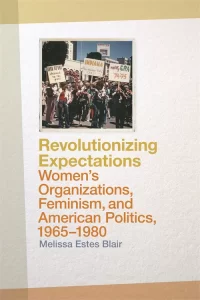
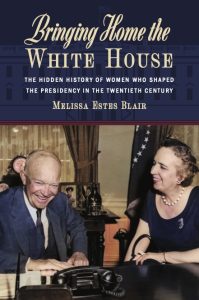
Melissa Estes Blair is an associate professor and department chair of history at Auburn University in Auburn, AL. She received her Ph.D from the University of Virginia, and her B.A. from the University of Kentucky. Her research focuses on women and politics in the twentieth-century United States. Her first book, Revolutionizing Expectations: Women’s Organizations, Feminism, and American Politics 1965-1980 examined the role of mainstream women’s organizations such as the YWCA and League of Women Voters in the feminist movement of the 1970s. Her forthcoming second book, Bringing Home the White House: The Hidden History of Women Who Shaped the Presidency in the Twentieth Century, is a group biography of the directors of the Women’s Division of the Democratic and Republican National Committees in the middle decades of the 20th century. It will be released September 1, 2023 by University of Georgia Press. An early version of part of that work appeared in the 2020 edited collection Suffrage at 100 published by Johns Hopkins University Press.
Take it away, Melissa!

Photo credit Miranda Beason
We’re all familiar with the challenges of finding sources for writing about women from the distant past. What are the challenges of writing about women from the mid-twentieth century?
A lot of scholars of the 20th century talk about drowning in paper, and that’s true for women’s history, even at the local level. Whether I was looking at records of YWCA and League of Women Voters chapters for my first book or DNC and RNC records for my current project, there was just so much stuff. And when you are traveling to archives and don’t have a ton of time, you have to triage pretty quickly to make your best educated guesses to ensure that you get through the best material.
The other big obstacle, especially when you are working on local or unknown women, is that even with all that paper it can be hard to figure out who’s who. If the meeting minutes and the mailing list of the LWV chapter, for example, list women by last name only (“In attendance were Mesdames Smith, Jones, Roberts…”) and the mailing list is “Mrs. William Smith,” but then the meeting minutes say “Dorothy suggested that…”, it can be quite hard to match all those names up. That, in turn, makes it hard to follow women into different aspects of their lives like paid employment or other organizations, or to find them for oral history. I did my dissertation research in the 2000s and wrote about the 1960s and 1970s. I’m sure many of the women I wrote about were still alive. But it was actually really hard to find them, because of the ways in which women’s names have historically been recorded. That’s one big reason there isn’t very much oral history in my first book, in spite of my chronological proximity to the topic.
What aspects of women’s history surprise your students most? What outrages them?
Almost everything surprises my students, which feeds into what outrages them. They are always appalled by how little they know, especially when it becomes clear that there are ample sources to teach about women throughout American history. Often these discussions go hand in hand. The last time I taught my women’s history class, for example, the students were particularly angry that none of them had heard about the women’s bread riots against the Confederacy during the Civil War. Their frustration with their lack of knowledge enabled us to have a really great discussion about the uses & misuses of history, how the history of white southerners’ frustrations with the Confederacy during the war were suppressed during the Lost Cause era and how that still shapes the education that my (majority Southern) students had received. Their outrage fuels amazing discussions because they are so eager to learn.
When did you first become interested in women’s history? What sparked that interest?
I have been interested in history pretty much my whole life, thanks to my mother. She is a native Virginian and a history lover, so when we would go to Virginia to visit her parents, we would often do a little bit of historical sight-seeing, whether it was a trip to Colonial Williamsburg or just an afternoon on the grounds at Maymont, a Gilded Age mansion in Richmond. (Side note: Maymont is now one of the best house museums I’ve ever seen, but when I was a kid the house wasn’t open, just the grounds).
It’s hard for me to pin down when women’s history became my focus. I am exactly the right age for the original American Girl dolls, and I devoured those books, which of course narrated historical events from a girl’s perspective. I took a lot of feminist literature classes in college (I was a history & English double major), and that really grew my interest in gender studies broadly. But history has always been my passion, so I combined that interest in women’s experiences that I got from Dr. Ellen Rosenman and other professors at the University of Kentucky English department with my love of history when I got to graduate school.
A question for you: You seem to be a scholar of pretty much everything. How do you do it? How do you manage to keep through lines in such big projects?
There is a reason historians tend to sink their roots into a specific time and space. It is both terrifying and thrilling to drop the safety net of an academic field and explore scholarly foreign territory. And yet, as with any kind of foreign travel, the unknown slowly becomes familiar, freeing you up to push your boundaries one step further.
Since I chose not to follow the academic path long before I finished my doctorate, I have always been free to follow my curiosity where it lead me. And sometimes it seems like I’m curious about everything. That can lead me to really deep dives into specific topics, that are very similar to the type of research that an academic historian does. It also allows me to go wide—moving across fields to look at the ways different ideas or events are connected. Then once I have that web of linked ideas, I can go deep again in what biographer Eric Washington calls a “galaxy of rabbit holes.” Over time, one set of linked ideas connects with another, creating a very personal field of scholarship.
For example, like your students, I had not heard about the women’s bread riots against the Confederacy, so I paused in the middle of working on this post to go down the bread-riot rabbit hole. The bread riots throughout the south were fascinating in themselves, but they linked in my mind to other bread riots I’ve written about: in eighteenth -century France, in England in 1819 and in Russia in 1917—not to mention the related potato riots in Germany during World War I and Weimar Germany and the constant fear of bread riots in classical Rome, leading to the concept of “bread and circuses.” There are some obvious things that link them all together—economic instability for one. But I suspect that if I started going down those rabbit holes I would find something else that was interesting. Will I do it? Not for the next five weeks for sure. Maybe not ever. At a minimum I will probably play with the ideas in a newsletter down the road.
***
Wanted to know more abut Melissa Estes Blair and her work?
Check out her website: https://www.melissablairhistorian.com/
Follow her on Instagram: @MelissaBlairHistorian
***
Come back tomorrow for one last Women’s History Month post, in which I hope to wind things up in a meaningful way. No promises.
Talking About Women’s History: Three Questions and an Answer with Diana Parsell
Diana Parsell is a writer, editor, and former journalist in the Washington, D.C., area. She has worked for publications and websites including National Geographic and The Washington Post, and for science organizations in Washington and Southeast Asia. A graduate of the University of Missouri School of Journalism and Johns Hopkins University’s M.A. program in nonfiction writing, Parsell was one of the founding editors of the online Washington Independent Review of Books. In support of her debut book, Eliza Scidmore: The Trailblazing Journalist Behind Washington’s Cherry Trees (March 2023, Oxford University Press), she received a
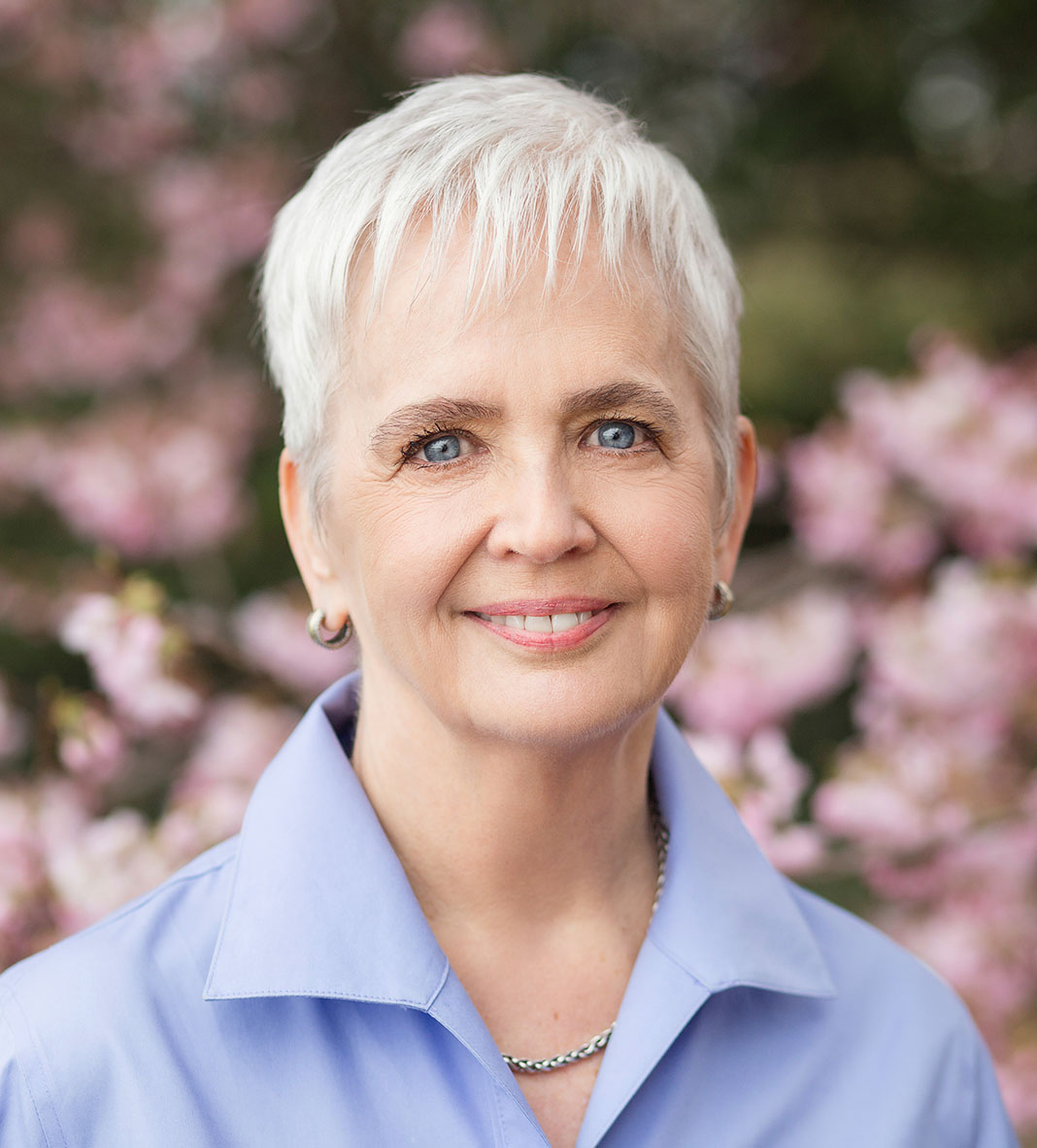
Photo credit: Lisa Damico Portraits
What was the most surprising thing you found doing historical research for your work?
Given the meager knowledge of my subject, the 19th-century author and travel writer Eliza Scidmore, it surprised me greatly to eventually uncover so much unknown information about her. Today, people know her mainly as the woman who fought a century ago to have Japanese cherry trees planted in Washington, D.C. But personal details about her have always been sketchy. There had never been a biography of her, and I learned early on that most of her personal papers were destroyed after her death. Because of this, I had little to go on when I started looking into her life. I didn’t know whether I would even find enough for a book. Because I’m not trained as a historian or scholar, I began with little understanding of standard techniques for doing historical research. I simply followed one clue after another. Over several years, this led me to an unexpected wealth of material, much of it buried in archives and “hiding in plain sight” in public records and databases. Digitization and other advances in research tools enabled me to uncover valuable primary sources that had long been overlooked.
Major breakthroughs occurred along the way. As one example, I was a couple years into the research when I discovered that Scidmore wrote her newspaper work under a pen name. That opened the floodgates to hundreds of articles she published. This body of work, never previously examined in full, proved enormously important. For one thing, it showed that Scidmore deserves greater recognition as one of America’s pioneering female journalists—a contemporary of the early newspaperwomen historian Alice Fahs describes in Out on Assignment (University of North Carolina Press, 2011). The newspaper datelines provided a core chronology of Scidmore’s life and early travels. And of course, the columns gave me her own words, as well as insight into her character and personality.
Another major surprise was discovering the significance of Scidmore’s reporting on China. In a couple of monographs that turned up, two different scholars described her as one of a handful of Western writer-travelers who “opened” China to mass tourism at the end of the nineteenth century. Even though I knew she published a book on China, this perspective offered a whole new dimension. In the end, I found so much material relevant to her travels in China that had I not been limited by a tight word count, I could have written a lot more about this important and little-known aspect of her life.
Writing about a historical figure like Eliza Scidmore requires living with her over a period of years. What was it like to have her as a constant companion?
I came to my research on Scidmore motivated by many questions. Among them, I hoped to find out what inspired her obsessive efforts to have Japanese cherry trees planted in Washington’s newly developed Potomac Park a century ago. More personally, it was questions about her personal life that intrigued me. I had read in general about her accomplishments: pioneering traveler to Alaska and author of the first tourist guide on the region; first woman elected to the board of the National Geographic Society (in 1892); activist in the burgeoning U.S. conservation movement, in affiliation with John Muir and others; recognized expert on Japan and author of a half-dozen travel books. I couldn’t help but wonder how she managed to achieve so much, at a time when few women had careers and society frowned on female ambition. I came to realize that Scidmore was still in her twenties when she first pitched her idea for cherry trees in Washington to the men in charge of the city’s public parks. What would have given a young woman of that era the confidence and audacity to make such a bold move. Who was she and where did she come from? What influences led her to act as she did, not just on D.C.’s cherry trees but in her larger life?
These, then, were the kinds of questions that ultimately drove my research. Searching for the answers made her not just an inviting companion in the decade it took me to write this book, but a subject in whom I hoped to better understand what it takes for women to succeed in a male-dominated world. She became a compelling figure because of questions I had about her that resonated with my own experience and that of other women I knew. Questions of how to make a life when one’s instincts don’t accord with family or societal expectations; how to reconcile a hunger for freedom and creative expression with the need to make a living; how to stay true to one’s values in a society that values conformity.
In writing the first-ever biography of Scidmore, I tried to make the writing accessible to general audiences, to spread her story as widely as possible. But I was also quite conscientious about documenting my sources thoroughly as a “blueprint” for further studies and analysis of her life and career. I feel sure she’ll continue to be in my life for some time, and I can’t wait to learn even more about her.
What work(s) of women’s history have you read lately that you loved?
One book that comes immediately to mind is Carolyn Fraser’s Pulitzer Prize-winning Prairie Fires: The American Dreams of Laura Ingalls Wilder. I found it impressive for the marriage of biographical insights and Fraser’s geographical rendering of the American plains as the backdrop of pioneer life. I’m a big proponent of master biographer Robert Caro’s conviction that place and setting play a crucial role in shaping a subject’s feelings, drives, motivations and insecurities. Fraser addressed this masterfully. I also loved A Woman of No Importance, by Sonia Purnell, and All the Frequent Troubles of Our Days by Rebecca Donner. Both of these elevate biography to a higher order in using the dramatic techniques of storytelling to illuminate critically important historical events.
As far as a top recent favorite of women’s history, however, my hands-down choice is Gillian Gill’s Virginia Woolf and the Women Who Shaped Her World. Like many women with strong literary leanings, I’ve read a lot of Woolf’s work. I’ve also read biographies about her. But nothing I’d read before matched the level of insight and analysis I got from Gill’s book. Focusing on Woolf’s heritage, she describes various women in the family who greatly affected Woolf’s growth and development–as both an unconventional woman of her day and a radical writer. Reading this book made me want to go back and reread all of Woolf’s work!

A question from Diana: Given how far history has lagged in giving us the important stories of women, as well as other marginalized groups, do you have any ideas for strategies on how to move the narrative forward in leaps, instead of through individual efforts and incremental progress?
I wish I did. Unfortunately, I suspect the only way this happens is one story at a time, until the narrative reaches the point at which “women’s history” is accepted as mainstream history. (I picture this as a narrative rockslide, where erosion occurs over time and then BAM! it happens. Though, of course, this would be positive and non-destructive.*)
*Am I getting loopy as I approach the deadline on this book? Why yes, yes I am.
***
Want to know more about Diana Parsell and her work?
Check out her website: www.dianaparsell.com
Follow her on Twitter: @DianaParsell
***
Come back tomorrow for three questions and an answer with historian Melissa Blair.
Talking About Women’s History: Three Questions (or Four, or six–depending on how you count) and an Answer with Katie Nelson and Olivia Meikle
If you’ve been hanging out here on the Margins for a while, you’ve probably read an earlier interview with women’s history co-conspirators Katie Nelson and Olivia Meikle, a pair of sisters who just keep finding new ways to explore women’s history and take the rest of us along with them. They are the hosts of the What’s Her Name podcast and co-authors of The Book of Sisters. (Rumor has it that they have a couple of new books in the works: A Stinky History of Toilets (coming soon) and A History of the World in 70 Lost Women.
Katie Nelson has a PhD in History from the University of Warwick and taught World History, Study Abroad, and The Meaning of Life at Weber State University for a decade. After diving into local history as Executive Director of the Weber County Heritage Foundation, she now writes books, leads tours, and podcasts full-time. Katie loves trying ALL the foods, exploring life’s big questions, and curating travel adventures for curious folks.
Olivia Meikle teaches Women’s & Gender Studies at Naropa University. She’s also the author of Around the World in 80 Diapers, a website empowering parents to travel internationally with their kids. She has an MA in English Literature and Women’s & Gender Studies from the University of Colorado, Boulder.
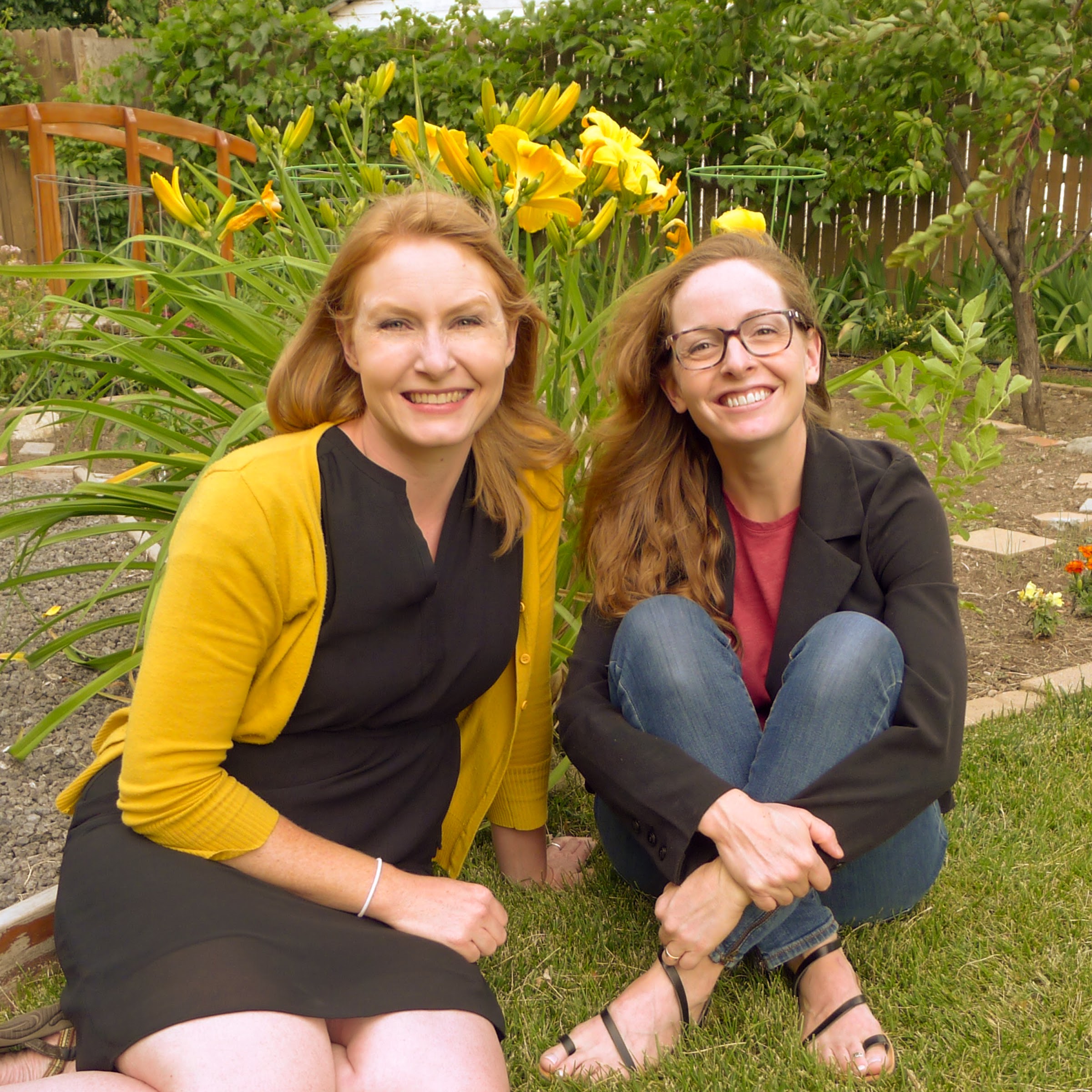
Photo credit Marc Nelson
It seems like every year you add a new and exciting way to explore fascinating women who have been left out of the historical narrative. Women’s history tours are the latest addition to the What’s Her Name empire. What inspired you to take this new step in women’s history?
Katie: I taught Study Abroad at Weber State University for a decade, guiding students across Europe. It was one of the great privileges of my life to witness the transformative power of educational travel through my students, year after year. I started recording podcast interviews on the fly while I was abroad; I was just encountering so many interesting stories! After more and more listeners kept saying things like “one day I want to visit the place where you recorded that episode…”, the next step was clear. We needed to create a new kind of study abroad, for curious grown ups. Our tours are built around episodes we’ve recorded, and rooted in authentic human connection (“don’t be hurry up”). We really get a self-selecting group of adventurers. If I say, “would you like to travel to obscure places no one knows about, to learn about women no one’s ever heard of?” The lovely, wonderful people who answer heck yes! are our people.
Once you’ve chosen the main destination, say Mexico, is it hard to find women-centric places to include on the tour?
Katie: Not at all, but I think it’s because we’ve learned where and how to look…i.e., not in the usual guidebooks, and not in the usual destinations. It turns out, the trickiest thing is trying to convey to hotels, drivers, and other guide-types that no, in fact, we do NOT want an itinerary that’s exactly like all the other commercial tours. Yes, we really do want to take a group to this obscure spot no one else cares about. We don’t fit any tourist stereotypes. Tourism professionals don’t know what to do with us. Which is how I like it! We have to be our own travel agents.
Olivia: Adding on to Katie’s answer: That’s actually one of my favorite things about our tours! There’s something magical about seeing all these ‘jaded, tourist-weary travel professionals’ we’re working with – drivers, site guides, hotel staff, etc – go from baffled, to amused, to intrigued, to absolutely, totally delighted as they watch our select little groups dive wholeheartedly into these totally unique (and undeniably odd) adventures. Most of the time they end up ‘diving in’ with us, becoming an integral part of the group on our weird little sidetracks off the tourist map, discovering new hidden treasures in their own backyards, and having as much fun as the rest of us. It’s such a joyous thing to experience, and I’ll never get tired of it.
What do you find most challenging or most exciting about researching historical women?
Katie: I love finding kindred spirits across time and across the world. Every once in a while, I’ll discover a women I instantly connect to. Even if she lived centuries ago in a completely different cultural world, I feel a profound kinship. Emilie du Chatelet, May Alcott, Zazil-Ha, Bouboulina…I found all of them through the podcast. Somehow the human story becomes my story, and vice versa–we’re all in it together.
Olivia: The answers to both these questions are kind of the same – I’m always amazed seeing how many women overcame incredible odds to accomplish the things they wanted to do! And seeing their courage and determination, and absolute refusal to give in to the obstacles and the forces trying to stop them, is never-endingly inspiring. But the flip side of that is this: it’s often incredibly disheartening to recognize so many of those exact same obstacles still working against women today, in exactly the same ways they were 100 or 700 (or 1700…) years ago. Reading about the obstacles placed in the way of a 16th century Afghani woman’s goals, then turning on the TV to see those exact same roadblocks popping up again in 2023 America can feel a bit depressing, to say the least.
But lately I find myself returning often to a quote from my favorite “hometown heroine” from my little Colorado mining town, 20th century Labor Activist (and first female Assistant Secretary of the Treasury in the US!) Josephine Roche: “If you believe in something, you may have to take a beating for many years before you accomplish your goal.” Roche certainly did that, for many, many years. But after all those years of struggle, she truly did revolutionize workers’ rights in this country forever. And so (at least most days) I still really do believe: If she [all these incredible, unstoppable “Shes” of history] can do it, then so can I.
What work of women’s history have you read lately that you loved? (Or for that matter, what work of women’s history have you loved in any format? )
Olivia: There were a couple of new books this year that absolutely blew my mind – Keith O’Brien’s brilliant and infuriating Paradise Falls, on the history of the Love Canal Disaster in the 1970s, was one I’d been eagerly anticipating for months but it was even more mind-blowing (and heart-wrenching) than I’d expected, and the amount of new information he was able to dig up on one of the stories I’ve been mild-to-moderately obsessed with for 20+ years was astonishing.
Then another book which just came out last month that I absolutely loved is Carolyn Whitzman’s Clara at the Door with a Revolver. A glorious deep-dive history of a “cross-dressing, maybe-bisexual, working class, Black woman tailor” put on trial for the murder of her well-to-do white male neighbor – in 1894! Fascinating, unexpected, extremely thought-provoking and incredibly well written, this book was a wild WILD ride of the best kind. I’d lined up an interview with the (absolutely delightful) author for the podcast before I’d even finished the book, because it was so obvious that this story was going to be one we simply had to share.
What do you find most challenging or most exciting about researching historical women?
A question from Katie and Olivia: Is there any particular site/location from women’s history that you dream to see someday?
I may be the only person in the world who has this on her bucket list: The Gene Stratton Porter historic site in Indiana.
I got a copy of one of her novels when I was nine or ten. I don’t remember if I bought it myself or if it was a quirky birthday present from someone. I fell hard for the story. It remains my favorite of her books. I re-read it every year or so.
The more I learn about her, the more amazing she is. She was a best-selling novelist in the early twentieth century, an early conservation activist, and one of the first women to form a movie production company.
We have driven past the signs for the historic site several times, but we’ve never been able to stop. One of these days we’ll make it.
Want to know more about Katie Nelson and Olivia Meikle and the amazing work they do?
Listen to the podcast: https://www.whatshernamepodcast.com/
Follow them on Twitter: @WhatsHerNamePC
Follow them on Facebook: https://www.facebook.com/whatshernamepodcast
Follow them on Instagram: https://www.instagram.com/whatshernamepodcast/
* * *
Come back tomorrow for three questions and an answer with biographer Diana Parsell