




Talking About Women’s History: Three Questions and an Answer with Julia Scheeres
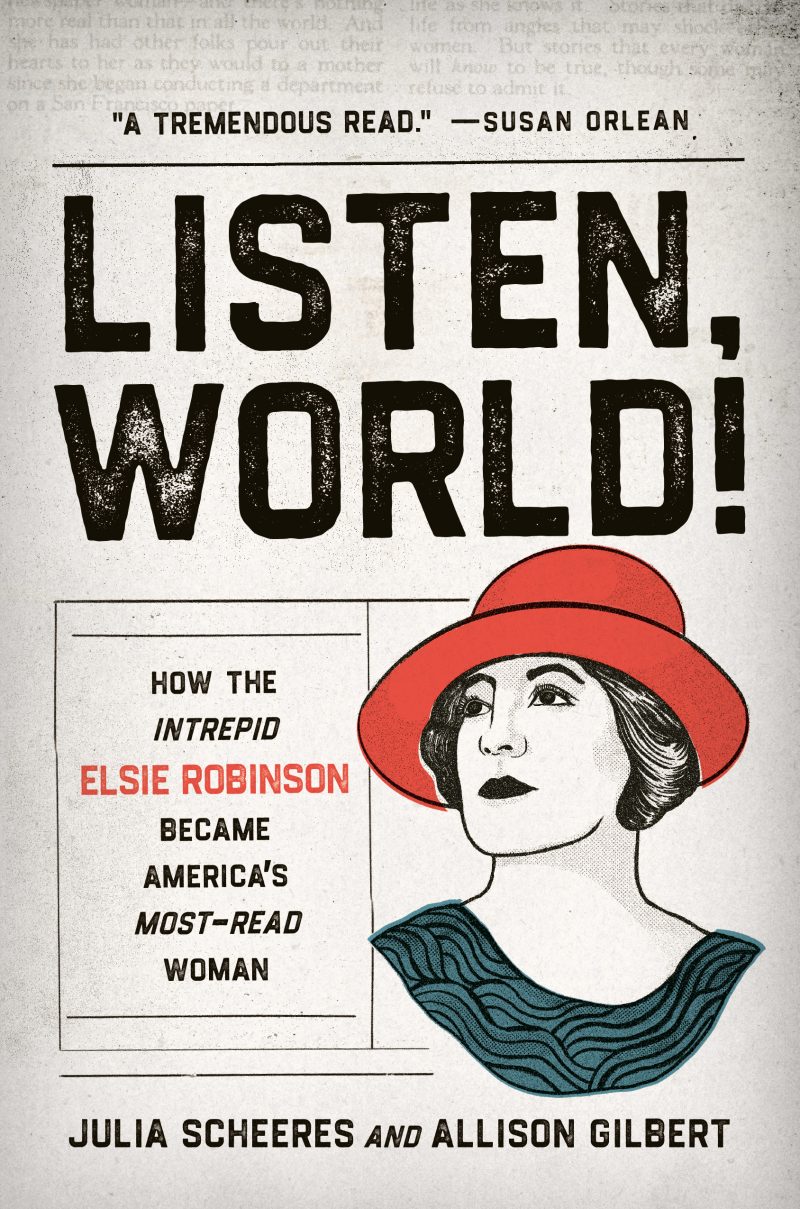
Julia Scheeres is the co-author with Allison Gilbert of Listen World! How the Intrepid Elsie Robinson Became America’s Most Read Woman.
Scheeres grew up in Indiana as one of six siblings that included two adopted Black brothers. .
After graduating with a B.A. in Spanish from Calvin College, she moved to Valencia, Spain, for four years, where she worked as a translator and an English teacher. Next she moved to Los Angeles, where she attended U.S.C., received an M.A. in Print Journalism, and worked for the Los Angeles Times. She also worked as a reporter for United Press International, El Financiero de Mexico, and Wired News. She quit daily journalism to write her first book, but has continued publishing in many outlets, including the New York Times, O Magazine, Elle, Narrative, Pacific Standard, Newsweek, The Guardian and more.
Her first book, a memoir, titled Jesus Land, led to the closure of the abusive reform school that she and her brother David attended as teens — which she profiled in the book. Her second book, A Thousand Lives, converted her into a Jonestown scholar. She has discussed the tragedy in dozens of documentaries, articles and podcasts. Her third book, Listen World!, is radical departure: a rollicking and inspirational biography of syndicated Hearst newspaper columnist Elsie Robinson.
In addition to writing, she teaches narrative nonfiction and memoir through Stanford Continuing Studies, works privately with clients on manuscripts, and generates content for corporate clients. She is also the founder, with her two teenage daughters, of Sustainabar, a business that makes zero-waste bars of household cleaning and beauty products.
Take it away, Julia!
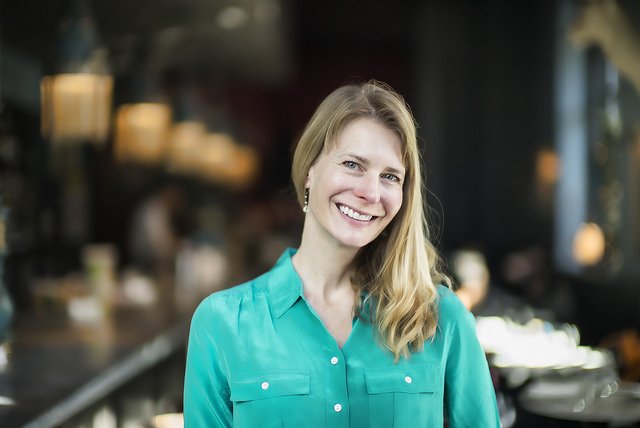
Photo credit: Christopher Michael
We’re all familiar with the challenges of finding sources for writing about women from the distant past. What are the challenges of writing about women from the early and middle twentieth century?
In Elsie’s case, the lack of a personal archive – she didn’t leave her papers to an institution. Nobody was still alive who worked with her, so we couldn’t interview them for their perspective. So we had to dig through lawsuits and read between the lines of her memoir and columns to see what was happening in her interior life. She had her outward persona — which was one of swagger and bravery — but we were able to recount a more personal, private story by triangulating information, so to speak.
What inspired you to write about Elsie Robinson? How did you come across her story?
My coauthor, a former CNN producer contacted me to help her write it. She brought the research chops, I brought the writing skills. Once I started learning about Elsie’s life, I fell in love and wanted to tell her story.
My coauthor reached out to me to help her write this book at a perfect time. My first two books are rather sad. One is a memoir that ends in tragedy and the second is a narrative history of the Jonestown mass murder-suicides. I couldn’t stand working on another sad subject after my brother died of colon cancer in his mid 50s. Elsie’s story was so inspiring. The obstacles in her way as a woman at the turn of the 20th century were profound. She wrote a lot about grief. I found great wisdom in her words and great inspiration in her personal story.
What do you find most challenging or most exciting about researching historical women?
It was fun to research the condition of women in the late 1880s – 1956, when Elsie died. The bizarre Victorian courting rituals, the dearth of knowledge about female anatomy. (Girls worried they’d get pregnant if they held hands with a boy, for example). We learned about many female heroes along the way, including Ida Craddock, who was prosecuted and jailed for writing tracts about women’s sexual response in the 1910’s — for example, how men could please, and not rape, their wives on their wedding night. About Alice B. Stockham, the fifth American woman to get an M.D., who wrote Tokology: A Book for Every Woman which offered women much-needed practical advice about pregnancy and childbirth. About Clelia Moser, a Stanford physician who conducted a groundbreaking survey in the late 1890s confirming that women enjoyed sex just as much as men.
Question from Julia: How do you define women’s history?
At its most basic, women’s history is the act of putting women back into the historical narrative, whether that means shining a light on the story of individual women or looking at the lives and accomplishments of groups of women. Because we were there, y’all. We were there.
***
Want to know more about Julia Scheeres and her work?
Check out her website: https://www.juliascheeres.com/
Follow her on Twitter: https://twitter.com/JuliaScheeres
Follow her on Instagram: https://www.instagram.com/jkscheeres/
Read an excerpt from Listen, World!: https://msmagazine.com/2023/03/16/elsie-robinson/
***
Come back tomorrow for three answers (or six, depending how you count) and a question with Olivia Meikle and Katie Nelson, two of my favorite women’s history co-conspirators
Belva Lockwood: a guest post by Jack French
Once or twice a year, long-time friend of the Margins Jack French reaches out with an interesting story and an offer to share. I’ve learned to say yes. Whether it’s the woman who invented Monopoly, a pair of WASP pilots, or a book recommendation, it’s always worth reading, and it’s often appropriate for Women’s History Month. He’s back, with another story of a woman I hadn’t heard of before. (I can’t tell you more without spoilers.)
Take it away, Jack!
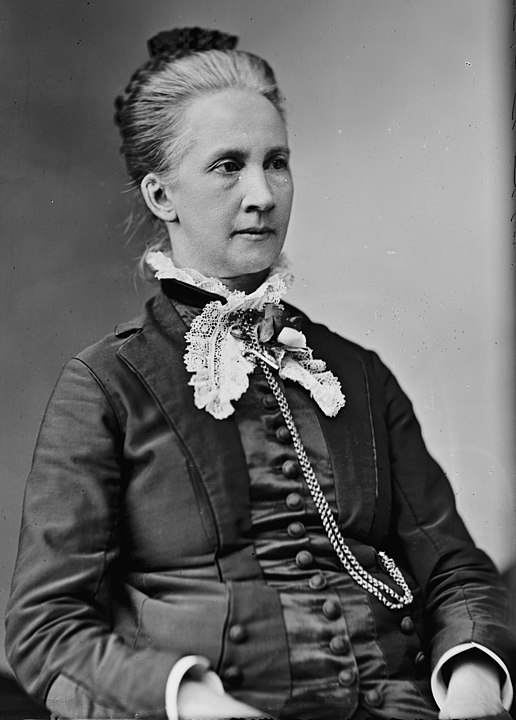
Photo by Matthew Brady, courtesy of the Library of Congress
Belva Ann Bennett was born October 24, 1830 into a modest farm family in Royalton, NY. Her parents apparently had a penchant for quirky names as two of Belva’s four siblings were named Cyrene and Inverno. In that pre-Civil War era, women were barred from nearly all professions (medicine, law, dentistry, banking, federal employment, etc.) but Belva would rise from her humble beginnings to become the first woman lawyer to argue in the Supreme Court and also the first woman to legitimately run for U.S. president….twice!
Despite her ambitions as a teenager, Belva was virtually limited to three options: domestic service, teaching, or getting married. She originally chose the latter two. At age 14 she accepted a teaching position, where she resented being paid half of what her male counterparts received for doing the identical work. In 1848 she married Uriah McNall, four years her senior.
The couple were farmers and also ran a small mill. They had one daughter before her husband died of injuries from a mill accident. The young widow sold the mill, and now, convinced that education would improve her lot, enrolled in college in Lima, NY, graduating in 1857. However she then had difficulty in finding a suitable position and was forced to accept a teaching job, again at half the salary of male teachers.
Later she became acquainted with both Susan B. Anthony and Dr. Mary Walker, and Belva would remain a champion of women’s rights as long as she lived. Anthony convinced her to move to Washington, DC for better prospects. By then Belva had aspirations of becoming a lawyer. In the Nation’s Capital, she met and married Ezekiel Lockwood in 1868. A 65 year old dentist, he was four years older than her father. But he was a loving husband and fully supported her quest for a law career. They resided in D.C. and operated a rental agency.
After being turned down at several East Coast law schools because of her gender, Belva fortunately found a new law school locally which admitted women on a limited basis: the National Law University in D.C. (which years later would merge into George Washington University.) In early 1871, National Law University accepted 15 women as students, but only two of them would eventually graduate: Lydia Hall and Belva Lockwood. However the institution refused to award them their diplomas.
Both successfully passed the three day exam (oral and written) for the D.C. bar, but since they had no diplomas, they were not admitted. Belva boldly wrote a personal letter to President Ulysses Grant, who was the honorary president of the university, requesting her diploma be released to her. It worked. Two weeks later her law diploma was in her hands and she was admitted to the D.C. bar on September 24, 1873, the second woman to achieve that distinction. The first was Charlotte Ray, the daughter of a nationally prominent African-American minister and publisher. She was admitted to the D.C. bar in 1872, shortly after graduating from Howard University Law School. However so few people would engage a woman of color as their attorney, Ray had to give up her practice and become a teacher.
Lockwood was moderately successful in her law practice, but some of her cases required argument in the Court of Claims, which had a separate bar. It would take Belva years of struggle to achieve that goal. Although she succeeded in getting a hearing to the bar of Court of Claims, it was a painful experience. After a lengthy discussion before a panel of five judges, she was told by the presiding judge: “Mistress Lockwood, you are a woman!” Later Belva would write: “For the first time in my life I began to realize that it was a crime to be a woman, but it was too late to put in a denial and I at once pleaded guilty to the charge.”
After weeks of deliberation the bar association concluded “A woman is without legal capacity to take the office of attorney” and therefore her request for admission was denied. However Belva was not to be stopped. She poured over the Supreme Court’s rulings on such matters, one of which concluded that any attorney in good standing before the highest court of State or Territory for three years shall be admitted to that court when presented by a member of the bar. But when the three years were up for her, she was still denied bar admission unless there was legislation for such approval. During this time, Ezekiel died in April 1877, leaving her a widow again.
But Belva then became a lobbyist in her own behalf. She located friendly faces in Congress, gave speeches, found allies in the press, and uncovered weak spots in her opposition. Her two year relentless campaign was successful. The bill admitting women to the Supreme Court bar was signed into law on February 7, 1879. Three weeks later, she became the first woman to be admitted to the bar of the Supreme Court.
Her astonishing victory opened the legal doors to all women in local, state, territory, and federal courts. Elizabeth Cady Stanton extolled her triumph, dubbing her a true “Portia”, Shakespeare’s brilliant lady lawyer. Her legal business continued to thrive. Very late in life she would be on the team whose arguments in the Supreme Court resulted in a multi-million dollar award for the Cherokee Nation.
In 1884 she consented to be the Presidential nominee for the Equal Rights Party, thus becoming the first woman to run for that office. “I can’t vote, but you can vote for me” was one of her slogans. Some of the press treated her fairly but others preferred lampooning her in cartons. She lost to Grover Cleveland, but four years later she ran again, this time defeated by Benjamin Harrison.
She continued her legal practice and pushed for women’s suffrage until she died at the age of 86 in 1917, just three years short of being able to vote. Sadly, the history books have ignored her, despite her impressive accomplishments. As her biographer, Jill Norgren, explains, there is “…a preference in history for Founding Fathers and fighting generals…”
PRIMARY SOURCES:
Belva Lockwood: The Woman Who Would be President by Jill Norgren, (New York University Press, 2007)
“Struggles and Accomplishments of Belva Lockwood” (2011) by Maryann Freedman, https://buffaloah.com/h/lock/lock.html
 Jack French is a researcher, feminist, and author in Northern Virginia; his website is: http://www.jackfrenchlectures.com/ His book, Private Eyelashes: Radio’s Lady Detectives (Bear Manor Media, 2004) won the Agatha Award for Best Non-Fiction and was voiced as a Talking Book by the Library of Congress.
***
Women’s History Month isn’t over yet! Come back on Monday for Three Questions and an answer with Julia Scheeres, co-author of Listen, World!
Talking About Women’s History: Three Questions and an Answer with Fiona-Jane Weston/
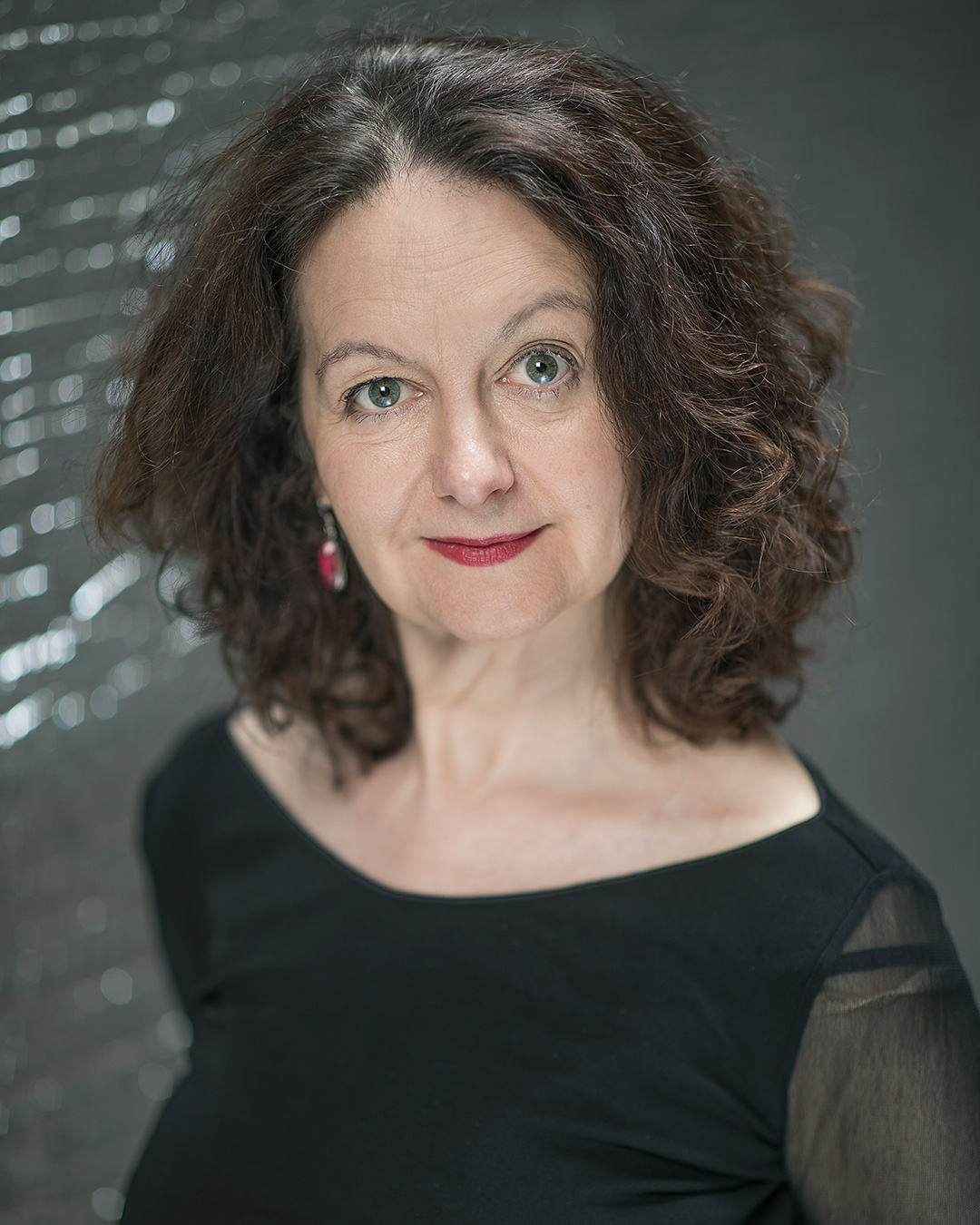
Fiona-Jane Weston is an actor, singer, and writer. Her solo shows have played to packed houses at The Other Palace, The Pheasantry, Crazy Coqs (Brasserie Zèdel), as well as on national and overseas tours.
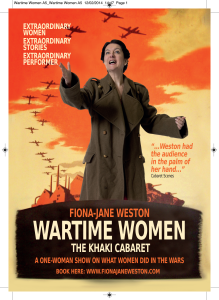
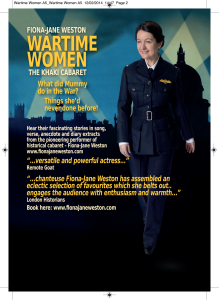
Fiona-Jane has received rave reviews for her unique take on historical themes and key events in history, most notably women’s history. Her highly acclaimed shows include Wartime Women, looking at the roles women have historically played in warfare and Looking For Lansbury, celebrating the life, heritage and extraordinary career of Dame Angela Lansbury, and musical chat show Fiona-Jane and West End Friends.
She is soon to launch a cabaret and theatre consultancy service that helps with all aspects of creating and managing a small-scale show. Fiona-Jane also writes about theatre and cabaret on her blog Capital Cabarets and Shows Scene, in addition to and for prestigious theatre blogs such as Musical Theatre Review. She has been featured in The Times, The Guardian and London Live TV, amongst other media outlets.
Take it away, Fiona-Jane!
What inspired you to combine your work as a cabaret artist with your interest in women’s history?
Even as a young girl I loved history, and part of my childhood was spent in Queensland, Australia – the state where Germaine Greer grew up and launched her books on feminism. I was studying at an all-girls school and her philosophies inspired me in my formative years. I became particularly fascinated by the concept of Herstory.
Again, even as a young girl, I knew I was going to become a performer, despite my parents’ opposition. In order to keep the peace, I did go down the academic route at university and studied Modern Asian Studies, specialising in Chinese language, politics and sociology.
This led me to examine the changing (and not so changing) role of women in both traditional and modern China, and my thesis study was on the propagandist role of theatre and performing arts in the country.
After graduation, an unusual opportunity came up for me to stay in a dormitory with Chinese student teachers in a compound of Guangzhou province for a year, where I was able to improve my language skills and observe how the society really worked at first hand. I also attended as many live performances of Cantonese and Peking Opera as I could, drinking in the stylised artform and immense skill of the performers.
All this is a long form of pointing out how the two interests were always there, often working side by side.
Fast forward many years now, and I did eventually pursue my career choice to become an actress and singer, and came back home to my native UK, where I had spent my early childhood and also a year when I was 16 years old, because my father was on sabbatical leave from the university where he lectured.
I continued my artistic training here whilst landing acting work at the same time, and in due course met my actor/director husband, who very much encouraged me to keep going.
The life of a performer has always been precarious, unless you happen to be very well connected, which I certainly wasn’t. Things ticking along while I was still looking very youthful, but there came a point when I felt I could not get away with playing the pretty ingenue any longer, and neither did I want to. I was ready for a fresh challenge.
I went into school teaching for a while, but quickly realised I was not going to be happy doing that, and embarked on getting my teaching qualifications for both ballet and the London Academy of Dramatic Examinations (LAMDA) board.
Working towards the LAMDA exams entailed a 1:1spoken examination on a century of drama, literature and poetry, which was fascinating to study, though a tough exam. We could choose the century we wanted to focus on, and I, like an idiot, chose the 20th century. My teacher warned me- “This is the century when everyone could read and write. There’s a lot more work!”
I’m not sorry I did it, though. The 2nd part of that exam was to present a 20 minute presentation of at least one piece of drama, literature and poetry each and link them together through some sort of theme. I chose to look at the changing role of 20th Century Woman through those genres – and that became the theme of my first professional cabaret!
I had always loved watching snippets of cabaret in old films and knew there must be a way to bring these disparate ideas together in a satisfying piece. I engaged a director, who also loved history and literature, and together we researched women, occupations and concerns of women throughout the 20th century, and created a show with songs, drama pieces and poems reflecting all that I wanted to say on the subject. The show was called 20th Century Woman: the Compact Cabaret.
It got good press and led me to New York and an international cabaret conference at Yale University.
My career never looked back. I have been self-producing work on women’s history ever since!
What led you to add videos about historical women to your repertoire?
I had an idea knocking around in the back of my head that I could create a documentary series on women’s history using my performance skills to advance the narrative, much as I do in my shows. I was inspired by the work of British actor Kenneth Griffith, who created documentaries on the Boer War in South Africa, where he would be talking to camera and then ‘become’ the historic character he was talking about.
That’s exactly the approach I was already using in my cabarets. I talk to the audience and then go into character speaking their real words when possible, and use the lyrics of a song to express what they are feeling or what is happening to them. I knew this would be a unique way to present documentaries on television.
What really pushed me into it though, was the pandemic. All venues closed down and no live work was possible. A friend in America, Cece Otto, who does shows on the American woman’s experience, and I got together online and did some live shows over Zoom to both our audiences. I started to really see then how working online could widen my audience and protect me from the vagaries of concentrating solely on live performance.
My biggest challenges were to get used to singing into a phone or computer screen (and that still feels weird) and overcoming the tech (still learning that one, too!), but I recently made one little film on a long-forgotten woman composer Avril Coleridge-Taylor, whose music completely fell out of favour and became nearly impossible to find. I felt it was time to give her back a bit more time in the sun!
The series is titled Women Making History – Then and Now, which gives me the opportunity to look at current women who are pioneering right now. My next set of videos will be on English Queens, and possibly include Camilla, the Queen Consort and the Princess of Wales- both of whom are definitely making history!
What do you find most challenging or most exciting about researching historical women?
The most challenging- and exciting- thing is finding the material itself. Women’s stories have barely been chronicled in the same way men’s stories have. Unless a woman was particularly prominent, no-one really thought to record what she did. This is especially true of the ‘woman next door’ who’s work and roles have changed so much over the last 100 years, and who never thought herself that she was doing anything extraordinary in very difficult circumstances.
My grandmother was a case in point. She lived through two World Wars, was feisty as could be and battled her way through bombings, poverty and five children, including a particularly wayward son. It never occurred to her that she did anything special, nor her eldest daughter, my aunt, who served in the Women’s Auxiliary Airforce (WAAF) during World War II. They were just getting on with it, as far as they were concerned. Why would anyone want to write about it? They were somewhat bewildered when I researched them for my show Wartime Women: the Khaki Cabaret. Sadly, they had both passed away when I got to portray them on stage- mind you, I don’t know how my Grandma might have reacted!
A question from Fiona-Jane: We are both passionate about celebrating women, our accomplishments and role in society. Do you ever feel women in Western civilisations are in danger of losing the ground we have gained? That we could be sleep walking into a new oppressive reality and could literally lose the rights we and our ancestral sisters have fought so hard for? If you do, what do you think we can/should do about it?
After spending much of the last few years watching the rise of Nazi Germany through daily newspaper reports in the United States, I think it is all too easy for people to lose rights because they aren’t paying attention. At the risk of repeating myself: Don’t take what we have for granted. Don’t look away when someone else’s rights are at risk. Don’t expect someone else to do the work.
***
Want to know about Fiona-Jane and her work?
Check out her website: http://www.fionajaneweston.com/
Subscribe to her newsletter: fionajane@fionajaneweston.com
Subscribe to her YouTube channel: https://www.youtube.com/@FionaJaneWeston
Check out her latest program: Avril Coleridge-Taylor – A Lost Musical Legacy:
***
Com back tomorrow for another guest post from a long-time friend of the blog, Jack French. He always brings us good stories.