




Déjà Vu All Over Again: Long Before Textspeak, There was Cablese

One of the things foreign correspondents juggled in the days before the internet rendered long-distance charges meaningless was the eternal trade-off between time and money in turning in a story. The mail was slow and (relatively) cheap. Cables and telephones* were fast and expensive. Reporters were torn between the desire to scoop other papers on big stories and the desire not to have their editors harp at them about their monthly cable bill.
If a reporter sent in a “mailer,” she had room to expand on a topic, fill in background, even play with language. But cables were paid for by the word, with an upper limit on how many characters counted as a word. As a result, foreign correspondents needed to send stories by cable to their editors back home using the fewest possible characters. The result was cablese: a funky shorthand in which reporters used special symbols and abbreviations, condensed some words, and left others out altogether, leaving the cable editor at the home office to put the stories back into plain English. “Untreaty smorning” became “no treaty agreed upon this morning” in the hands of a skilled cable editor. (These went the other way as well in the case of newspapers like the Paris edition of the Chicago Tribune, where reporters on the copy desk created columns for the paper from a fifty word dispatch of cablese from the home office.)
Every news agency had its own list of codes so they wouldn’t get scooped, but some techniques were common to them all. A creative use of prefixes was popular: exGermany appears frequently in Sigrid Schultz’s cables home. Words couldn’t simply be run together: canny wire operators would recognize that as a an attempt to game the system. But reversing a phrase was fair game: uplook for look up, downhold for hold down, onworking for working on.** There is a story that an editor sent British writer Evelyn Waugh*** an assignment to investigate reports that a British nurse had been killed in an air raid. The cable red SEND TWO HUNDRED WORDS UPBLOWN NURSE. Waugh found the rumors were not true and replied NURSE UNUPBLOWN.
Most of the examples I’ve seen don’t feature that degree of flair. Here’s a pretty straightforward example from Sigrid Schultz’s correspondence: Thank u v much for letter of Oct 31 clears up the matter v satisfactorily since u assure me that u r not askg G office new information or cards issued f reporting purposes.
LOL?
*Sometimes used in combination in the period I am dealing with in a effort to get the best balance. A reporter in Berlin would call in a story to a central office in Paris or London, from whence it would be cabled to New York, and then on the other hubs.
**Spellcheck hates these and suggests upload, download, and non-working as replacements.
***He was a journalist as well as a satirical novelist and used his own experience of covering a foreign war to great affect in Scoop.
Celebrating Independent Bookstore Day, Virtually
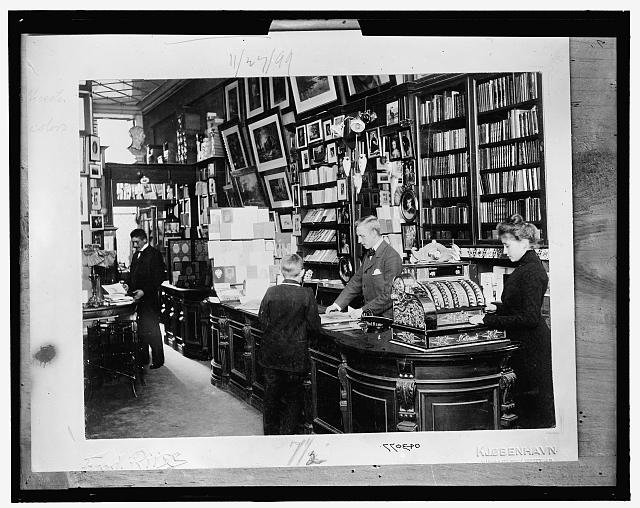
Today is Independent Bookstore Day in the United States, assuming you are reading this on the day it comes out. (And it really doesn’t matter if you’re not. All the important bits still apply.)
Last year I was too heartsore/stunned/scared to post my usual love letter to independent bookstores. My beloved Seminary Coop Bookstore and its little sister 57th Street Books had temporarily closed their doors and were just beginning to figure out how to work through the pandemic. I had enough books on hand to keep me reading for the foreseeable future.* But I worried that brick-and-mortar bookstores would not survive.
A year later, my independent bookstore is still functioning, thanks to a combination of mail delivery, curbside service, and in-person delivery for those of us who live in the neighborhood. I’ve been an enthusiastic user of the in-person delivery option. In fact, I may have gotten a little carried away. Yesterday my book-delivering bookseller, on his second visit of the week, greeted me with a cheerful, “More books!” when he handed me my packages.
In the past, I’ve celebrated Independent Bookstore Day in person, armed with a wish list and an eye for the serendipitous find. This year, I plan to order another book or five and dream of the day when I can go back to the bookstore in real life. I can’t wait!
*(Who am I kidding? I have enough books on hand to keep me reading for years.
The Hat in the Ring Squadron
If you’re a serious aviation buff, or perhaps a WWI buff, you may already know all this, but it was new to me.
The “Hat in the Ring”* Squadron was the nickname for the 94th Aero Squadron of the United States Army Air Service (USAAS) during World War I. Formed at Kelly Field in Texas, it was the first American pursuit squadron to fly in combat in the war, and the most famous thanks in large part to the exploits of highly decorated flying ace Eddie Rickenbacker and his fellow flying aces.**
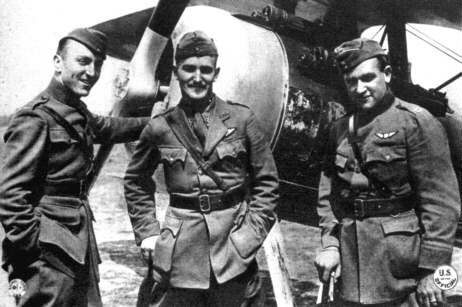
Aviators from the Hat in the Ring Squadron
I must admit, I am not a serious aviation buff, though I am aviation-buff adjacent thanks to My Own True Love. The things that caught my attention about the squadron were
1) the nickname, which referred to the fact that the United States had finally tossed its hat in the ring of the war, and
2) the insignia painted on the nose of each of the squadron’s aircraft, a literal representation of Uncle Sam’s red, white and blue top hat going through a ring.
Together they make a powerful statement about the role played by a small group of volunteers.
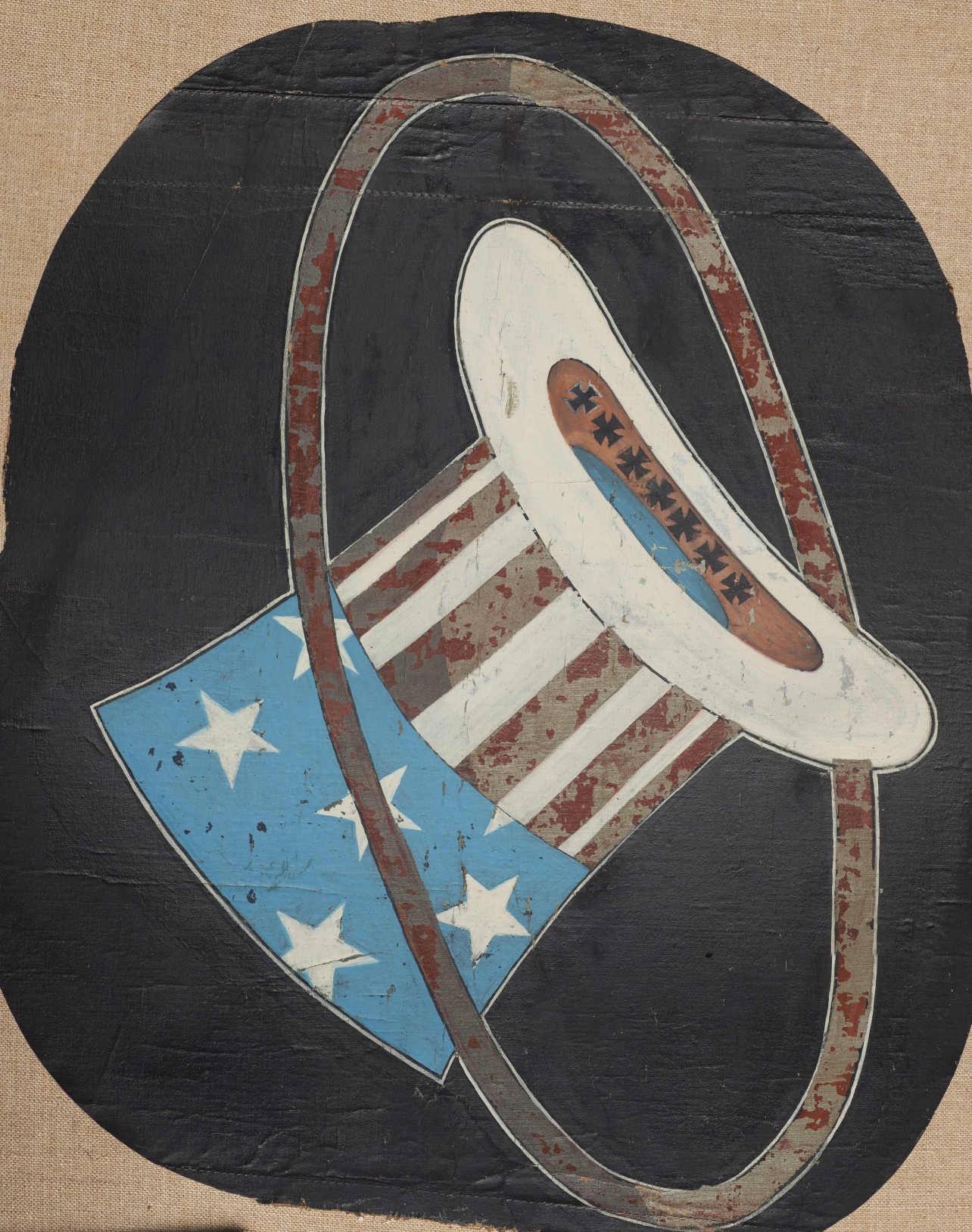
Image courtesy of the Air and Space Museum
If you look closely at this version of the insignia, which is from the plane flown by flying ace H. Weir Cook, you will see seven representations of the German Iron Cross on the inside of the hat band, signifying the three aircraft and four observation balloons that Cook shot down. How cool is that?
*My Own True Love tells me that though most readers know what the phrase “hat in the ring” means, you may not know where the phrase comes from. It’s a boxing term from the early nineteenth century. Anyone who wanted to take his chances in a bout would literal throw his hat in the ring, which was not the roped-off square of modern boxing but simply a circle of spectators around the combatants.
**It’s worth noting that “flying ace” or “air ace” is the technical term for a military aviator who shot down five or more enemy aircraft. It is unclear to me if Snoopy qualified.