




Talking About Women’s History: A Whole Lot of Questions and an Answer w/ Julia Charles
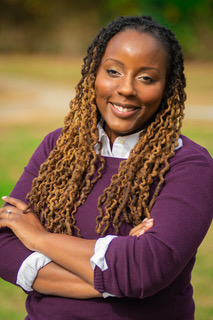
Julia S. Charles received her Ph.D. and an M.A. from the University of Massachusetts, Amherst from the W.E.B. Du Bois Department of Afro-American Studies. A proud two-time HBCU graduate, she received an M.A. in English and African American Literature from North Carolina Agricultural and Technical State University and a BA in English from Bennett College. Her newest book, That Middle World: Race, Performance, and the Politics of Passing, examines how mixed-race characters in American fiction performed race from the antebellum period through the New Negro Renaissance. Julia serves on the Board of Directors for FosterClub, an organization that connects, educates, and inspires youth in and from foster care in order to help them realize they personal potential. She is also the Co-Founder of The Loving Luggage Project, a community donation initiative that provides new luggage for youth in foster care to help ease their transitions through and out of foster care.
Take it away, Julia:
What path led you to Jessie Fauset’s story?
My path to Jessie Redmon Fauset was a beautiful one. It felt almost fortuitous. In graduate school in the W.E.B. Du Bois Department of Afro-American Studies at UMass, I had been studying Charles W. Chesnutt, and I thought I would write my dissertation on him and his work. But through my classes I started to realize I was actually more interested in his depictions of mixed-race characters and the cultural phenomenon of racial passing. That same semester, one of my professors, A. Yemisi Jimoh, I believe it was, assigned Fauset’s Plum Bun to our class and I loved it.
Later in my program, Britt Rusert, who was also a professor of mine, arranged a visit to the special collections archives at UMass where I was able to thumb through the Du Bois Papers. In them, there were so many correspondences between Du Bois and Fauset, and then between Fauset and others on Du Bois’ behalf. There was one letter in particular that fascinated me most: it was from a young Fauset, then an English major at Cornell University, boldly asking Du Bois about a job, and complimenting him for having written The Souls of Black Folk. It was a letter that was short on words, but long on lessons for me. It was one of those days that you just know you have stumbled on something special. So, I went to find everything I could about her.
Why do you think it is important to tell her story today?
There are many women who have greatly impacted American history, but whose stories are buried in the work of the men of around them, or whose work is disregarded, lost, or simply forgotten. I think about legacies of Black women like Frances Ellen Watkins Harper whose name we know, but whose first book of poems, Forest Leaves, had been considered lost, until my friend from graduate school, Johanna Ortner, was simply doing the work of a graduate student—that is, researching—and recovered this important work. I think of how enriched I have been by the work of Zora Neale Hurston, and how, were it not for Alice Walker going in search of Hurston in 1975, I may never have been taught, encouraged, or validated by Hurston’s work. Both Harper and Hurston were brilliant in their day, and their work survives because someone was deliberately searching for them. And there are so many other Black women writers whose lives and works have suffered the same fate, Fauset being one of them. And so, here I am, doing the work of finding Fauset, and hopefully, giving her back to a people, a discipline, and indeed, a country that she worked so diligently to make better.
Jessie Fauset was well known in her time, but is largely overlooked now—not an unusual situation for women. Why do we tend to forget the roles women play in history?
During the New Negro Renaissance everyone who was anyone knew (and needed to know) Fauset. She was arguably the most influential women of the Renaissance, which is why in his biography, Langston Hughes (whose work Fauset was the first to print when she published “The Negro Speaks of Rivers” in The Crisis in 1921) called her one of the three people who midwifed the “so-called New Negro literature into being.” Fauset was not just known during the Renaissance, she was well known and well respected. Much like Zora Neale Hurston, it wasn’t until after her career and death that she fell into relative obscurity.
But to answer the question, memory is often political, especially in literature and the arts. And the gatekeeps know well the politics of memory—that is, who gets to be remembered, how and why they are remembered. They are often powerful white men, leaders of institutions, archives, museums, and other spaces that are ostensibly intended to collect, preserve, and/or exhibit treasured historical artifacts. And so they control who gets remembered and the narrative of those folx lives. Thus, women are often viewed in terms of their service to those men, rather than their contributions to the nation more broadly or the world of arts and letters more specifically.
Writing about a historical figure like Jessie Fauset requires living with her over a period of years. What was it like to have her as your constant companion?
There’s a picture of Fauset that I love; it’s her senior portrait from when she was a student at Cornell University. This past Christmas, my fiancé commissioned a visual artist named Rodan who did an amazing colorized rendering of that image. It now hangs in my house. I walk past her every day. So, when you say this work—of life writing—“requires living with her . . .” it feels incredibly salient for me. In a lot of ways, Fauset has been a companion of mine since graduate school. I feel cheated that I didn’t know her before then. Having her as a companion now makes me feel both humbled and terrified. Humbled because who am I to get to share space with the ancestors this way? Why was I chosen—and I do feel chozen—to do this assignment? What have I done to deserve this rare treat? Yet, I feel petrified of failing her. I want to write her life so well that people begin to question the politics of memory. I want to people to ask why they haven’t known her before I facilitated their introduction to her life and work. What Alice Walker did with Zora Neale Hurston, I want to do for Jessie Redmon Fauset, who is just as worthy a subject. I want readers to question the politics of the archive, and so, in that way, I want to do her justice. And sometimes I wonder if there is enough space for me to do that.
What work of women’s history have you read lately that you loved? (Or for that matter, what work of women’s history have you loved in any format? )
As you can imagine, all my reading lately has been in the genre of biography/life writing. And there are a few that jump out at me: There are a couple of new biographies of the great Black woman writer and activist Lorraine Hansberry that are, to my mind, outstanding. Former FLOTUS, Michelle Obama’s Becoming has fed me in several ways; not only is it beautifully written, but there is a level of transparency that I had not expected, especially where she discusses learning to have a life of her own outside of her powerful husband. Roxane Gay’s Hunger, which is not so much women’s history as it is a history of her body and its relationship or encounters with the rest of the world around her. But what a fantastic read! There are so many others, which might be more academic in tone, but I’m going to stick with these because they are each fantastic in their own right, but they have also been a boon to my understanding about the duty of the biographer in life writing.
If you could pick one woman from history to put in every high school history textbook, who would it be?
This is kind of a difficult question because there are people like Frances Ellen Watkins Harper, Pauline Hopkins, Anna Julia Cooper, Ida B. Wells, Nella Larsen, and, of course, Jessie Redmon Fauset. There are Black folx like Zora Neale Hurston, Audre Lorde, Pat Parker, June Jordan, Alice Walker, Toni Cade Bambara, The Combahee River Collective, and, my goodness, Toni Morrison, and Octavia Butler. The latter two who are arguably in a class all their own. And that doesn’t even include contemporary folx like, Jesmyn Ward, Tayari Jones, and Brit Bennett. Nor does it include children’s or YA writers like Mildred D. Taylor, Angie Thomas, and Jacqueline Woodson. And just look at the womxn I am leaving out with this short list. And this list only includes authors; it doesn’t even mention artists, entertainers, politicians, activists, or womxn from any other walk of life. Narrowing it to one would definitely be an exercise in futility for me.
Who are some of your favorite authors working in women’s history today?
Nareza Wright, author of Black Girlhood in the Nineteenth Century, and Deidre Cooper Owens, author of Medical Bondage: Race, Gender, and the Origins of American Gynecology, are two of my favorites. I am also very much looking forward to Crystal Webster’s new book, Beyond the Boundaries of Childhood: African American Children in the Antebellum North, which will be out soon from UNC Press. I think all these authors are adding something valuable to our understanding about Black womanhood, even those of them who are dealing explicitly with girlhood studies.
What do you find most challenging or most exciting about researching historical women?
The thing I find most challenging is the archive itself, but it is also the most exciting. History has not been kind to women, especially Black women. The ways in which it disregards them, dismisses them, misremembers their contributions, sometimes misgenders them, are all reflections of the archive’s failures. Yet, without even the parochial catalogs of the archives, even more would be lost. So, some of the challenge is rooted in the necessary confrontation with the formal archive and other spaces of memory. The other challenge is what to share of the subject’s life. There are too many instances of historical women’s contributions being obscured by or reduced to who they were intimate with or who they worked for. The exciting part is figuring out what to include and what to keep private for Fauset.
Do you think Women’s History Month is important and why?
Of course, Women’s History Month is incredibly important. In a lot of ways, it does what I am suggesting in confronting the archive. The more women we learn about through observations like Women’s History Month, the more likely we are to change the global tendency toward erasure of women.
What was the most surprising thing you’ve found doing historical research for your work?
Without giving too much away, one of the most surprising things I have found is the sheer volume of correspondences between Fauset and anyone who was anyone during the New Negro Renaissance. It just demonstrates that her sphere of influence was so vast.
Another question for Pamela. What are your top 5 books about women and why?
This is as tough as choosing one woman to put into high school history books! Here are five books about women that I loved and that stuck in my head long after the fact:
1. Margalit Fox’s The Riddle of the Labyrinth: The Quest to Crack an Ancient Code was my first up-close look at a woman’s contributions to a discovery being swept aside in favor of a male colleague. Infuriating and illuminating.
2. Antonia Fraser’s The Warrior Queens introduced me to the idea that women “fought, literally fought, as a normal part of the army in far more epochs and far more civilizations than is generally appreciated.” She set me on the road that led to Women Warriors, thirty years later.
3. Matthew Goodman’s Eighty Days: Nellie Bly and Elizabeth Bisland’s History-Making Race Around the World held me spellbound. (I must admit, I was rooting for Bisland all the way.)
4. Together Sarah Gristwood’s Blood Sisters; The Women Behind the Wars of the Roses and Game of Queens: The Women Who Made Sixteenth-Century Europe transformed the way I think about women’s roles in medieval and early modern Europen power politics. (I’m going to cheat and count them as one book.)
[Despite appearances, I did not step to my bookshelves, which are organized alphabetically by authors’ last names, and randomly pull books off the shelf.]
5. I know I’ve mentioned them before, but I owe a debt of gratitude to the authors who wrote biographies for young girls about smart and/or tough women who sidestepped (or kicked their way through) society’s boundaries and accomplished stuff no one thought they could accomplish. A handful of those books found their way to my school library when I was in fifth or sixth grade. They were a revelation.
* * *
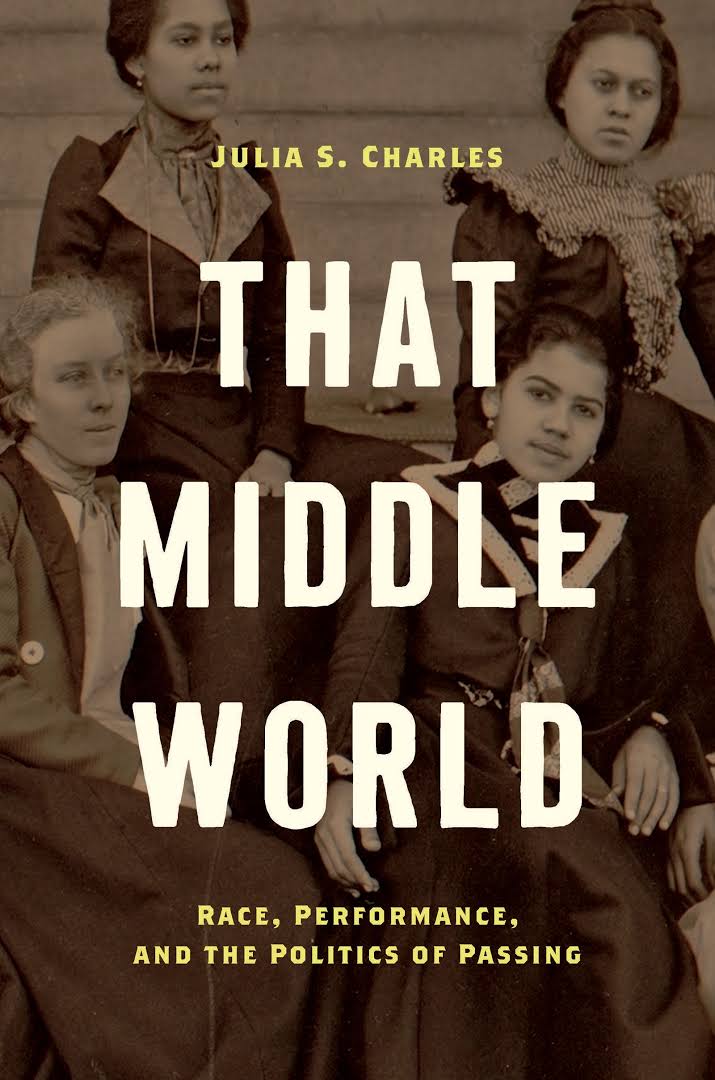
Want to know more about Julia Charles and her work?
Check out her faculty profile: https://cla.auburn.edu/english/people/professorial-faculty/julia-charles/
* * *
Come back tomorrow, when we go out with a bang with three questions and a answer with best-selling historical novelist Renée Rosen.
Talking About Women’s History: Three Questions and an Answer with Judy Batalion
When I heard Judy Batalion’s new book, The Light of Days, described as “Inglourious Basterds”– if the “basterds” were teenage Jewish girls who hid grenades in their underwear to kill Nazis,” my first thought was “I need to read that book. “ My second thought was, I need to talk to the author for Women’s History Month. I’m so glad I did.
Judy Batalion is the author of White Walls: A Memoir About Motherhood, Daughterhood and the Mess in Between. Her essays have appeared in the New York Times, the Washington Post, the Forward, Vogue, and many other publications. Judy has a BA in the History of Science from Harvard, and a PhD in the History of Art from the Courtauld Institute, University of London, and has worked as a museum curator and university lecturer. Born in Montreal, where she grew up speaking English, French, Hebrew, and Yiddish, she now lives in New York with her husband and three children.
Take it away, Judy:

We are seeing more and more books about female spies and members of the resistance in World War II, both fiction and non-fiction. Do you think there is a reason that we are drawn to these stories now?
That’s a great question, and I have two answers. First, some backstory: I found the primary Yiddish source material for this book in the spring of 2007, just after I submitted my dissertation in feminist art history. I knew that the stories I’d found – testimonies about Jewish women who tricked the Gestapo into carrying their luggage filled with contraband, hid revolvers in teddy bears, flung Molotov cocktails, and bombed German supply trains – were incredible, and yet, at the time, I also knew that they would not be “commercially viable.” As I’d learned from my Ph.D. work, women’s history just wasn’t in vogue. I was granted translation funds from an academic institution and, for many years, planned to release my research in an academic sphere. It was only after the first Women’s March, after Trump took office in 2017, that I pitched this idea to my literary agent, who immediately saw this story as one well-suited for a trade publication. Around that time, a new type of feminism was developing alongside a popular fascination in lost women’s histories. All to say, one reason is the social zeitgeist.
My second answer has to do with the subjects of these stories (and many of the fictional accounts published now are based on real people). Many of these WW2 female survivors stayed silent about their war tales for most of their lives. Sometimes they weren’t believed; other times, they were blamed for fighting instead of helping their families; frequently they were accused of sleeping their way to safety. Many women suffered terrible survivor’s guilt. Mostly, many women wanted to suppress their memories to raise “normal children” and create a healthy, happy new generation. Despite this, the second generation often felt ashamed of their outsider, refugee parents. It took until my generation, the 3Gs, to feel pride in this legacy, to ask our “grandmothers” about their lives. The WW2 survivors finally started talking, aware that they needed to tell their stories before they died. I think we’re now seeing books published based on these late-in-life conversations and ruminations.
The Light of Days tells the story of a group of fascinating women. Do you have a favorite among them?
You can’t have a favorite child! I was drawn to each woman for a different reason, mostly because they were so unlike me. These women were daring, cunning, passionate, and willing to take risks against-all-odds. Having said all that, when I went to have my headshot photographed for the book, I was having trouble posing. Before The Light of Days, most of my published work was humorous, and my photos always showed me smiling; I had perfected the cheeky glance, looking up at the camera above my glasses frames. For this shoot, however, I had to project something serious. I did not know how. The excellent photographer pushed me to think about my subject material, to focus intensely on one woman whose story I wanted – needed – to tell. I immediately thought of Frumka Plotnicka. Known as “di mama,” (the mother, in Yiddish) for her ability to listen, counsel and comfort, she returned to Nazi-occupied Poland on her own accord. She established soup kitchens and cultural programs to help ghettoized Jews; she slipped in and out of ghettos and traveled across the country bringing Jewish communities information, hope and supplies; she strategized uprisings and negotiated with Poles and Nazis; she was offered papers to leave the country for The Hague but would not go. But alongside her colossal strength and bravado, Frumka also had trouble making friends; she was intense and awkward and broke down a few times during the war – all that I could certainly relate to. Frumka died, age 29, while shooting at Nazis, clutching a revolver. If I didn’t tell her incredible story, who would? I feel close to her, in an ethereal, writerly way.
What do you find most challenging or most exciting about researching historical women?
A real research challenge for me in this project was names. I struggled with my characters’ names, a struggle that was amplified because they were women. The women in my story, like most Polish Jews, had Polish, Hebrew, and Yiddish names, as well as nicknames. Some had a wartime alias or several. Sometimes, they used other fake identities for emigration papers; it was usually easier to leave Europe if a woman was faux married. Then many changed their names to suit the languages of the countries where they ended up. (For instance, Vladka Meed began as Feigele Peltel. Vladka was her Polish undercover name; she married a Miedzyrzecka, which was changed to Meed when they moved to New York.) Further, I searched for these Slavic and Hebraic words in English search engines, based on combinations of Latin letters. For example, I found my protagonist Renia Kukielka under Renia, Renya, Rania, Regina, Rivka, Renata, Renee, Irena, and Irene; Kukielka has infinite Anglo spellings, as does its Yiddish “Kukelkohn.” Then Renia had various false wartime document names—Wanda Widuchowska, Gluck, Neuman. Plus, the married name added a layer that often complicates women’s traceability: “Renia Kukielka Herscovitch” (or possibly Herskovitch or Herzcovitz) has endless permutations. The story of Renia Kukielka could easily have slipped through, been lost forever.
My question to Pamela: Since you are so wonderfully steeped in women’s history, I would love to hear what you recommend as a great and surprising women’s history book or even TV show right now?
Women’s history month is a rough time around here (and by around here, I mean in my head). I end up with a whole bunch of books I want to read, added to the pile of books I already wanted to read and no time to do more than dip in here and there. That said, two very different books have grabbed me by the imagination and are keeping me reading:
The Secret History of Home Economics: How Trailblazing Women Harnessed the Power of Home and Changed the Way We Lived by Danielle Dreilinger—I was a hostile reluctant home economics student when I was forced to take the class in eighth grade. (And I still think that the class as I experienced it was caught in a timewarp.) The revelation that home economics was a feminist project in its roots is an eye-opener. (Just so you know, the book won’t be released until May. Sorry)
The Daughters of Kobani: A Story of Rebellion, Courage and Justice by Gayle Tzemach Lemmon.—I loved Lemmon’s earlier books so I was eager to read this one, and she doesn’t disappoint. Beginning with the statement “I told myself that I had given up war,” Lemmon is sucked into the story of an all-female Kurdish militia unit fighting against Isis, and to make women’s equality a reality in the process. She sucked me in, too.
* * *

The Light of Days will be released on April 6, but you can pre-order it now wherever you buy your books.
Want to know more about Judy Batalion and The Light of Days?
Check out her website: https://www.judybatalion.com/
Follow her on Twitter: @JudyBatalion
Follow her on Facebook: Judy Batalion Author
Follow her on Instagram: JudyBatalion
* * *
Come back tomorrow for a whole bunch of questions and an answer with Julia Charles, talking about Jessie Redmon Fauset and the New Negro Renaissance.
* * *
If you’re interested in the process of writing and thinking about history, you might enjoy my newsletter, which comes out roughly every two weeks. The content is totally different from History in the Margins. In recent months I’ve discussed cliffhangers, the odd experience of reading history “in real time” in the form of old newspapers, the question of “first-naming” the subject of a biography, and , well, women photojournalists. (You can tell where my mind’s been lately.) If that sounds like your fistful of daffodils, you can subscribe here: http://eepurl.com/dIft-b .(When you subscribe, you’ll get a link for a very cool downloadable timeline of the Roman emperors and the women who fought against them or supported them, which I created with the people behind The Exploress podcast.)
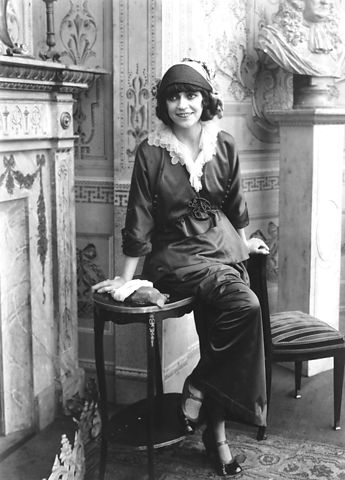
Asta Nielsen, International Film Sensation
Here’s the deal about “women’s history”: once you’re sensitive to the subject you stumble across references to notable women all the time.*
Take the case of Asta Nielsen:
 I first met her in this sentence: “Asta Nielsen, newly arrived in Berlin from Denmark, described her horror when a skeletal horse collapsed in the street.”** For all I knew, Asta Nielsen was just a stray Danish tourist in Berlin, but I am a responsible researcher so I did a quick Google search, just in case. And, poof, once again I was down a research rabbit hole with no immediate link to my book.
Asta Nielsen is often described as the first international film star. Known as “Die Asta” and “the Silent Muse,” she was an international superstar of the silent movies. (In World War I, soldiers on both sides of the trenches carried her picture into battle.)
Nielsen was a working actress with an career that was going nowhere when film director Peter Urban Gad convinced her to work with him on a film. The project, an erotic melodrama titled Afgrunden (The Abyss), released in 1910.
Nielsen used her success to negotiate contract terms with the growing German film industry that gave her a financial interest in her films and considerable artistic and economic control over both her films and her public persona. (Unlike most of her Hollywood contemporaries.) Nielsen spent the next 25 years in Germany, where she made 70 films, including one co-starring Greta Garbo, Die freudlose Gasse (the Joyless Street or The Street of Sorrow). ( Garbo’s assessment of Nielsen: “In terms of expression and versatility, I am nothing compared to her.”) In 1932, Nielson performed in her only sound film, Impossible Love. It was her last film, with the exception of two documentaries that she appeared in decades later.
When the Nazis came into power in 1933, Nazi propaganda minister Joseph Goebbels offered Nielsen her own studio. She refused, but continued to perform in German theaters until 1937, when she returned to Denmark. When the Nazis occupied Denmark in 1940, they offered her another chance to make films. She refused again.
In Denmark, she continued to perform on stage, became an acclaimed collage artist, and began a literary career at the age of 65.
Greta Garbo, Marlene Dietrich, and Katherine Hepburn all acknowledged her influence on their work. Not a bad legacy by any standard.
*This should surprise no one.
**In Belinda J. Davis’s Home Fires Burning: Food Politics, and Everyday Life in World War I Berlin, in case you want to know. An excellent book, though a bit too academic for me to review it here on the Margins.
* * *
Come back Monday for a three questions and an answer with Judy Batalion about Jewish women who fought against the Nazis in the resistance .