




How the Titanic Launched* One Woman’s Journalism Career
In April 1912 , a 30-year old seamstress/businesswoman from Louisiana, Missouri named May Birkhead was sailing to Europe on the Carpathia. Her holiday was postponed when the ship halted to pick up survivors from the Titanic.
Birkhead put her seamstress skills to good use, creating clothing for the shipwreck victims from towels and other materials available on board ship. But that would be her last job as a dressmaker.
Several years previously, Birkhead had become friends with Eric Hawkins, a New York Herald reporter who came to Louisiana Missouri to photograph Democratic Senator Champ Clark.. When word reached New York that the Carpathia had picked up survivors, Hawkins remembered that Birkhead was on board. He contacted her over the ship’s radio and asked her for an eyewitness account. She not only got interviews with survivors, she got negatives from Carpathia passengers who took photographs of the disaster and the rescue.**
Birkhead met Hawkins on the dock when the Carpathia arrived back in New York, giving the New York Herald a enormous scoop on the biggest news of the day.
The Herald’s publisher, James Gordon Bennet, was so impressed with her work that he offered her a job.
Birkhead started work as soon as she reached Paris. For twenty-nine years, she reported on fashion and society from Paris, first was a correspondent for the New York Herald and later for the Paris edition of the Chicago Tribune and then the New York Times. During World War I, she stayed in France and once again proved herself to be a reporter who could handle more than the “woman’s page.” Although she was not an official war correspondent, she wrote feature stories about war news and later reported on the Versailles peace conference.
She left Paris on July 16, 1940—a month after the Nazis took Paris. Birkhead drove out of France toward Lisbon through Nazi-occupied territories with several friends. They quickly discovered that Germain officers refused to allow people who were leaving the country to buy gasoline. They spent five days in Poitiers, trying to get enough gasoline to reach Bordeaux. While in Poitiers, two of the party were arrested by the Nazis on suspicion of spying. The charges were proved to be false and the army officers agreed to give them gasoline as a “form of damages.”
When they reached Lisbon, they discovered that 22,000 people had arrived ahead of them, trying to get passage out of Europe.
Interviewed by the New York Times on her arrival, she told the reporter that the Nazis were stripping the city of all valuables, including food. She reported that before she left the city where she had wined and dined for almost thirty years, she had lived for five days on condensed milk, cocoa, and cereal, the only food left in her cupboards. The interview ended with the optimistic statement that Birkhead had renewed the lease on her apartment before she left and would be “going back after the Germans are thrown out.”
Birkhead did not make it back to her beloved Paris. She died on October 28, 1941. In her obituary, the New York Times said “She probably knew and was known by more cosmopolites and social personages of the two continents than any other reporter in Europe or America.” (On the other hand, the Times also described her as being “a young girl bound for a carefree holiday abroad” on the Carpathia, when in fact she was a 30-year-old woman who had financed her own first-class ticket with her successful dressmaking business.)
* Sorry I couldn’t resist.
**Rubbernecking on a grand scale.
* * *
Come back tomorrow for more juicy Women’s History Month content.
Talking About Women’s History: Three Questions and an Answer with Natalie Dykstra
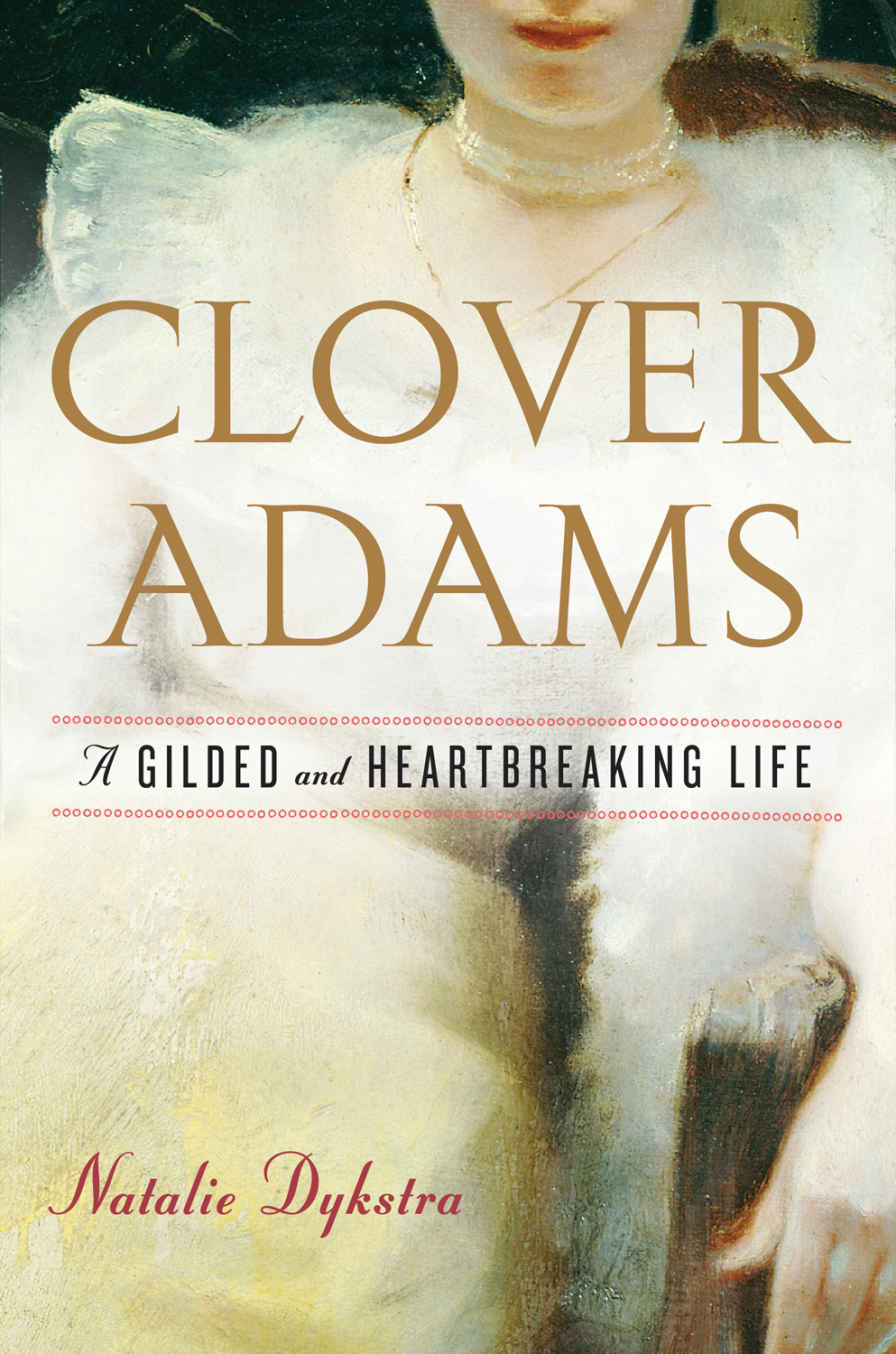
Natalie Dykstra is the author of Clover Adams: A Gilded and Heartbreaking Life, a 2013 Massachusetts Book Award finalist. She received a 2005 NEH Fellowship for her research on Clover Adams and a 2018 NEH Public Scholar Award for her upcoming biography of Isabella Stewart Gardner. She is Professor of English at Hope College and an elected Fellow of the Massachusetts Historical Society.
Take it away, Natalie:
Writing about a historical figure like Isabella Stewart Gardner (1840-1924) requires living with her over a period of years. What was it like to have her as your constant companion?
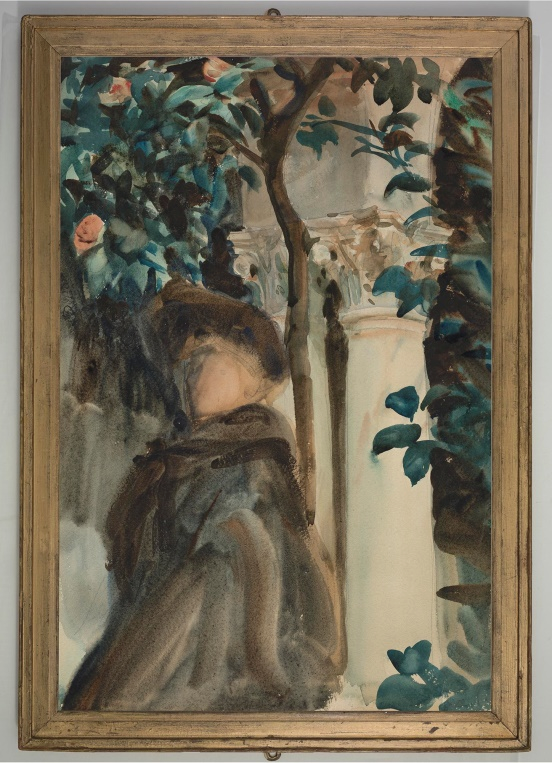
At first, it was very intimidating. She was a remarkable woman who lived a long life, knew a wide range of people, collected important art, and created a magnificent museum that bears her name in Boston. She knew how to dress and dance and didn’t suffer fools. She could be unpredictable, saying whatever was on her mind. Her wealth unnerved me initially. And at first I found it hard to lay aside my need to have her like me or approve of me in some kind of retroactive way. As I’ve gotten to know her, slowly over several years, I see a tender side that she protected very carefully. She’d lost her only child early in her life; Bostonians mocked her; she knew the men around her would get most of the credit for what she accomplished with her museum. Yet she persisted. There’s a scene from a trip she and her husband, Jack Gardner, took on the Nile in 1874 that I loved thinking and writing about. They’d spent months on the river, coming on shore for various expeditions. She filled her travel album with descriptions and sketches of the scenery along with an elaborate key for the hieroglyphics. On one of their last days, she woke up very early to say “goodbye to one of the old worlds’ wonders” at Abu Simbel. She got there first, before anyone else, and lay on the warm sand to watch the sun rise in the sky as it lit up the “benign calm of the great Ramses.” Someone who does that is a lot of fun to write about!
*Mrs. Gardner at Fenway Court, 1903, by John Singer Sargent, ISGM.
Has your experience of writing about Gardner been significantly different than writing about Gilded Age hostess and photographer, Clover Adams, who was the subject of your previous book?
The two women knew each other. Gardner was three older than Adams, and their social circles overlapped. I first took on Clover’s attitude toward Mrs. Jack – that she was a lot of work to be around. I gradually let that go, agreeing more with Clover’s husband, Henry Adams, who thought otherwise and marveled at her energy. I’ve said elsewhere that Clover’s story was a kind of chamber piece; she died young and tragically by suicide. Her world started to close in around her, even as she grew to be a gifted photographer in her last years. Isabella’s story is a full orchestra with innumerable instruments and choirs. And her life became larger and larger as she got older. Her museum opened to the public when she was about to turn sixty-three years old. That’s part of what drew me to the story. I find the shape of her life – an early promise, terrible losses, a long quiet, and then a coming to fruition, a blooming, much past the time otherwise expected—to be fascinating, unexpected, immensely moving. And she lived long enough to fully realize and enjoy what she’d accomplished. That’s rare and particularly so for a woman of her generation.
How would you describe what you write?
I write biography. I like thinking a long time about a single person in relation to a time period and cultural context. Virginia Woolf has a simple phrase for this interweaving of an intimate story with larger historical forces: “a fish in the stream.” What I like so much about the genre is that it defeats preconceived ideas of what happened. People are never the sum of our theories about them. So there are always surprises or eddies in how a story moves that I can’t anticipate ahead of time. I’m not a fiction writer. I like the constraint of fact that biography imposes, and within that constraint, one can use the tools of fiction, such as setting, character, detail, metaphor, and voice.
I think, too, I write biography for the same reason I read biography: to feel less alone. Biography assuages as no other kind of writing or reading.
My question for Pamela: I’d love to know how you choose your writing projects – what combination of sources, characters, or storylines get you to say: “that’s next.”
In my experience, writing projects choose the author, and not the other way around.
In the case of Women Warriors, I had literally been collecting the material for years, just because, before my then-agent asked “Would you be interested in writing something about women warriors?” My response could be summed up as “Who dropped that hat?” (It was another two years, another book, and another agent before it found a home.)
But that’s the exception.
Usually a project (large or small) starts by my stumbling across something I don’t know that catches my imagination. I almost never have the luxury of thinking about it immediately. So I start a page in my ideas notebook* and move along. A lot of ideas die in that notebook. But if a subject continues to poke at me, eventually I start down the rabbit hole: What already exists on the subject? What sources are available? What shape would the book take? Why should anyone else care?
All of those are practical questions. They are important questions. But they aren’t the decisive question. At least twice I have abandoned perfectly viable book proposals halfway through. (It hurts.) In one case, I realized that if I was that bored writing the proposal, writing the book would be even worse. In the other case, I thought it was a important book, that someone should write it—and I wasn’t the right person. That word “should” is critical. In a recent newsletter, biographer Alexis Coe drew a distinction between a book she wanted to write and a book she thought she should write. It is the crucial distinction. And it doesn’t happen in your head. Or at least it doesn’t happen in mine.
Two years ago, an article that referred to my current book topic popped up in my newsfeed. I was already deep in the process of exploring an entirely different subject. I’d done some interviews. I’d traveled to meet with a group of enthusiasts. I wasn’t quite sure about the shape of the story, but I was sure there was a story. I just needed a little more time to find it. While I struggled to find what the story would look like, decided to spend some time with the new idea, just to see what was there. And just like that, I had my next project.
Superficially, the two subjects looked very similar. Both are under-told stories about women who were well known in their time and were not quite forgotten. Both had available archival sources. But one story demanded to be told NOW and the other didn’t.
* * *
Interested in learning more about Natalie Dykstra and her work?
Check out her website: nataliedykstra.com
Follow her on Twitter: @natalieanneDY
* * *
Come back tomorrow for more juicy Women’s History Month content.
* * *
If you’re interested in the process of writing and thinking about history, you might enjoy my newsletter, which comes out roughly every two weeks. The content is totally different from History in the Margins. In recent months I’ve discussed cliffhangers, the odd experience of reading history “in real time” in the form of old newspapers, the question of “first-naming” the subject of a biography, and , well, women photojournalists. (You can tell where my mind’s been lately.) If that sounds like your glass of chianti, you can subscribe here: http://eepurl.com/dIft-b .(When you subscribe, you’ll get a link for a very cool downloadable timeline of the Roman emperors and the women who fought against them or supported them, which I created with the people behind The Exploress podcast.)
Talking About Women’s History: Three Questions and an Answer with Tori Telfer
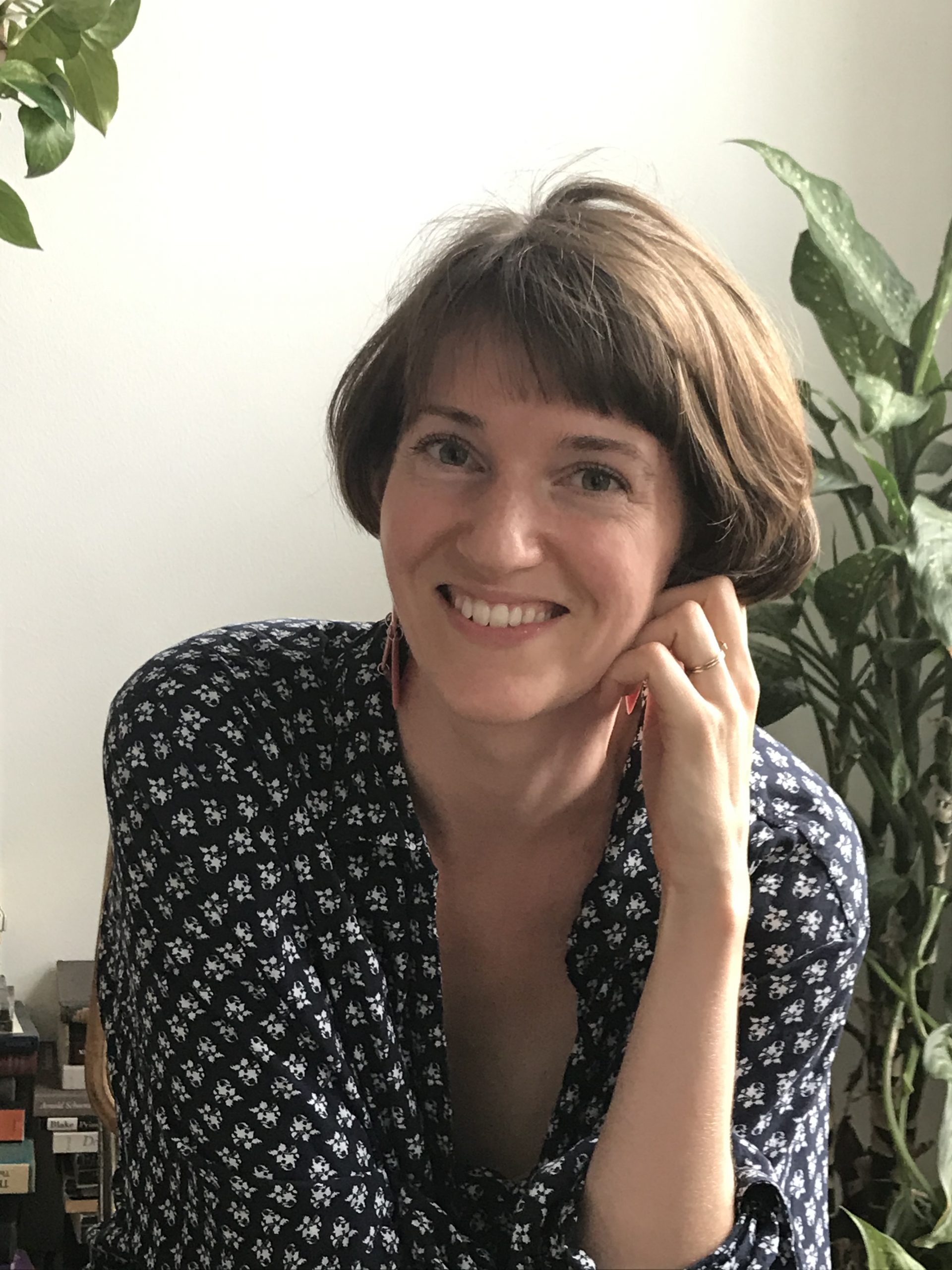
Tori Telfer is the author of Lady Killers: Deadly Women Throughout History and Confident Women: Swindlers, Grifters, and Shapeshifters of the Feminine Persuasion. She has written on the culture of crime for The Believer, Vulture, The Awl, Vice, TheAtlantic.com, and RollingStone.com, and is the host of the podcast Criminal Broads. She lives in NYC with her husband and son.
Take it away, Tori:
My impression is that stories in which women are the criminal rather than the victims are relatively rare in the genre of true crime. (I am just spitballing here. I don’t read true crime, horror, or violent mystery novels because I am a wimp.) If this is not true, correct me. If it is true, tell me why. (In other words, do female criminals suffer from the same kind of historical erasure as female scientists and women warriors?)
You’re right—they are rare. Our most famous criminals are, of course, men. The figures in true crime—like Bundy and Manson—that get 1,294,890 movies made about them are almost always men. I do think it’s important to remember that part of this is a statistical matter: men commit something like 90% of homicides. Though it’s interesting to note that most victims of violent crimes are actually men, too, other than victims of rape/sexual assault—but all our most famous victims are females. Our most famous missing-person stories are women (Natalee Holloway, Maura Murray). Our most famous cold cases feature dead women (Jack the Ripper, the Black Dahlia). Anyway! Female criminals are simply a much, much smaller population, especially female murderers. What I’ve noticed is that they are erased—until they’re not. For instance, Jack the Ripper is much more famous than his serial killing countrywoman Mary Ann Cotton. But Aileen Wuornos? Casey Anthony? Jodi Arias? As a society we’re definitely not opposed to obsessing over a female criminal. Plus, even the ones who are now forgotten were often very, very famous when they were captured, because it’s more rare and thus more shocking. So perhaps what’s going on here is a blend of statistics, historical erasure, and selective memory (immortalizing the sexiest and most psychopathic of the killers, say, and forgetting the rest).
You also host a podcast about women on the wrong side of the law, Criminal Broads. How do you choose the stories that go into your podcast? Do you have different criteria for the stories that go into your books?
I really follow my fancy for this podcast. I like to do a blend of scary cases (like nurse Jane Toppan, who, uh…let’s just say…you definitely don’t want her delivering your morphine) and lighter historical ones (like the Pomeranian-owning rival gang queens of 1930s Australia). On a practical level, I pick cases that I can research rather quickly; I spend much less time on a podcast episode than on a book chapter. But with every woman who I’ve ever written or podcast about, I look for certain things (is there material available about her? does she fit with the other stories in this project? is she different from the women I’ve written about before?) but ultimately rely on a gut instinct that just tells me, yeah, this woman is interesting.
If you could pick one woman from history to put in every high school history textbook, who would it be?
Phoolan Devi! One of the most compelling podcast episodes I’ve ever done. She was a poor Indian girl from Uttar Pradesh who endured a terrible arranged marriage (as a child!) and unthinkable assault by the wealthier men in her village. And then she RAN AWAY AND JOINED A GANG OF BANDITS AND WREAKED REVENGE ON EVERYONE WHO WRONGED HER. Her story is striking for many reasons: it’s hard to overstate the terrors she endured (and I wouldn’t put them all in a high school textbook), which had everything to do with her being a woman, her caste, and her defiant spirit. But then she has this phenomenal revenge story, earns herself the nickname Bandit Queen, gets arrested, spends years in jail, and then runs for parliament and wins! The media loves her, the public loves her. And then at age 37, she’s assassinated as a belated revenge for her revenge. Why aren’t there 1,294,890 movies made about her? (I believe there is one, plus a documentary.)
Question for you: I have a practical question! I imagine that as a freelance writer with a lot of interests, you have ideas for projects bubbling on at any given time. If so—how do you organize your thoughts, ideas, windy paths you want to go down, and so on?
Now you’re asking the hard stuff!
I am fascinated by organizing systems. Over the years I have tried things like Trello and Get Things Done. They look so cool, but they all turn into the place that ideas and to-do lists go to die.
Several years ago I abandoned productivity systems and went back to the basics:
- A notebook for future projects that I haven’t yet made a commitment to. Each idea gets a page where I record info and questions as they occur to me.
- When I reach the point at which an idea has a full page, or I am finding physical stuff supporting a project, I set up a file folder for pictures, maps, clippings etc and a project folder on my computer, which at a minimum includes a Scrivener file.
- When I commit to a large project, I set up a work notebook for it which allows me to capture ideas and random information related to the project that don’t have an obvious home.
- I use Scrivener as a rough and ready editorial calendar to organize ideas for both this blog and my newsletter, with a separate document for each post/issue. At the moment, I have 20 current ideas for blog posts lined up in my April folder. Some of these ideas will ultimately end up in the Dud folder.
- I also use Scrivener to record ideas (and the rough research for those ideas) for a publication that I write for several times a year.
This may all sound complicated, but it boils down to having a single place where I can capture ideas as they appear. (And I mean immediately. I lost one a couple of days ago because I didn’t stop and write it down.) Everything else branches off from that first notebook.
* * *
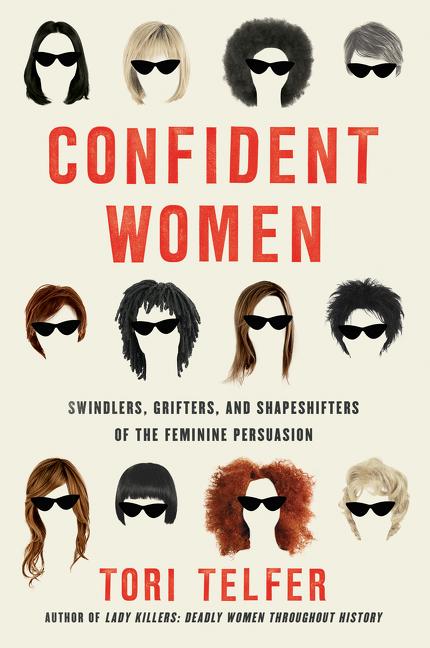
Want to know more about Tori Telfer and her work?
Check out her website: toritelfer.com
Listen to her podcast: criminalbroads.com
* * *
Come back tomorrow for three questions and an answer with Natalie Dykstra, talking about Isabella Stewart Gardner and writing biography.
* * *
If you’re interested in the process of writing and thinking about history, you might enjoy my newsletter, which comes out roughly every two weeks. The content is totally different from History in the Margins. In recent months I’ve discussed cliffhangers, the odd experience of reading history “in real time” in the form of old newspapers, the question of “first-naming” the subject of a biography, and , well, women photojournalists. (You can tell where my mind’s been lately.) If that sounds like your order of egg rolls, you can subscribe here: http://eepurl.com/dIft-b .(When you subscribe, you’ll get a link for a very cool downloadable timeline of the Roman emperors and the women who fought against them or supported them, which I created with the people behind The Exploress podcast.)