




History, Memory, and the First Moon Landing

Several years ago* I was at the Adler Planetarium with my youngest sister. We stopped and watched a video of the first moon landing. At the end, I turned to her and said “I don’t think I’ve ever seen this in color before.” She answered, “I’ve never seen this before.”
Not surprising. She was less than a month old at the time. (For the record, I had just turned eleven.)
As I write this the 50th anniversary of the first moon walk is almost upon us. I had intended to write about my memories of the moon walk. But when I sat down to write, I realized that my personal memories are about watching the moon walk, not about the event itself.
It was hot and sticky, as July days so often are in Missouri Ozarks. We were gathered in the living room, watching a small black and white television. The windows were open and a fan was blowing, because we did not yet have air conditioning. In my memory, it was afternoon—which suggests that I remember the landing rather than the walk itself. It’s possible that I have all the details wrong. (Except the heat and the humidity. That I’m positive about.)
If truth be told, I have far more vivid memories of earlier rocket launches. When they occurred on a school day, everyone in my grade school carried their chairs to the all-purpose room. Sitting in tidy rows, we watched the lead-up to the launch and then counted down with the television: 10. 9. 8. 7. 6. 5. 4. 3. 2. 1. BLASTOFF! My memory is hours of mind-numbing boredom ending with a few seconds of excitement.
Even in the case of those earlier launches, my memory is more about the experience of watching than the events themselves.
At some level, that is always what we remember about the big historical events that we did not actually participate in. The kind of event that punctuates our lives, that may even shape our lives from a distance, but in which we did not play an immediate role. No one asks you, “What happened when Kennedy was assassinated?” They ask, “Where were you when you heard that President Kennedy was assassinated? What were you doing?”
Those memories do not tell us about the event itself. But taken together, they tell us about the context for the event. How people reacted. Why it mattered. In short, they, too, are the stuff of history.
*And by several years, I mean at least twenty and possibly more.
__________________________
I’d like to give a shout-out to excellent works by two of my writer friends that look at the moon landing from slightly different and fascinating angles:
I Love You, Michael Collins by Lauren Baratz-Logsted is a middle-grade novel centered on the moon walk, as seen from the perspective of a 10-year-old girl whose family is falling apart. It made me laugh. It made me cry. And it made me think about the moon landing in a very different way. Highly recommended for adults as well as kids.
Erin Blakemore had the opportunity to interview Poppy Northcutt, the only woman who was part of Mission Control for the Apollo flights. It’s a good one: Inside Apollo Mission Control As Seen by the First Woman Engineer
Enjoy!
The Red Summer of 1919
I have long been familiar with the role that World War I played in the struggle for India’s independence from Great Britain. Indian regiments sailed overseas and fought alongside their Canadian and Australian counterparts. (If you visit the memorial gateway at Ypres, you will see how many of them died in defense of the empire.) Indian nationalists loyally supported the British government during the war, fully expecting that British victory would end with Indian self rule on the dominion model. Instead of self-rule, India got repressive legislation that resulted in the Amritsar Massacre.
Earlier this year, I was stunned to learn that a similar toxic combination of high hopes and racist backlash resulted in violence across the United States. Here’s the short version:
When the United States enter the war in 1917, African-American civil rights leaders responded to Woodrow Wilson’s call for national unity against the German threat. W.E. B. Dubois summed up their position when he urged African-Americans “while the war lasts forget our special grievances and close our ranks shoulder to shoulder with our own while fellow citizens and the allied nations that are fighting for democracy.
Almost 400,000 African American men who served in the war suffered from the same —— that they experienced at home. The four regiments of the all-black 93rd division who served in France, each assigned to a different French division, had the new experience of being treated as equals. The regiments served heroically at the front alongside the French, and were highly decorated for their gallantry in action.
When they came home in February 1919, members of the 369th Infantry, nicknamed the Harlem Hellfighters, were greeted with a victory parade down Fifth Avenue in New York. But the heroic welcome was short-lived. Black soldiers came home to an atmosphere of increased racial tension fueled by competition for jobs and housing, white fears of black upward mobility and black discontent with the state of civil rights. “We return from fighting,” Dubois wrote in May 1919, “We return fighting.”
From April through November, anti-black race riots broke out in cities across America, including Washington D.C. (The count varies from 25 to 50, depending on the source.) The number of lynchings nationwide increased: ten of the victims were African-American veterans, some of whom were lynched while in uniform. Given little support from law enforcement officers at any level, African Americans took up arms to defend themselves against lynchings, bombings, and riots.
The most dramatic violence occurred in Chicago. The city’s lakefront beaches were segregated, by custom if not by law. On July 27, an African-American teenager named Eugene Williams floated his homemade wooden raft across the invisible line into a “white” area on the South Side; he was stoned and drowned. The Chicago police refused to take action against Williams’ attacker, even though witnesses identified the man who had thrown the stones. Young black men took matters into their own hands. Young white men retaliated. For a week,* mobs battled in the streets. The Illinois militia were called in to restore order. The violence left 38 people dead—23 of them black. More than 500 were injured, two-thirds of them black. Hundreds of homes and small businesses burned to the ground on the South Side, most of them black-owned.
Like the Amritsar Massacre, the Red Summer of 1919** marks a historical shift. One worth remembering.
Want to learn more?
Check out this website created by Chicago’s Newberry Library as part of a year-long program surrounding the Chicago riots in the Red Summer of 1919* Personally I’m tempted by the Bughouse Square section on July 27.
*Or maybe thirteen days.
**The name was coined by James Weldon Johnson, the field secretary of the NAACP.
Little Orphan Annie Goes to War
I’m at the research stage on a couple of new potential projects. (Sorry to be vague, but they are both too fragile to share any details yet.) For one of them, I’m trying to get a handle on the experience of children during World War II in the United States.
One of the things I’m doing is looking more closely at the things we all think we know about life on the home front. I started with scrap drives, which led me unexpectedly to Little Orphan Annie.
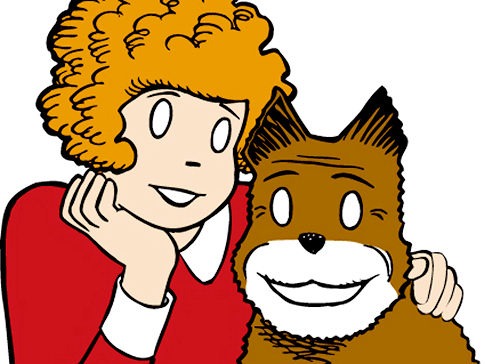
Harold Gray, the creator of Little Orphan Annie, had always found the themes for his comic strips from the headlines. World War II was no different. Daddy Warbucks geared up for war production and joined an unidentifiable army as a 3-star general. Annie and her little dog fought on the home front, foiling Nazi submarine attacks, taking down spy rings, and looking for corruption in local rationing boards.*
Annie most important wartime action, and the one with real life consequences, was the formation of the Junior Commandos: a way for children to contribute to the war effort. “Colonel Annie” explained how the Junior Commandos worked. She had a ledger with the names of everyone in the town. People who gave scrap got a blue mark beside their names. People who hired Junior Commandos to do small jobs, allowing children to earn money to buy war stamps, got a red mark. And people who did not support the Junior Commandos? Colonel Annie’s response was scornful: “If they won’t even try to help when our country needs th’ help o’ everyone? Why that’s easy—for them we use a yellow mark!” (Little Orphan Annie was never a subtle comic strip.)
Children around the country organized Junior Commando chapters and set out to collect scrap materials for the war production effort. Thousands of children participated: by the fall of 1942, the Boston Herald Traveler reported almost 20,000 Junior Commandos were enrolled in the Boston area alone.
The Junior Commandos weren’t the only groups of children that collected scraps. The War Production organized a school-based Junior Army. (Some of those units chose to call themselves Junior Commandos.) Scout troops and churches also pitched in.
It’s not clear how much good scrap collection did in terms of war production. With the exception of kitchen grease, which could be processed into glycerin and used in explosives, the technology for reusing scrap was expensive and inefficient. But there is no doubt that scrap drives were good for moral. As Annie told some neighborhood girls who were giving her a hard time about not having time to play, “Loretta an’ I have something lots more important than playin’. We’re doin’ war work. It’s our war, just as much—or maybe more—than anybody else’s.”
If you have family anecdotes about kids collecting scrap in World War II or know where I can find out more about the Junior Commandos, please let me know.
*This last was not a piece of pure-hearted patriotism. Gray was involved in a flap with his local board over their refusal to allow him extra gasoline coupons. For some reason they did not find agree with his claim that drawing Little Orphan Annie was vital war work and that he needed to travel to collect material. Many readers were not amused by his perceived attack on government war policy and at least one paper refused to run the strip was a result.