




Madame Demorest, Women’s Magazines, and Fashion

In the mid-19th century, Ellen Curtis “Madame” Demorest (1824-1898), aided by her husband William, created a fashion and media empire in New York built on the growing magazine industry and the aspirations of middle-class women who wanted to reproduce current French couture at home, something that was previously only available to the wealthy.
The connection between women’s magazines and fashion wasn’t new. Godey’s Lady’s Book, for instance, which was published from 1830 to 1896 and was the most widely circulated magazine before the American Civil War,[1] was best known for the hand-tinted fashion plates at the front of each issue. Those plates gave women not only a glimpse of what was fashionable, but measurements and patterns.[2]
Madame Demorest leaned into that connection and expanded it. In 1860, the Demorests opened their first shop, on lower Broadway in New York: Madame Demorest’s Emporium of Fashions. Soon thereafter, they began to publish fashion magazines. The first, and the jewel in their publishing crown, was Mme. Demorest’s Mirror of Fashions, which they described as “The Model Magazine of America.” It started out as a quarterly magazine. Five years later it was successful enough to be published monthly. Eventually the couple published five separate publications, with a combined circulation of more than one million.[3]
Each issue included “Splendid engravings, Original Music, Mammoth Fashion Plates, Entertaining Poems & Stories,[4] Valuable Recipes, Full Size Fashionable Patterns & Other Valuable Novelties.” The back of the magazines were devoted to advertisements, most notably ads for Madame Demorest’s eponymous beauty products: “Mme. Demorest’s Everlasting Perfume,” “Mme. Demorest’s Lilly Bloom for the Complexion,” “Mme. Demorest’s Self Tucking Attachment,”[5] “Mme. Demorest’s Spiral Spring Bosom Pads,”[6] and “Mme. Demorest’s Superior French Corsets.” No matter what your beauty needs, Madame Demorest had you covered–and the magazines were the vehicle for telling you so.
The “Full Size Fashionable Patterns” proved to be the most important part of Madame Demorest’s business. She was probably the first to mass-produce paper dress patterns and sell them directly to customers, using a mathematical system she called the “Excelsior Dress Model” to print different sizes on one pattern. The patterns were included as fold-outs in the magazine, but sales agents also sold “Mme. Demorest’s Reliable Patterns” in cities throughout the United States. They were so popular that the instructions were printed in French, Dutch, Portuguese, German and Spanish as well as English. In 1876, they sold three million patterns through 1500 agents.
The success of the pattern business depended on that of another American innovator, Isaac Singer, whose domestic sewing machines were becoming a staple in American homes.
Demorest was an advocate for women in business as well as a fashion arbiter. Building on her own experience,[7] she urged parents to “teach your daughters some remunerative business. Select for them as you do your sons.” She set off the nineteenth century equivalent of a flame war in 1868 in the Letters to the Editor section of the New York Times when some luckless man dared to opine on “Women’s Work and Wages”—her first response began “Inasmuch as you are not a women, and do not, to any extent, employ women, allow one who is, and does, to reply…” Later that same year, she joined journalist Jane Cunningham Croly in creating the first professional women’s club in New York, after women journalists were barred from attending a reception for Charles Dickens given by the New York Press Club.
There is some disagreement as to whether Madame Demorest or Ebenezer Butterick was the first to mass-produce paper patterns. The timing as I read it leans toward Demorest, but Butterick patented his system and Demorest did not. Guess whose name we remember?
[1] Not the most widely circulated women’s magazine. The most widely circulated magazine. It is easy to dismiss publications for women as somehow lesser than general interest publications.
[2] It is only fair to point out that Godey’s Lady’s Book, like women’s magazines today, was not devoted solely to beauty and fashion. It published stories by men and women, including Edgar Allan Poe, Washington Irving, and Frances Hodgson Burnett. The magazine advocated for education for women and included a regular section titled “Employment for Women” that discussed women in the workplace. And its editor, Sarah, Hale, used it as a platform for her campaign to make Thanksgiving an official holiday. But I digress.
[3] At its height, Godey’s Lady’s Book had a circulation of 150,000.
[4] Including stories by Louisa May Alcott and Julia Ward Howe
[5] Apparently an attachment for sewing machines making it easier to sew tucks, not a better way to keep your shirtwaist tucked-in.
[6] I must admit to curiosity about the spiral spring. The image that came to mind has a Wile E Coyote feel to it, complete with “boing”. The drawing that accompanies the ad did nothing to dispel that since it looks like there is indeed a spiral spring inside the pad. Ouch!
[7] She opened her first business, a successful hat shop, at the age of eighteen—with a little help from her father who owned a men’s hat factory. She ran it until she was 34, when she met and married William Demorest and swept the widowed owner of a dry-goods store into a fashion empire.
History on Display: The National Civil Rights Museum
Because we are heading into the Martin Luther King holiday weekend here in the United States. I thought it was an appropriate time to re-run my post on our visit to the National Civil Rights Museum in Memphis in the spring of 2024. It turns out that I didn’t write one. With questions of institutionalized violence, resistance, and civil rights in the headlines and in our hearts I still think it’s the right subject for today’s post, so I’m going to have to dig back into my notes/memory to tell the story I should have written then.

The National Civil Rights Museum, built around the Lorraine Motel where Dr. Martin Luther King Jr was assassinated, is rightly described as a sacred space. The exhibits use a brilliant blend of space, light, music and photographs to immerse viewers in familiar stories–the Montgomery bus boycott of 1955, the student sit-ins of 1960, and the freedom rides of 1961— and those less well known. (Perhaps only less well known to those of us who were not directly affected by the events or the need for them.) The museum ends with the room in which Dr. King died–the atmosphere when we were there was reverent.
I strongly urge you to visit the museum if you have the chance. I came away both proud of those who fought for civil rights and ashamed that the need had existed.
Beulah Henry, aka “Lady Edison
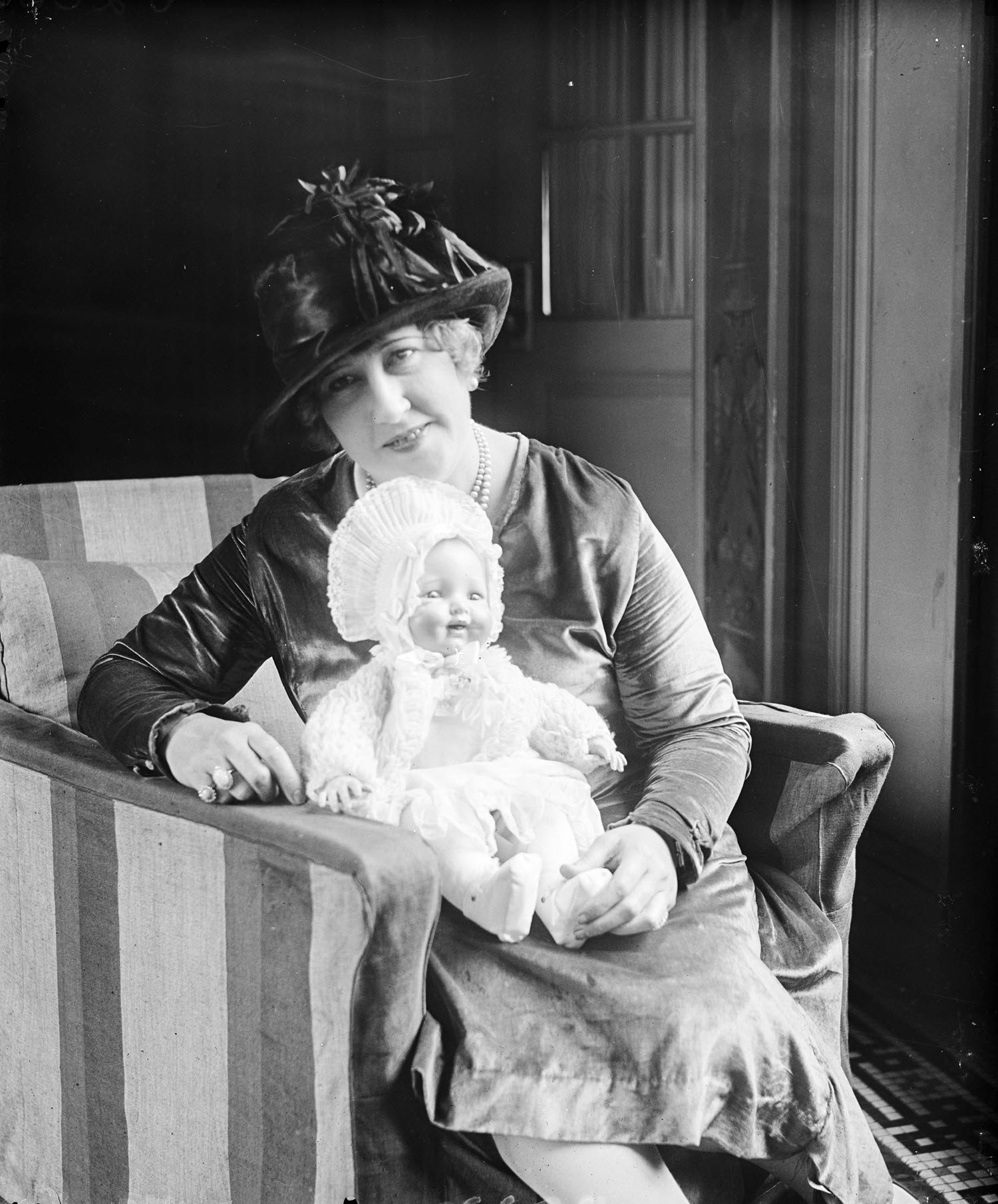
Beulah Louise Henry (1887-1973) was one of the most prolific inventors of the 20th century, although she had no training in mechanics or engineering. She became known as “Lady Edison” for the number of inventions she produced. None of them were big or world-shaking. Instead she invented children’s toys and devices that made daily life easier.
She created her first prototype for an invention when she was nine: a belt with holder attached that made it possible to read a newspaper when your hands were full. As with many of her later inventions, it was the result of observing a problem—in this case seeing a man struggling to read a newspaper while carrying his groceries.—and looking for a solution.

Patent drawing for her ice cream freezer
Henry received her first patent in 1912 for a vacuum sealed ice-cream freezer that needed very little ice to work—a major improvement since ice was in short supply before freezers became widely available for home use. A year later, she received patents for a handbag and an umbrella with interchangeable covers, allowing a woman to coordinate them with her outfits (Which sounds like a nuisance to me.)
Creating the invention and getting the patent was the easy part; getting someone to make her inventions was harder. In 1920, Henry and her parents moved to New York from their home in North Carolina to give her access to model makers, patent attorneys and retailers.
After Henry pounded lots of pavements and knocked on lots of doors, she founded her own company to make her parasol. Despite all the men who had said it wouldn’t work and wouldn’t sell, the product became a success and her rate of innovation picked up.
Henry focused next on toys, drawing her inspiration in part from watching children in New York’s playgrounds. Among other things, she created a core structure of springs made stuffed toys more flexible and durable, a spinning top to replace dice in board games and the ““Kiddie Clock” which helped children learn to tell time.
From toys, she moved to typewriters. Her first typewriter patent was the “protograph,” a device to attach to a typewriter that produced four copies without messy carbon paper. As was often the case, the final product seemed simple, but the engineering challenge was complex. The device had to work smoothly with hundreds of typewriter models that were on the market, as well as standard paper and ink ribbons. Henry received another twelve patents for improvements to typewriters. She then created the first bobbinless sewing machine, aimed at commercial rather than domestic seamstresses.
Throughout the 1920s and into the 1930s, Henry and her team averaged more than two patents a year. In 1941, when the United States entered the war, Henry put her patent development process on hold and joined a machine shop as part of the war effort, where she directed her innovations to the question of material shortages
When reporters interviewed her about her successes, “Lady Edison” told them she just looked at something and though “There’s a better way of doing that.” By the end of her career, Henry held a total of 48 patents—she received a 49th posthumously. Far more patents than any other woman at the time. She is credited with over 100 inventions.