




From the Archives. Talking About Women’s History: Three Questions and an Answer with Dava Sobels
Every year I gather up my courage to invite at least one writer whom I do not know and whose work is extraordinary. This year that writer was Dava Sobel. I fan-girled all over the house when she said yes.
Dava Sobel is the author of Longitude (Walker 1995, Bloomsbury 2005), Galileo’s Daughter (Walker 1999 and 2011), The Planets (Viking 2005, Penguin 2006), A More Perfect Heaven (Walker/Bloomsbury 2011 and 2012), And the Sun Stood Still (Bloomsbury 2016), The Glass Universe (Viking 2016, Penguin 2017) and The Elements of Marie Curie (Grove/Atlantic 2024). She has also co-authored six books, including Is Anyone Out There? with astronomer Frank Drake, and currently edits the “Meter” poetry column in Scientific American.
Take it away Dava!

Image credit: Glen Allsop for Hodinkee
How do you choose subjects for your books?
Choosing a subject for a book is a little like choosing a romantic partner. You’re going to be alone in a room together for a long time, through periods that will feel dark and discouraging, so it helps to really like or even love the topic. I can honestly say that I’ve fallen in love with all the people I’ve written about — or with the story their lives embody. Mme. Curie, the central figure of my most recent book, proved to be the perfect pandemic companion. Her grit had seen her through griefs and challenges far more threatening than any aspect of my situation, and I took inspiration daily from her example.
Of course there has to be science in the mix to attract me. Real chemistry, say, or the dawn of astrophysics. I enjoy learning about and then trying to explain aspects of science as a creative human enterprise. Everyone knows that scientists “do research,” but most people have no idea what such research might entail, or how it would feel to be the scientist at work in this laboratory or at that observatory.
Because I write about the history of science, and can’t interview the long dead, I rely on archives for letters and diaries. If those kinds of materials don’t exist, or they’re written in a language I can’t read, then I consider that topic out of reach. Sometimes the existence of such a trove is reason enough to take on a book project, as happened when I learned that Galileo’s elder daughter, who was a cloistered nun, had written her supposedly heretic father more than a hundred letters that still survived. I felt that familiar rush of excitement, and figured I could probably revive my three years of university-level Italian, despite the lapse of three decades. The fact that Galileo’s replies had vanished over the centuries seemed problematic at first, but he’d said enough in other contexts to carry his end of their conversation.
The Curie archives were physically out of reach because of travel restrictions during the pandemic. Fortunately, however, the fact of Marie’s fame as a two-time Nobel Prize winner, coupled with the dangerous nature of the materials she handled, had resulted in the digitization of nearly every notebook and draft letter, including the hand-written grief journal that she kept through the year following her husband’s death. The letters to and from her two daughters had been collected and published as books, so I had all of those at hand as well. The Elements of Marie Curie is a particularly female story — a tale of scientific discovery, yes, but also of love and marriage, childbirth, miscarriage, difficulty nursing, misogyny, and widowhood.
What is the most surprising thing you learned doing research for your books?
By far the most surprising — even shocking — thing was the discovery of my own misogyny. This happened rather late in my career, and explains my decision to tell only women’s stories going forward. Of course, as a woman, I didn’t think I could be accused of misogyny, but I was wrong.
I learned this while writing my previous book, The Glass Universe, which tells the story of a group of women who worked at the Harvard College Observatory in the late 19th and early 20th centuries, where they made pivotal discoveries in astronomy. I had written about many key figures in the history of astronomy, including Galileo and Copernicus, and the story of the Harvard women appealed to me precisely because it focused on female astronomers. However, once I got to work, each one’s achievements surprised me. And why was that? At length I had to admit that I’d come to them with embarrassingly low expectations. It seemed I didn’t really believe women could do science. In spite of the encouragement I’d enjoyed from my own family, at school, and through decades as a professional science writer, I had not escaped the negative attitudes about women that were “in the air” when I was growing up in the 1950s.
After that transformative moment of confronting my latent undiagnosed misogyny, all I wanted to do was tell true stories that reveal women’s scientific prowess. When I learned that some 45 women had spent a formative period in Mme. Curie’s lab, I knew I had something new and important to say about her.
Two of your books, The Glass Universe and The Elements of Marie Curie, are group biographies. How did you decide which women to include?
The Harvard Observatory women numbered in the dozens, but only five of them achieved lasting fame (at least in the astronomical community) for their contributions. Still, five main female characters are a lot, plus the charismatic director who hired them, and the two wealthy heiresses who funded their research. I longed for one stand-out who could carry the whole story, but she didn’t exist. Eventually it struck me that the several hundred thousand glass-plate photographs of the night sky, which replaced direct observation by telescope for these women, connected everything and everyone in the story. That gave me the idea for the title, since the collection of plates is truly a “glass universe.” And of course the glass universe — very fittingly — encompassed the notion of the glass ceiling. In fact, the association is so strong that people often call the book “The Glass Ceiling” without realizing they’ve misspoken.
I had the opposite problem with Mme. Curie. She is a figure of such towering fame that nearly everyone has heard of her. Although she was never the only woman scientist, she’s the only one most people can name. My initial idea was to put her in the background of the narrative. Since the women arrived at the lab in a slow trickle at first, one per year, I thought I’d treat each one individually, moving chronologically and bringing in the facts of Mme. Curie’s life only as they related to her protegees’ experiences. That didn’t work at all. My editor, George Gibson, reminded me that although virtually everyone knew Mme. Curie’s name, her name was all they knew. Her personal story had to be the vehicle that carried all the others’ stories.
As with The Glass Universe, an inanimate character also figures in this book. It’s the periodic table of the elements. Each chapter title has two parts: the name of a person (usually a woman in the Curie lab, though occasionally a man) and the name of an element relevant to that person’s work.
My choices of individuals to feature depended partly on the importance or interest of their activities and partly on the amount of available information about them. Some of Mme. Curie’s female assistants flitted through the lab so quickly that they left no historical record, not even their full names. I’m still wondering whatever happened to the mysterious “Mlle. Larch.”


A question from Dava: Is Women’s History Month a good thing or a bad thing? Please elaborate.
I struggle with this question every March. And every March, my answer remains the same. It is neither good nor bad. But for now it is necessary. In fact, I would argue that it is more necessary than ever. As I write this, Federal agencies are ordering celebration of “cultural awareness” months paused or cancelled altogether. (Perhaps by the time you read this those orders will have been rolled back. We can only hope.)
In the meantime, I intend to celebrate Women’s History month as hard as I can. The fact is that many libraries, museums, and particularly schools only include women in their programming in March. Until we regularly teach students that women were involved in, well, everything, we need Women’s History Month.
Let’s party hard!
***
Interested in learning more about Dava Sobel and her work? Check out her website at http://www.davasobel.com/
***
Come back tomorrow for three questions and a answer from novelist Della Leavitt.
From the Archives: Talking About Women’s History and Overnight Code with Paige Bowers
This one dates from 2021. I was glad to pull it out and read it again.
***
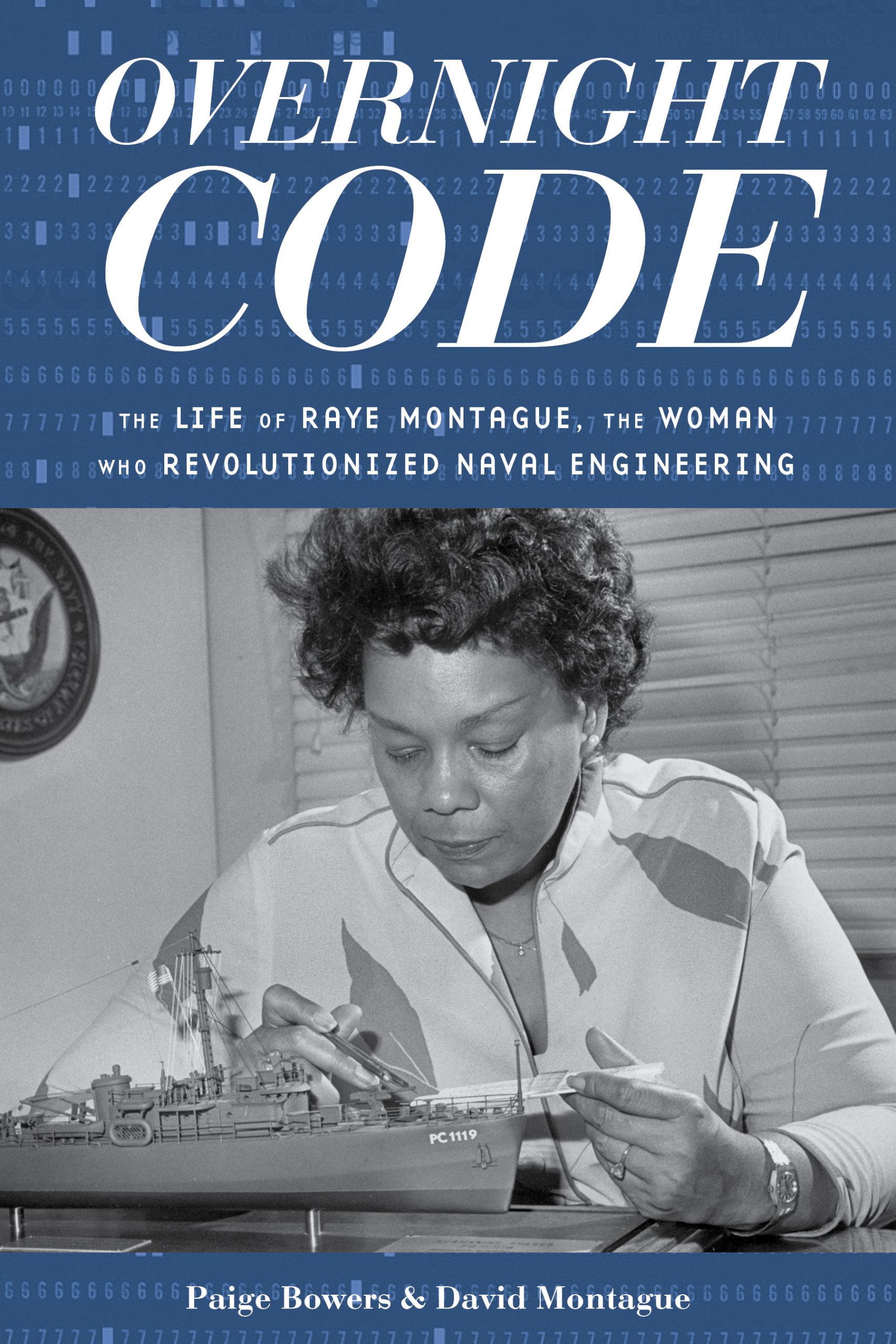
I’ve been waiting to read Paige Bowers’s Overnight Code, the story of groundbreaking computer engineer and ship designer Raye Montague, ever since Paige announced the deal more than a year ago. When I finally got my hands on it, the book more than lived up to my expectations. Overnight Code is an important addition to the growing genre of works that give voice to important and largely forgotten women of science. It is also a powerful and inspiring story of a woman who refused to be stopped by the dual challenges of racism and sexism in the largely male, largely white world of the early days of computer science.
I am pleased to have Paige back here on the Margins to talk about the book and how she wrote it.
How did you come across Raye Montague’s story? Was your experience of writing her story significantly different that writing about Genevieve De Gaulle, who was the subject of your previous book?
My agent saw Raye on a “Good Morning America” segment and approached her about writing her memoir, which had been something people had been telling her she needed to do for a long time. Her son, my co-author, David, was going to help her write it, but one thing led to another and my agent approached me about getting involved. I was a huge fan of Hidden Figures, so the opportunity to help Raye tell her little-known story was really appealing to me. Unfortunately, she passed away right as the proposal for her book found a home, so I went from working with her on her memoir, to working with David on what would become a biography. The experience was significantly different from my previous book for a variety of reasons: 1. I actually had the opportunity to interview Raye, which was not possible with Genevieve de Gaulle, who had long since passed before I thought to write her about her. So that helped me get more of a sense of who Raye was, how she spoke, what her personality was like, and so forth; 2. David was a fantastic partner in this because he very generously mailed me his mother’s personal papers, dug up people for me to interview, and was a constant sounding board from beginning to end; and finally 3. I’m typically a pretty anxious person, but when I sent this off to my editor, I was far more at peace with the end result of this book than I was with my first. David and I are very, very excited to introduce his mother to readers!
Overnight Code straddles the boundaries between memoir and biography. How did you navigate that?
You know, I hadn’t really thought about that until now! I suppose it worked out this way because in the beginning it was supposed to be a memoir, and I spent a lot of time listening to Raye tell stories, and was doing what I could to capture her cadences and her indomitable personality on the page. After she passed, I knew the writing voice needed to shift, and there needed to be more reporting and research to counterbalance what she said. By the same token, I didn’t want to let go of the fiery spirit that I had begun to capture. It is what made her so beloved by so many people, and I felt like it was what was driving the narrative chapter to chapter, making events from decades ago still feel so alive and fresh.
There is a significant STEM component to Raye’s story, but you make it easy for a non-technical reader to understand. How much did you have to learn to about the technical aspects of her story? And how hard was it? ( I assume you didn’t already have a background in early computers and ship design.)
Dirty little secret: I was not the best math and science student, so I realized that learning about early computers and ship design was the first and most important thing I needed to do. It was a pretty steep learning curve. I had a general idea of the early computer part, but I was able to interview Raye about her experience, as well as some of her former colleagues to get more detail about how that technology worked. David sent me some of his mother’s books about ship design, so that helped me get a better sense of how it developed over time, and how computers were brought in to make the process faster and easier. I interviewed another former colleague of hers to fill in some of the gaps, and he was so good, and made things so clear to me, I felt confident that I could write about it in a way that was easy to understand. [Pamela here: She succeeded.]
You do an excellent job of placing Raye’s story in the context of both the civil rights movement and the women’s movement in the late 1960s and early 1970s. Did anything about her experience of discrimination take you by surprise, or particularly outrage you?
Thank you! She was definitely an extraordinary woman living through an extraordinary moment. I am not sure if I was surprised by her experiences with discrimination, but I was certainly disgusted with the ways in which she was treated with such disrespect because of her color and gender. The saddest part about it is that she went back to be honored by the navy maybe a decade or so after her retirement, women told her that they were still experiencing some of the discrimination she faced.
One of the questions I’m fascinated with right now is how biographers name their subjects, particularly when writing about a woman. Can you explain why you chose to use Raye’s first name throughout the book?
I think a lot of it boils down to intimacy. I wanted readers to feel close to and be on a first name basis with this little-known woman who lived a big, bold life. But I also think it speaks a bit to Raye, who didn’t want to be called Mrs. Montague, or for me to “Yes ma’am” her. She wanted to be known as Raye, and as a person, not a gender. It was difficult for me to get my head around that when I first began interviewing her. My Southern mama raised me with some pretty old school manners. But from the outset, Raye told me to call her “Raye,” and in doing that, she pulled me close and told me all about her life and times. It was a tremendous honor, one I’ve never taken lightly.
What would you like readers take away from the book?
David and I want people to be inspired by this woman who followed her dreams and didn’t take no for an answer. Having your dreams come true is no straightforward, fairy tale thing. It involves preparation, determination, occasional heartbreak, shifted gears, and ultimate triumphs. Persistence is key. So is resilience. Just look at Raye’s life and you’ll have all the proof you’ll need!
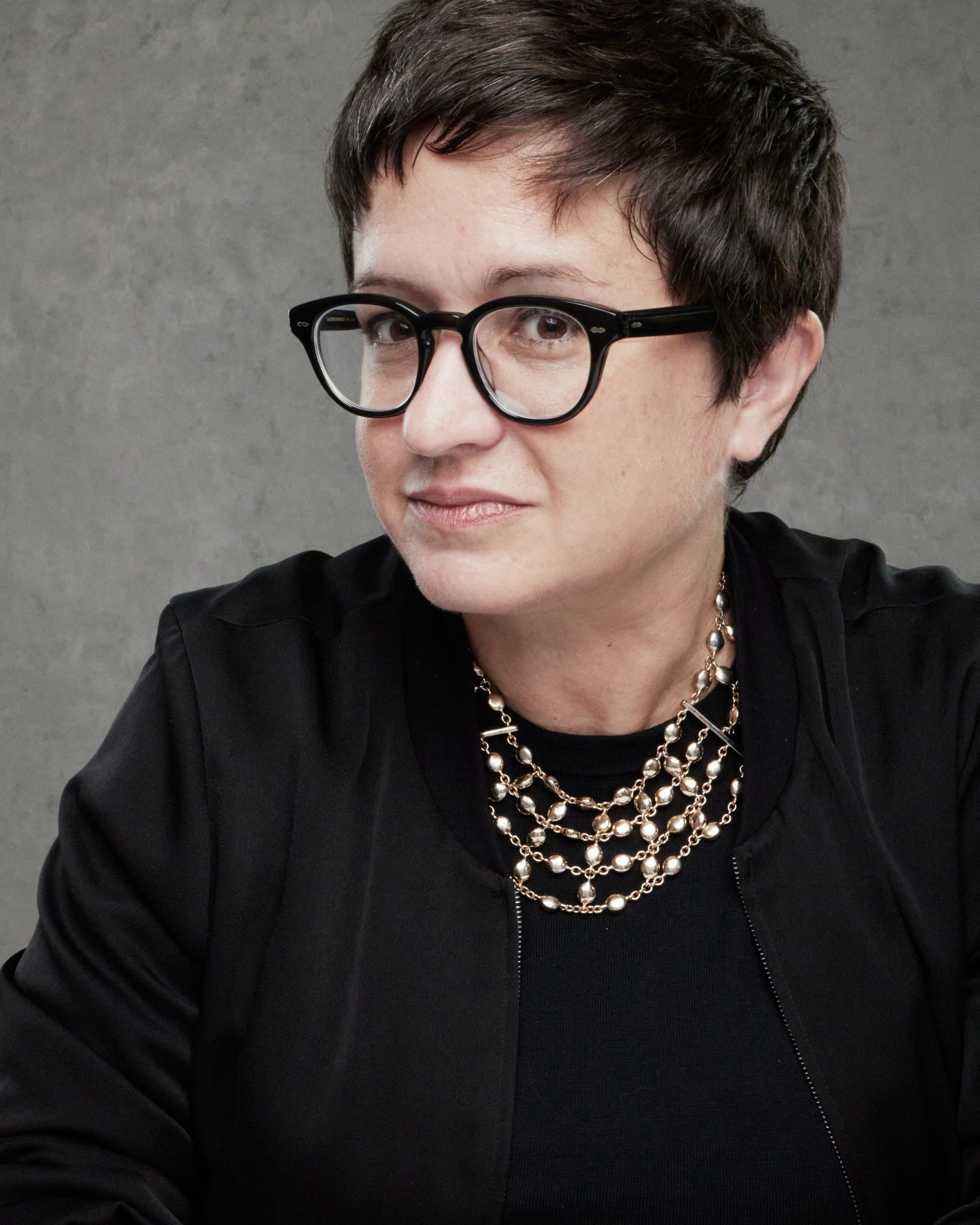
Paige Bowers is the author of THE GENERAL’S NIECE: The Little-Known de Gaulle Who Fought to Free Occupied France. For the past couple of years, she has been working closely with Hidden Figure Raye Montague’s son, David, on the story of how his mother engineered her way out of the Jim Crow South to become the first person to draft a Naval ship design by computer. That book, OVERNIGHT CODE: The Life of Raye Montague, the Woman Who Revolutionized Naval Engineering, now available wherever you buy your books. .
Paige is a nationally published news and features writer whose work has appeared in TIME, USA Today, The Wall Street Journal, The New York Times, People, Allure, Thomson Reuters, Glamour, Pregnancy, The Atlanta Journal-Constitution, Atlanta Magazine and Palm Beach Illustrated.
A lifelong Francophile, Paige earned a master’s degree in Modern European history from Louisiana State University in 2012, and has taught French history classes for LSU Continuing Education. She is represented by Jane Dystel of Dystel, Goderich & Bourret, L.L.C.
***
Want to know more about Paige Bowers and her work?
Check out her website: http://www.paigebowers.com/
Follow her on Instagram
***
Tomorrow it will be business as usual here on the Margins with a blog post from me.
From the Archives–Talking About Women’s History: Three Question and an Answer with Lydia Moland
Like all historians, I enjoy a dip into the archives!
***
Lydia Moland is the author of Lydia Maria Child: A Radical American Life, a biography of one of 19th-century America’s fiercest abolitionists. She is the John D. and Catherine T. MacArthur Professor of Philosophy at Colby College in Maine and the author of books and articles on 19th-century German philosophy. Her work on Lydia Maria Child has appeared in the Wall Street Journal, the Washington Post, and the Boston Globe, among other venues. She is the recipient of grants from the National Endowment for the Humanities, the ACLS, and the American Academy in Berlin. The best thing she did on her last sabbatical was to take trapeze lessons. [Pamela here: That sounds like so much fun!]
Take it away, Lydia!

What path led you to Lydia Maria Child? And why do you think it is important to tell her story today?
I had been happily writing academic books about German philosophy before the 2016 election. At that point, I decided that I wanted my scholarship to reflect our new national reality, and I went looking for wisdom from an American woman who had faced a moral emergency in her country. I literally went to the Schlesinger Library at Harvard, which has an incredible collection of women’s history, and asked the librarians if they knew of any women philosophers who had also fought against slavery. Their help led me to discover Lydia Maria Child, one of the foremost abolitionists of the 19th century. Child’s example stunned me. Once convinced of the evils of slavery, Child took stock of her abilities and dedicated them to helping her country live up to its principles. Her primary talents were as a writer, so she wrote fiction, nonfiction, histories, biographies, and self-help books, all with the express purpose of cultivating democratic virtues. But she did not only write. She assisted those escaping slavery and faced down mobs of proslavery agitators. She organized antislavery fairs and raised money for freedpeople. She edited a national abolitionist newspaper, used her connections to support Black artists and authors, and farmed sugar beets in an attempt to undermine the value of cane sugar grown on plantations.
If people know anything about Child, they know that she wrote “Over the River and Through the Wood.” I was intrigued (and simultaneously somewhat enraged) by the fact that someone famous for a sentimental Thanksgiving poem was actually a radical reformer. I decided more people needed to learn more from her example, so I wrote Lydia Maria Child: A Radical American Life.
Child’s story is so important today because she is a brilliant example of someone who recognized her responsibility for her country’s democracy and met that responsibility at every turn. There were very dark times: times when it seemed the country was sliding further into authoritarianism and all hope was lost. Child also survived a decade of disengagement and depression after her editing of a national abolitionist newspaper ended in ruined friendships, an estranged husband, and a conviction that her life had been for nothing. She learned through bitter experience that pursuing political change requires us not just to take stock of our talents but to understand our limits. This knowledge enabled her, after this period of depression, to reengage and keep fighting for the rest of her life. I think this is a vital example for all of us today.
Your previous work focused on 19th century German philosophy. What was it like to write about a 19th-century female activist instead?
I had a fundamental insight going into this project that in order to devote yourself to ending a systematic evil at your country’s core, you would have to be thinking philosophically. That is: you would have to be asking big questions like “What is justice?” or “What is truth?” or “What does it mean to be human?” You’d have to have some deep underlying commitments that would sustain you when things got hard. And you’d have to make good arguments: to listen to people, understand where they were coming from, and then convince them to change their lives. Child was not officially a philosopher—she wouldn’t have been allowed to be, given her gender—but she was inspired by German philosophy, and she certainly thought philosophically. She asked big questions; she had deep underlying commitments; and she was a champion at helping her fellow white Americans see that the arguments that enabled them to condone or ignore slavery were flawed.
Someone once said that no real social change happens without philosophy, and I think that’s true. Philosophy has always been an enormous source of strength to me, including in my political engagements. As we confront social crises from climate change to racial injustice to growing threats to women’s rights, I think we can all benefit from the example of someone like Child.
What are you working on now?
Two things: one, together with Alison Stone of Lancaster University, I am editing the Oxford Handbook of American and British Women Philosophers in the Nineteenth Century. We were educated to think that there were no women philosophers in the nineteenth century. But once we started looking, they were everywhere. They had been erased or forgotten in all the ways with which we are now familiar. If we assume they were not there, we do not look for them. If we do not look for them, we do not find them! Our volume has 50 chapters bringing these amazing women back into the light. [Pamela butting in again: This is such a familiar, enraging story.]
And I have definitely been bitten by the biography bug! I have started work on the life of Helene Stöcker, a radical German feminist and pacifist who had to flee the Nazis in 1933. Stöcker was the first German woman to earn a PhD in philosophy. She used the radical thought of Friedrich Nietzsche (despite his famous and blistering misogyny!) to claim that society’s values needed radical reevaluation. She used this insight to attack norms that held women back; she also used it to challenge her society’s assumption that war could be justified. But she did not only theorize. Stöcker founded clinics for unwed mothers to give birth and homes for them to live. She organized seminars advising women on sexual health and petitioned the government to provide paid leave for new mothers. After World War I, she organized internationally for peace, collaborating with Albert Einstein and others in the hopes of preventing another war. When this failed, she escaped via the trans-Siberian railroad across Russia and took a steamer to San Francisco. It is a life of principle and adventure, and I am excited to get started!

A question from Lydia: Your book The Dragon from Chicago is also about a woman who, like my new biographical subject Helene Stöcker, lived and wrote in Berlin in the early 1900s. (Stöcker was also a well-known author, so I am sure they knew of each other!) Both women tried to warn their readers about rising fascism. How did you manage the emotionally draining aspects of writing about such dark times? Do you think about lessons for us today about how to encourage readers to do what’s necessary to resist political oppression?
First, let me say, it was indeed emotionally draining. One of the first things I did was read all of Sigrid Schultz’s by-lined articles in chronological order, from a fluffy little piece about her first visit to Paris after World War I, written in 1919, to a retrospective article on identifying Hitler’s body after the war, written in 1968. Reading the news day-to-day as the Weimar republic crumbled and the Nazis seized control was powerful and distressing, especially when the news then seemed all too similar to the news in 2020.
I found the best way to manage the emotional stress was to step away from the grim and dark in my down time. I chopped a lot of vegetables. I knitted simple things—knit four, purl four, repeat. I read a lot of genre novels–science fiction, fantasy, mystery, and romance were all fair game as long as they were not set in Nazi Germany.(Horror, not so much.) I ignored the many many people who told me I really needed to watch Babylon Berlin or World on Fire—sorry, folks, those were the last things I needed to watch. (Though I did indulge myself with a couple of seasons of Wonder Woman. Watching Lynda Carter kick Nazi butt in every episode was deeply satisfying.)
But giving myself downtime was not the same as hiding my head in the sand. I also spent a lot of time thinking about the ways in which Sigrid Schultz stood up to the Nazis , and wondering whether I would be as courageous as she was. Over and over I came back to her own assessment of the work she did: “The greatest service we could render our country was to try to marshal the facts as they were and not as propagandists tried to make them appear.” As a historian, that’s my assignment.
***
Interested in learning more about Lydia and her work?
Check out her website: lydiamoland.com
If you have access to the Wall Street Journal, read this review of Lydia Maria Child: “An Abolitionist is Born” (Pay wall, alas!)
Follow her on Bluesky: @lydiamoland.bsky.social
Read this piece about her new research on the feminist and pacifist Helene Stöcker
***
Come back tomorrow for three questions and an answer with–someone!