




From the Archives–Talking About Women’s History: Three Questions and an Answer with Sara Catterall
Another post from the past!
***
Sara Catterall and I have been following each other around the internet since we met as reviewers for Shelf Awareness, a shockingly long time ago. I’ve been looking forward to her biography of Amelia Bloomer ever since she began posting about it. As you’ll see below, bloomers were only a small part of Bloomer’s life.
Sara is a writer with a Drama degree from NYU, and an MLIS from Syracuse University. She was born in Ankara and grew up in South Minneapolis. She has worked as a librarian at Cornell University, as a reviewer and interviewer for Shelf Awareness, and as a professional book indexer. Her work has been published in the NEH’s Humanities magazine and The Sun, and she co-authored Ottoman Dress and Design in the West: A Visual History of Cultural Exchange. She lives with her family near Ithaca, New York, serves on the Executive Board of Buffalo Street Books in Ithaca, and is a member of Biographers International.
Take it away, Sara!

Photo credit: Edna Brown
Many of my readers will recognize the name Amelia Bloomer. Are there particular challenges in writing about women who people think they know something about?
I think that her name recognition helped me more than challenged me. I was first inspired to look up more about her because of it. Once I realized there was much more to her career, I kept a file of misinformation about her starting in 1851 right up to the current news. And I thought a lot about what those wrong ideas served, and why on earth people are still repeating them after so long. Why she comes up more often than some of her much more influential or scandalous peers. Also, though that viral incident of the “short dress and trousers” is far from her whole story, it does echo through her life. And they make a great hook! Even when people haven’t heard of Bloomer, they have heard of bloomers.
The thing most of us know about Amelia Bloomer is her championship of “rational dress” in the form of the “bloomers” that came to bear her name. How did dress reform fit into her larger career as a suffragist and social advocate?
In the more general sense of her advocacy for women’s personal and political freedom. She never considered dress reform one of her primary causes. She came to it by way of alternative medicine. Bloomer was chronically ill herself, with serious GI issues and daily headaches starting in her youth, possibly because of a bad bout of malaria, and possibly because of the mercury treatments that were common at that time. Tight clothes are fine when you’re healthy, but if you aren’t, and a lot of people had uncurable chronic ailments in the 19th century, switching to loose clothes can give some relief. “The Turkish dress” had been worn by white women since the 18th century as a political statement and for exercise and leisure, and was considered a feminine alternative to the clothing men wore. Also, in the 1840s, women’s clothing was not just tight, it was heavy and the hemlines trailed on the ground, which made it hard to work or walk in. Bloomer gave up corsets before she put on “the Turkish Dress” and she blamed her sister’s postpartum death on burdensome clothing. She was also known for walking so fast everywhere that her own husband, who was nearly a foot taller, could barely keep up with her. So the short dress and trousers appealed to Bloomer and her friends, and to other women who wore it before she did, for their physical comfort and freedom, without giving up modesty. You had to be a nonconformist, that’s for sure, but some women who wore it were not in favor of woman suffrage, and some women who kept wearing long skirts, were.
What is the most surprising thing you found doing research for your work?
So many! But one was how broad-minded Bloomer was about gender expression through clothes, given that she was born in 1818 and had a conservative rural upbringing. She had no problem with the idea of men wearing “women’s clothes” if they found them comfortable and liked them. Another was her clash with Frederick Douglass, and her friends Elizabeth Cady Stanton, and Susan B. Anthony, over the question of allowing men to be controlling officers in the one-year-old New York Women’s Temperance Society. Douglass, Stanton, and Anthony wanted the most educated, experienced, and influential officers possible, which at that time mostly meant men, and they wanted to focus on women’s rights rather than temperance. Bloomer felt that it was wrong to change the mission of the organization after a year of fundraising for a woman-controlled temperance society, and that women needed to keep control of the funds and the power for a while to gain confidence and learn how to manage an organization. This incident is well documented, including Douglass’s aggravated report of the meeting in his paper, and her reply in hers, but as far as I could see, no-one had written it up before.

Great cover!
A question from Sara: Other than Bloomer and Sigrid Schultz (I loved The Dragon From Chicago and gave it to friends for Christmas!), who are some Midwestern historical women that you think deserve a more national fame than they’ve had so far?
How to chose?
The first one that comes to mind is Indiana-born novelist Gene Stratton Porter (1863-1924). I first read one of her novels, A Girl of the Limberlost when I was nine or ten. I still read it every year or two. The more I learn about her, the more amazing she is. She was a best-selling novelist in the early twentieth century, an early conservation activist, and one of the first women to form a movie production company.
***
Interested in learning more about Sara Catterall and her work?
Check out her website: https://saracatterall.com/
Follow her on Bluesky: @scatterall.bsky.social
Follow her on Instagram: saracatterall
***
Come back tomorrow for three questions and an answer with –someone.
Talking About Women’s History: Three Questions and an Answer with Ericka Verba
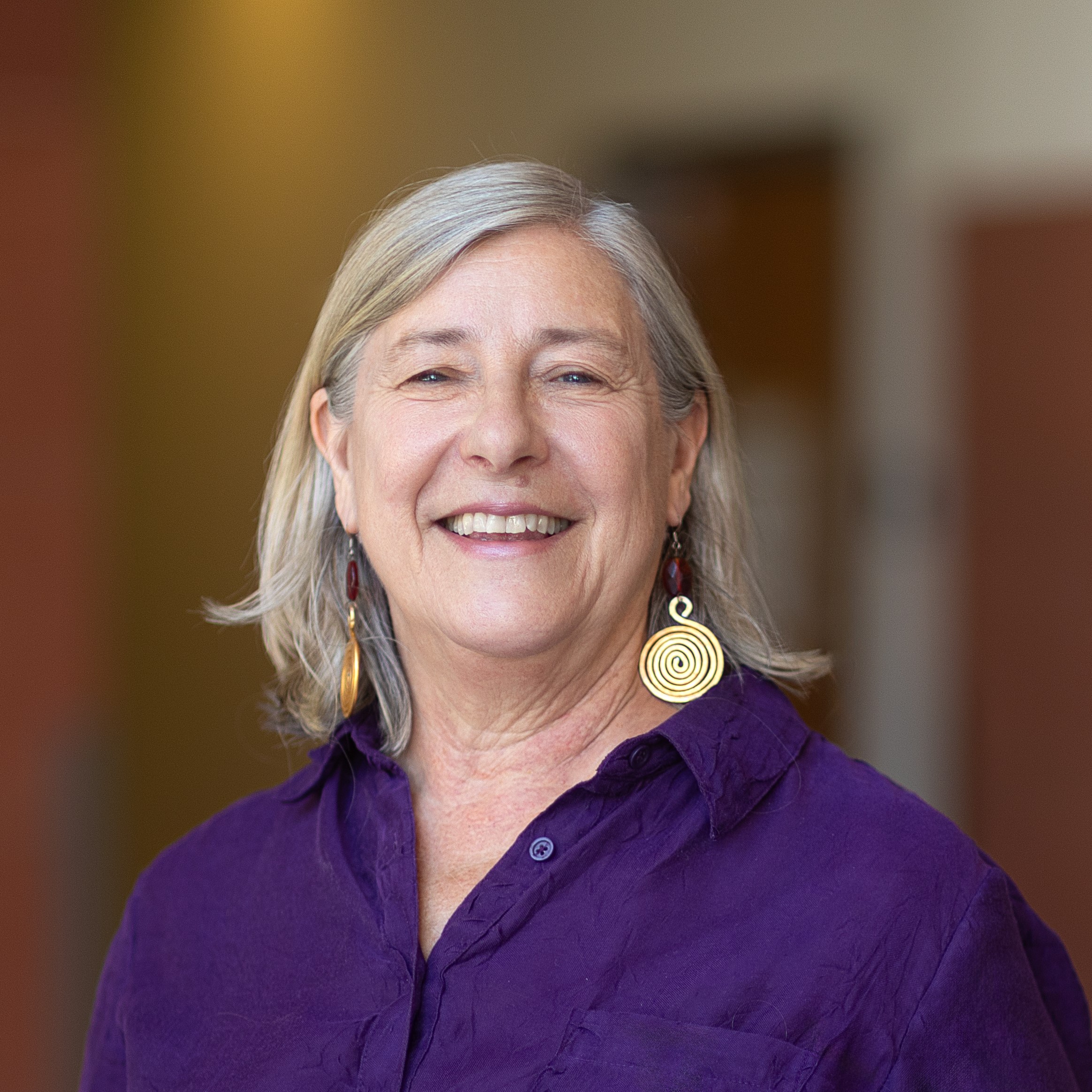
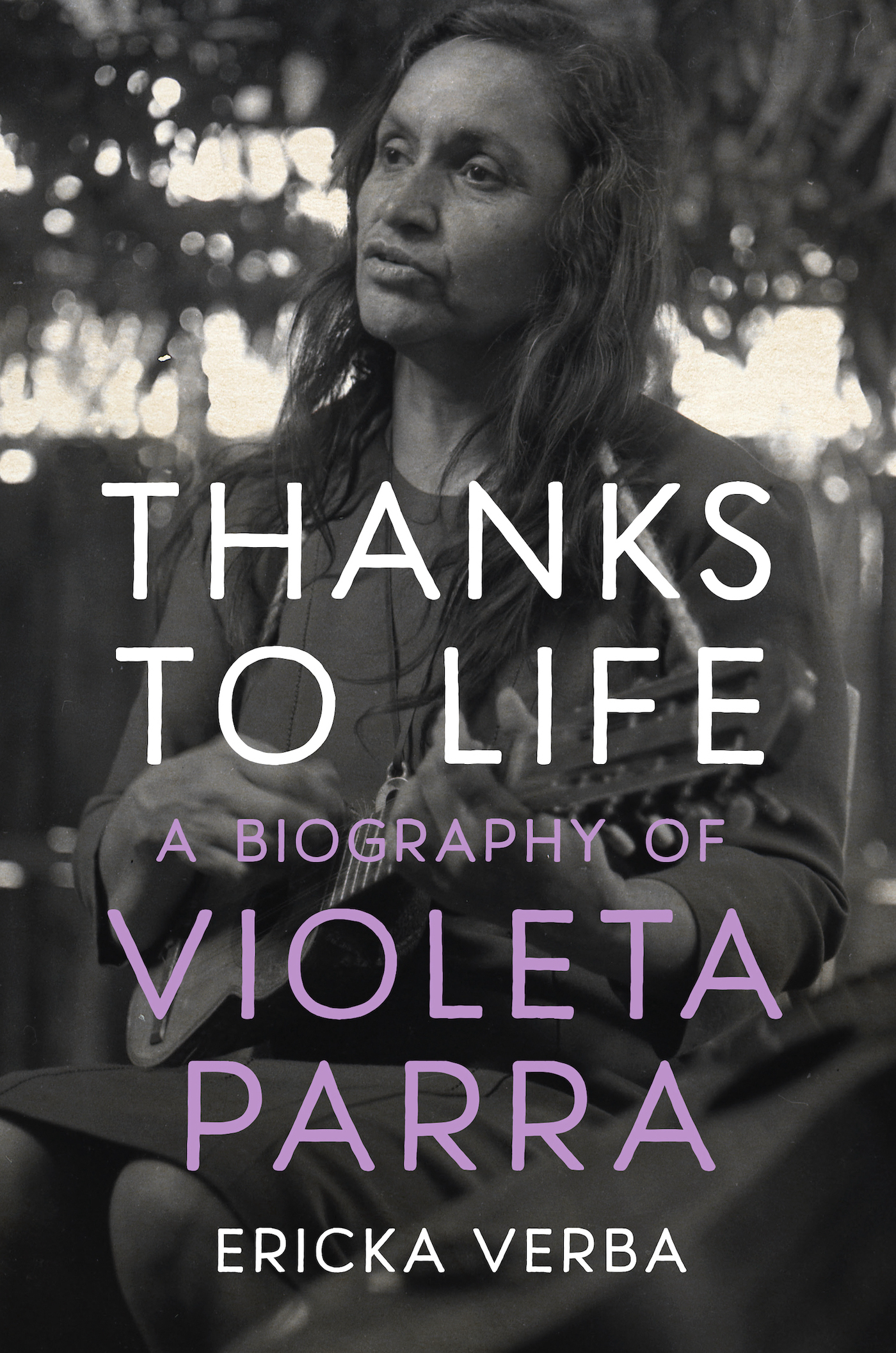
Ericka Verba is Professor of Latin American Studies at California State University, Los Angeles. Her research interests include the cultural Cold War, the role of music in social movements, and the intersection of gender and class politics in twentieth-century Latin America. She has received grants from the National Endowment for the Humanities, the Mellon Foundation, the Social Science Research Council, the Fulbright, and the Los Angeles Department of Cultural Affairs. She is a founding member of SCALAS (Southern California Association of Latin American Studies) and the recipient of the E. Bradford Burns Award for service to the Pacific Coast Council on Latin American Studies. She is the author of the book Thanks to Life: A Biography of Violeta Parra.
Take it away, Ericka!
What path led you to Violeta Parra?
I first encountered Violeta Parra’s music as a high school student when I became friends with a Chilean family of musicians and artists living in exile. The family taught me my first Violeta Parra songs and guided my political awakening to the brutality of the Pinochet dictatorship and the role of the US government in installing and supporting it. As a musician and member of the US-based New Song groups Sabiá and Desborde, I have been performing Parra’s music since the late 1970s. I wrote my undergraduate senior thesis on Parra’s autobiography in verse in 1980, and gave my first academic presentation on Parra at the 2nd International Conference on Women in Music in 1982. In 1996, I was musical director and arranger for a tribute concert to Violeta Parra, held in Los Angeles with the participation of L.A.-based musicians from four continents. As a professor of Latin American History since 2004, I have welded my research on the history of women in Chile with my interest in Parra to acquire a deeper understanding of the social context and gender dynamics that shaped her life. Suffice to say that my biography of Violeta Parra is the culmination of my decades-long curiosity about and engagement with her work.
Thanks to Life is an evocative title. Can you tell me how you came to it?
“Thanks to Life” is the English translation of the title of Violeta Parra’s most famous song, “Gracias a la vida.” The song has been translated into 14 different languages and sung and recorded by scores of musicians the world over, including country music star Kasey Musgraves, cellist Yo-Yo Ma (instrumental version), Latin pop singers Jennifer Lopez and Shakira, K-pop duo Davichi, US folksinger Joan Baez, and Cuban singer Omara Portuando of the Buena Vista Social Club. I recently learned that Argentine folk singer Mercedes Sosa’s version of the song is featured on the soundtrack to the film Project Hail Mary. The song’s title also has the word “life” in it. Finally, the song clearly hits a universal chord. For all these reasons, it felt like the obvious choice for the first major biography of Violeta Parra to be published in English. My hope is that it will lead listeners to want to know more not just about her music, but also her visual art, poetry, and life story.
How did your experience as a musician inform your work on Violeta Parra?
I’ve been singing Parra’s songs since I was a teenager. Her lyrics have become part of my internal vocabulary and a particular line will come to the surface when I need it most to help me grasp what I am feeling at that moment. Lately, for example, this phrase from the last verse of “Gracias a la vida” often comes to mind:
Gracias a la vida que me ha dado tanto.
Me ha dado la risa y me ha dado el llanto.
Así yo distingo dicha de quebranto,
los dos materiales que forman mi canto
[Thanks to life for all it has given me.
It has given me laughter, it has given me tears.
And so I distinguish joyfulness from sorrow,
The materials that together make up my song]
I think this level of familiarity with Parra’s poetry gave me an edge when I began to examine her life from the analytical perspective of a historian. It also influenced my decision to integrate excerpts of Parra’s song lyrics and décimas, her autobiography in verse, into my book.
And I am so happy with the translations, which were done with much love and effort by my dear friends and colleagues Nancy Morris and Patricia Vilches. Here is their explanation of their process: “Translating parts of Violeta Parra’s Décimas [Parra’s autobiography in verse] and songs constituted both a cherished and monumental task for us. We worked through successive draft translations, parsing and refining line by line and at times word by word. We sought to maintain the vibrancy of Parra’s poetry and songs while staying faithful to her meaning, and to convey the meter, pacing, rhythm, tone, and, where achievable, rhyme of the original texts.”
A question from Ericka: What inspired you to start your blog?
When I started History in the Margins, almost fifteen (!!!) years ago, the first post I wrote was an attempt to answer the question “Why Another History Blog? “ I went back to that post today, I found it still rings true to me. Here’s the guts of it: “These days I write about a wide range of historical topics…And at the end of every day I have a great story that didn’t quite fit in the piece at hand, a dangling idea that I want to play with, a connection I want to explore, or a book that I can’t wait to share with someone else.”
****
Want to know more about Ericka and her work?
Visit her website: https://erickaverba.com/
Follow her on Instagram
****
Come back tomorrow for more women’s history fun.
History on Display: The Anne Frank Pen Pal Museum
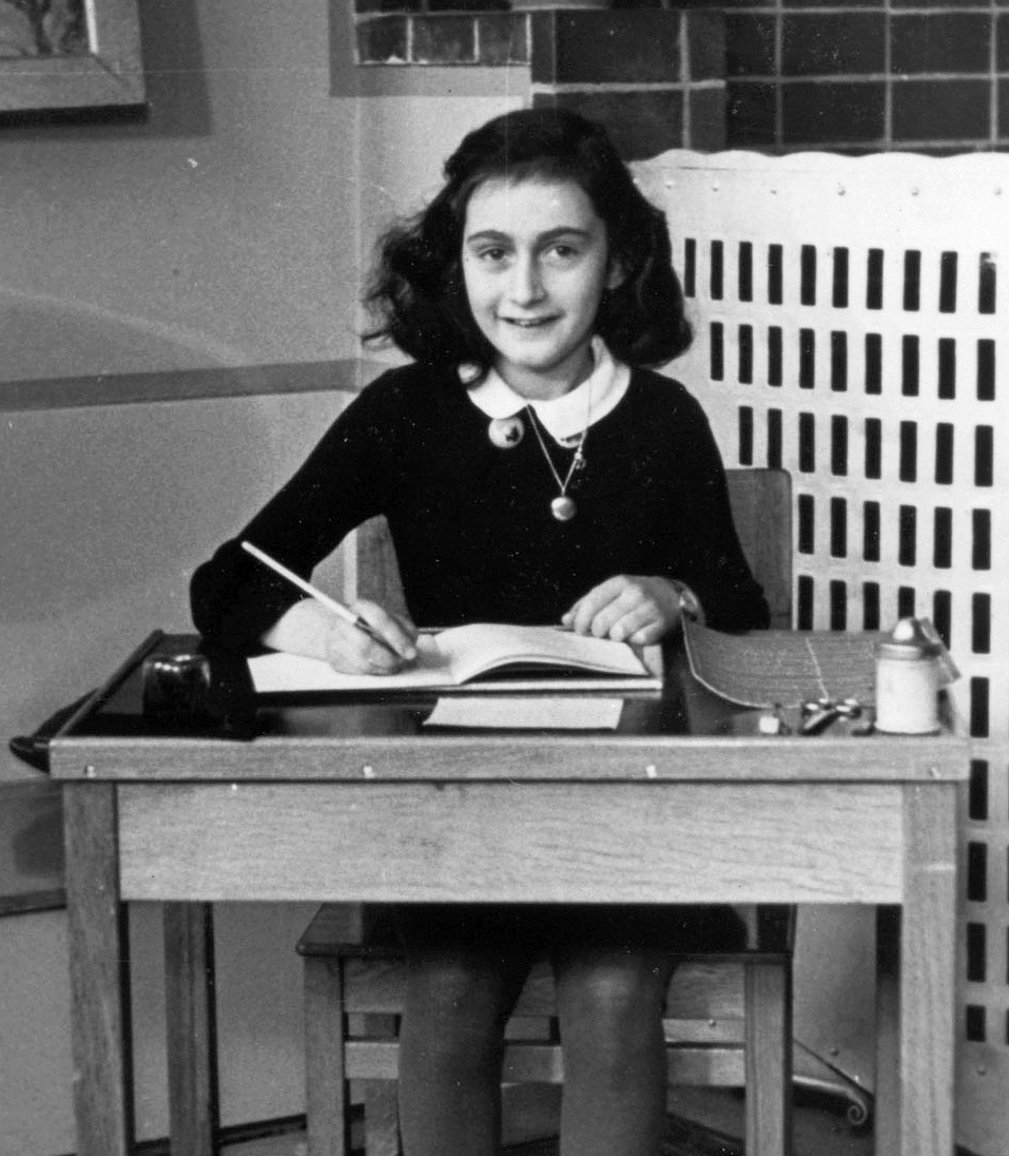
Anne Frank, 1940, at the 6th Montessori School, Amsterdam
One of the delights of a road trip is seeing a sign advertising an unexpected attraction. The kind that makes you go “What??!!” and immediately pull out your phone because you can’t believe you read it correctly.
One of the frustrations of a road trip is missing something you would like to see because the timing does not work.
The Anne Frank Pen Pal Museum in Danville, Iowa, fits both categories.
The story behind the museum is little more than a footnote in the larger Anne Frank story.
Every summer Danville school teacher Miss Birdie Matthews traveled to Europe. Every fall, she would have her students write letters to European pen pals from an interested school that she had contacted during her summer travels. In January 1940, she gave her students a a list of names and addresses of Dutch children who attended the 6h Montessori School in Amsterdam, where Anne Frank was a student.
Ten-year-old Juanita Jane Wagner picked Anne Frank from the list. In her first letter to Anne, she told her about Danville, her family, particularly her sister Betty Anne, and life on an Iowa farm. Then she waited eagerly for a return letter.
A few weeks later, Juanita received her first and only letter from her pen pal, dated April 29 1940. There was a second letter in the envelope, from Anne’s fourteen-year-old sister Margot to Juanita’s sister Betty Ann, who was also fourteen. Anne wrote about her school and her family. She told Juanita that she collected postcards and asked her to send a photo. Margot wrote about what was happening in Europe and the fact that they listened to the news on the radio. She told Betty Ann that “we never feel safe’ because the Netherlands shared a border with Germany. Neither girl mentioned that they were Jewish. Both letters were written in English—the assumption is that they drafted them in Dutch and their father translated them into English for the girls to copy. The Frank sisters also sent small photographs of themselves and a picture postcard of Amsterdam.
The Wagner girls wrote back immediately, and sent snapshots of themselves in return.
They did not hear from their Dutch pen pals again. Germany invaded the Netherlands on May 10, the Dutch surrendered four days later, and the Frank family went into hiding.
In an interview late in her life, Betty Wagner said that she and her sister often wondered if their Dutch pen pals were safe. When the war was over, Betty wrote to the address they had used before. Otto Frank answered, telling them what the family had gone through and what had happened to his daughters. Betty said later that after she read the letter, she “just sat and cried.” It was the first time the Wagners learned that their pen pals were Jewish.
The original letters are now in the Simon Wiesenthal Center in Los Angeles. The museum in Danville has copies of the letters on display. It also tells the stories of Holocaust survivors who settled in Iowa. Or so reviews of the museum say. We drove past too late in the day to stop. It’s on my list of places to go back to.
***
Come back on Monday for three questions and an answer with somebody about women’s history.