




From the Archives: Talking About Women’s History and Alias Agnes with Elizabeth De Wolfe
Sometimes plans go astray. I don’t have a new “Three Questions and an Answer” to share with you today. Luckily I have years of interviews that you may not have read the first time. I am pleased. Next up, historian and writing friend Elizabeth de Wolfe!
* * *
I have literally been waiting for years to read Elizabeth De Wolfe’s newest book, Alias Agnes: The Notorious Tale of a Gilded Age Spy. In fact, I was so eager that I pre-ordered it twice. . To quote Matthew Goodman, author of one of my favorite books, Eighty Days, “This is a stirring tale of secrecy, betrayal, ambition, jilted love, and the many barriers—political, financial, legal—faced by young women in nineteenth-century America.” Definitely my cup of chai with milk.
I am delighted to have Elizabeth back here on the Margins to talk about Alias Agnes and how she wrote it.

Even well known women in the nineteenth century are often neglected by biographers and historians. What path led you to stenographer turned undercover detective Jane Armstrong Tucker?
The path to Jane was accidental. I began my research intending to write a book about Madeleine Pollard, the plaintiff in a breach of promise lawsuit against Congressman WCP Breckinridge for failing, as pledged, to marry her. While a handful of historians had written about the trial and Breckinridge’s subsequent (failed) political career, the overwhelming assumption was that Pollard was a mistress and nothing more, as if her life was frozen at that very public moment of time. I wanted to know about her life before she met Breckinridge, the path that took her to a courtroom in the nation’s capital, and what happened after the trial was over. As I read through correspondence between Congressman Breckinridge and his legal team at the Library of Congress, I picked up on hints of some sort of secret scheme. His lawyer refused to put details in writing, leaving only the vaguest hints about a “Miss P.” At the same time, I was reading accounts of the trial published during and immediately after – works capitalizing on the public interest. One book was written by “Agnes Parker,” purportedly a memoir of ten weeks as a “girl spy.” Miss P? Agnes Parker? Fiction or fact? As it turns out, a bit of both. Once I began to write my book, I stuck with my initial idea of focusing on the trial, but the manuscript never really gelled. But Agnes Parker’s behind-the-scenes relationship with Madeleine Pollard did. I flipped the narrative of my book to focus on Tucker, and the story just took off.
The Gilded Age has been a popular history hot spot for several years now, the setting for the television series by that name, now in its third season, and a number of best-selling novels, including The Personal Librarian, The Address, and The Social Graces. In your subtitle, you described Tucker as a Gilded Age spy. How does her story relate to the world evoked in such works?
Jane Tucker is an outsider to the glitz and glamor – she does not hobknob with “the 400,” nor aspire to a life of luxury. Yet, as a working-class woman, she is intimately connected. Her goal was to become financially self-sufficient, but it was no easy task. Eschewing the route of marriage, in Boston Jane worked as a seamstress–at one point working in the dress department of a major department store. Skilled in fine embroidery, Jane made the custom buttons and embellishments for women’s bespoke dresses. She also painted porcelain, adding the flowers and delicate motifs to the teacups and plates the upper crust used in their parlors. Jane was well aware of that world — middle class managers and their families boarded at her coastal home for summer relaxation (while she worked for their comfort) and she was well-versed with their culinary preferences, knowledge she put to good use while spying on Madeleine Pollard.
Both the young women at the heart of your book struggle to make a life for themselves as single women in the Gilded Age, though they chose very different paths. What new opportunities, and challenges, did women face at that time?
An opportunity that connects Tucker and Pollard is the typewriter. This new office tool allowed thousands of young women the opportunity to engage in office work, both in urban businesses and, in Washington, in civil service, a lucrative option.
Tired of working for unpleasant employers, Jane learned to type and take shorthand at the Hickox School in Boston’s Copley Square. She progressed rapidly and easily found work. Her most significant job was working for a group of Kentucky businessmen who had established a New York City office (When Boston jobs grew tiresome, she tried her hand in New York). She loved the work, the city, and her supervisor, a lawyer named Charles Stoll, whom she called “the kindest man she ever met.” When the economy soured and the Kentucky group closed their office, Stoll wrote her a glowing recommendation letter. Eight or so months later, Stoll, now serving as Breckinridge’s attorney, remembered Jane’s skills and derring-do, and begged her to take on a very special job.
Madeleine Pollard also learned to type. In Washington, she took the required Civil Service exam at least twice, each time earning middling scores. Nonetheless, she did get work (in at least one case with the strong-arm assistance of her lover) first in the Botany Division of the Agricultural Department and later with the Census Office. Madeleine started as a “computer,” tallying up census items; she was promoted to copyist and her annual salary reached $900. The money allowed Madeleine to move out of a room in a convent (where she did some light teaching in exchange for housing) and into a series of boarding houses in increasingly tony neighborhoods. Her significant moment came when her landlady introduced the Kentucky-born Pollard to two of her Kentucky friends, sisters Emily Zane and Julia Churchill Blackburn, a senior member of Kentucky “Society” in Washington. Pollard became Blackburn’s protégé and entered the life of which she had dreamed: teas and dinners, literary events, and travel.
As single women earning marginally sufficient salaries, both women were at risk—a job loss could be catastrophic. After New York City, Jane returned to a former Boston job with a street railway company but was laid off at the end of 1893. Worn out and without work, she returned home. Madeleine lost her job at the Census office when tabulation of the 1890 census was completed. Ironically, new technology played a role. The Hollerith keypunch machine counted the collected data more efficiently and instead of years to tabulate the 1880 census, the 1890 census took just twelve months. In June of 1891, Madeleine was let go “on account of necessary reduction of force.” Shortly thereafter, she met Blackburn and moved from the work-a-day world to the world of leisure.
Both Jane and Madeleine shared a similar fate after the trial: Breckinridge did not pay either one money he owed them.
Like other women you’ve written about, Tucker is not a major historical figure. How difficult is it to find sources for women whose lives are not well documented? What is your favorite research tip for people who want to write about relatively obscure historical women?
It is very difficult to find sources. In Jane Tucker’s case, even the archive holding the family papers had no idea of her days as an undercover detective. My tip is to start with the men in a subject’s life – her father, husband, brothers, associates — and scour their papers. Then, build out her world of women and men. I draw relationship maps on big sheets of paper. (Pro tip: use the back of good quality wrapping paper—it’s big, sturdy, and often has grid lines). Who were her relatives? Schoolmates? Neighbors? Businesses she frequented? Places she traveled? And for each, think through what records might exist. Treat every relationship as if it were the subject of your work and dig, dig, dig, dig, dig. And google everything: one insomniac night, instead of googling her name, I googled Madeleine Pollard’s nineteenth-century address which revealed her presence in a university catalog under one of her playful name variations. I never would have found that if not for this backwards google. The lesson I learned in this project is that to find an undercover detective’s story, you have to be a detective.
What was most challenging or exciting about researching women in this period of history?
The most challenging part of this project was the absence of two key data sources: the 1890 federal census, which burned in 1921 leaving a twenty year gap between the 1880 and 1900 records, and the Pollard v. Breckinridge trial documents. I found fabulous stories from the women who testified, and I was eager to read their full depositions or transcript of courtroom testimony — typically elided by the newspapers covering the trial. Yet, when I requested the records from the National Archives, the archivist found an empty acid-free box. The only thing inside was a file card that said: “Do not remove this card.”
What was the most surprising thing you learned working on this book?
That Jane Tucker was from my home state, Maine. I nearly fell on the floor when I saw on a key document “Transportation: Maine to Washington.” So much for my idea that, for once, this project would not feature New England!
What work of women’s history (fictional or non-fiction) have you read lately that you loved? Or for that matter, what work of women’s history have you loved in any format?
I recently read Jodi Picoult’s novel By Any Other Name that braids the story of Emilia Bassano, possible writer of Shakespeare’s works, and a twenty-first-century young female playwright. Both face challenges of gender, making a living, and erasure. I loved this thought-provoking novel that spoke to my desire to recover and make visible women’s stories.
Along those lines, in non-fiction, Amrita Chakrabarti Myers’s The Vice-President’s Black Wife brings to the fore an amazing story of an enslaved woman’s persistence and her subsequent, quite intentional, erasure. It’s an amazing piece of research. And I’ll also mention a book I love to teach in my Women in the Modern World course – Hallie Rubenhold’s The Five, which explores the lives, not the deaths, of the victims of Jack the Ripper. Rubenhold shows how fragile a woman’s security was and how quickly one’s life could change. It’s also a model of historical research and how historians weave together a life from scant references spread across diverse and sometimes unconventional sources. My students are amazed that what they thought they knew—the victims were all prostitutes—is wrong.
Is there anything else you wish I had asked you about?
I’m glad you did not ask me what’s next, because I really have no idea, but I’m excited by the newfound freedom and creative space freed up by completing Alias Agnes. I’m confident the right project will find me.

Elizabeth DeWolfe is professor of history and co-founder of the Gender, Women’s, and Sexuality Studies Program at the University of New England where she teaches courses in women’s history and archival research. She is the award-winning author of The Murder of Mary Bean and Other Stories (Kent State University Press), about the unfortunate death of a textile mill operative in 1849 and Shaking the Faith (Palgrave) about the nineteenth-century anti-Shaker campaign of Mary Marshall Dyer, a former member. DeWolfe makes her home in southern Maine with her husband, an antiquarian books dealer, and Floyd, a stray cat now living his best life on the DeWolfes’ sun-drenched couch.
* * *
Want to know more about Elizabeth and her work?
Check out her website: www.elizabethdewolfe.com
Follow her on FaceBook and Instagram
* * *
Tomorrow will be business as usual here on the Margins with a blog post from me. Then we’ll be back on Monday with three questions and an answer from … someone.
Talking About Women’s History: Three Questions and an Answer with Kate Moore
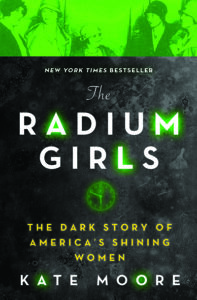
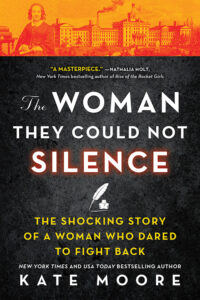
Kate Moore is the New York Times and USA Today bestselling author of The Radium Girls, which won the 2017 Goodreads Choice Award for Best History, was voted U.S. librarians’ favourite nonfiction book of 2017, and was named a Notable Nonfiction Book of 2018 by the American Library Association. A British writer based near Cambridge, UK, Kate writes across a variety of genres and has had multiple titles on the Sunday Times bestseller list. Her latest book is the USA Today bestseller The Woman They Could Not Silence, which, among other accolades, was named runner-up for Best History in the 2021 Goodreads Choice Awards and a 2021 Booklist Editor’s Choice. She is currently working on a third U.S. history book.
Take it away, Kate!
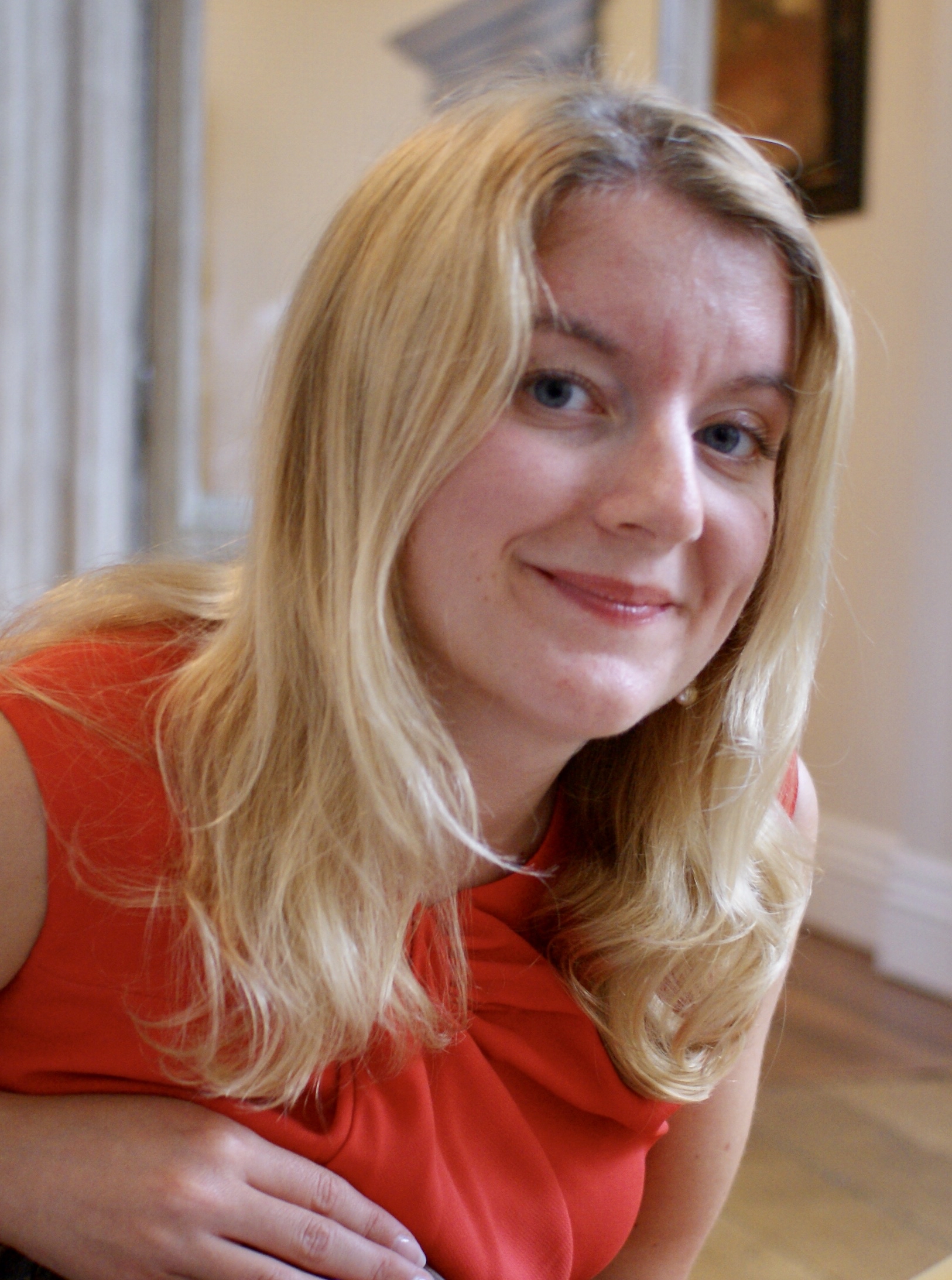
Even well-known women in the nineteenth century are often neglected by biographers and historians. What path led you to Elizabeth Packard, the central figure in The Woman They Could Not Silence, and why do you think it’s important to tell her story today?
I always think that the genesis of The Woman They Could Not Silence was a little topsy-turvy – because I decided on the theme I wanted to write about before I’d even heard Elizabeth’s name. The book was inspired by the #MeToo movement; it got me thinking, how have women been silenced in the past? (Because 2017 was not the first time women had spoken out, yet it was the first time we were listened to and – crucially – believed.) My thoughts coalesced around this realization that, often, women are dismissed with the false claim that we’re crazy. Our mental health is wielded as a weapon against us, used to undermine and control us. I decided that age-old strategy from the powers-that-be was what I wanted to explore in my next book, but I didn’t want to write a polemic. I’m a storyteller – so I needed to find a true story: one woman in history whose personal experiences could act as a microcosm. A sane woman accused of being mad in order to silence her. Through telling that one woman’s story, I hoped she could stand for all, and highlight this experience that is so common, even today – and not only for women, but for anyone who challenges the status quo.
So I went looking for this woman, not knowing if she even existed. Yet one January day, after falling into a rabbit warren of internet searches about women and madness, I found her. Four pages into a university essay about “Lunacy in the Nineteenth Century” was a single paragraph containing the name “Elizabeth Packard”. Once I looked more deeply into her life – the gothic horror of her committal to a mental hospital in 1860 (simply by the request of her husband), the courtroom drama of her landmark insanity trial, her own extraordinary campaigning as she subsequently used this horrendous experience in her life to make the world better for others – I knew she was “The One.”
It’s important to tell her story today because, regrettably, we are still living it. I’ve been shocked by the number of readers who have written to tell me their own lives have been ruined by similar experiences – by the gaslighting, the attempted sectioning, the false claim of crazy to silence and control.
Yet it’s important for another reason too. My book has a happy ending. And I think the extraordinary Elizabeth Packard can inspire us all to seek a happy ending in our own century too.
At first glance, The Woman They Could Not Silence and The Radium Girls are very different stories, set a half century apart. Are there common themes that link them?
Absolutely, yes! I would personally describe them both as feminist books – here are two sets of women, bravely fighting for justice against all the odds. These are portraits of strong women who stood up for what they believed in, and in so doing changed the world. Both books also share fascinating elements of science history and shocking did-they-really-used-to-do-that reveals. Both stories are full of intimate details, driven by character and first-person historical sources, so that you hear directly from the historical figures in their own words, sharing what they were thinking and feeling at the time. And of course both stories are compellingly dramatic, with courtroom drama a centerpiece of both narratives.
What is your favorite research tip for people who want to write about relatively obscure historical women?
Ooh, I’ve got a couple of tips. Firstly, if anyone has published a book that even vaguely references your subject or topic, check out their bibliography. It may provide a treasure trail of clues to follow – an obscure archive or collection you didn’t know about, for example. Secondly, don’t forget about the gift of secondary sources. When writing Elizabeth’s story, I devoured asylum memoirs and journals from her contemporaries to get a sense of that world in that era – it might not have been her particular asylum they were writing about, but they gave a lot of insight and I think personal memoirs often give fantastically vivid details (sights/sounds/smells) that will allow your biography to come to life. Thirdly, HathiTrust has digitized a lot of long-forgotten older texts from the nineteenth century (and earlier), which means there is a wealth of fascinating texts at your fingertips that may be relevant, be it a travel memoir to your location in the right era, legislative records, out-of-print books etc. Fourth, enlist the help of archivists at libraries. They will often be able to suggest avenues for research or relevant books you weren’t aware of. Finally, don’t forget about resources on sites such as Ancestry. Census records (and other documents) that you can find there can be really useful. They might even enable you to track down living relatives, who may have inherited documents or stories they can share with you. Enjoy the journey!
A question from Kate: As historians, we often see history repeating itself. How can stories from the past help us to prepare for the future? And can they ever stop us making the same mistakes?
Like many of us who spend our lives thinking about another time and place, I’ve struggled with this question a lot in recent years–in the privacy of my own mind if not in public debate. I’ve come to the conclusion that history echoes rather than repeats. Comparisons between the past and the present are inevitably inexact. Looking at the past to explain the present through that inexactitude can be both enlightening and confusing, depending on how you phrase the question.
Ultimately, I don’t think stories from the past can help us prepare for the future, or stop us from making the same mistakes because while the mistakes may be similar, the paths that lead to them are inevitably different. That said, studying the past gives us a context for the present, and perhaps a guidebook for how to respond differently. Even if all it tells us is that we need to say “NO!” earlier and louder.
* * *
Want to learn more about Kate and her work?
Check out her website: www.kate-moore.com
Follow her on Facebook
* * *
Come back tomorrow for more Women’s History Month fun.
Talking About Women’s History: Three Questions and an Answer with Denise Kiernan
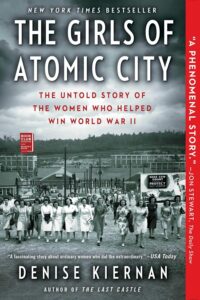
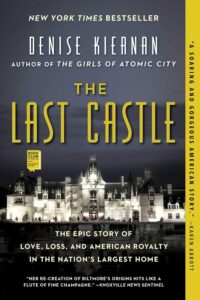
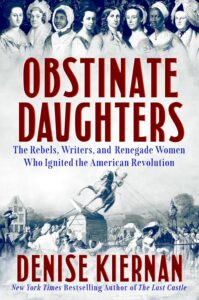
Denise Kiernan is an author, journalist, producer, and host of “CRAFT: Authors in Conversation.” Her forthcoming narrative nonfiction title, Obstinate Daughters: The Rebels, Writers, and Renegade Women Who Ignited the American Revolution arrives June 23, 2026. Her latest young reader’s book, We Gather Together: Stories of Thanksgiving from Then to Now, is a companion title to the popular adult nonfiction book, We Gather Together, and children’s picture book, Giving Thanks. Her book The Last Castle was an instant New York Times bestseller in both hardcover and paperback and was also a Wall Street Journal bestseller. She is also the author of The Girls of Atomic City, which is a New York Times, Los Angeles Times, and NPR bestseller and has been published in multiple languages.[1] She lives in North Carolina.
Take it away, Denise!
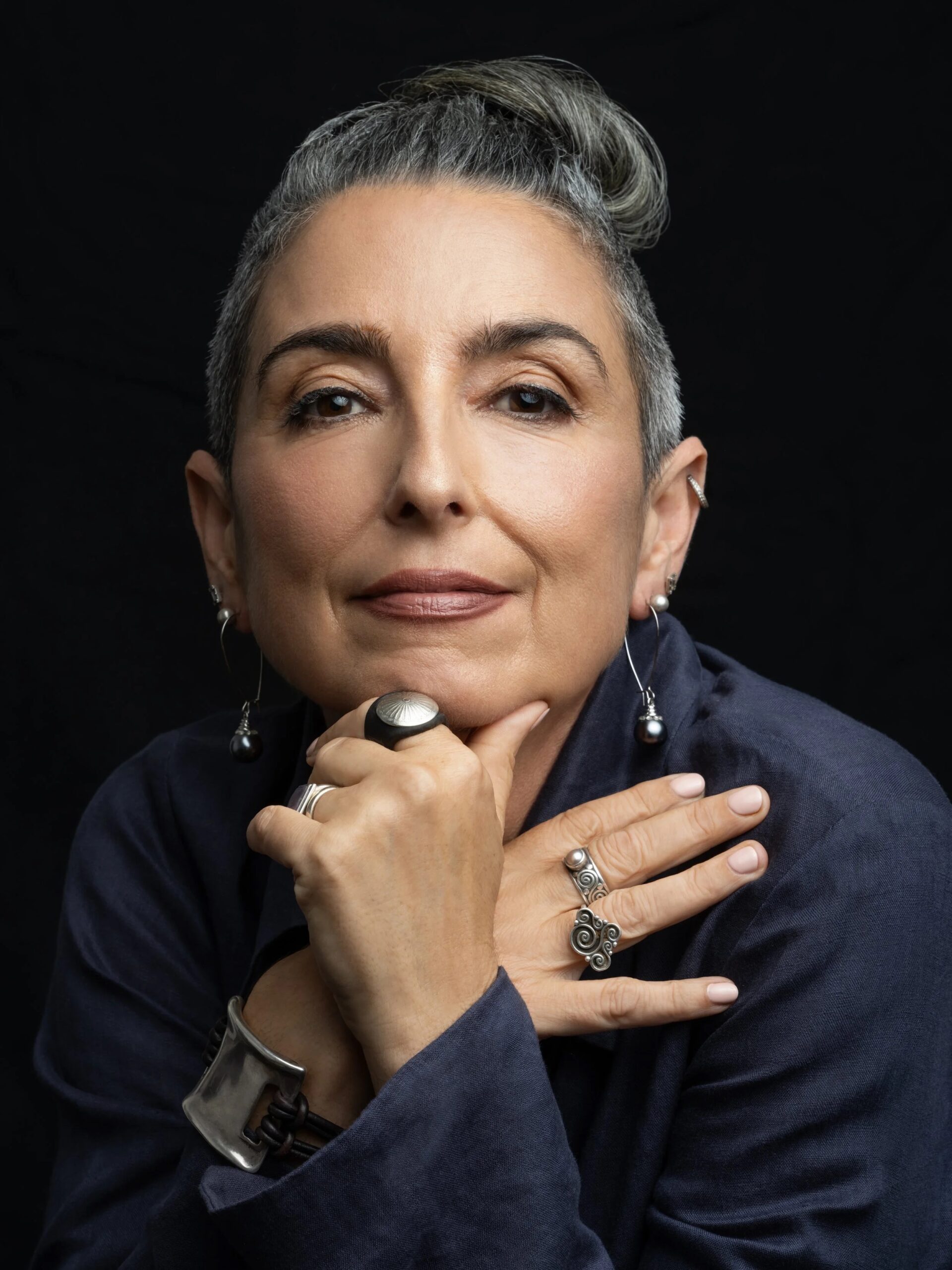
Photograph © Beowulf Sheehan
How do you chose the subjects for your works of narrative non-fiction?
I start with—and stick with—curiosity. These books are in my life for a long time and I have to be fascinated by the subject. I keep lists of ideas, moments in history, and the people who shaped them. I try to find a topic or theme that feels familiar and then explore it through underrepresented voices and perspectives.
What was the most surprising thing you’ve found doing historical research for your work?
I am always astounded by the sheer amount of information that remains in archives, libraries, and historical societies that has yet to see the light of day. There are so many stories still to tell.
What work of women’s history have you read lately that you loved? (Or for that matter, what work of women’s history have you loved in any format?)
I LOVE You Can’t Catch Us. Lady Bird Johnson’s Trailblazing 1964 Campaign Train and the Women Who Rode with Her, by Shannon McKenna Schmidt. She’s an amazing author and this is a spectacular read.
A question from Denise: My question for you is a simple one: What first inspired you to undertake this annual Q&A project, and how has conducting it impacted you as a writer?
I can’t take credit for the idea. In 2018, the brilliant Greer Macallister, who writes historical fiction and epic fantasy with a feminist twist, ran a wonderful series on her blog for Women’s History Month titled #WomensHistoryReads. The concept was simple: she asked historians and historical novelists to answer three questions regarding writing and reading about women in history and asked each of us to ask her a question in return. I eagerly awaited each post as it came out. With her blessing, I began running a similar series the following year. Since then it’s taken on a life of its own.
The series has been a good thing for me in many ways, some of them unexpected. Instance, it has forced me to gather up my courage to reach out to people I admire—not that easy for a shy human being. Every year, it causes my To-Be-Read list to explode. But the impact on me as a writer has come from the questions. Writing the questions each year is always thought-provoking because I try to ask some questions that relate directly to the work of each person I’m interviewing. The questions you all ask me in return often make me stop and consider how I do the work and what I believe about the work, something I seldom have time for in the middle of working on a book.
[1] Pamela interjecting: Also one of my favorite books of recent years.
***
Want to know more about Denise and her work?
Visit her website: https://www.denisekiernan.com/
Subscribe to her newsletter: https://newsletter.denisekiernan.com/
***
Come back tomorrow for three questions and an answer with author Kate Moore.