




Talking About Women’s History: Three Questions and an Answer with Shelley Puhak
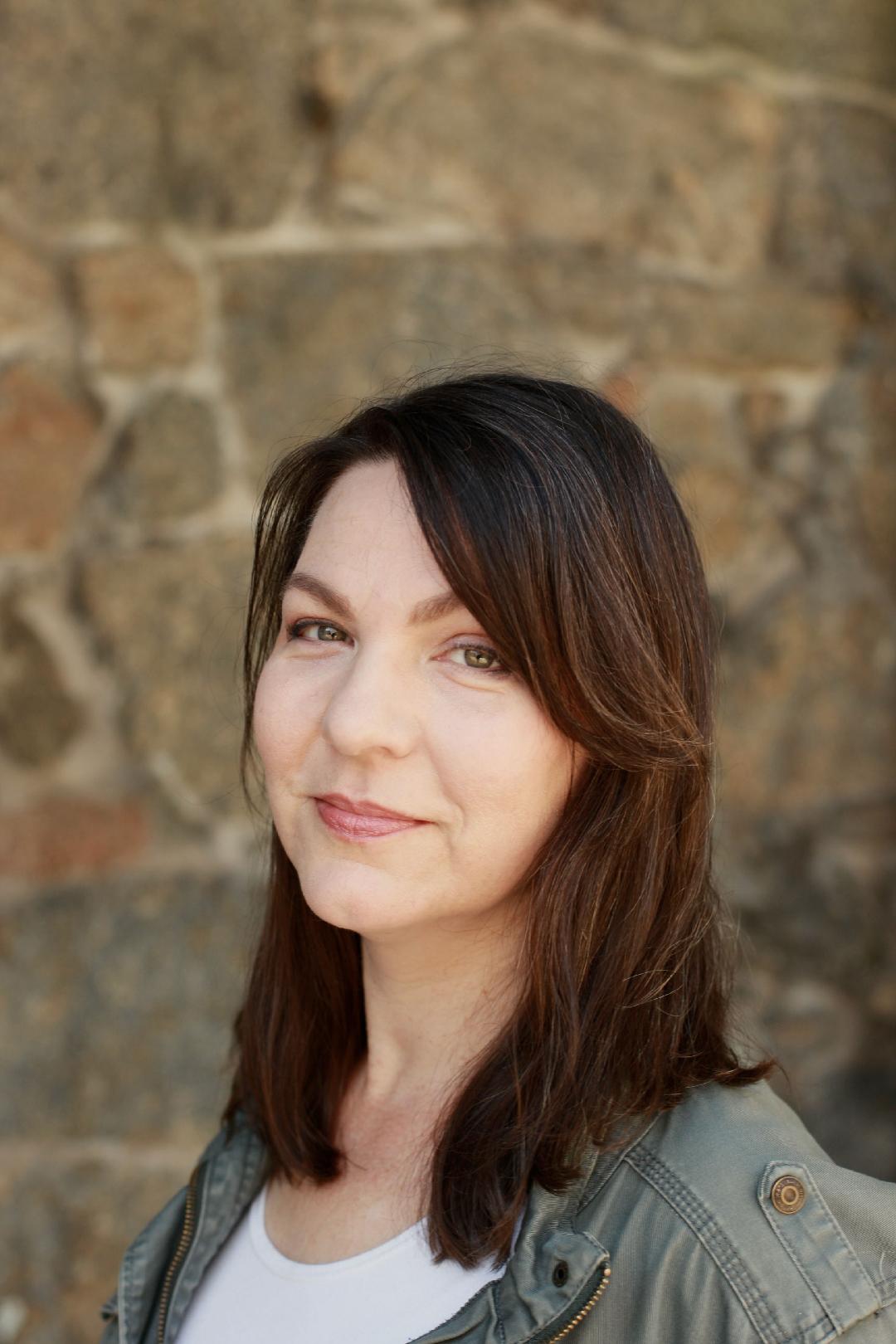
I am thrilled to have Shelley Puhak back for another round of Three Questions and an Answer. I loved her last book, The Dark Queens: The Bloody Rivalry that Forged the Medieval World and was thrilled when I learned she was writing about the infamous Elizabeth Bathory. (Spoiler: It lived up to my expectations.)
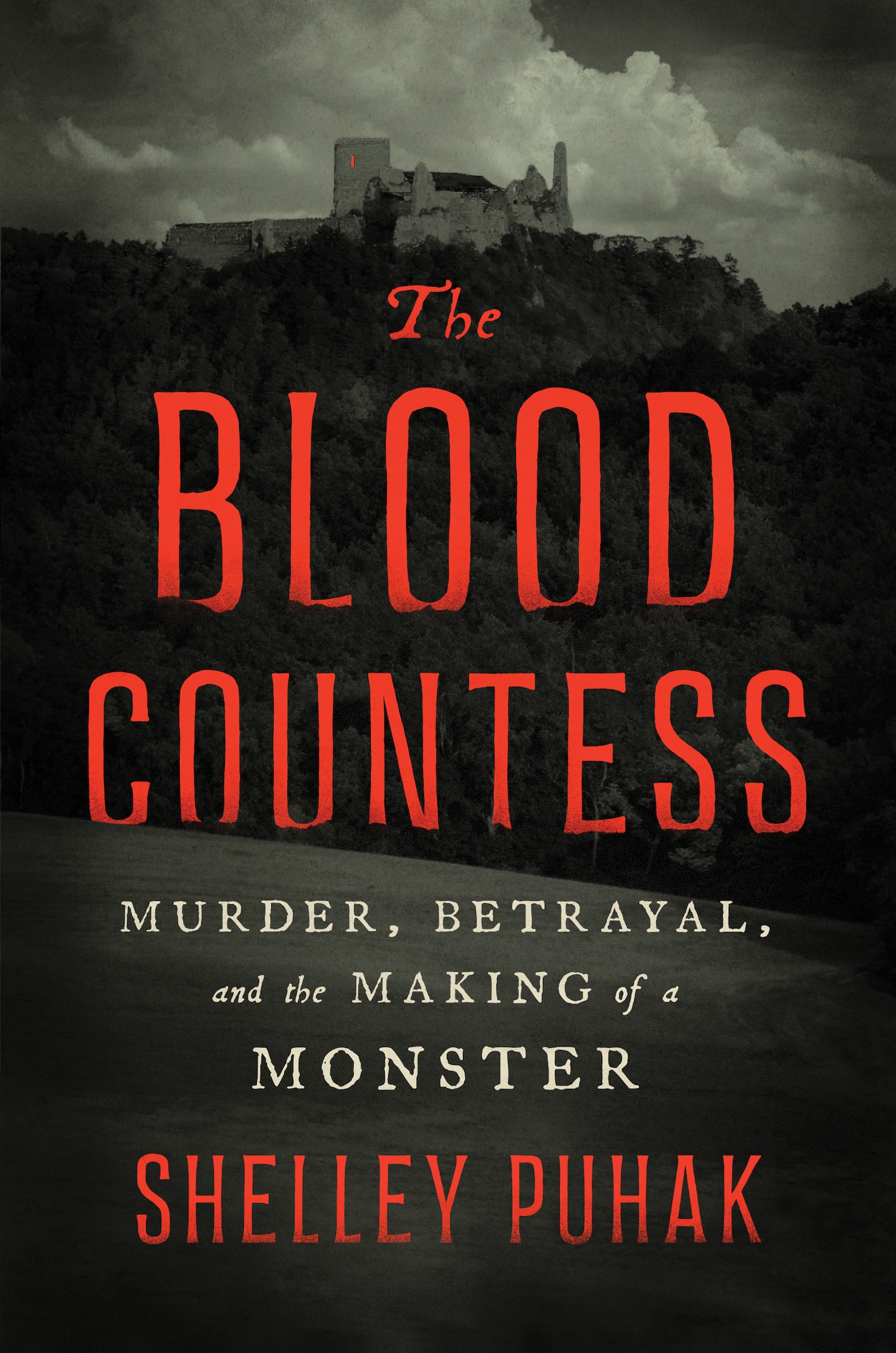
Shelley writes literary nonfiction and poetry informed by rigorous historical research. Her prose has appeared in The Atlantic, Smithsonian, and Virginia Quarterly Review; been anthologized in Best American Travel Writing; and designated as Notable in four editions of Best American Essays. Her nonfiction debut The Dark Queens (Bloomsbury 2022), exploring the little-known queens Brunhild and Fredegund, was a national bestseller and a USA Today Best Books selection, an Amazon Editors’ Pick, and a Goodreads Choice Awards finalist. Her second book The Blood Countess, a reexamination of the notorious Elizabeth Bathory, was released in February 2026.
Shelley is also the author of three award-winning books of poetry. The most recent is Harbinger, a National Poetry Series selection (Ecco/ HarperCollins 2022).
Take it away, Shelley!
You start Blood Countess with a chilling narrative of the story of Elizabeth Bathory, who has been demonized through the centuries as the world’s most prolific female serial killer. Then you bluntly state: “And nearly none of it is true.” What inspired you to unravel Bathory’s story from myth and misinformation?
We’re all witnessing the proliferation of online disinformation, and I couldn’t help but hear echoes of Elizabeth’s time, when another new and unregulated technology enabled conspiracy theories to spread faster and further than ever before.
Elizabeth Bathory is accused of torturing and killing hundreds of young girls and bathing in their blood. I was also curious why so many people really want this legend to be true. In the past, the legend gave many repressed men the chance to discuss, imagine, and sketch lots of naked (dead) female bodies, all in the name of pursuing moral or scientific truth. But now, over 400 years later, why does this story still have such a grip on our imaginations? (I have theories!) Its an intriguing historical cold case, but it is also a fascinating case study in who gets to speak, what counts as evidence, and how myths get made.
How does Bathory’s story fit into the larger framework of witch hunting in Europe in the seventeenth century?
Her case unfolds at the beginning of The Great Hunt, the explosion of witchcraft accusations and trials in early modern Europe. The same men who accused and investigated Elizabeth Bathory also oversaw the witch hunts in the area.
So many women in Elizabeth’s family end up accused of witchcraft: her mother-in-law, her aunt, her cousins, and her niece. Elizabeth herself was alleged to use a supernatural pretzel for surveillance, serve bewitched cakes to her enemies, and command an army of invisible demon dogs and cats. She was also known to have kept company with convicted witches: one of Elizabeth’s friends was accused of dabbling in the dark arts, and another was burned at the stake.
What do you find most challenging or most exciting about researching historical woman?
I find it exhilarating to uncover the networks of women of any time period, the overlooked sisters, daughters, cousins, friends and rivals. Intertwined with Elizabeth’s story were women joining rebellions, pitching in as soldiers, operating printing presses, running medical practices, even women trying to become priests. If you go looking for one woman, you always turn up dozens of others, deserving of books of their own.
A question from Shelly: From the nail-biting opening on the streets outside her apartment to the scene of Schultz dodging shrapnel on her way to a broadcast, wartime Berlin is so integral to The Dragon from Chicago. You incorporate subway systems, walking routes, multiple state and bureau buildings, etc. How did you manage to render Berlin so vividly when this version of Berlin ended up reduced to rubble? What tools, tricks, or tips do you have for readers and writers interested in researching places that have been irrevocably altered or no longer exist?
I worked really hard at this, so I’m glad to hear that I succeeded.
I would say that the research skills are much the same, but the questions are different. Here are some the things I found helpful:
1. If you’ve spent anytime following me here on the Margins or on my newsletter, you know that I’m a big fan of maps. In the case of The Dragon From Chicago, maps became even more important than usual. In the course of writing about one of the many small revolts that occurred in Germany during the first months of the Weimar republic, I realized that I needed not only to untangle the events as they occurred day by day, but I also needed to place those events in space to see just how they would have affected Sigrid Schultz.
I had already pinpointed the location of the Schultz apartment thanks to Google maps and a big street map of modern Berlin. Now I began to track her movements and the movements of the battles. That’s when I ran into a problem: some of the streets weren’t on the modern map. The ultimate solution was to locate a map of Berlin between the wars (harder to find than you might think) and work with it in conjunction with my more detailed modern map. I located the location of all the buildings that were important to my story—most of which no longer exist. I also traced the routes Sigrid was most apt to have traveled between them, based in part on her letters. I used Google maps to get an estimate of distance and travel time, which gave me a rough idea of how far apart things were. (It would have been wonderful to do this in person in modern Berlin, but I began working on the book in March, 2020. Travel was not an option,).
This gave me a physical framework on which to set the action
2. Obviously I spent a lot of time looking at photographs, not only of public buildings but also of the streets of Berlin between 1919 and 1941. There were some images that I wanted but never found, or found too late to use. For instance I didn’t find a picture of the Hotel Adlon bar, which was a major location in the book, until The Dragon From Chicago was in copy edits. Luckily Sigrid gave several detailed descriptions, right down to the red leather seats on the chairs.
And speaking of those red leather seats: After a while, I realized that the prevalence of black and white photos was coloring—so to speak—my image of mid-century Berlin. Thinking of the city in shades of gray was metaphorically all too apt for the period. So I began to seek out paintings, drawings, and illustrations from the period that would add color to my mental image. FYI: this is a case where the big names may not be your best bet. Paintings by Otto Dix and George Grosz illustrated the zeitgeist; talented but more conventional artists told me what the streets and store interiors looked like in realistic terms.
3. I combed my sources for sensory details that would bring scenes to life: when I mention the weather it comes from contemporary report. I read every memoir or contemporary account of the period I could get my hands on. Even when they report the same events they see different things.
4. I sought out information about urban planning, transportation, and technology to learn about public transportation, utilities, radio, and information transmission.
In short, find ways to look for the physicality of your setting, not just the events that occurred there.
***
Interested in learning more about Shelley and her work?
Check out her website: www.shelleypuhak.com
***
Come back tomorrow for three questions and an answer with journalist Denise Kieran
Fascinating use of maps, photos and art to aid in your research.
Goes along with historian/spies in Books and Daggers that I recently finished reading.