




Idols of Perversity
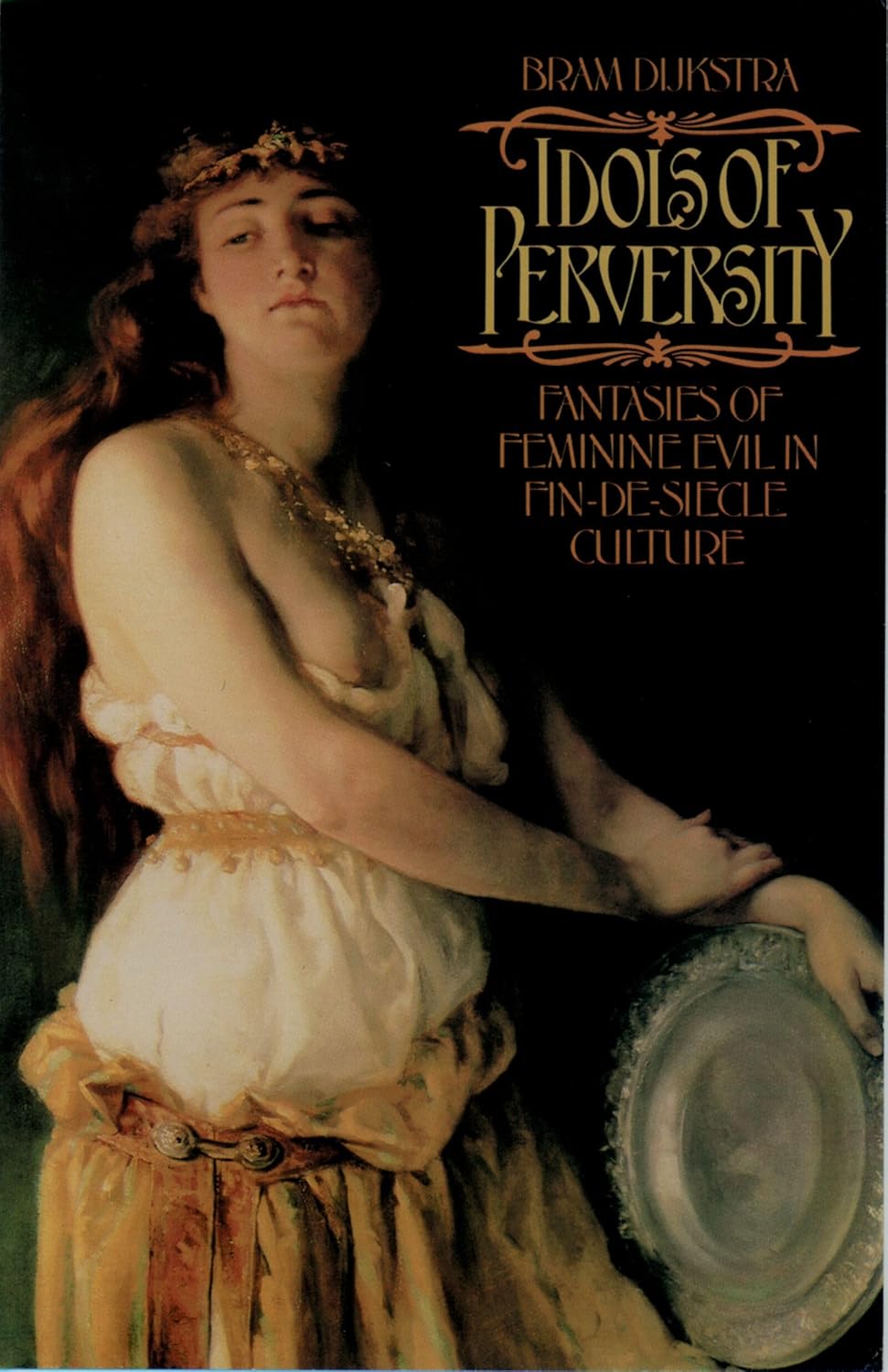
In the course of reading around the edges of the book topic I’m exploring[1], I was surprised to come across a discussion of a book I found useful while writing my dissertation: Idols of Perversity: Fantasies of Feminine Evil in Fin-de-Siècle Culture by literary scholar Bram Dijkstra. I found the way the author used Dijkstra’s work as a theoretical prop for her own arguments inappropriate, unconvincing, and actively annoying.[2] On the other hand, it has been at least 25 and probably closer to 40 years since I read Dijkstra, so I decided to take another look.[3]
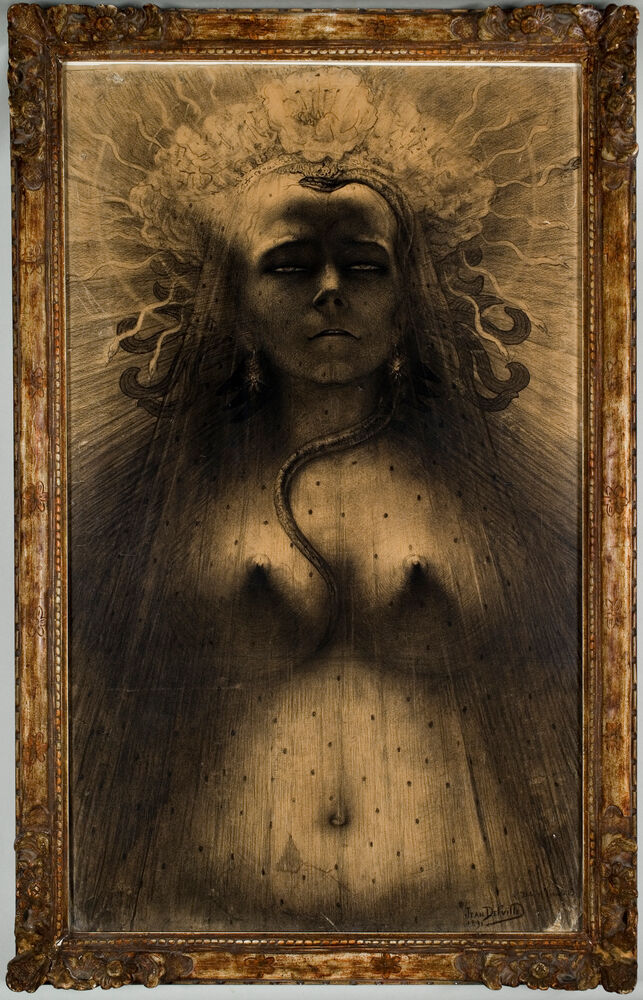
Jean Delville. Idol of Perversity. 1891
The title, Idols of Perversity, comes from a graphite drawing by Belgian Symbolist painter and author Jean Delville (1867-1953) The painting has been described as embodying fin-de-siècle fascination with the femme fatale as a force of temptation, corruption, and hidden power; Dijkstra, in turn, is fascinated with that fascination.
Dijkstra describes his work as an “iconography of misogyny” —a term that seems more accurate than the “feminine evil” of the title. He explores a number of repeating themes as they appear in images drawn from the visual arts in the academic tradition of the late nineteenth century: sleeping women, dead women, women looking at themselves in mirrors, women with dangerous animals,[4] women as dangerous animals. Many of the works draw from classical mythology and medieval stories[5], though Dijkstra also looks at images of nineteenth century women through the same lens. All are erotic to some degree. (Not surprisingly, since Dijkstra links nineteenth-century discomfort with female sexuality and feminism through the book.) He enriches his arguments with related examples from poets, scientist, and social theorists of the period. His analysis of any given painting can feel far-fetched; the iterative effect is powerful.
In my memory, Idols of Perversity was lush, dense, and challenging. Certainly it was an intriguing model for my dissertation, in which I chased recurring themes from art and literature in the early nineteenth century. The book did not capture my imagination in quite the same way returning to it decades and thousands of books[6] later. I suspect that has as much to do with me as a reader as it does with the book itself.
[1] Nope. Still not prepared to put it out into the world.
[2] Yes, I have opinions. And your point?
[3] Procrastination comes in many shapes and sizes. There is a reason that my to-be-read piles never seem to get smaller.
[4] Lots of big snakes. Iconography is not always subtle.
[5] Mythological rapes and murders are easier for viewers to handle.
[6] Not an exaggeration.