




Another Book That Sat on the To-Be-Read Shelves for Far too Long: Fast-Talking Dames
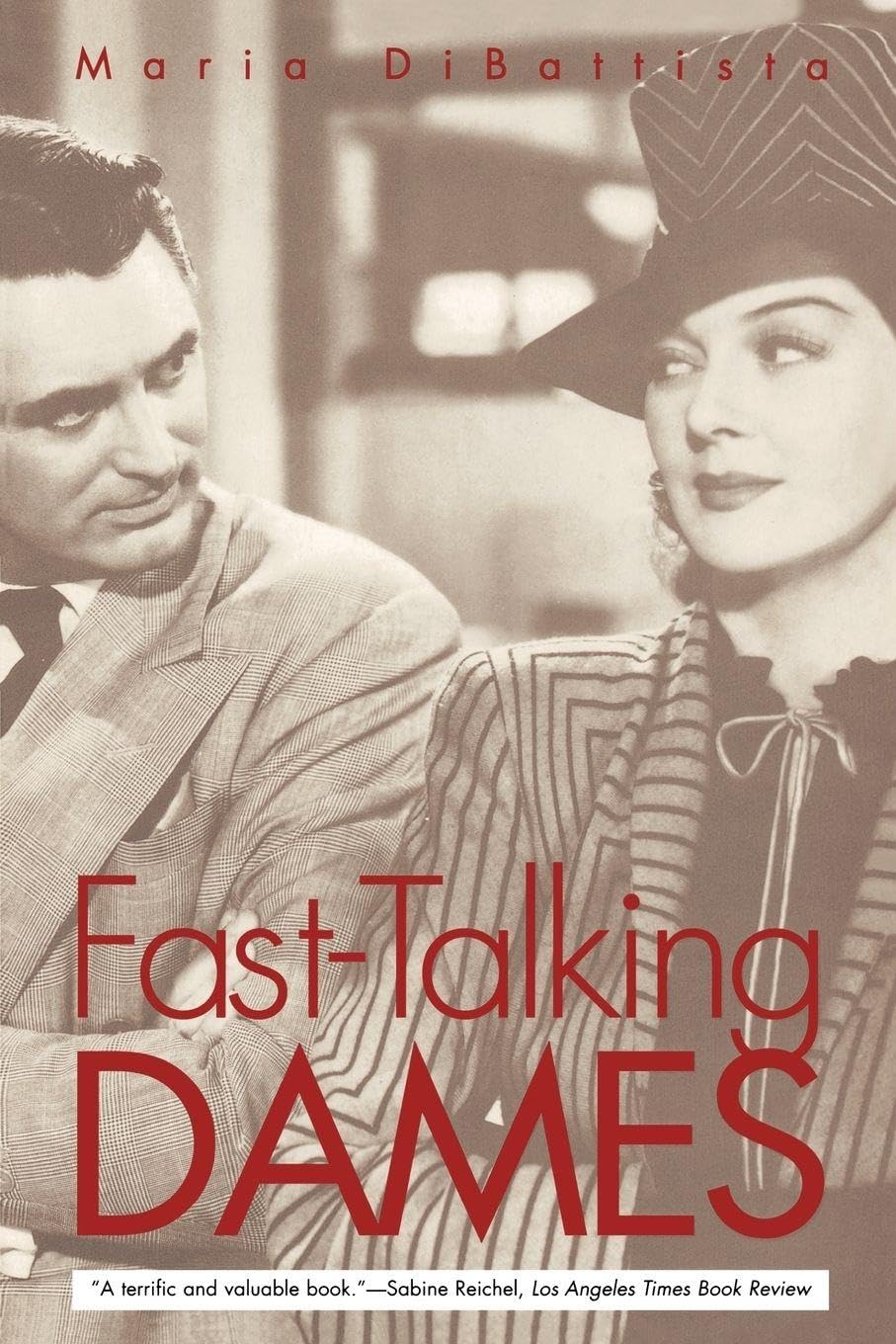
Fast-Talking Dames by Maria DiBattista is both a study of and homage to the fast-talking heroines of Hollywood comedies in the 1930s and 1940s. Like me, DiBattista discovered the women she writes about in her early teens, when she watched old movies after school and late at night. Like me, she saw them as a model to aspire to: classy, smart, smart-mouthed, witty (not quite the same thing as smart-mouthed, in my opinion), bold, and able to meet their male counterparts on equal terms, or even a bit ahead of them, in any given moment.
Some of the fun of Fast-Talking Dames, at least for this reader, is the skill with with DiBattista evokes the essence of movies I’ve watched many times, deepening my understanding of them with one-liner characterizations that any of her fast-talking dames would have been happy to deliver. For instance, discussing the rapid fire dialogue of His Girl Friday, arguably the fastest talking film in the genre, she describes Rosalind Russell as delivering her lines with “the assuredness of a large woman who knows she is taking up room and is enjoying the space allotted to her. “ Bingo![1]
DiBattista lays out common tropes on these comedies: madcap heiresses, spunky working girls[2] , blonde bombshells, and what she describes as “female Pygmalions” who educate and transform their male counterparts. She examines the careers of the queens of the genre—Katherine Hepburn,[3] Carole Lombard, Claudette Colbert, Jean Arthur, Barbara Stanwyck, Ginger Rogers—as well as some of their lesser-known sisters.[4] All of which make for an engaging read for those of us who are fans of movies of this period
But DiBattista does not stop there. She also follows some fascinating scholarly paths that place her fast-talking dames in a larger context. She looks at them in the context of the long-standing and misogynistic discourse against mulier loquax (the talkative woman), which has its roots in classical Greece and has never gone completely away. She considers their place in the lineage of clever women in stage plays, ranging from Shakespeare through Noel Coward. She contrasts them to the the laconic heroes of Westerns produced in much the same period.[5] And she ends with the gradual dissapearance of the fast-talking dame as movies returned to more traditional values in the post-war era.
I came away from Fast-Talking Dames with a deeper understanding of and respect for a genre I have long loved, and a substantial list of movies I want to watch. If you’re an old movie buff or a fan of smart (or smart-mouthed) broads, this one’s for you.
[1] If you’ll allow me one more: Discussing the “jubilant partnership” of Myrna Loy and William Powell, she states “there is nothing more optically exquisite in movie comedy than watching Myrna Loy, arching her brows, take in Powell’s droll manner with the bemused and appreciative air of a connoisseur.” Indeed.
[2] The spiritual ancestors of Mary Rogers in the Mary Tyler Moore Show, who was a more attainable model for many of us.
[3] In the course of looking at Katherine Hepburn, she convinced me to give Bringing Up Baby another try, if only because of the layers of meaning inherent in the title. Over the years I’ve shifted from finding the movie hysterically funny to finding it irritating. Possibly another viewing will shift it back.
[4] I wanted a word that was the female equivalent of brethren here, but didn’t find one that was quite right. Sorority and sisterhood have overtones that didn’t fit. And the actual equivalent, sistren, while popular in the late medieval period, fell out of use several centuries ago. Oh well. It was a pleasant little rabbit hole to spend sometime in.
[5] A contrast that at least some of her dames are well aware of. As one of them puts it, “I know that type—ungrammatical but strong.”