




Selling Opportunity: A Q & A with Mary Lisa Gavenas
As those of you who have been hanging out here in the Margins know, I’ve been spending time over the last year thinking about women entrepreneurs. One of the most interesting things I’ve read on the subject is a new book by journalist Mary Lisa Gavenas: Selling Opportunity: the Story of Mary Kay.
I am pleased to have Mary Lisa here to answer some questions about Selling Opportunity, Mary Kay, and what she learned from writing about the woman and business.
Take it away, Mary Lisa!
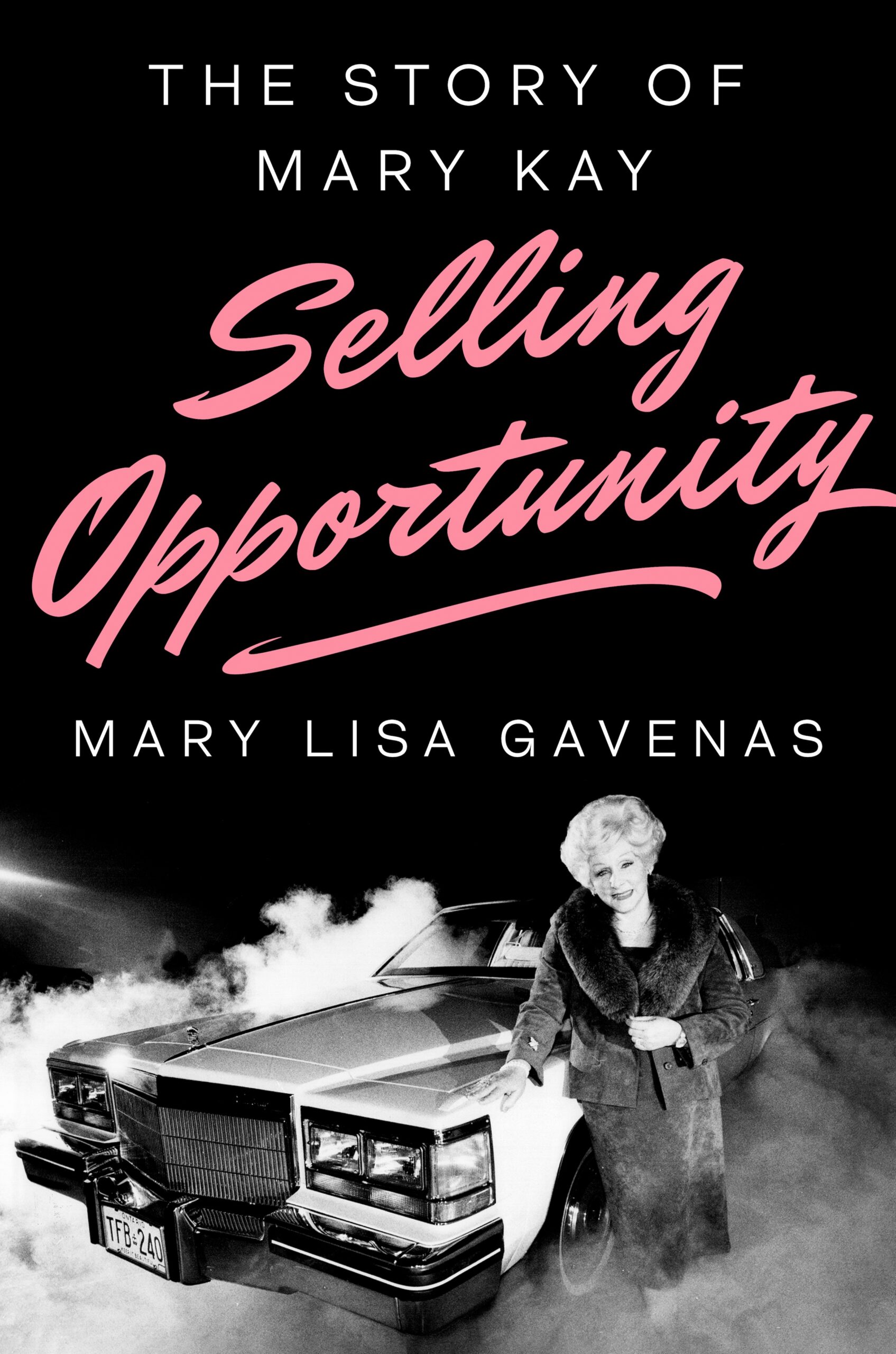
What path lead you to the story of Mary Kay Ash and her creation of Mary Kay Cosmetics? Why do you think it’s important to tell this story today?
For a biographer, Mary Kay Ash was the best of both worlds: undocumented American history and the rags-to-riches story of a public figure.
She belonged to a demographic that historians don’t really examine. Mary Kay was a dutiful daughter and diligent student who believed every bromide she ever heard about hard work making dreams come true, over-performed in any task she was assigned, and yet still found herself in a dead-end marriage with two babies by the age of eighteen. As the success of her company demonstrated, she proved to be far from the only woman desperate for a second chance and self-invention.
Writing that story let me dig into the culture of evangelical capitalism, how we are brought up to define the American Dream, traditional gender roles, women’s access to capital, and a lot of other issues that are especially topical today.
All that, plus a page-turning personal history that ended up with Mary Kay being the first woman to chair a company on the New York Stock Exchange and the only woman in Forbes Greatest Business Stories of All Time.
A man with that level of influence on American culture would have been the subject of a biography long ago.
Most of my readers will recognize the name Mary Kay as a product—and probably have opinions about direct selling as a business model—but know little about Mary Kay as a person. (Me included before I read your book.) Are there particular challenges in writing about a figure who is best known as a brand?
Women regard beauty brands as a referendum on taste. This is not a brand you’ll see on the cover of Vogue, so the biggest challenge is getting them to pick up the book.
Once you get past that, most people assume this book will be an endorsement of her brand and/or current MLM business models. It’s quite the opposite. But you have to read the book to realize that.
Writing about a historical figure like Mary Kay Ash requires living with her over a period of years. What was it like to have Mary Kay as your constant companion?
After seeing so much video, reading so much publicity, and talking to so many people who knew her, I found myself thinking, “Hmmm . . . I bet she would have done this next. . . . “ I started developing a “spidey sense” about what she left out of her life story. Intuitions led me to biographical details that nobody else had been able to find: her parents’ divorce and remarriage, her sketchy stepfather, her first husband’s work at a nightclub known as a drug and gambling den, her financial bailout for her third husband, etc.
What was the most surprising thing you learned working on this book?
That anybody could write anything about Mary Kay and get away with it. Hard to imagine that happening in coverage of Bill Gates, Warren Buffett, or any other male CEO.
During her lifetime, Mary Kay made that work to her advantage. She was an easy story: campy, quotable, cooperative. No fact-checking needed. Even if the story was inaccurate or insulting, she would still send the reporter a thank you note. So she got a lot of coverage, which she used to build her brand.
How does your previous career as a beauty journalist inform your response to Mary Kay, and Mary Kay Cosmetics?
Mention the name Mary Kay Ash to a beauty editor and she will make a moue of distaste, perhaps followed by a graceful shudder. I’m sure that was one of the things that attracted me to the subject.
I left the beauty beat in 1997. Well before that, I was known as the cranky one who asked inappropriate questions at press conferences. Ruth Whitney, Glamour’s editor-in-chief, had recruited me as Beauty Features Editor in the early 1990s, a time when the magazine was using its considerable clout to promote Susan Faludi’s Backlash and Naomi Wolf’s The Beauty Myth. Whitney added me to the magazine’s coverlines meeting and let me focus on ingredients stories and female entrepreneurship; both years that I was on staff, Glamour was a finalist for the National Magazine Award for General Excellence.
I was not so lucky with other editors at other titles. The perks of being a top beauty editor were phenomenal, so it was not a job that most women willingly surrendered. But, one fine day, I found myself in a limo going from the Chanel sample sale to an all-the-caviar-you-can-eat event at The Four Seasons—bored with being a beauty editor—and I realized it was time to stop. My first book, Color Stories, put the nail in that coffin.
We’re all familiar with the challenges of finding sources for writing about women from the distant past and little-known women. What are the challenges of writing about a prominent woman from the twentieth century?
People suspend their willingness to put themselves in another place and time. As history comes closer to their own lifetime, solipsism takes over. I’ve had people ask why Mary Kay didn’t jump on the bandwagon for second wave feminism. They don’t consider that, in Texas, it was illegal for a woman to open a bank account, take a job, or write a check without her husband’s permission—a law didn’t change until 1968 and a culture that didn’t change until much later.
You also find yourself playing whack-a-mole with the internet. For example: Type Mary Kay’s name into a search engine and Biography.com will dish up an official-looking factoid explaining that she was “hired away” by World Gift in 1952—which was a full year before World Gift was founded and at least two years before Mary Kay ever considered working for them. (Sadly, that one made it into a NewYorker.com piece: proof of how pervasive the disinformation can be.)
Selling Opportunity is as much—or more—a history of direct selling as it is a biography. Why did you decide to take this approach?
There was no way to write about Mary Kay without writing about the business that consumed her every waking hour.
I was already a couple of months into the project before I learned that I was going to have to figure out a lot of the business history for myself. The major work on the subject, sociologist Nicole Woolsey Biggart’s wonderful Charismatic Capitalism, published in 1989, included a high-level history of early direct sales companies. But, as I tracked down original documents of those early companies, I found an ad hoc, make-it-up-as-you-go-along, improvisatory industry and not the organized, intentional enterprises described in her book. I also saw found brilliant African-American businesswomen, like Annie Turnbo Malone and Madam C. J. Walker, who had not been mentioned.
So I took a different approach. Borrowing from my start as a reporter, I did “history from the ground up” documentation in imitation of my heroes Studs Terkel and the late Mike Wallace, who headed the Gotham Center for New York City, where I was listed as an “expert resource” from 2003–2015.
I saw Mary Kay as a figure who—like Henry Ford or Dale Carnegie—synthesized cultural influences and then sold that synthesis back to her customers. She was a one-woman historical feedback loop.
Readers have alternately described Selling Opportunity as a hagiography or as a hatchet job, depending on how they feel about Mary Kay Ash. Why is Mary Kay such a polarizing figure?
Class prejudice. Mary Kay was as a working class Southern girl who became a teenage mother. She loved Liberace. She drove pink Cadillacs. She wore big wigs and the kind of jewelry that fashion magazines do not find to be in good taste. People either embrace that as authenticity or run far and fast in the opposite direction.
Regional prejudice plays a part too. Mary Kay is identified with traditional gender roles, the motivational speaking industry, the Southern Baptist Convention, and conspicuous consumption. Those are not topics beloved by legacy media.
Then there’s politics. Donald Trump ran an MLM. Betsy DeVos, his former Secretary of Education, is married to the CEO of Amway. His former Secretary of Housing and Urban Development was a spokesman for a nutritional MLM. Lumping Mary Kay, who had a massive stroke in 1996 and died in 2001, with current MLM culture gives any pundit a lot of clicks.
Selling Opportunity straddles the boundary between biography and business history. How did you balance those components in telling Mary Kay’s story?
Mary Kay was an ideal subject—a one-woman history of direct selling. Her life touched on everything I needed to tell that story.
What she didn’t experience directly, she experienced indirectly through her many marriages. For example: Husband Number Two started with the old tea wagon traditions inherited from the 19th century, then moved to Fuller Brush, the company that changed the image of the door to door salesman; thanks to Husband Number Four, she had a sister-in-law who founded an outrageously successful company that later provided the model for Mary Kay’s own recruiting and rewards; Husband Number Five had been involved in one of the era’s most notorious network marketing scams. And so on . . .
Your previous book, Color Stories, is an engaging look behind the scenes in America’s beauty industry. Was it a challenge to make the leap to a historical narrative?
A lot happened between that book and this one.
Color Stories came out in 2002, after I made the switch from lifestyle to business reporting, a beat that tends to integrate lots of historical narrative. I was working full-time, finishing a master’s degree in the history of material culture, and writing an academic reference, The Fairchild Encyclopedia of Menswear (Bloomsbury, 2008). That book included hundreds of biographies and brand histories, so that gave me plenty of practice.
After that, I was looking at PhD programs when I won a Leon Levy Fellowship for Biography. That was a life-changing experience: I had a full year to research, develop Mary Kay’s story, and discuss my work with distinguished practitioners. When the fellowship ended, I also benefited from a year at the Wertheim Study of the New York Public Library.
Unfortunately, I had to put reporting on hold for a dozen years because I became a self-supporting single mom—that “Can you be in Shanghai by Saturday?” schedule doesn’t work when you’re raising a child—but I was able to sneak in some academic writing and conference presentations. It’s no coincidence that this book finally came out the same year that my son started college.
Is there anything else you wish I had asked you about?
I changed my writing style for this book. Selling Opportunity uses a lot of idioms to help readers understand characters who used those tropes.
I also committed to a non-academic writing style. True, this book has over a thousand end notes, but I didn’t want it to read that way. Going back to Terkel and Wallace again, I am a fan of accessible history—that’s how I became a fan of your blog.
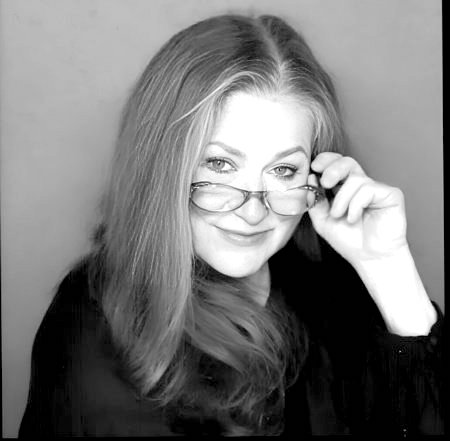
After her start as a reporter and editor on daily newspapers, Mary Lisa Gavenas became an editor at Mirabella, Glamour, and InStyle magazines, was twice a columnist for ELLE, and freelanced for publications ranging from Salon to Fast Company. Writing for both the academic and popular press, she is the author of Color Stories: Behind the Scenes in America’s Billion-Dollar Beauty Industry (Simon & Schuster) and The Fairchild Encyclopedia of Menswear (Bloomsbury, 2008). Her current book, Selling Opportunity, a NYT Editors’ Choice, grew out of her fellowship at the Leon Levy Center for Biography. Follow her online at https://marylisagavenas.com/