




From the Archives: Road Trip Through History–Fort Sumter
I am reminded a little after the fact that April 12 was the anniversary of the fall of Fort Sumter, which further reminded me of our spectacular visit to the fort in January, 2017. Enjoy!
***
My Own True Love and I are spending a long weekend in Charleston, South Carolina. For me, it’s a vacation/work sandwich. Yesterday we bopped around together doing history-buff stuff.* Today he heads off for twenty-four hours with his grandson’s Cub Scout troop aboard the USS Yorktown while I settle in for a day of reading and writing. Tomorrow, we resume bopping.

The center of our first day was a visit to Fort Sumter, where the Civil War officially began.** As always, the National Park Service did an excellent job.
Because Fort Sumter is on a island in the mouth of Charleston’s harbor, the visit begins with a boat ride, offered through an official park vendor.*** I must admit, I grumbled at the idea of a narrated boat “tour” of the harbor with only hour on the ground at the fort. I should have had more faith. A hour was just about the right amount of time.
If you have the choice, I recommend the first trip of the day because it includes a flag-raising ceremony. The ranger began with a brief, impassioned account of the fall of Fort Sumter on April 12, 1861, including a description of the role that the American flag played in the events on Sumter. (Stay tuned for some of the details.) Then she asked for help raising the flag. Twenty or thirty visitors (including me and My Own True Love) lined up to help unfold and hoist the flag. Before we began, she asked us to introduce ourselves to our neighbors in the line. It was moving and meaningful—a moment of unity in which no one mentioned the election or the inauguration that was going on as we shook hands and remembered a time of national division.
Once the ceremony was over, we were free to explore the ruins of the fort and the excellent small museum. We would have enjoyed the visit even if all we got out of it was a more detailed version of the events of April 12, 1861—the ranger was interesting, the boat ride lovely, the weather was amazing. But, as is so often the case, the NPS did a good job of putting the place in its broader historical context, including a small exhibit on the role of African-American slaves in the fort’s history. Here are some of the things that caught my imagination:
The fort was built as part of a string of coastal fortifications, planned as a result of the inadequacy of coastal defense in the War of 1812. (At some level, armies always plan for the last war. And really, what choice do they have?) They built a man-made island in the mouth of Charleston’s Harbor in 1829, using sand and 70,000 tons of granite from New England. Intended for a garrison of 650 men with 135 guns, the fort was almost completed by 1860 but it was not yet manned When Anderson and his men arrived at the fort, they raised the American flag there for the first time.
The military professionals of the Union and Confederate armies were drawn from the same small pool of big fish: Brigadier General Pierre G.T. Beauregard led the Confederate troops that bombarded Anderson and his men. Anderson was Beauregard’s artillery instructor at West Point. This is the kind of thing that would lead to dramatic tension—or charges of implausibility—if I wrote historical fiction.
Major Anderson was allowed to surrender with full honors, including the right to take his flag with him. At the war’s end, on April 9, 1865, he raised the same flag over Fort Sumter once more.
The story of Fort Sumter didn’t end with Anderson’s surrender. The fort remained a Confederate stronghold for the next four years despite repeated Union efforts to recapture it. The Confederate garrison never surrendered. They withdrew from the island when Sherman’s march threatened the South Carolina capitol.
The ruined fort was brought back into service during the Spanish-American War, when the army constructed a large concrete battery on the former parade ground, and it remained in service as part of the coastal defense until Pearl Harbor, when it became clear that aviation was the name of the coastal defense game.
*And eating. Because everything you hear about food in Charleston is true. The only thing that saved us from dyspepsia and blimpitude has been lots and lots of walking.
**For those of you who are unfamiliar with the story or want a refresher, here’s a recap:
In November, 1860, Abraham Lincoln was elected president. On December 20, South Carolina voted to secede from the Union. By March 2, a total of seven states had seceded and seized Federal forts and naval yards throughout the South. Fort Sumter, an unfinished red brick fortress built on a man-made granite island, was one of the few to remain in Federal hands, thanks to peremptory action by Major Robert Anderson.
Anderson commanded two companies—a total of 85 men, including musicians—at nearby Fort Moultrie. Six days after South Carolina seceded, he decided Moultrie was impossible to defend and moved his troops in the night to Sumter. The Confederate government saw Anderson’s transfer as an act of aggression. (Unlike, say, seizing Federal forts. Partisanship blinds us all.)
The fort became the emotional focal point of the conflict between Union and Confederacy. The small garrison was cut off from resupply or reinforcement, but refused to surrender the fort to Confederate control. Anderson, a Kentucky native and former slaveholder, was praised as a hero in the North and reviled as a traitor in the South. President James Buchanan, at the end of his term of office, was unwilling to trigger civil war by attempting to relieve the besieged unit and equally unwilling to trigger a public outcry by recalling the troops from Sumter. He chose instead to leave the problem for his successor.
When Abraham Lincoln took office on March 4, the garrison at Sumter had less than six weeks of food left. Lincoln’s cabinet told him it was impossible to relieve the fortress and urged him to evacuate Anderson’s troops as a way of reducing tension between North and South. Popular opinion screamed for Lincoln to send reinforcements to the “gallant little band”. With public opinion eager for action, and no sign that delay would improve the chances of reuniting the country, Lincoln chose to resupply the garrison but not send reinforcements unless the Confederates attacked either the fort or the supply ships—a compromise that pleased no one.
Shortly after midnight on April 12, with resupply ships on the way, the Confederate government gave Anderson until 4:00 AM to surrender. Anderson refused. At 4:30 AM, the bombardment began. Although they had neither the men nor supplies to mount a meaningful defense, the Union forces held out for a day and a half before surrendering.
The war had begun.
***Only two round trips a day in January. There are more in the high season, but there are also more people who want to go. Plan ahead so you aren’t disappointed.
Bette Nesmith Graham, Who Regularly Saved My Life (or at Least My Sanity) in College

Returning to the idea of women who were inventors and/or entrepreneurs, allow me to introduce you to Bette Nesmith Graham, a struggling single mother who founded what became a multi-million dollar business in her kitchen[1].
In 1954, Bette Nesmith Graham was a divorced single mother who supported herself and her son, Michael,[2] by working as the executive secretary for the chairman of the Texas Bank and Trust in Dallas. But the introduction of new technology to American offices, in the form of IBM’s electric typewriter, threatened that position and her livelihood.
Nesmith Graham was an excellent secretary overall, but she was not a good typist. The transition to an electronic typewriter was a nightmare. The new typewriters allowed typists to work more quickly, but they had sensitive keys, which triggered more typos than the stiffer manual typewriter keys. Worse, they used carbon ribbons instead of fabric ones: when typists tried to fix a mistake with a pencil eraser, the carbon ink would smear all over the page, meaning that a secretary often had to retype an entire page because of a single mistake. As far as Nesmith Graham was concerned, it was lose/lose.
Even though the position of executive secretary was as high as a woman could go as a clerical worker, she lived paycheck-to-paycheck on her salary of $300 a month.[3] to make extra money, she would take on side jobs, which often used the artistic skills she had learned from her mother, who was an artist and small business owner. One of those jobs was helping dress display windows at the bank that Christmas. Watching the display artists paint windows with a festive scene, Nesmith Graham noticed that when they made a mistake they painted over it. It was an “aha!” moment. Why couldn’t she do the same thing when she made a typing error?
She started with a small watercolor brush and fast-drying water-based tempera paint that she tinted to match the bank’s stationary. She brought it to the office in nail polish bottles, which she hid in her desk so her boss wouldn’t see. But while her boss might not have noticed her careful corrections using the paint, other secretaries did and asked her to make bottles for them.
Soon she was staying up late at night working in her kitchen, making batches of “Mistake Out” in her blender and filling bottles. Determined to make it a viable business, she researched paint formulas in the local library. She collaborated with her son’s chemistry teacher to improve the consistency of the product and paid an industrial polymer chemist $200 to help her develop a formula that would dry more quickly.
Orders increased. She formed the Mistake Out Company in 1956, though she couldn’t yet afford the $400 fee to patent the idea.
At night she filled the growing orders from other secretaries in Dallas and sent samples to potential buyers. She sent IBM two typed documents, one with errors corrected with an eraser and one with her correcting fluid, along with a personal note in which she said “I truly believe that this can mean a turning point from the old methods—a new era.” She hoped IBM would be interested in marketing the product. IBM declined.
On the weekends, she traveled from Dallas to San Antonio and Houston trying to market the product.
Eventually orders increased enough that she hired her first employees. She paid her teenage son and his friends a dollar an hour to fill nail polish bottles using restaurant-style ketchup bottles, cut the tips of the brushing inside the bottle caps at an angle, and paste on labels.
It was, perhaps, inevitable that working two jobs would catch up with her. One day she signed a letter at the bank as “The Mistake Out Company.” She was promptly fired.
Without the safety net of her secretarial job, Nesmith Graham concentrated on building her correction fluid business. In 1958, she renamed the product “Liquid Paper” and could finally afford to file for a patent. That same year, the business made a breakthrough when an article in a trade magazine for secretaries, called The Secretary, described Liquid Paper as “the answer to a secretary’s prayer.” Soon after that General Electric placed an order for 400 bottles in three colors—her first large order. Orders from other large companies followed, including IBM. (I bet Graham did a dance of triumph the day that order came in. Or maybe she blew a raspberry in the direction of Big Blue.)
With the help of her second husband, Robert Graham, a former frozen food salesman who used his experience to sell Liquid Paper to office supply stores across the country, the business grew. She moved the business from her kitchen to her garage, to a trailer and then to a four-room house. In 1956, Nesmith Graham was selling 500 bottles of Liquid Paper each week, produced in her kitchen. By 1968 what was then the Mistake Out Company was a million-dollar business, producing one million bottles of Liquid Paper annually.
In 1968, Nesmith Graham changed the name of the company to Liquid Paper Corporation, and filed for a trademark. In 1969, she built a new company headquarters that was well ahead of its time in terms of making it easy for employees to work there. It was wheel-chair accessible 21 years before the passage of the Americans with Disabilities Act. It included an in-plant library, an employee-owned credit union, and, perhaps because of her struggles as a single mother, an onsite childcare center.
The company continued to grow: at its height, it produced 25 million bottles of Liquid Paper a year. That’s a lot of typos. (More of them were mine than I like to admit.)
She faced a new business challenge in 1975, following the end of her marriage . After their divorce, Robert Graham, who was then chairman of the board, convinced company executives to bar Nesmith Graham from both the building and any business decisions. He attempted to change the Liquid Paper formula, which she had spent ten years perfecting and which was legally protected as a trade secret. If the formula was changed, it would lose its trade secret protection and Nesmith Graham would lose her royalty rights.
She fought back. (Are you surprised?) After regaining controlled of the company, she sold it to the Gillette Corporation for $475 million in 1980. She died six months later, at the age of 56.
On behalf of all of us whose typing wasn’t our strongest skill, I thank you, Bette Nesmith Graham.
[1] The single mother equivalent of tech bros inventing things in their parents’ garages. It’s a cliche for a reason.
[2] He became a musician, best known as a member of the pop band The Monkees. (I’ve suffered from an ear worm or two since learning this.) He later founded a multimedia production company, Pacific Arts, and helped pioneer music videos. But I digress.
[3] Roughly $3500 today. Slightly less than the average secretary makes in Dallas today.
From the Archives: Bessie Beatty and the Red Heart of Russia
A post form 2022 for your amusement while I catch up on the things that piled up during Women’s History Month. New posts soon, I promise!
***
I was recently digging about in the history of women’s magazines in the early twentieth century when I came across a familiar name: Bessie Beatty. I knew Beatty’s work from her reporting on Russia’s Women’s Battalion of Death, which I wrote about in Women Warriors. At the time, I was totally engrossed in the women Beatty wrote about and gave no thought to the reporter herself. Funny how things change.
Beatty got her start in journalism at the age of eighteen, working for the Los Angeles Herald while she was still in college. Partway through her senior year, she left college to report on a miner’s strike for the Herald.
Her work in Nevada caught the attention of Fremont Older, editor of the San Francisco Bulletin.* At the Bulletin, Beatty ran a feature page, titled “On the Margin” [!!!], in which she covered women’s issues and social work, broadly defined. (Among other things, she ran a campaign on behalf of prostitutes who were put out of work when the red light district was closed. Not your typical social justice campaign even today, let alone in the first years of the twentieth century. )
In 1917, as the Great War raged on, Older sent Beatty on a large-scale reporting assignment: a series of articles called “Around the World in War.” Four days after she sailed, the United States declared war on Germany.
American correspondents, officially accredited and otherwise, headed toward Europe. Beatty and a few others headed east. She reported on social and cultural traditions in Hawaii,** Japan, and China, but her real destination was the revolution in Russia. Like other reporters who built their careers reporting on social justice issues and exposing corruption in government, she had a romantic vision of the new socialist government and wanted to see it first hand.
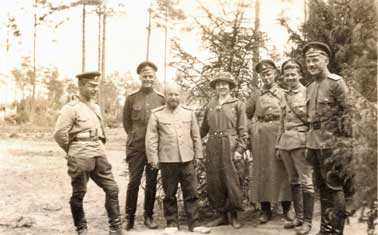
She traveled traveled from the Pacific port of Vladivostok to Petrograd (formerly, and once again, St. Petersburg) aboard the TranSiberian Railway, a twelve-day trip through Russia to the heart of the revolution. Once in Petrograd, she managed to get a room in the War Hotel, where Russian officers lived with their wives. With the hotel as her base, she followed Russia’s involvement in the war and the course of the revolution. She traveled to the front, getting within 160 feet of the German trenches, and sat in a concrete observation station from which she could see barbed wire of no-man’s land through a narrow peephole. She and another reporter, Rheta Childe Dorr, spent a week with the Women’s Battalion of Death, traveling with them to the front and sleeping with them in their barracks. She interviewed sailors, soldiers, peasants and the woman in the street.
When the Bolsheviks overthrew the Provisional Government in November, Beatty witnessed every stage of the new revolution, aided by a pass from the Military Revolutionary Committee that gave her access everywhere in the city. She spent hours in the Soviet, listening as revolutionary leaders argued about the shape of the new state. She interviewed political prisoners, including ministers of the deposed Provisional Government
Like other American journalists drawn to report on the revolution, she believed in the experiment she was watching unfold. (In fact, she would later testify in favor of the Bolshevik Revolution before Senator Overman’s sub-committee on the influence of Bolshevism in America.)***
In February 1919, Beatty and two other journalists, Madeline Doty andLouise Bryant, decided it was time to leave Russia. They caught the last train to leave Petrograd for Finland, which was fighting to free itself from Russian rule, and then traveled by sleigh from the northernmost corner of Finland into Sweden. (*Brrr*)
Like many of her fellow journalists, Beatty wrote a book about her experience of the revolution, The Red Heart of Russia (1918). Her sentiments about the revolution, as she expressed them at the end of the book, were complicated: “Mingled with my sorrow, the morning I left Petrograd, was a certain exultant, tragic joy. I had been alive at a great moment and knew that it was great.”
Back in the United States, Beatty chose not to return to San Francisco. Instead she stayed in New York, where she finished her book and worked as the editor of McCall’s from 1918 to 1921.
She soon grew eager to travel as a journalist again. Her articles on politics, women’s rights, and even tourist destinations, appeared in popular magazines such as Good Housekeeping, The New Republic, Women’s Home Journal, and Century.
Beatty returned to Russia in 1921. It took her weeks to get into the country, but once there she stayed for nine months, writing a series of interviews with Bolshevik leaders, including Lenin and Trotsky, for the San Francisco Bulletin.
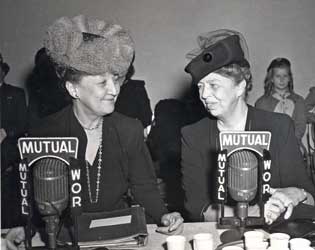
She spent some time as a screenwriter for MGM. She remained a dedicated activist. And in 1940, she entered a new career as the host of a popular radio show on WOR in New York. During World War II, she used her show to sell more than $300,000 in war bonds.**** She continued to broadcast until her death in 1947 at the age of 61.
Describing her on-air personality, Time magazine described her as “a short, voluble bit of human voltage.” Not bad.
*Older was unusually supportive of women reporters and gave a number of talented women, including Rose Wilder Lane, their start in a field that was not always welcoming to women.
**Which was annexed by the United States in 1898 and became a US territory in 1900. Just to give you a piece of chronology to hang your hats on.
***An early version of the Red Scare.
****$5,270,000 in today’s dollars.