




Women’s History Month comes to an end, again
As always, I have mixed feeling about the end of Women’s History Month.
As always, I’ve loved running this series of mini-interviews with people doing interesting work in the field of women’s history. I hope you’ve enjoyed it, too.
Over the last few months[1] I’ve had a chance to interact with some of my history-writing heroes, and find some new ones. I’ve added books to my TBR list. I’ve promoted people who are doing wonderful work in our shared project of putting women back into history. And I’ve tried to answer some really hard questions—as always, people posed some doozies!


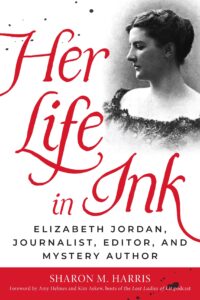
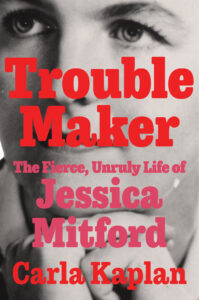
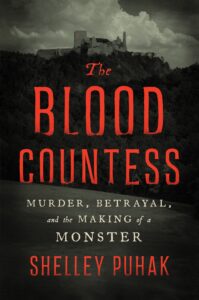
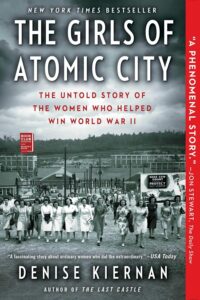
But I have to admit, this year Women’s History Month has been a little harder. In previous years there has been a sense of celebration in all the places I hang out online. This year organizations still hosted women’s history programs, and I deeply enjoyed the chances I had to speak. People still posted stories about women doing amazing things. But it’s all been less exuberant. Instead of joy, there has been a sense of doggedness. An insistence that women’s history will not be erased. Or maybe that’s just me—I’m pretty dang tired.
In the past one of the questions I asked the people I interviewed was “Do you think Women’s History Month is important and why?” Every year, someone asked me the same question in return. This year I didn’t ask, because the answer is clear. Most of us who are involved in this work wish we didn’t need Women’s History Month, or Black History Month, or any of the other history months and heritage months that now mark our calendars . That we didn’t have to put up big flashing signs that say “WE WERE THERE, DAMN IT!” once a year to remind people that history should tell everyone’s stories. That we have already integrated those stories into history as we teach and read about it.
Today it seems like we are further away from that goal than we were even a year ago.
As far as I’m concerned, that means I’m going to keep telling you stories you may not know, and that I didn’t know either–year in and year out. I’m going to be a little louder than I have been in the past. I hope you’ll come along for the ride. We’re all in this together.
[1] This is always a five-month project. I start sending out invitations to possible guests in November. And I always scramble to get the last few posts up at the end of March.
Talking About Women’s History: Three Questions with Della Leavitt
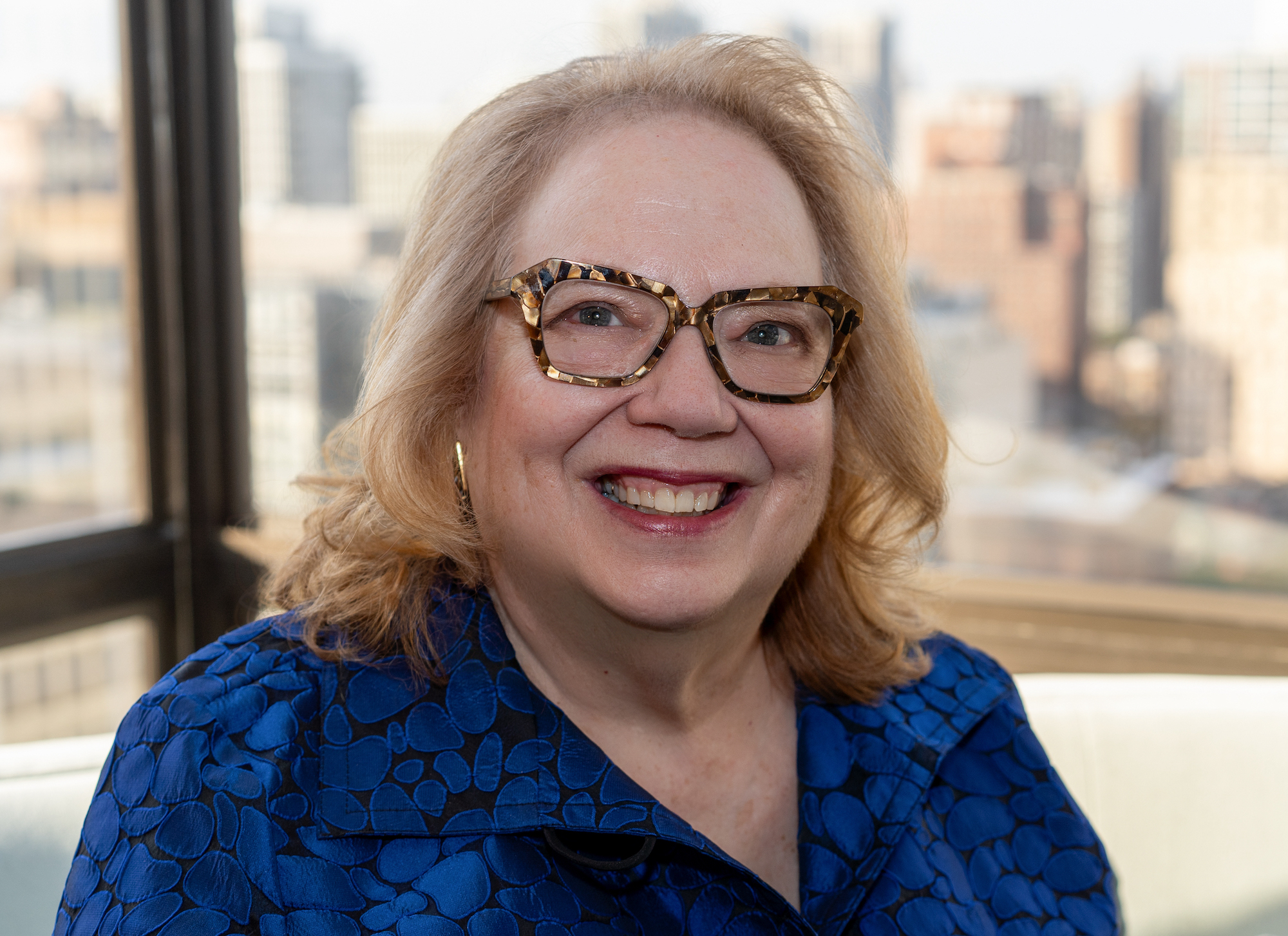
I am delighted to wrap up this year’s Women’s History Month Q & A series with Della Leavitt. She and I have been following each other around the writing world, on-line and in real life, for a long time.
After careers in tech and math education, Della began an intensive DIY study of writing fiction within the vibrant Midwestern writing community including coursework and a fellowship at the Newberry Library. She continues to study within editors’ private workshops. Della served on the Board of Directors of the long-running Off Campus Writers’ Workshop for four years. She lives in Chicago with her spouse of several decades and their fearless feline Vic (Victoria). Their son and his wife live nearby along with daughter, Nora Shirley.
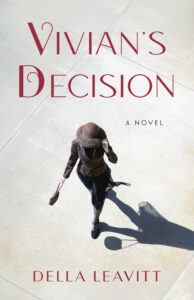
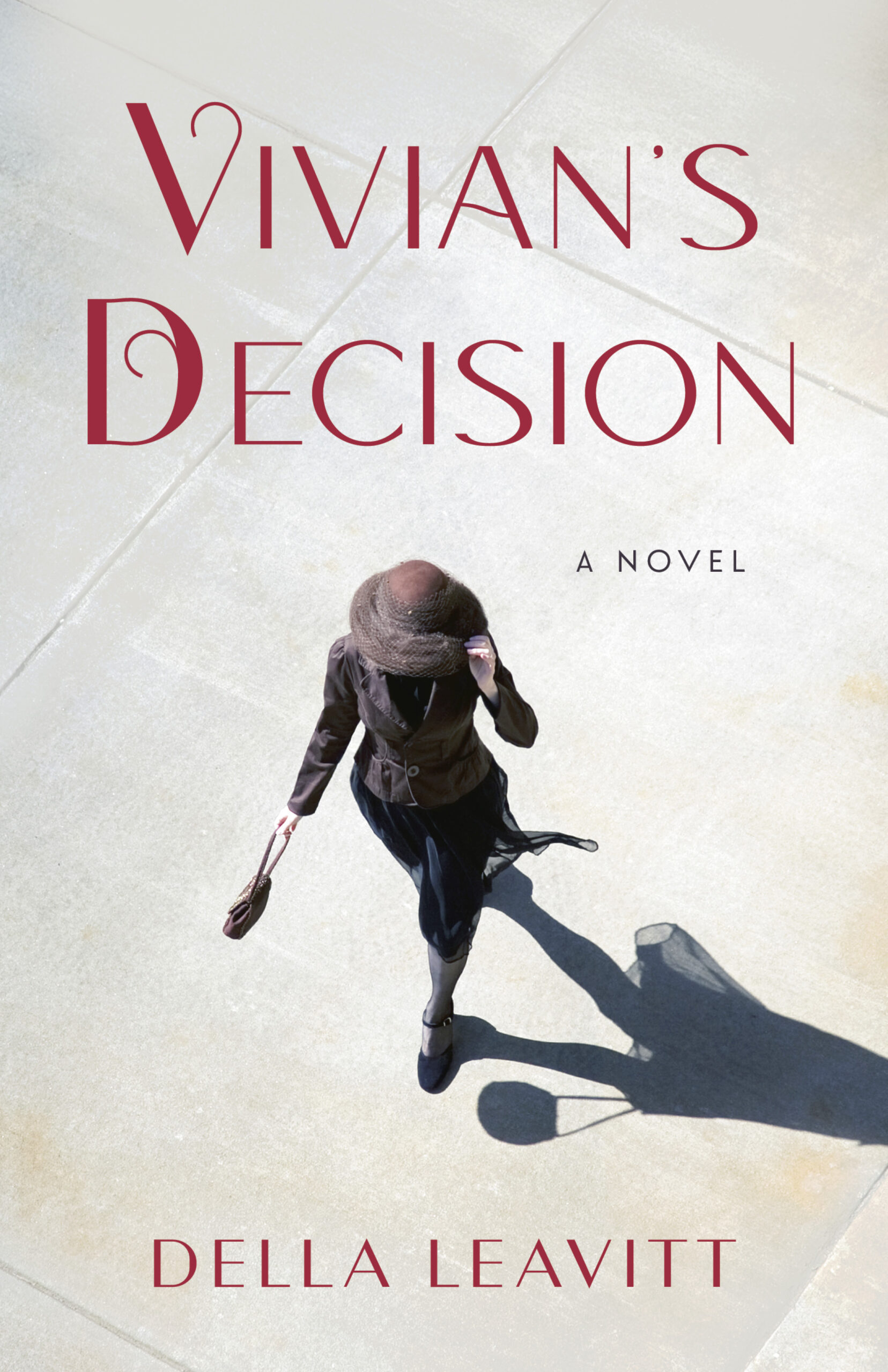
Her debut novel, Vivian’s Decision (She Writes Press) is evocative work of historical fiction set in 1956 in Chicago. It is the story of Vivian Jacobson, an overwhelmed mother grappling with whether to have an illegal abortion, who discovers her Jewish immigrant mother faced a similar crisis when pregnant with Vivian. Vivian’s Decision is an all too relevant story of repeated history, female friendship, and the strength that it takes to make choices of one’s own. It will be released on April 14, 2026 and is available for pre-order now.
Take it away, Della!
What inspired you to write Vivian’s Decision?
Not exactly “what”, but “who.” My foray into creative writing came later in life than most after my lengthy careers in the tech field and mathematics education. I had an idea to write the serendipitous story as a gift for my (now, late) mother’s 90th birthday about how my parents met after my father returned to Chicago after fighting in Europe during World War II followed by several months of German occupation. I had long been a discerning reader of fiction and participated in a women’s book group that ran for 30 years, but I never imagined I could become a writer. I soon realized how much I needed to learn if I were to write artful fiction and signed up for many workshops, including Chicago’s StoryStudio and the Off Campus Writers’ Workshop.
I became curious about mother’s mother, a Russian Jewish immigrant who died before I was born. I’m named for her. Her Hebrew name was Dena Rivka, but when she arrived at Ellis Island in 1906, the officials named her Della, a popular female “D” name during that time. She died around age 60 (although we never knew her exact age) in Los Angeles where my mother’s six siblings and their families had moved during the 1940s when they left Chicago. Each of my Grandmother Della’s seven children revered their mother and often spoke of her hard life. Each one named a child for her, often with the initials “D.R.” I’m Della Ruth. There are also Delle, Dan, Debi, Dennis, Denise, and Donna. I wondered whether having seven children–five born at home in a flat on Chicago’s West side and two at Mt. Sinai Hospital—had shortened my grandmother’s life.
Vivian’s Decision began as the story of Vivian’s immigrant mother, Hannah Kolson, as I began imagine how powerless women must have felt, particularly poor and immigrant women, with almost no control over childbearing. I recalled one of my aunts relating a story when she acted as her mother’s English language go-between. The local druggist admonished my grandmother: “if you don’t want this baby, I’ll take him!” That scene grew in my imagination. It appears in an early chapter of Vivian’s Decision.
As I wrote, I felt strongly that I wanted to portray the lives of Jewish immigrants who came to Chicago in the early 20th Century to escape violent Tsarist pogroms and also, the next generations of their Chicago-born children and their families. How they strived to assimilate during the post-WWII Cold War era. This is a world that no longer exists yet resonates with many issues in today’s United States including antisemitism and the backlash against immigrants or perceived immigrants.
Vivian’s Decision deals with questions of reproductive rights in a time before Roe v. Wade made abortion legal. Are there special challenges in writing about a historical event with echoes in current politics?
The women I wrote about in Vivian’s Decision who lived in the first half of the 20th century all knew that abortion was against the law, despite it being an act many would seek out for various reasons. During my 2021 research fellowship at the Newberry Library, I found statistical references often broken down by religion and the number of a mother’s previous births. In Chapter 11 of Birth Control: Its Use and Misuse (1934, Harper and Sons), titled “Abortion,” Dorothy Dunbar Bromley cites and summarizes several prominent studies:
- “The great majority of abortions occur today among married women.” (p. 138)
- “Out of 5010 patients of the Birth Control Clinical Research Bureau in New York who admitted to having abortions 28 per cent were Protestant, 26 percent were Catholic, and 43 per cent were Jewish, representing the same ratio of religious belief as obtains among all of the Clinic’s patients. After the fifth pregnancy, the Catholic ration led all others.” (p. 142)
- “There are all kinds and varieties of abortionists, ranging from extremely skillful surgeons to one-horse practitioners and bungling midwives. …Abortionists of any class, as a rule, avoid trouble by refusing to abort a patient who is more than two and a half months along…” (p. 143)
As with quantification of any illegal activity, it is unlikely these counts are accurate, but the large numbers imply that the practice of abortion was not uncommon, although each woman would have made her decision specific to her situation. This would always be an individual act.
There is a tendency, as with all historical fiction, to write about an action like abortion through the lens of today’s mores. I tried to keep in mind the perspectives of women and men of Vivian’s Decision who lived in the 1920s, 1930s, 1940s, and 1950s who never dreamed abortion could become the law. My own view was different. As a young woman, I was a member of the Chicago Women’s Liberation Union who celebrated on the night of the 1973 U.S. Supreme Court Roe v. Wade ruling. By that time, abortion was legal in New York, New Jersey, and Puerto Rico. It was clear that nationwide legalization was imminent.
Before the Dobbs decision in June 2022 that overturned Roe v. Wade, I had already written a number of drafts of Vivian’s Decision with several different endings. Given the dramatic increase of draconian restrictions including banning all elective abortions and termination of unviable pregnancies that threaten a mother’s life, I began to feel the urgency to portray a 1950s middle class mother with a supportive husband, who had options. Vivian Jacobson had a referral from a reputable obstetrician to an (albeit, illegal) abortion provider. When at last, I turned to Pulitizer Prize-winning poet, Gwendolyn Brooks’ 1947 poem “The Mother” to explore the feelings and universality of this truly individual decision, I found the emotional heft I needed to write an ending attuned to the times.
Who are some of your favorite writers of historical fiction?
Like many historical fiction readers, author Kate Quinn stands out for me. Her novels weave twisting plots, and often unlikely, heroic female characters that recreate eras replete with vivid period details. Among my favorites of Quinn’s novels are The Briar Club (2024), taking place in a 1950s McCarthy-era rooming house in Washington, DC; The Huntress (2019), in which a Russian female bomber pilot a British male journalist, and linguist, team up on a worldwide hunt for Nazis after World War II has ended; and The Rose Code (2021) that follows three women from divergent backgrounds who are recruited to serve as codebreakers in England’s Bletchley Park.
Along my writer’s journey over these last twelve years, I’ve been extremely fortunate to have met, befriended, and learned from several generous and talented authors, either in-person or remotely, over Zoom. All have enriched my life. In the last year, two of my contemporaries published well-researched, debut historical novels. Both also drew upon family history for their initial inspirations. Janis Falk grew up in Detroit’s Polish community. She now lives in Wisconsin’s Door County. Janis looked to her Depression-era forebears for Not Yet Lost (She Writes Press, September 2025). At the core of this novel are the hardships and triumphs that female cigar factory workers endured leading to their courageous strike in 1937. Leslie Schover grew up in the Chicago area. She’s a retired research psychologist living in Houston. Her debut novel Fission: A Story of Atomic Heartbreak (She Writes Press, January 2026) springs from when Leslie’s parents and older sister lived in Oak Ridge, Tennessee. Leslie’s father was a scientist who worked on the Manhattan Project. Her father was one of the scientists who signed the petition urging President Truman not to drop the atomic bomb before demonstrating the extent of the weapon’s potential devastation.
One of my favorite novelists, Elizabeth Berg, doesn’t always write historical fiction. While writing the first draft of Vivian’s Decision, I found inspiration in Berg’s historical novel, Dream While You’re Feeling Blue (2008) about a loving Chicago Irish family with
Want to know more about Della and her work? Check out her website: https://www.dellaleavitt.com/
From the Archives. Talking About Women’s History: Three Questions and an Answer with Dava Sobels
Every year I gather up my courage to invite at least one writer whom I do not know and whose work is extraordinary. This year that writer was Dava Sobel. I fan-girled all over the house when she said yes.
Dava Sobel is the author of Longitude (Walker 1995, Bloomsbury 2005), Galileo’s Daughter (Walker 1999 and 2011), The Planets (Viking 2005, Penguin 2006), A More Perfect Heaven (Walker/Bloomsbury 2011 and 2012), And the Sun Stood Still (Bloomsbury 2016), The Glass Universe (Viking 2016, Penguin 2017) and The Elements of Marie Curie (Grove/Atlantic 2024). She has also co-authored six books, including Is Anyone Out There? with astronomer Frank Drake, and currently edits the “Meter” poetry column in Scientific American.
Take it away Dava!

Image credit: Glen Allsop for Hodinkee
How do you choose subjects for your books?
Choosing a subject for a book is a little like choosing a romantic partner. You’re going to be alone in a room together for a long time, through periods that will feel dark and discouraging, so it helps to really like or even love the topic. I can honestly say that I’ve fallen in love with all the people I’ve written about — or with the story their lives embody. Mme. Curie, the central figure of my most recent book, proved to be the perfect pandemic companion. Her grit had seen her through griefs and challenges far more threatening than any aspect of my situation, and I took inspiration daily from her example.
Of course there has to be science in the mix to attract me. Real chemistry, say, or the dawn of astrophysics. I enjoy learning about and then trying to explain aspects of science as a creative human enterprise. Everyone knows that scientists “do research,” but most people have no idea what such research might entail, or how it would feel to be the scientist at work in this laboratory or at that observatory.
Because I write about the history of science, and can’t interview the long dead, I rely on archives for letters and diaries. If those kinds of materials don’t exist, or they’re written in a language I can’t read, then I consider that topic out of reach. Sometimes the existence of such a trove is reason enough to take on a book project, as happened when I learned that Galileo’s elder daughter, who was a cloistered nun, had written her supposedly heretic father more than a hundred letters that still survived. I felt that familiar rush of excitement, and figured I could probably revive my three years of university-level Italian, despite the lapse of three decades. The fact that Galileo’s replies had vanished over the centuries seemed problematic at first, but he’d said enough in other contexts to carry his end of their conversation.
The Curie archives were physically out of reach because of travel restrictions during the pandemic. Fortunately, however, the fact of Marie’s fame as a two-time Nobel Prize winner, coupled with the dangerous nature of the materials she handled, had resulted in the digitization of nearly every notebook and draft letter, including the hand-written grief journal that she kept through the year following her husband’s death. The letters to and from her two daughters had been collected and published as books, so I had all of those at hand as well. The Elements of Marie Curie is a particularly female story — a tale of scientific discovery, yes, but also of love and marriage, childbirth, miscarriage, difficulty nursing, misogyny, and widowhood.
What is the most surprising thing you learned doing research for your books?
By far the most surprising — even shocking — thing was the discovery of my own misogyny. This happened rather late in my career, and explains my decision to tell only women’s stories going forward. Of course, as a woman, I didn’t think I could be accused of misogyny, but I was wrong.
I learned this while writing my previous book, The Glass Universe, which tells the story of a group of women who worked at the Harvard College Observatory in the late 19th and early 20th centuries, where they made pivotal discoveries in astronomy. I had written about many key figures in the history of astronomy, including Galileo and Copernicus, and the story of the Harvard women appealed to me precisely because it focused on female astronomers. However, once I got to work, each one’s achievements surprised me. And why was that? At length I had to admit that I’d come to them with embarrassingly low expectations. It seemed I didn’t really believe women could do science. In spite of the encouragement I’d enjoyed from my own family, at school, and through decades as a professional science writer, I had not escaped the negative attitudes about women that were “in the air” when I was growing up in the 1950s.
After that transformative moment of confronting my latent undiagnosed misogyny, all I wanted to do was tell true stories that reveal women’s scientific prowess. When I learned that some 45 women had spent a formative period in Mme. Curie’s lab, I knew I had something new and important to say about her.
Two of your books, The Glass Universe and The Elements of Marie Curie, are group biographies. How did you decide which women to include?
The Harvard Observatory women numbered in the dozens, but only five of them achieved lasting fame (at least in the astronomical community) for their contributions. Still, five main female characters are a lot, plus the charismatic director who hired them, and the two wealthy heiresses who funded their research. I longed for one stand-out who could carry the whole story, but she didn’t exist. Eventually it struck me that the several hundred thousand glass-plate photographs of the night sky, which replaced direct observation by telescope for these women, connected everything and everyone in the story. That gave me the idea for the title, since the collection of plates is truly a “glass universe.” And of course the glass universe — very fittingly — encompassed the notion of the glass ceiling. In fact, the association is so strong that people often call the book “The Glass Ceiling” without realizing they’ve misspoken.
I had the opposite problem with Mme. Curie. She is a figure of such towering fame that nearly everyone has heard of her. Although she was never the only woman scientist, she’s the only one most people can name. My initial idea was to put her in the background of the narrative. Since the women arrived at the lab in a slow trickle at first, one per year, I thought I’d treat each one individually, moving chronologically and bringing in the facts of Mme. Curie’s life only as they related to her protegees’ experiences. That didn’t work at all. My editor, George Gibson, reminded me that although virtually everyone knew Mme. Curie’s name, her name was all they knew. Her personal story had to be the vehicle that carried all the others’ stories.
As with The Glass Universe, an inanimate character also figures in this book. It’s the periodic table of the elements. Each chapter title has two parts: the name of a person (usually a woman in the Curie lab, though occasionally a man) and the name of an element relevant to that person’s work.
My choices of individuals to feature depended partly on the importance or interest of their activities and partly on the amount of available information about them. Some of Mme. Curie’s female assistants flitted through the lab so quickly that they left no historical record, not even their full names. I’m still wondering whatever happened to the mysterious “Mlle. Larch.”


A question from Dava: Is Women’s History Month a good thing or a bad thing? Please elaborate.
I struggle with this question every March. And every March, my answer remains the same. It is neither good nor bad. But for now it is necessary. In fact, I would argue that it is more necessary than ever. As I write this, Federal agencies are ordering celebration of “cultural awareness” months paused or cancelled altogether. (Perhaps by the time you read this those orders will have been rolled back. We can only hope.)
In the meantime, I intend to celebrate Women’s History month as hard as I can. The fact is that many libraries, museums, and particularly schools only include women in their programming in March. Until we regularly teach students that women were involved in, well, everything, we need Women’s History Month.
Let’s party hard!
***
Interested in learning more about Dava Sobel and her work? Check out her website at http://www.davasobel.com/
***
Come back tomorrow for three questions and a answer from novelist Della Leavitt.