




From the Archives: Shin-Kickers from History -Olaudah Equiano
In every book I write I reach the point where I am so deep in the work that I have to stop writing blog posts and newsletters. I always hope to avoid it. That somehow I’ll be smarter, or faster, or more organized, or just more. This time I’ve managed to avoid hitting the wall for several months by cutting back to one post a month. But the time has come. For the next little while, I’m going to share blog posts from the past. (This one is from 2015.) I hope you enjoy an old favorite, or read a post that you missed when it first came out.
There will be new posts in March no matter what: we celebrate Women’s History Month hard here on the Margins. (I have some fascinating people lined up.)

Most accounts of the slave trade were written by slave traders, or by people dedicated to abolishing the slave trade. Few accounts were written by the slaves themselves. One important exception is The Interesting Narrative of Olaudah Equiano, published in 1789.
Olaudah Equiano was born in 1745 in what is now Nigeria. When he was ten or eleven, he was kidnapped and sold as a slave in Barbados. He did not remain in Barbados long. He was sold first to a planter in Virginia and three months later to a British naval officer. He spent most of his time as a slave working on British slave ships and naval vessels. One of his owners, Henry Pascal, the captain of a British trading ship, gave Equiano the name Gustavas Vassa, which he used for most of his life.
In 1762, Equiano was sold to Robert King, a Quaker merchant from Philadelphia. King allowed Equiano to trade small amounts of merchandise on his own behalf. He earned enough money to buy his freedom in 1766.
Once free, Equiano settled in England, where he worked as a merchant and became active in the abolition movement there. At the urging of his abolitionist friends, he wrote a memoir describing his capture and his experiences as a slave. The book was clearly designed as part of the movement: it began with a petition to Parliament and ended with an antislavery letter addressed to Queen Charlotte.* Although he included horrifying tales of the middle passage and West African slavery, he focused on his personal story–countering the popular image of the African slave as a heathen savage with that of a middle-class Englishman who improved his fortunes with hard work and just happened to be black.
The time of its publication in 1789 was good. William Wilberforce had brought his first bill for the abolition of the slave trade before Parliament. Abolitionist committees were flooding the country with copies of the shocking diagram of the slave ship The Brookes. With abolition in the air, The Interesting Narrative of Olaudah Equiano, or Gustavus Vassa the African, Written by Himself became an international best seller. ** Equiano did his part to make that happen. He traveled across the British Isles for five years promoting his book and his cause.***
Equiano died in 1797. It was 1807 before Parliament declared the slave trade illegal in Britain.
* No point in addressing it to the king. George III was known to be pro-slavery, or at least anti-abolition. The man always backed the wrong historical horse.
**It’s still in print today.
***Speaking as an author who has tried to actively promote a book for a period of months, this exhausts me just to think about.
From the Archives: Liar, Temptress, Soldier, Spy
In every book I write I reach the point where I am so deep in the work that I have to stop writing blog posts and newsletters. I always hope to avoid it. That somehow I’ll be smarter, or faster, or more organized, or just more. This time I’ve managed to avoid hitting the wall for several months by cutting back to one post a month. But the time has come. For the next little while, I’m going to share blog posts from the past. (This one is from 2015.) I hope you enjoy an old favorite, or read a post that you missed when it first came out.
There will be new posts in March no matter what: we celebrate Women’s History Month hard here on the Margins. (I have some fascinating people lined up.)

Nursing wasn’t the only role that women played in the American Civil War. Women on both sides of the conflict organized soldier’s aid societies, effectively transforming homes, schools and churches into small-scale factories and shipping warehouses in which they made and collected food, clothing and medical supplies. Eighty years before Rosie the Riveter, they worked in munitions factories, loading paper cartridges by hand. In the north, hundreds of women took over desk jobs in the growing Federal government, freeing up men to fight.*
Other women stepped even further outside of social norms. Several hundred women cut off their hair, disguised themselves as men, and enlisted to fight. Others used society’s assumptions about what women can/should/don’t/shouldn’t do as an effective cover for spying
In Liar, Temptress, Soldier, Spy, Karen Abbott tells the stories of four very different women who went undercover during the Civil War. Seventeen-year-old Belle Boyd, described by a contemporary as “the fastest girl in Virginia or anywhere else for that matter”, was a courier and spy for the confederate army, using her feminine wiles and her lack of maidenly modesty to manipulate men in both armies. Rose O’Neal Greenhow was a “merry widow” who formed a Confederate spy ring in Washington.** Her Union counterpart was Elizabeth Van Lew, a wealthy maiden lady in Richmond who was a known abolitionist and Union sympathizer. Disguising her actions under the guise of proper ladylike behavior, she ran an extensive and daring information network under the nose of her Confederate in-laws, with whom she shared a home. Emma Edmondson had disguised herself as a man for personal reasons two years before the war and traveled as a Bible salesman. When the war broke out, she enlisted in a Michigan regiment as Frank Thompson.
Taken together, their stories explore the boundaries of nineteenth century assumption about the roles of women. Which sounds ponderous. Trust me, in Abbott’s hands it’s anything but dull. Liar, Temptress, Soldier, Spy: Four Women Undercover in the Civil War is a rollicking good read.
*Unlike Rosie the Riveter, many women kept their new jobs after the war was over. One of the things that we tend to forget about war is the holes left by the men who don’t come back, not only in families but in society as a whole.
**I’ve always found it difficult to understand why a man in possession of critical military information doesn’t have warning lights flash in his head when the woman he’s having an illicit affair with wants to talk troop movements.
***Which is a big assumption, because I realize that people discover this blog and individual posts long after the fact. If you’re new here, welcome!
From the Archives: Fatherland
In every book I write I reach the point where I am so deep in the work that I have to stop writing blog posts and newsletters. I always hope to avoid it. That somehow I’ll be smarter, or faster, or more organized, or just more. This time I’ve managed to avoid hitting the wall for several months by cutting back to one post a month. But the time has come. For the next little while, I’m going to share blog posts from the past. (This one is from 2015.) I hope you enjoy an old favorite, or read a post that you missed when it first came out.
There will be new posts in March no matter what: we celebrate Women’s History Month hard here on the Margins. (I have some fascinating people lined up.)
*
If you dismiss history told in comic book graphic form* as the non-fiction equivalent of Classic Comics, you’re missing out. At its best, graphic non-fiction uses visual elements to tell stories in new and powerful ways.**
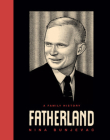 In her graphic memoir, Fatherland: A Family History, Serbian-Canadian artist Nina Bunjevac tells the blood-soaked history of the former state of Yugoslavia through the lens of one family’s story.
Fatherland centers on Bunjevac’s father, whose involvement in a Canadian-based Serbian terrorist organization led her mother to flee with her daughters to Yugoslavia in 1975 and ended with his death in a bomb explosion. Moving back and forth in time and place, from modern Toronto to Yugoslavia during both the Nazi occupation and the Cold War, Bunjevac explores the steps that led to her father’s extreme nationalism and its tragic consequences. Using a combination of strong lines, pointillism and cross-hatching that evokes the feeling of an old newspaper, she tells a story in which there are no heroes and every choice, personal or political, has traumatic consequences. (Bunjevac’s mother is forced to make a classic “Sophie’s choice”: the only way she can take her daughters to Yugoslavia is to leave her son behind.) Both the country and Bunjevac’s family are torn apart by the bitter divisions between Serbs and Croats, partisans and collaborators, royalists and communists.
Bunjevac makes no moral judgments about her family’s choices. Instead she approaches their history from several viewpoints, introducing increasing complexity and moral ambiguity with each new layer. The only thing that is black and white in Fatherland is Bunjevac’s exquisite and often grim illustrations.
*As opposed to what we call “comic book history” here at the Margins–stories that are culturally entrenched and often emotionally satisfying but untrue.
**At its worst, graphic non-fiction is garish and heavy-handed. But if we abandon entire genres of literature based only on the worst examples we’ll have nothing left to read.